Art
Class Plus Sass: Bunny Rogers’ ‘Columbine Cafeteria’
Is art just war conducted by other means?

Art
Is art just war conducted by other means?
Art
The curatorial focus emphasizes the Genesis story's foundational position in the mythology of language. This is fitting for an exhibition that brings together artists whose diverse languages — and even alphabets — represent countries well-steeped in the history of making language visible.

Art
PHILADELPHIA – A few months back, in a review of Jan Baltzell's paintings, I discussed the slippage between representation and abstraction. In one painting, I thought I saw a thumb, and in another I was convinced George Washington’s head was hovering in the upper right corner. This was content the a

Books
In the United States today, education, especially in its public forms, paid for by taxpayers, is frequently the most contentious subject on the agendas of politicians, pundits, public-policy researchers, private-foundation funders, controversy-loving TV talking heads, pedagogical “experts” and, of c

Art
And then there’s Richard Serra, whose double-gallery blowout at Gagosian is Exhibit A for material-intensity-meets-overwhelming-scale. There’s nothing else like it.

Art
I Can’t Breathe, now on view at the Art Gallery at the College of Staten Island, is a dissonant show.
Art
After a decade of anticipation, The Diary, a long-lost solo album by late hip-hop legend J Dilla, was released last month.

Art
That film is open to all sorts of escapes, inspirations, and incursions has long been the stuff of movies.
Art
LONDON — Five figures stand cocooned in the radiating steel cables of the Brooklyn Bridge — four of them are naked and covered in painted spots, hanging out beneath a banner that reads “SELF-OBLITERATION.”
Art
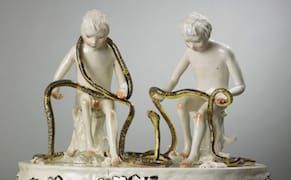
PARIS — Conversations about art and medium-specificity are almost always conversations about history.
Art
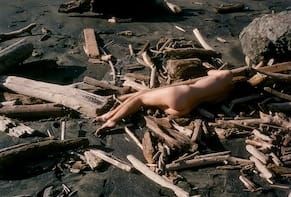
Rowan Renee's highly personalized images offer an optimistic and curiously romantic glimpse into her secret world as she works through the long-term psychological trappings of incest, latent anger, and the ability to overcome adversity through telling her story.
Art
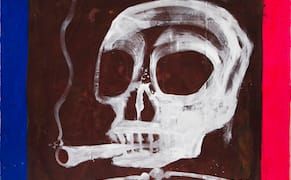
LOS ANGELES — Paintings about painting are really about life, proposals for how it might be lived.