Taking a Seat at Robert Therrien’s Table
The Broad invites us into the late artist’s obsessively iterative practice, where oversized tables and chairs give way to more elusive, personal forms.

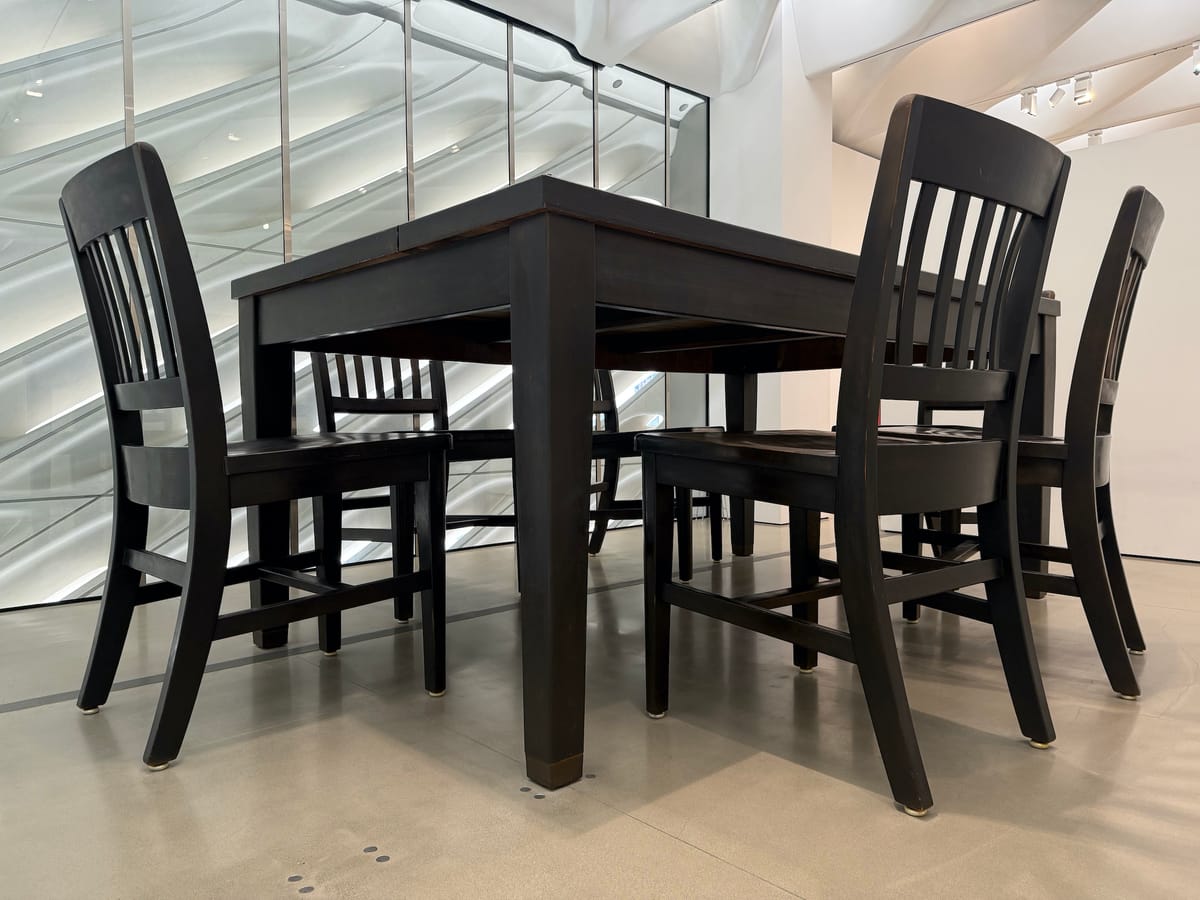
LOS ANGELES — Robert Therrien’s “Under the Table” (1994) is arguably one of the most popular artworks at the Broad. The 10-foot-tall (~3-meter-tall), meticulously scaled-up version of a sturdy Gunlocke table surrounded by six chairs occupies an absurdly small room at the museum. It’s often filled with wide-eyed visitors who take turns posing for pictures under the monumental table, gazing at its underside in wonder.
“I think that artists can get swallowed up by their most famous works,” Broad curator Ed Schad told Hyperallergic in an interview. “If you are in the arts, specifically the Los Angeles art world, you know him very well. But I don't get the impression that, outside of that sculpture, Robert Therrien is very well known by a general audience.”
Robert Therrien: This is a Story, curated by Schad at the Broad, aims to change that. On view through April 5, the exhibition brings together over 120 works produced over five decades by the late artist, who spent his entire adult life in LA. Along with oversized tables, chairs, pots, and plates for which Therrien is best known, the show includes sculptures and drawings that hover between the specific and the universal — investigations into form and material inspired by the artist’s own personal history.
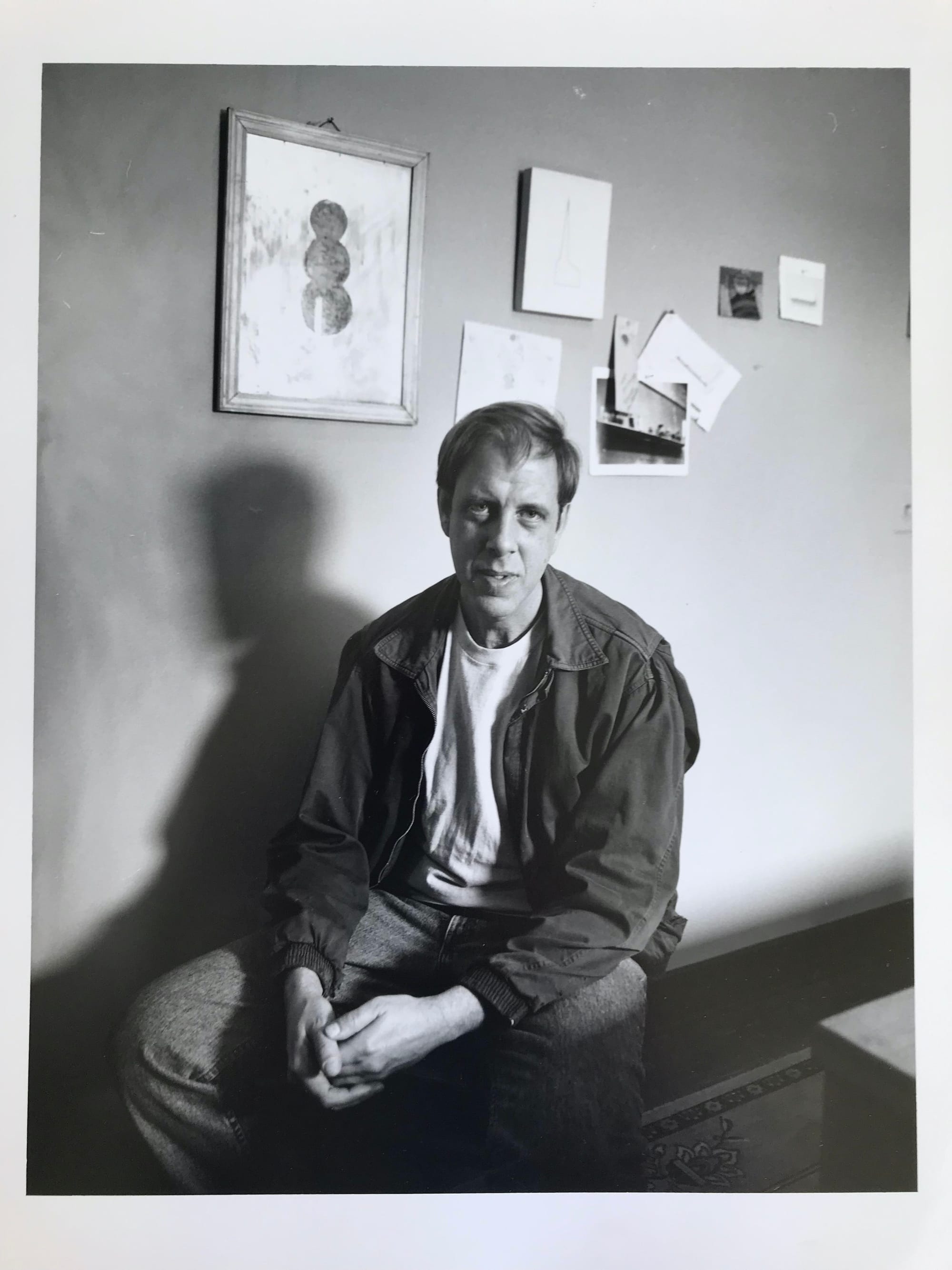
Robert Therrien was born in Chicago in 1947, but his family relocated to Palo Alto, California, when he was nine when the Golden State’s milder climate proved more restorative for his childhood asthma. As a child, he was an avid fan of cartoons and comics with an anti-authoritarian streak. In the late 1960s, he attended Oakland’s California College of Arts and Crafts (now the California College of Arts) and then studied printmaking at the Brooks Institute in Santa Barbara and painting at the Santa Barbara Art Institute. At the suggestion of his professor, painter James Jarvaise, he moved to LA in 1971 to get his MFA at the University of Southern California, setting himself up in a studio on a nondescript stretch of Pico Boulevard just east of Fairfax, where he would remain for almost two decades.
Some of his earliest works from this period were enigmatic sculptures that drew from imagery from childhood memories — coffins recalling the death of his father when he was 14, chapels symbolic of his Catholic upbringing, Dutch doors from his grandparents’ home, snowmen as self-portraits — that he would return to again and again throughout his career. They would transform, as well: The snowman tipped on its side and became a cloud, a butterfly turned into a bow, and the chapel morphed into an oil can.
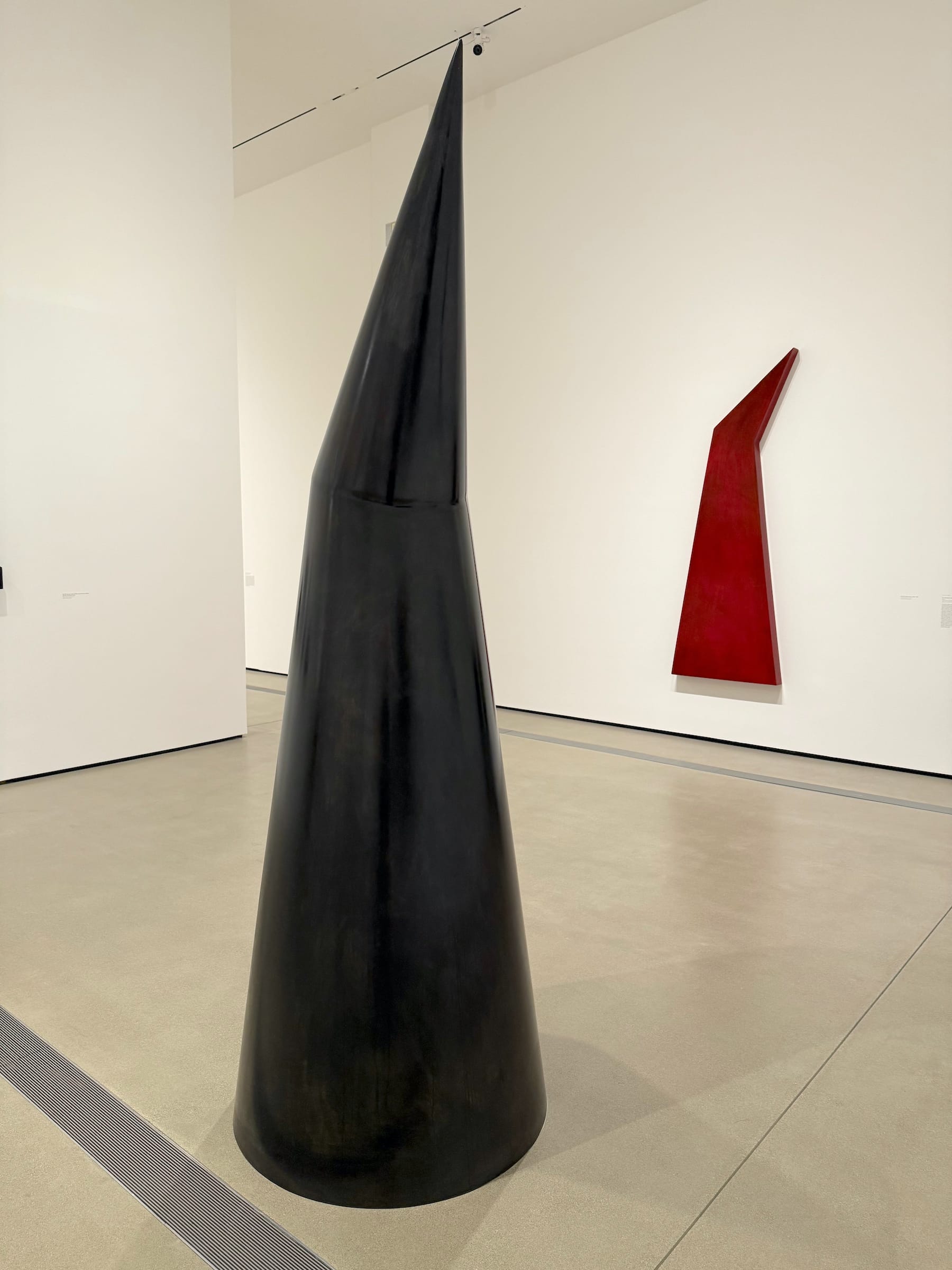
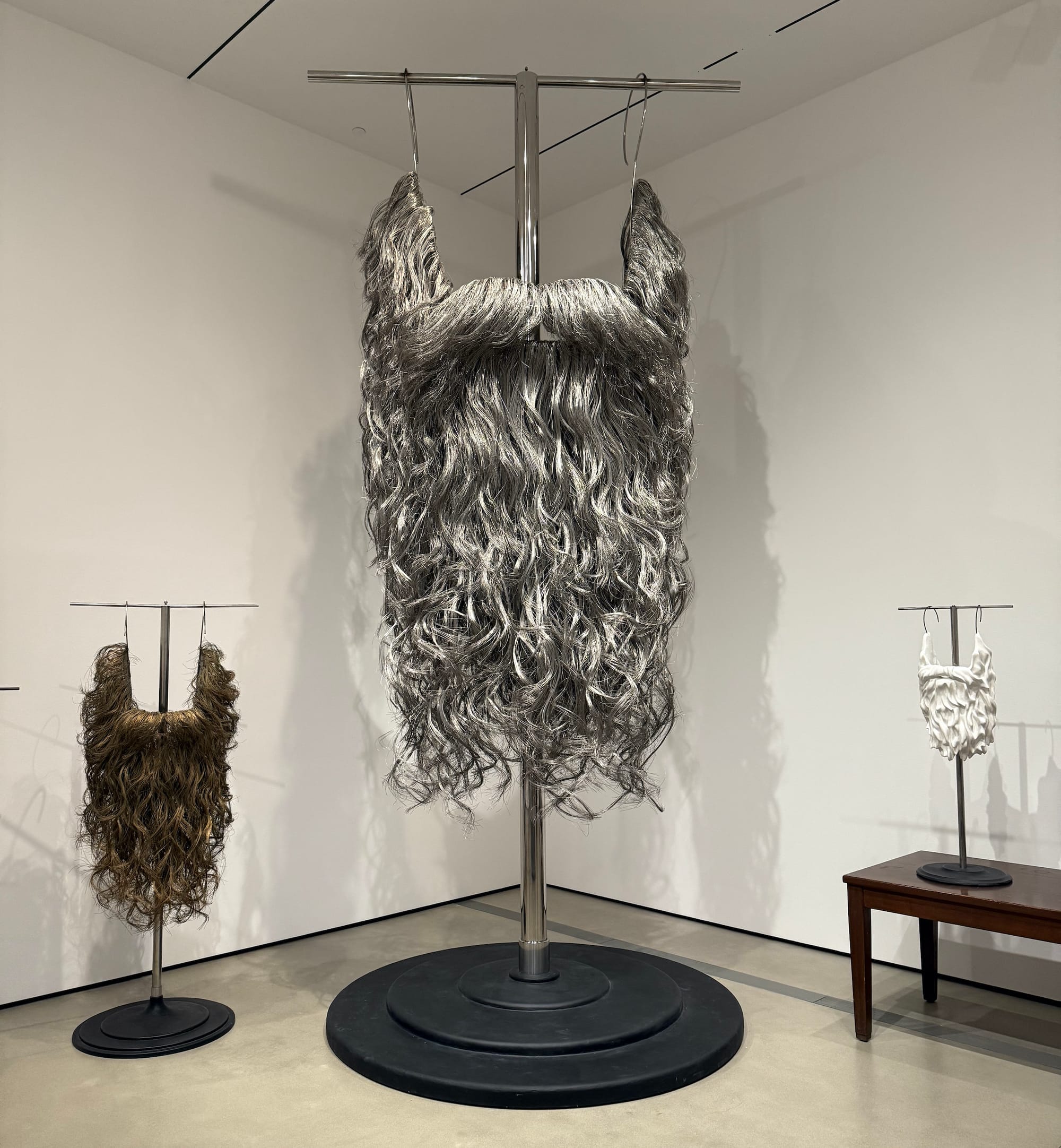
“The forms migrate, wandering far from the personal, then back again,” Schad writes in the show’s catalog. “They repeat but are never repetitive … they expand and contract, shift materials, and swing between colors and patinas.”
The exhibition features a timeline created by Therrien and his former assistant, the artist Christina Forrer, that charts the progression of his chapel-turned-oil-can forms, inspired by a similar graphic illustrating the evolution of Romanian sculptor Constantin Brâncuși’s Bird in Space (1923–40) series.
“What he wanted to show by revisiting the sculpture was that it’s never done,” Forrer said in an interview. “The chart is kind of a spiral, showing a sense of refinement, trying to make the impossible happen.”
Although his sculptures bore some resemblance to the simplified forms of minimalism, Therrien himself rejected this comparison. “He would take the kind of reduced forms that he was seeing in Judd and Lewitt, the spirit of minimalism, and would pollute them with his own memories, and with his own zany approach to materials,” Schad added.
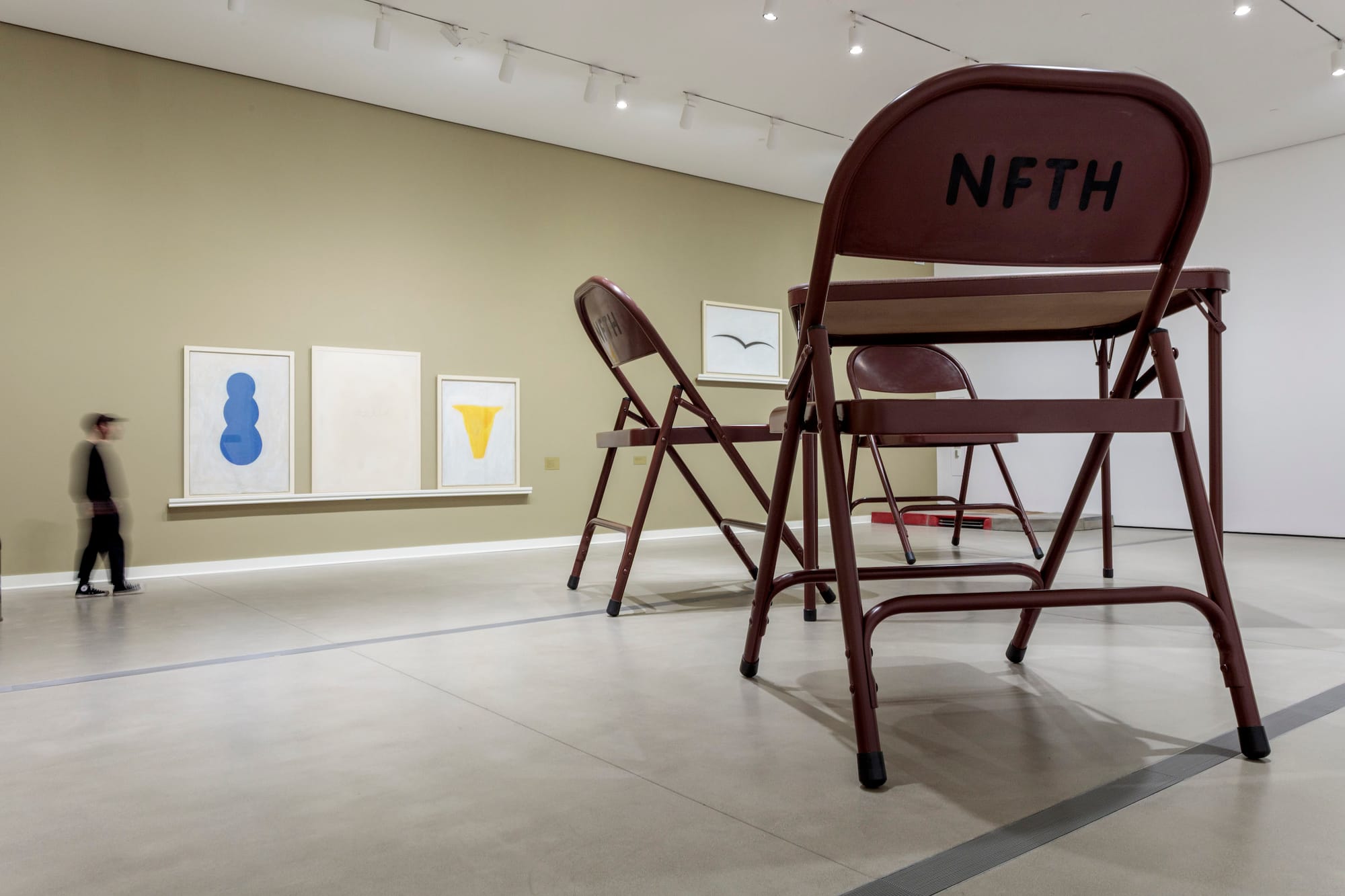
At the same time, Therrien didn’t intend for his art to be read through a biographical lens. He was famously reticent to explain his work, preferring viewers to bring in their own interpretations and associations; to that end, he often named his works “No title” rather than the standard “Untitled.”
“He's always been mining from the same place: his past, his childhood, and objects that everybody is familiar with and has connections to,” said Dean Anes, Therrien’s liaison at Gagosian Gallery, who now co-directs his estate. “The more connections he had to his subjects, the better. It was never one straight read.”
Therrien’s works are imbued with a sense of deadpan humor, channeling the slapstick of the cartoons he loved in his childhood. Schad notes in his catalog essay that the off-center spire of Therrien’s chapel resembles a hand with its middle finger extended, an irreverent rebuke to institutional authority. ”No title (large stainless beard)” (1999), a nearly 20-foot-tall tangle of steel wires, recalls both the facial hair of an omnipotent deity and, with its ear loops, a goofy, theatrical costume.
His career took off in the 1980s after a solo show at LA’s Museum of Contemporary Art in 1984, the year of his first Broad acquisition, followed by his inclusion in the Whitney Biennial the following year. He was soon picked up by two seminal galleries: Leo Castelli in New York and Konrad Fischer in Germany.
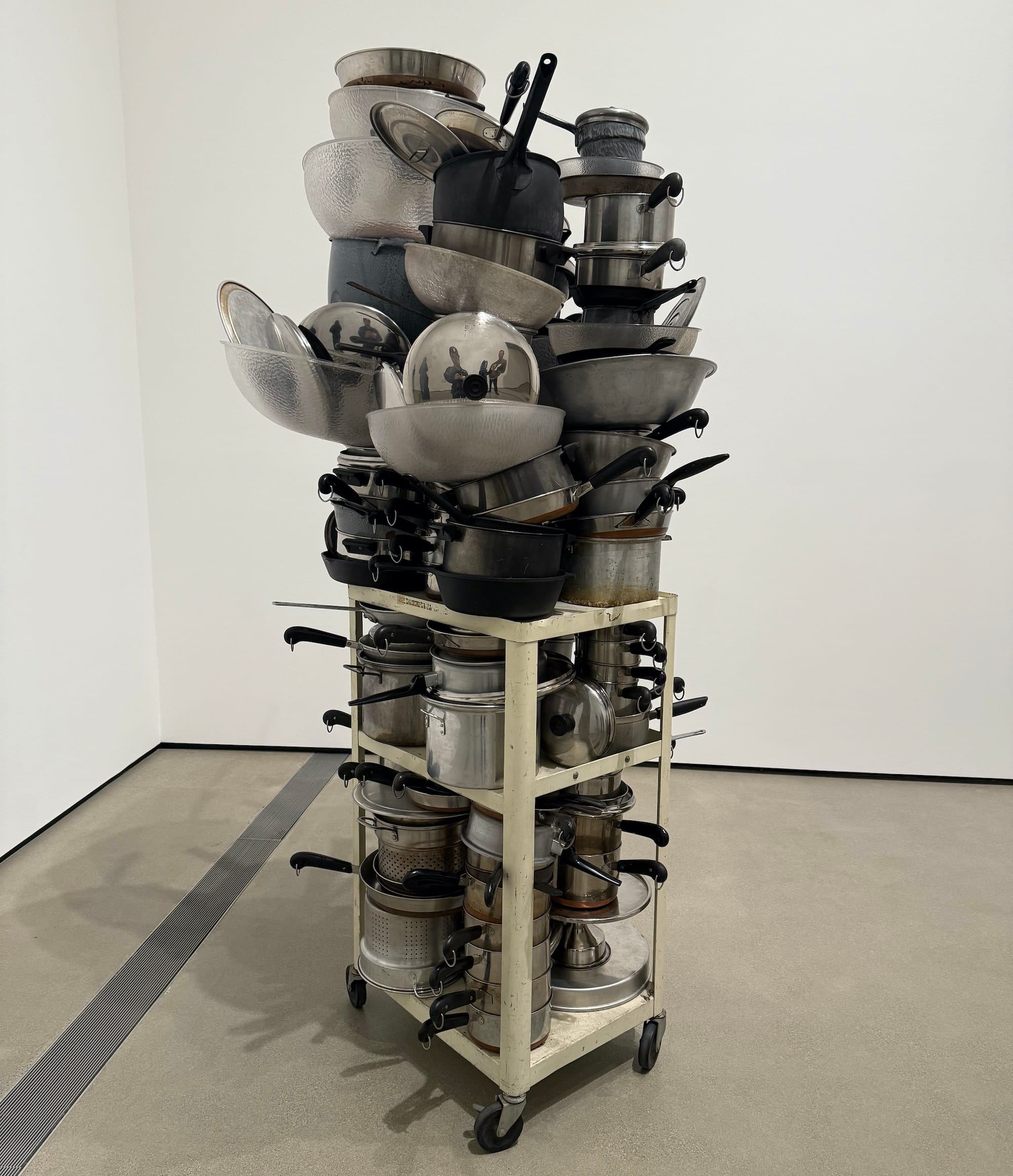
Around 1990, he began working with art fabricators, including Jack Brogan, La Paloma, and Carlson & Co., to make his first monumental sculptures, allowing him to scale up with precision and verisimilitude. These works are often characterized by their sense of child-like whimsy, which is certainly present. However, this straightforward reading doesn’t do them justice and often omits the sense of anxiety or dread they evoke. Take, for instance, his comically overstacked piles of pots or plates that tower over the viewer with a mix of cartoon absurdity and potential disaster, on view in This is a Story.
“He liked those sort of altered states brought on by emotions and memory and fears,” Schad said. “When you walk around those plates, it becomes vertiginous and unsettling.” Fittingly, Alfred Hitchcock’s Vertigo (1958) was one of Therrien’s favorite films, and he even owned the chair that Jimmy Stewart’s character stands on in an unsuccessful attempt to cure his condition.
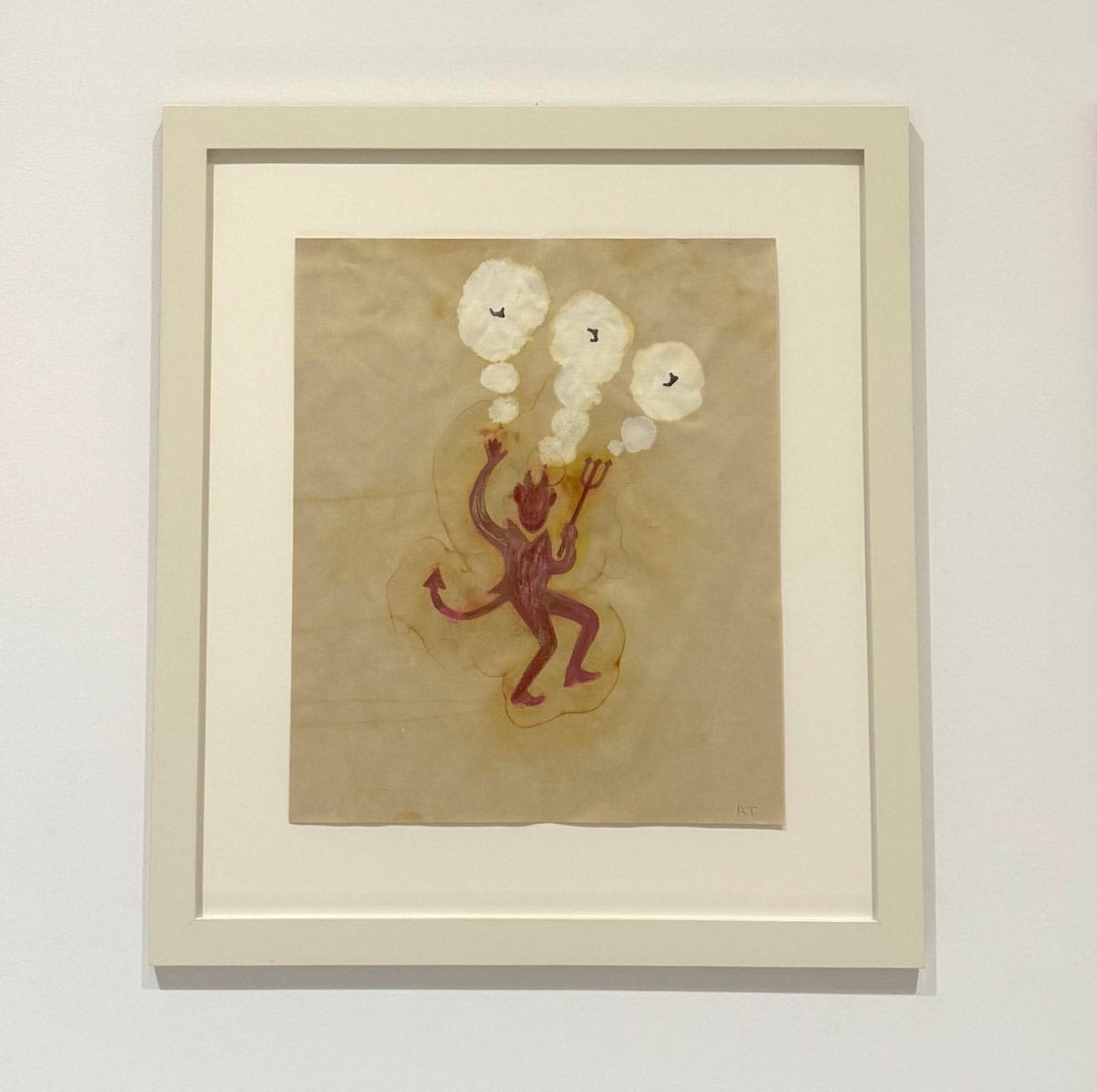
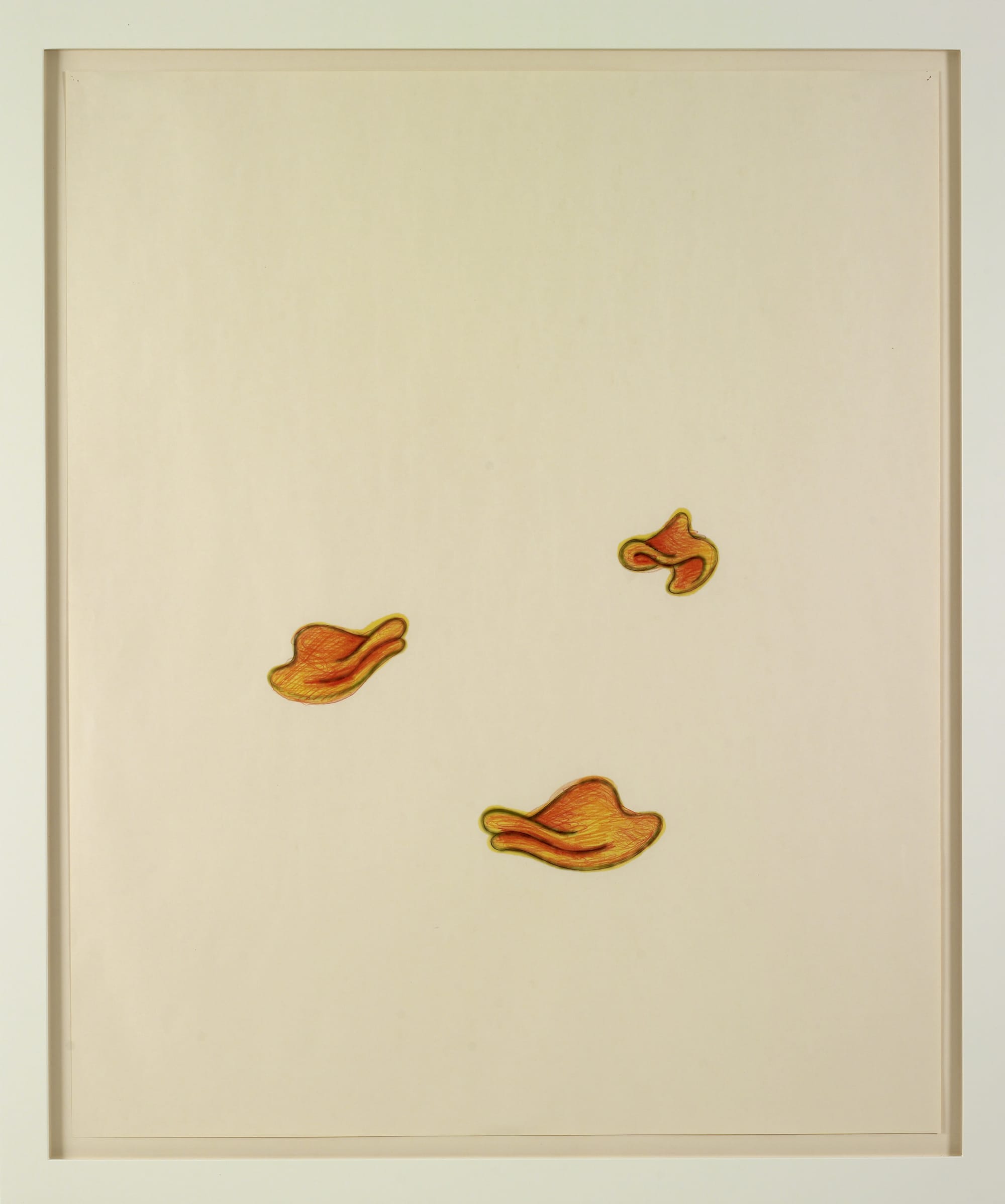
Left: Robert Therrien, "No title (devil thinking about three feet)" (1993), silkscreen, ink, bleach, and graphite on paper; right: Robert Therrien, "No title (large duckbills)" (2001), aniline dye, colored pencil, and ink on manila paper (photo © Joshua White; photo Joshua White, courtesy The Broad)
Next came whole environments, rooms filled with objects, or eerily devoid of any, such as “No title (room, panic doors)” (2013–14), which is included in the Broad’s exhibition. Shedding light on the other end of his artistic spectrum, the show features an array of intimate drawings and works on paper in which Therrien’s hand is more present than in the enlarged simulacra of everyday materials. Devils appear in several drawings, including “No title (devil thinking about three feet)” (1993), which features a mischievous red imp (modeled on the Underwood Deviled Ham logo) who waves at the viewers as thought bubbles containing feet float above its head.
Despite his laconic nature in interviews, Therrien was a garrulous and generous host who “liked to talk about all of his enthusiasms,” as Schad put it. In 1990, Therrien moved out of his Pico studio into a new studio in an industrial patch of South LA, a two-story, dusty-pink building he had designed himself. Schad writes in the catalog that, “like a mind, Therrien’s studio was to be an archive and a place of memory, a place with secret passageways, spaces open to change, and often doors that lead to nowhere.” Since his death in 2019, it has been the home of his estate, managed by Anes and Paul Cherwick, who also ran his studio.
Although the studio is presently not open to the public, the exhibition attempts to recreate some of its behind-the-scenes magic through vitrines of sketchbooks, photographs, stencils, and other ephemera, as well as the recreation of a red room at his studio packed with stacks of teetering pots comprising “No title (room, pots and pans I)” (2008–15). His studio replicates the layered characteristics of his work, as visitors moved through various work rooms and upstairs to a gleaming white exhibition space, leading to spartan living quarters and a modest kitchen which channels a timeless kind of 20th-century Americana. Friends would gather in this room around a table Therrien picked up at a flea market — the source material for “Under the Table” — as he served up salad from a ridiculously large bowl.
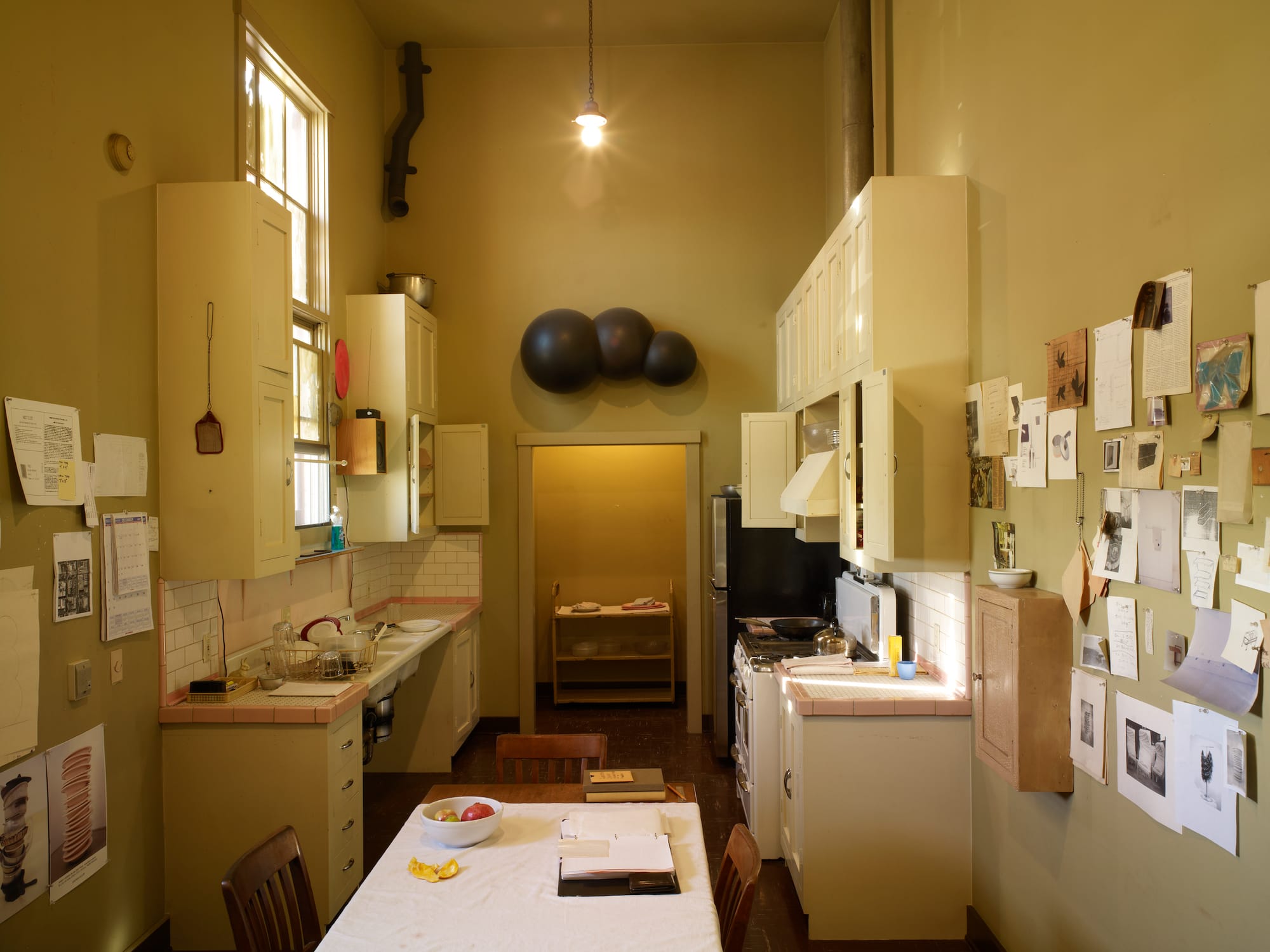
With windows on just one side, the studio felt disconnected from the streets outside. “The first day I shot for him, I couldn’t tell if I was there for an hour or 12,” photographer Joshua White, a close friend of Therrien, told Hyperallergic. “When the doors and windows are closed, you’re immersed in his world.”
This is a Story aims to do just that: to immerse us in Therrien’s story and show his hometown the broad scope of his decades-long career, in which he perpetually returned to the same forms and ideas in expansive rather than redundant ways. His story continues to be written, looping back on itself and spiraling outward, just as his studio offered boundless wonder for his guests.
“I don’t know what to say but to look, really look, and have some fun. Wander around. That’s what we all did in Bob’s studio, Bob’s world,” Vicky Arnold, Therrien’s longtime partner, writes in the catalog. “That’s why he made it and what he made it for. For him and for all of us. Bob’s world — like no other.”