The Cruelty of American Curatorial Silence
Many of my fellow curators, especially at institutions, have failed to speak out against fascism. What is it about being a curator that offers a free pass for political silence?
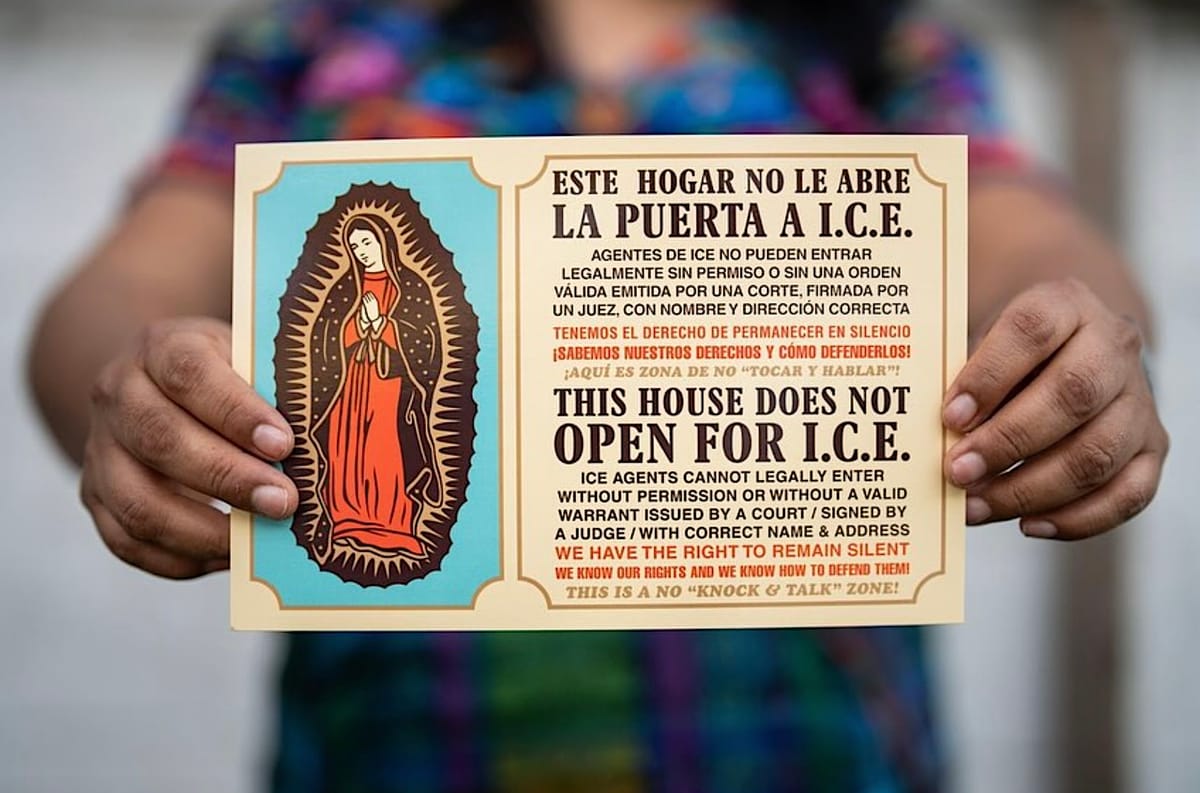
This year has been a difficult one for the arts in the United States, from federal funding cuts to the president’s demands to censor or manipulate artistic content to fit his white supremacist narrative of history and reinforce ideals of American exceptionalism; from a call for the erasure of African-American history to attempts to slash federal funding to the Institute of American Indian Arts. Across the country, from Los Angeles to Chicago and Oregon to North Carolina, mass deportations lacking due process and kidnappings by presumed border patrol agents continue to happen every day. At the same time, the federal administration bullies state administrations through military presence on museum grounds.
In Los Angeles, photographs and videos of border patrol agents violently sequestering people are sadly becoming as quotidian as traffic. Consuming professional cruelty at the bureaucratic level is delivered every morning by the White House’s media channels, while gruesome scenes of immigrants and their children being shot, sandwiched by moving vehicles, dragged while screaming, and even convulsing on the floor are normalized every day. In a recent conversation I had with artist Rachel Hakimian Emenaker, we concluded that as visual arts professionals, it is nearly impossible to quantify all the visual pain we absorb on a daily basis, which ultimately seeps into our visual vernacular.
As of late, I’ve found myself wondering if the curatorial field is poised to take a revolutionary stand against fascism. Why are curators not as politically active in the public sphere as artists have been since the dawn of time? What kind of privilege does the curatorial field grant that allows many curators to be politically inactive at best, and complicit at worst? Artists in LA are banding together for immigrants. Why aren’t more curators leading similar efforts? Artists continue to support Palestine and lose opportunities because of it. Why aren’t curators matching their energy? What is it about being a curator that offers a free pass for political silence?
I often struggle with the title of “curator” because it falls short of my practice, which is political by nature, focusing on championing undoc+ (formerly or currently undocumented) intergenerational immigrant communities beyond exhibition walls. We curators ostensibly spend our lives considering how people will engage with art, and yet many remain silent as visuals emerge of this administration’s assaults on the very communities that comprise our public. In a field in which most of us have decades of training in visual analysis, why aren’t we using the tools of our trade to counterbalance the visual horrors of our current administration, both abroad and at home? Why are there no institutional exhibitions that uplift undocumented narratives? Where are the museum curators seeking inclusivity inside institutions for members of the undoc+ creative community?
In a recent Instagram post, Dr. Meranda Roberts, a Numu (Paiute)/Chicana curator, explains that museum workers’ role right now is to fight for the truths we’ve gained and not allow others to rewrite our history. She asks that we not sit by and watch it happen, demanding that we be bold and courageous. I echo this sentiment, while calling on other curators and arts administrators alike to fight for the trust that artists and the public bestow upon us.
My vision of what it means to be a curator, like Dr. Roberts’s, rests on a foundation of ethics and trust; from the artists who trust that I center ethics in my labor, and from my community who trusts my vision. Political silence from many of my curatorial colleagues is cruelty wrapped in institutionalism and further generates mistrust in our field.
Curators and other arts professionals today must earn public trust by taking vocal, public, and unflinching action amid the attacks in our communities. Curators need to be as inclusive with undoc+ artists as we have been in the past with other persecuted communities. There is no need for historical distance between fascism and our next-door neighbors; let's speak now, let's act now, let's help now. In a time when collective action seems to be the only thing upholding our society, political silence is too steep a price to pay.