The Divine Powers of “Chicken Linda”
Pioneering performance artist Linda Mary Montano gave me a tour of her home-shrine and a glimpse into her lifelong spiritual quest through art.

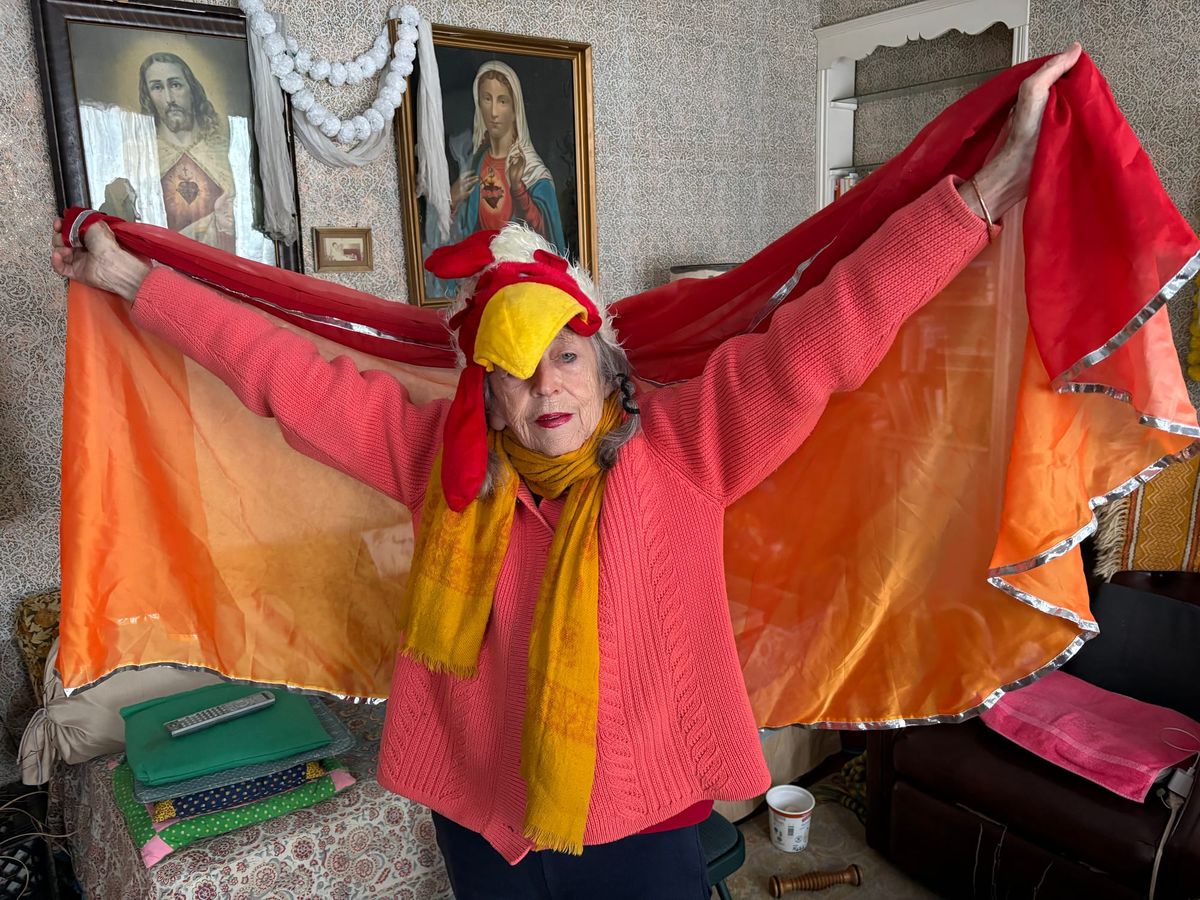
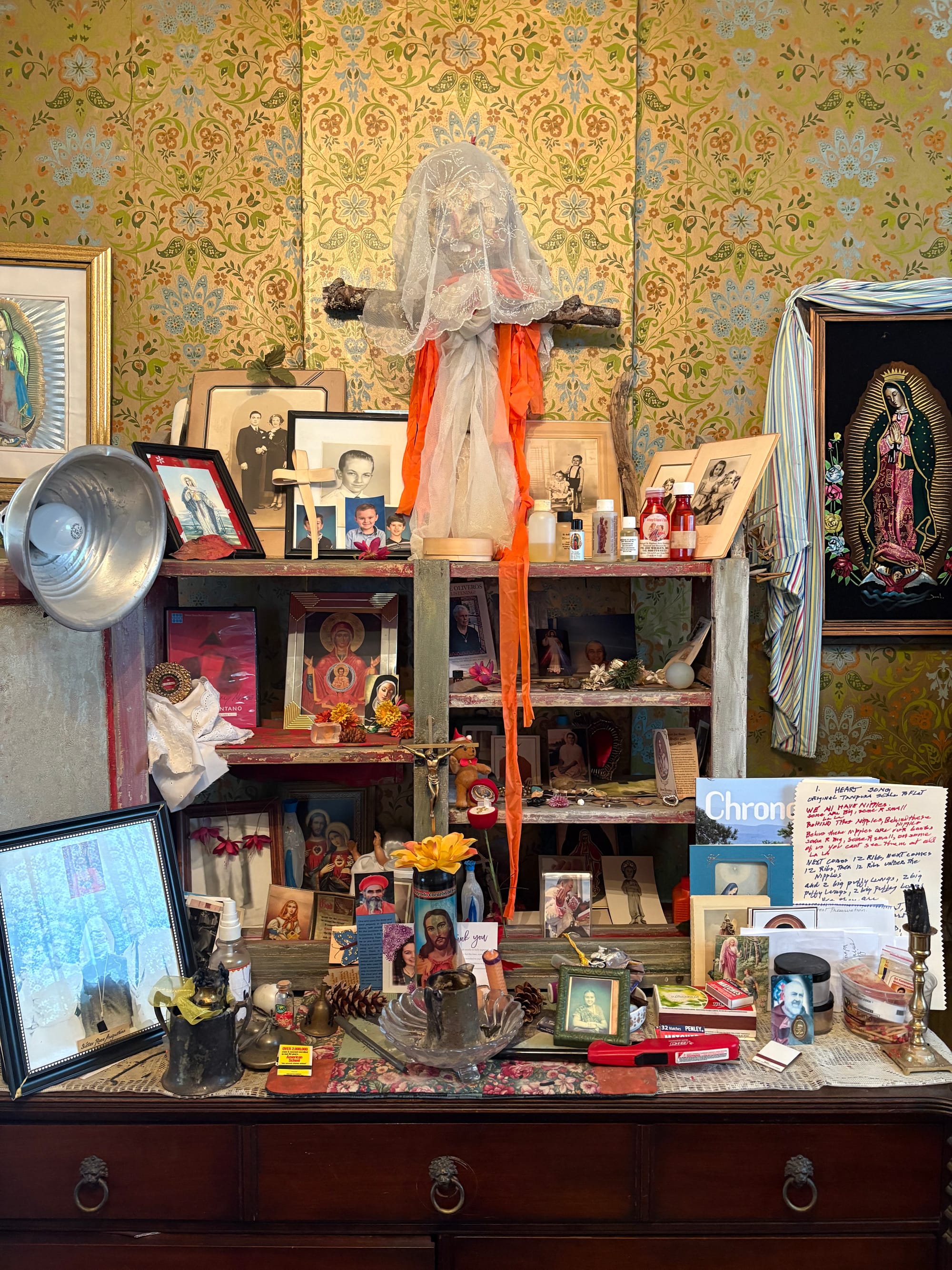
I visited Linda Mary Montano at her home in Saugerties, New York, on a snowy morning in late January. When I entered, I was transported into a living shrine, and the octogenarian artist gracefully hovered about as if she were the resident angel. After a warm welcome, she floated upstairs to put on her “Chicken Linda” outfit, which allowed me a moment to take in the scene. Montano views chickens as divine in disguise, and she gave herself the name “Chicken Linda” as a way to connect with the Holy Spirit.
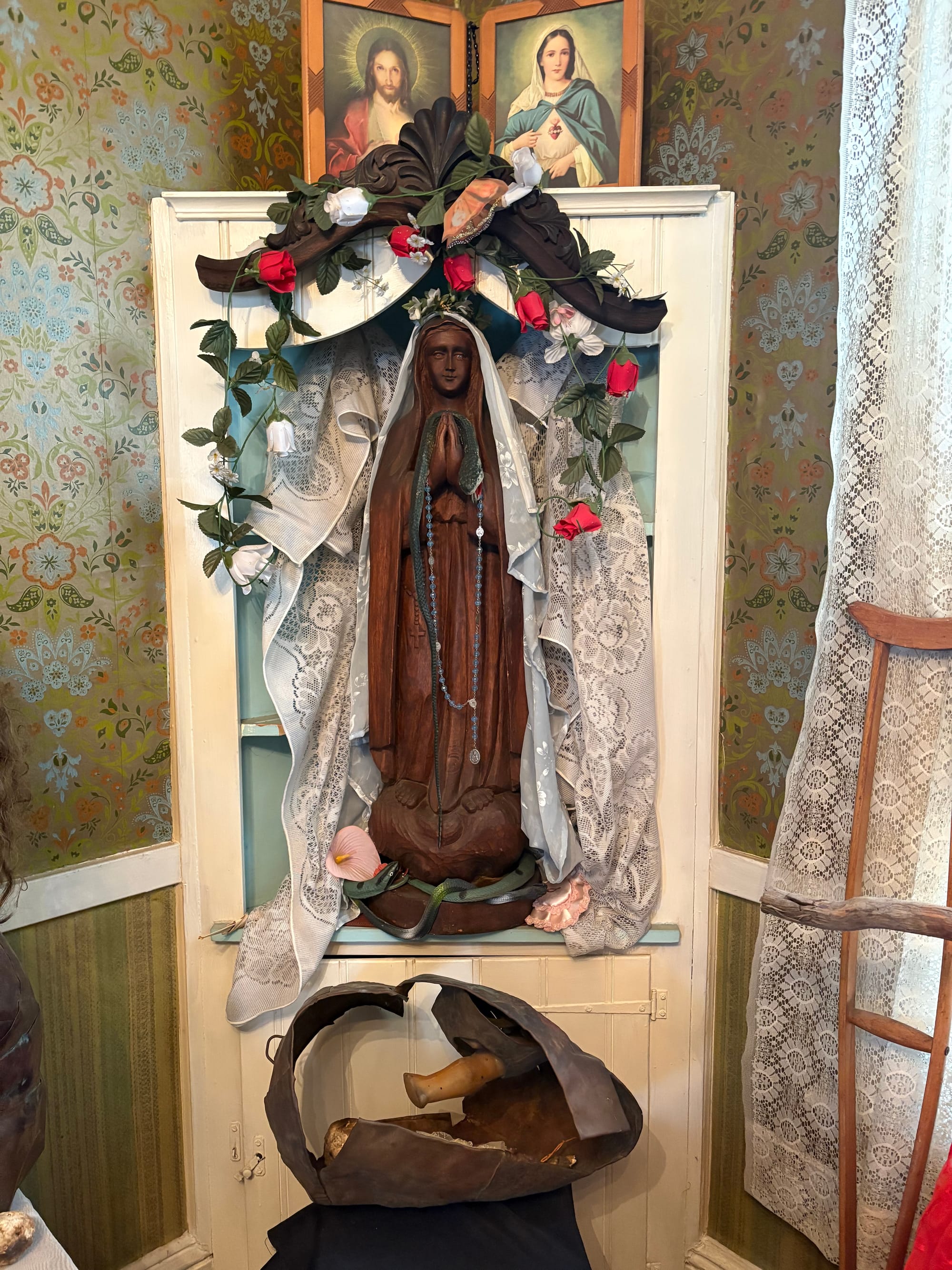
Filled with sacred altars, experimental sculptures, and religious iconography at every turn, Montano’s abode — the same family home she grew up in — reflects her 60-year journey as a devoted spiritual seeker and consummate creator whose practice obliterates the boundaries between art and life.
Born in 1942, Montano is a pioneering endurance performance artist. A unique category in our collective understanding of art, “endurance performance art” is a practice in which artists employ their bodies in extreme ways for creative purposes, and Montano’s practice is groundbreaking among them. She did her master’s degree in Catholic sculpture in Italy and her MFA in sculpture (live chickens) at the University of Wisconsin-Madison, as one of only two women in the sculpture department from 1967–69. “Sculpture was extremely large, unwieldy, and masculine during my time there,” she told me.
In the early 1970s, Montano began her adventure in performance art in San Francisco during the First Wave feminist art movement. She coined the term “art/life” during this time, influenced by Allan Kaprow, the artists from Los Angeles’s Woman’s Building, and other California creators. She cites Tom Marioni’s Museum of Conceptual Art (MoCA), Bonnie Sherk, Howard Fried, Paul Kos, and Terry Fox as important influences from that era.
“The mood was one of improvisation, of inclusion of the female voice,” she stated. During that time, she also met her guru, Shri Bhramananda Saraswati, who encouraged her art. “I was given permission. It was the work of improvisational freak-out. He gave me the mic, he gave me the stage,” she said of this important connection.
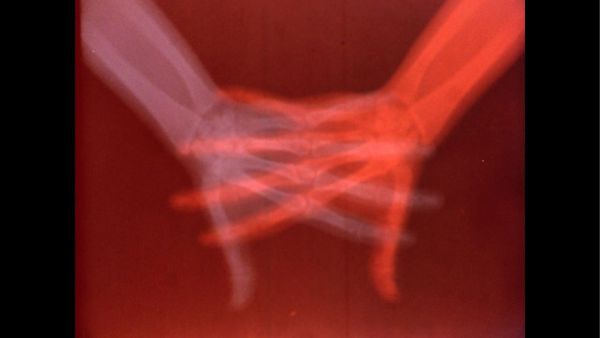
In 1977, her former husband Mitchell Payne was murdered, and she created a 22-minute video titled “Mitchell’s Death” to honor her grief. (That piece is now in the permanent collections of the Museum of Modern Art and the Museum of Conceptual Art, Los Angeles.) She turned to art to heal from the trauma, “Because I didn’t have verbal language, because I did not have emotional language, because I didn’t have an ability to even tell anyone he died or how I felt about it, or to lay in anyone’s arms, I laid in the arms of art.” Later, she had a long-term partnership and lived with artist Pauline Oliveros, a central figure in experimental and electronic music.
Montano’s practice is informed by her deep knowledge of religious theologies, notably her explorations in Zen, Hindu philosophy, and her strong alignment with Catholicism since her youth. She lived at Zen Mountain Monastery in the Catskills for three years; studied with Shri Bhramananda Saraswati for over 30 years; and lived as a Maryknoll Sister for two years before her life as an artist. Describing her reawakening to the Catholic faith, she said, “Performing and doing these healings as Mother Teresa allowed me to re-see Catholicism as an invitation to focus on healing and cleansing and connecting, and not so much on punishment and sin and guilt and fear.”
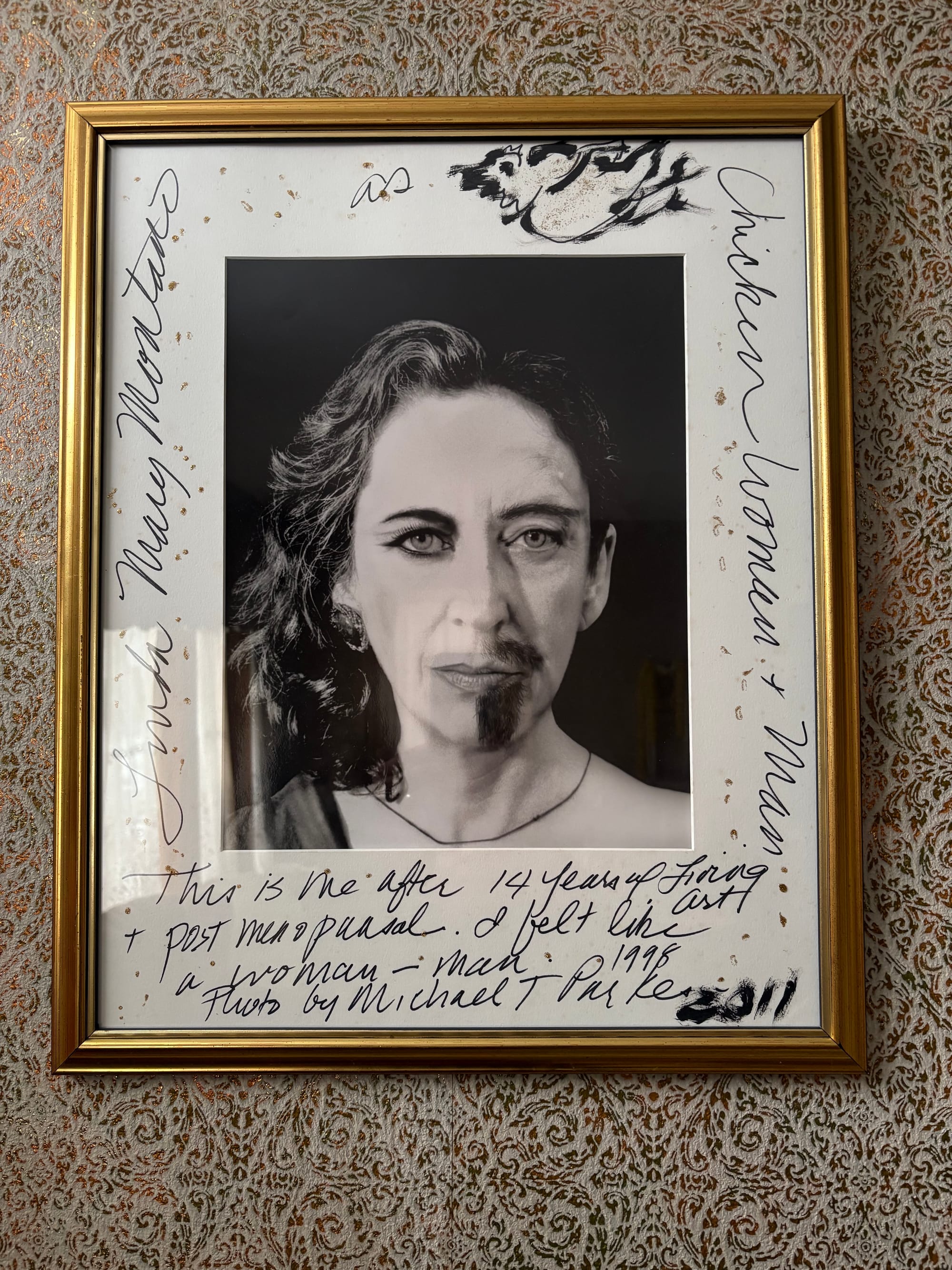
In 1981, Montano published one of her five books titled Art in Everyday Life, which details how to do live-performance art as a daily activity. She has performed thousands of times and in outrageous ways, among the most extreme being her collaboration in Tehching Hsieh’s year-long rope performance, in which they were bound together by an 8-foot (~2.4 meters) rope from 1983 to 1984. She cites both Jungian shadow work and gratitude as the core experiences of that primal year. “The piece was pure, total permission to feel,” she said. “It was free rage therapy, free going down into the hell realms.” After working with Hsieh, she embarked on a 14-year endurance performance piece titled “Fourteen Years of Living Art” (1984–98). During that time, she studied Hindu chakra systems, wore single-colored clothing, and visited Manhattan once a month to give palm readings and tarot counseling sessions in a windowed storefront space at the New Museum. Montano praised curator Marcia Tucker, founder of the New Museum in Manhattan, for that unusual opportunity. “She had the vision to give me a room and to paint it every year — red, orange, green, yellow, blue, purple, white — seven colors, seven years,” she said. “What a gift.”
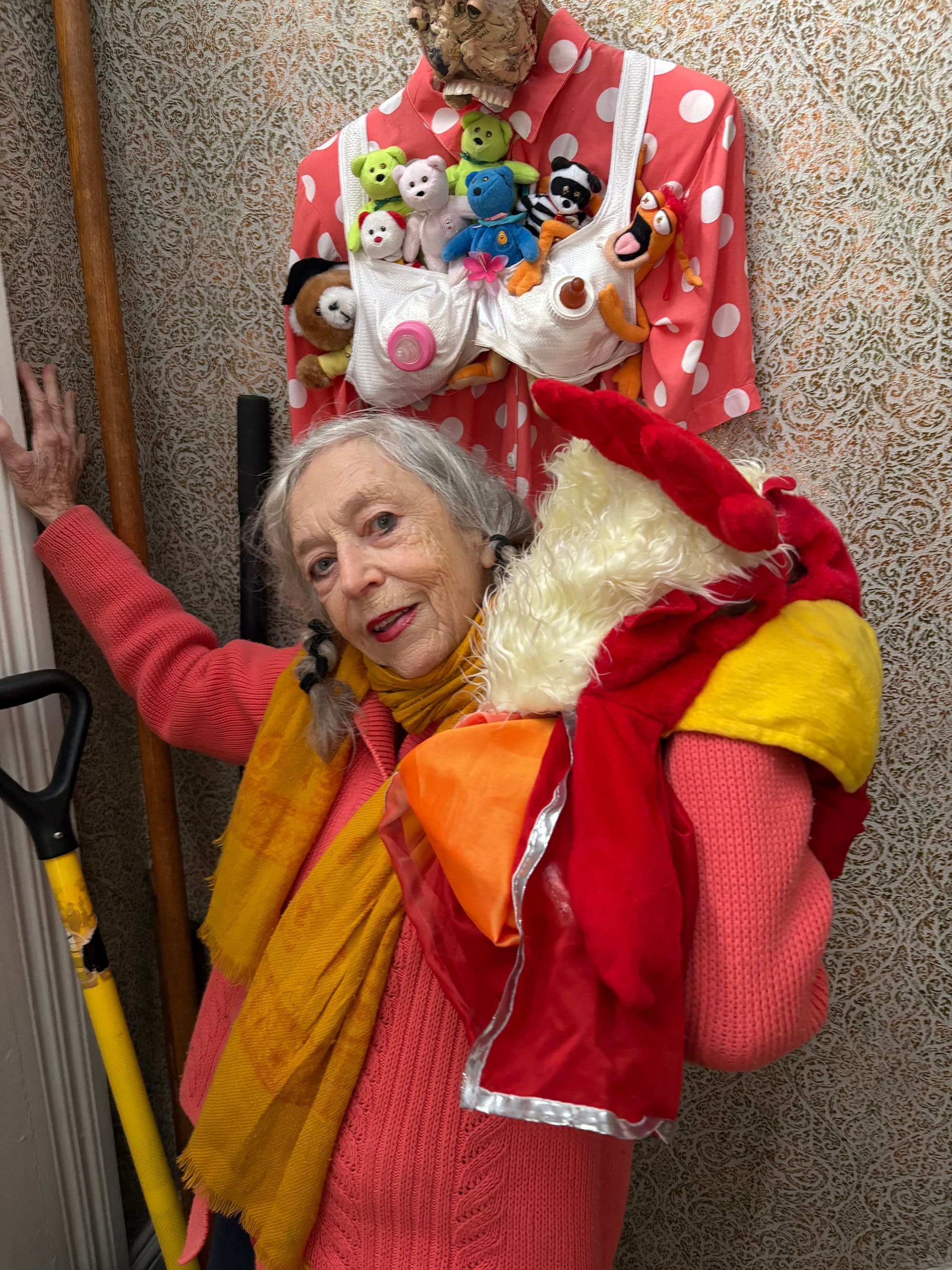
On my visit to see her that winter day, Montano stretched her arms out gracefully wide, revealing the saffron wings of her “Chicken Linda” outfit. She then guided me around her home from one altar-sculpture to the next: a Kali sculpture of toy bears stuffed into a bra with a polka dot dress; a lingam sculpture of layers of wigs with a bronze phallus protruding; a Mary Magdalene torso, upon which she lovingly rested her head; and her “Jesus Comes Off the Cross with a Heart” installation.
When I asked her about her life’s focus on endurance art and what it means to her now, she described her practice as an “ego-buster.”
She explained: “If you stay long enough with a chosen action for your art — something that you’ve created as an envelope or as a safe haven for a time, a space, and an action that’s repeated over and over again — what it does is kill the ego, invites the ego to go on vacation, let go — to meld, to mold, to incorporate this tiny little garbage can of ego into the larger framework.”
Just as I was departing her home-shrine, Montano pulled a little ceramic chicken from a shelf on the wall and thrust it into my hands as she lovingly closed the door behind me, retreating back into sacred silence.