The Enduring Power of Book Cover Art
LOS ANGELES — You should never judge a book by its cover, they say. But in a media rich world, often the book cover is the only way a book can stand in a chance against others in the bookstore or online.

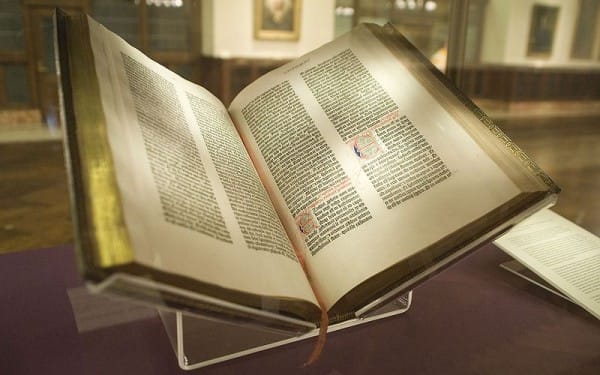
LOS ANGELES — You should never judge a book by its cover, they say. But in a media rich world, often the book cover is the only way a book can stand in a chance against others in the bookstore or online. That eye-catching graphic tells loads about what’s inside and what to expect, and it at least gets your attention long enough to flip through and consider buying it.
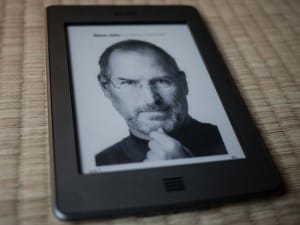
Is the book cover dead? More and more on subways and planes, I see Kindles and iPads instead of print books, and I start to wonder what people are reading, what they’re doing. In the good ol’ days, you could simply judge a reader by his or her book’s book cover, but now it’s harder to find out.
In a terrific essay, designer Craig Mod lamented the death of the book cover:
Dead! Sure, they are. In the same way that glue for a paperback binding is dead, or sewn in bookmarks are dead. There’s a digital glue holding our electric pages together, but it’s different. And there’s a way to bookmark your Kindle ‘page,’ but that’s different, too.
But not all his lost. Mod notes the book covers are not adaptable — they can be book trailers, favicons, thumbnails and Kindle backgrounds. They shift and change for a social media age, when a link to one’s book can point to any page, making that page, effectively, a new book cover:
The covers for our digital editions need not yell. Need not sell. Heck, they may very well never been seen. The reality is, entire books need to be treated as covers. Entry points into digital editions aren’t strictly defined and they’re only getting fuzzier. Internet readers don’t casually stumble upon books set atop tables. They’re exposed through digital chance: a friend tweeting about a particular passage — and linking, directly, into that chapter.
Which gets me thinking about the evolution of the gallery show invitation. It once mattered that we receive a postcard in the mail with an invite to a show. That practice has shifted to a JPG attachment. But what does it mean in the age of social media? How do we share our work effectively online? What I love about Mod’s essay is that he shows that the book cover is very much alive, and it can be found in a variety of media, whether that be a glowing iPad screen, quite e-ink or the classic printed page.