The Fruitless Search for Vermeer’s Personal God
A recent biography spends too much time speculating about the Dutch artist’s religious beliefs and not enough exploring other mysteries, including his possible use of a camera obscura.

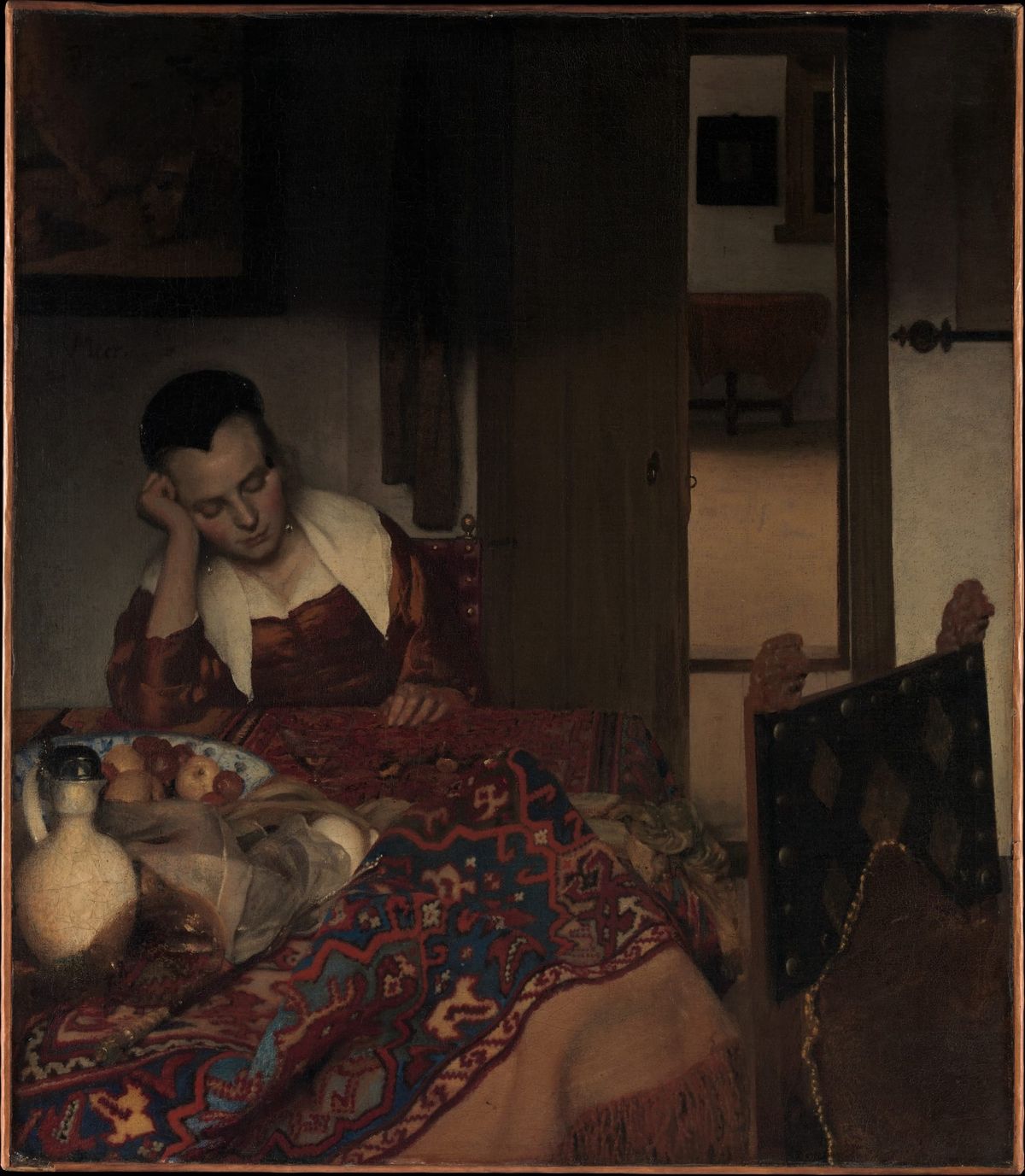
During his lifetime, Johannes Vermeer was well regarded, though hardly famous. Unlike his compatriot Rembrandt, whose critical fortunes declined during his lifetime but never left the public consciousness, Vermeer simply disappeared until the mid-19th century. In the 1860s, French art historian Théophile Thoré plucked him from obscurity and nicknamed him the “Sphinx of Delft” for his enigmatic paintings and slim presence in the historical record.
Since then, Vermeer has become a modern obsession, his work inviting considerable scholarly examination and becoming the subject of various works of film and fiction, not to mention the sold-out 2023 exhibition at Rijksmuseum in Amsterdam. Art historian Andrew Graham-Dixon’s new biography, Vermeer: A Life Lost and Found (2026), joins the fray with an encomiastic, highly readable, and implausibly sweeping reinterpretation of the 17th-century Dutch master’s life and work.