What the Art World Doesn't Want You to Know About Yayoi Kusama
A new publication tries hard to reinvent Kusama as a champion of racial equity despite her troubling record of anti-Black statements.

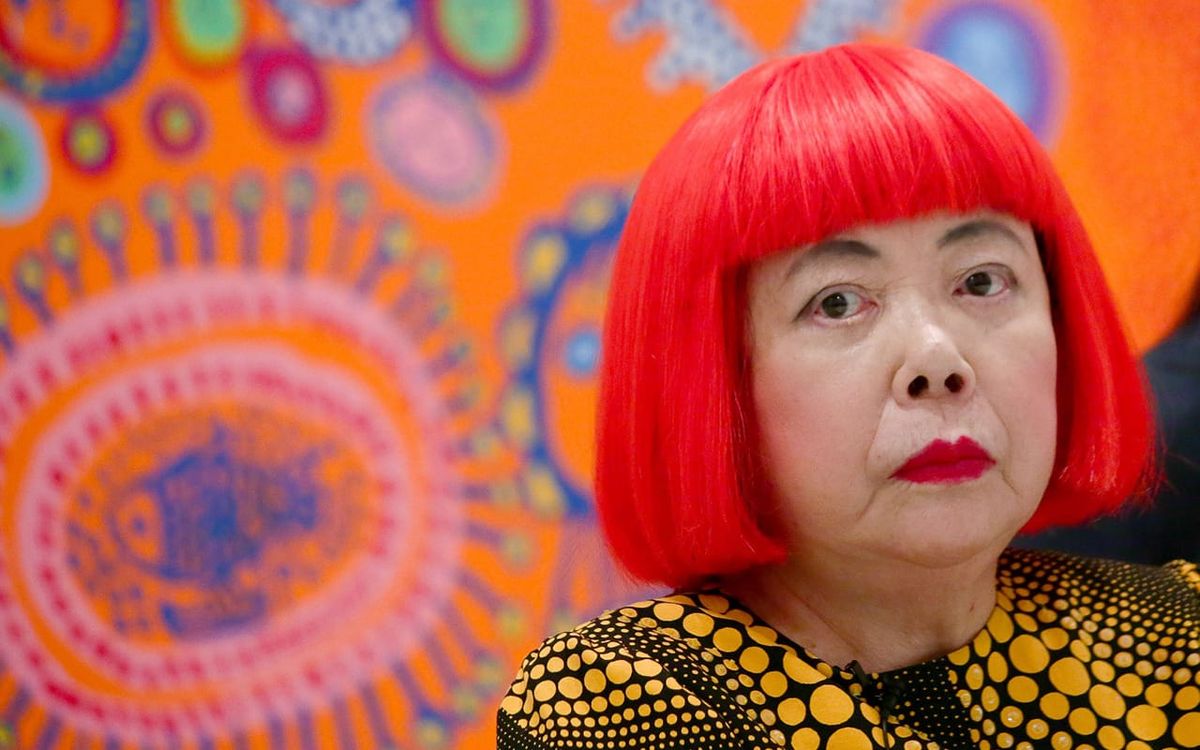
I've had a question about Yayoi Kusama's work for a long time and the new survey publication Yayoi Kusama: 1945 to Now (2023) has finally resolved it.
In short, the answer is money, but I’ll back up a bit.
The volume features a roundtable discussion between notable curators and museum directors, and quickly, the topic of Kusama’s marketability comes up. The argument presented is that the mass production of Kusama merchandise — Kusama coffee cups, Kusama figurine keychains, and so on — has accelerated the democratization of art.
“We couldn't have invented a better artist to be a kind of banner artist for the transnational and the transhistorical, and for improving gender balance,” Tate Modern Director Frances Morris says in the featured roundtable.
That is, the commercialization of Kusama herself is not presented as a “necessary evil,” but instead as an opportunity for a positive step toward equality. This is an interesting framing that I generally agree with.
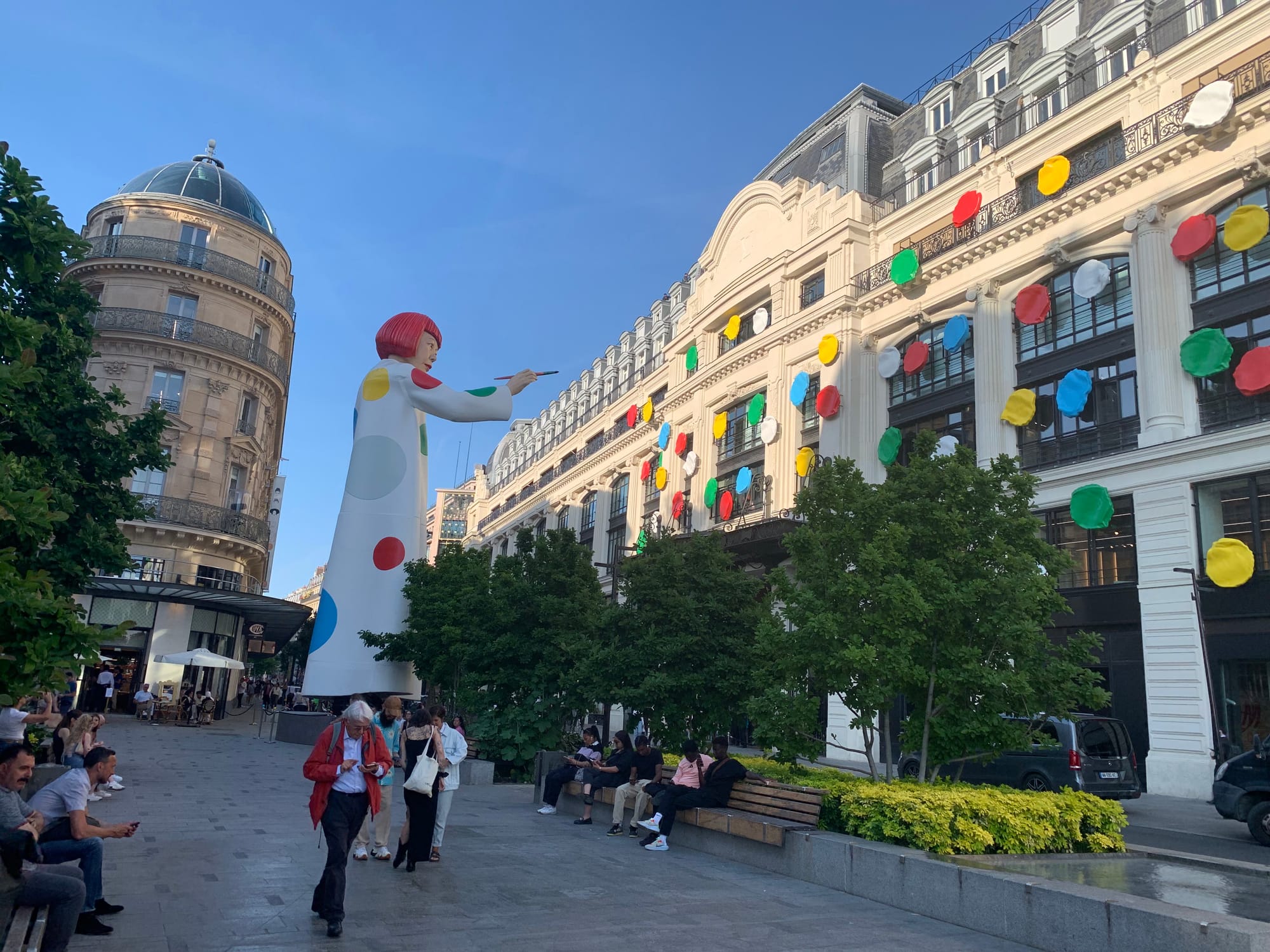
But what is left unsaid is that 1945 to Now is itself part of an attempt to “invent a better artist” — a version of Yayoi Kusama who used her art to aid in racial solidarity.
This “Kusama” does not exist. In a 2017 article for Vice News, I pointed out that in her autobiography Infinity Net, originally published in 2002, Kusama consistently wrote about Black people as primitive, hyper-sexualized beings. But the part that most confused me was a blank space on the page.
In her original Japanese edition, Kusama refers to the area in New York where she used to live transforming into a “slum,” with real estate prices “falling by $5 a day.” She attributes this to “black people shooting each other out front, and homeless people sleeping there.”
When the English translation of Infinity Net came out in 2011, this sentence was missing. It was not a mistranslation. The rest of the paragraph was intact; only the sentence about Black and unhoused people was deleted.
At the time, I was unsure what to make of this omission. However, after reading 1945 to Now, I’m starting to think that this was an early sign of a strategy to subtly sanitize Kusama for Western audiences, reinventing her so as to improve her marketability.