Why I Wanted to Meet Thaddeus Mosley
His work had everything to do with what it means to be an artist and member of a community. He was a model for us.

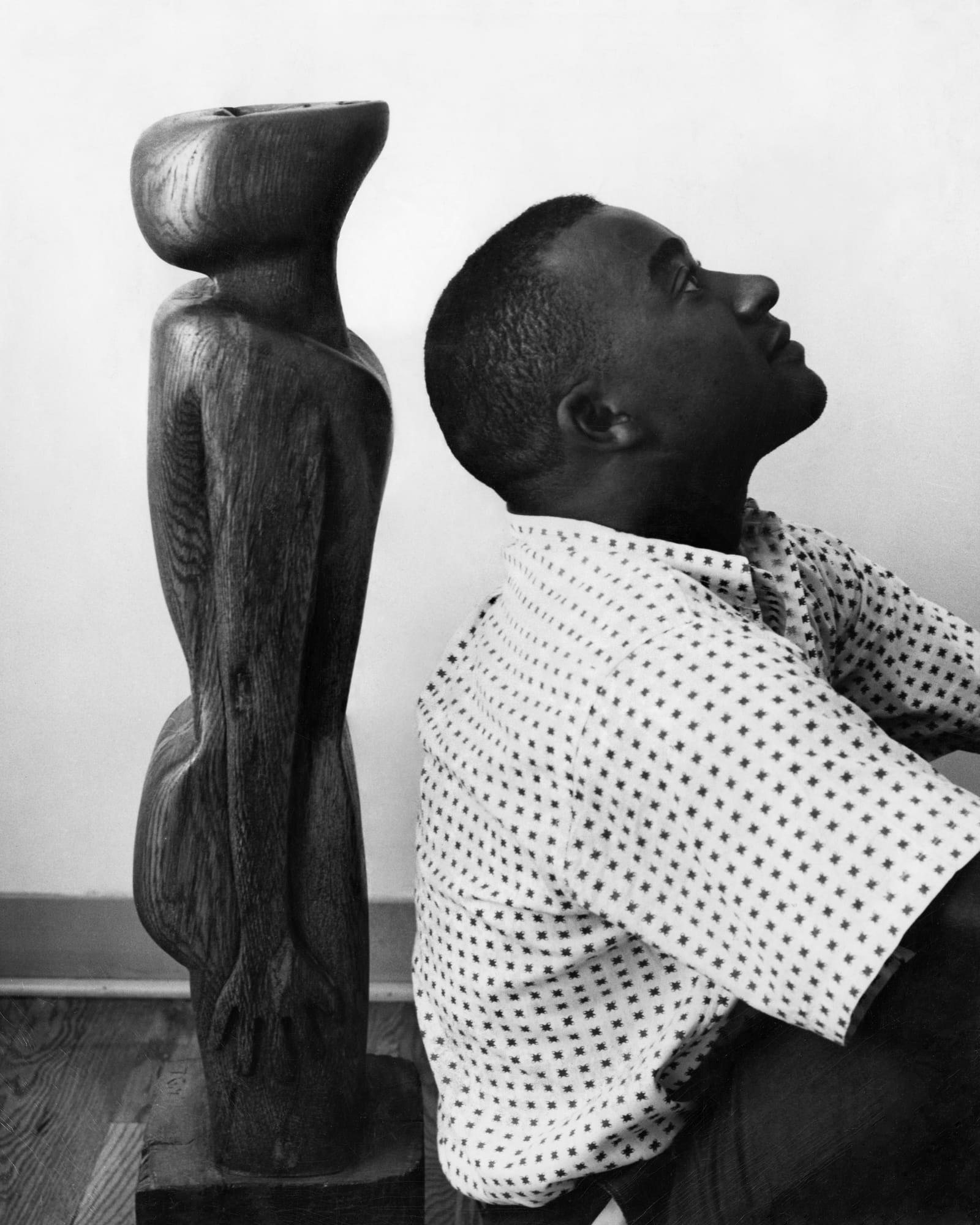
Thaddeus Mosley’s carved wood sculptures first came to New York in 2004 when the poet Nathaniel (“Nate”) Mackey curated the debut exhibition of his work at CUE. I went because I love Nate’s work both as poet and editor and am interested in anything he does. I had never heard of Mosley before and was not sure what I would see. His exhibition reminded me of something I had long known: There are many artists of color that the art world blithely ignores.
A year later, still thinking about Mosley’s sculptures, I decided to invite myself to his studio in Pittsburgh, even though I was not writing for any art magazine and I did not have the money to go there and back on a train, much less stay in a hotel. I did not think much past wanting to talk to Mosley.
I got his number from the poet Ed Roberson, who was, like Mosley, from Pittsburgh. After a few days and lots of hesitation, I called him up at around 9pm and got his voicemail. As he was in his 80s, I wondered if I had tried too late. A few hours later, around midnight, my phone rang. It was him. He told me that he had just gotten home after going to a club to hear some local jazz musicians. We talked for half an hour. By the end I knew Mosley was a special spirit.
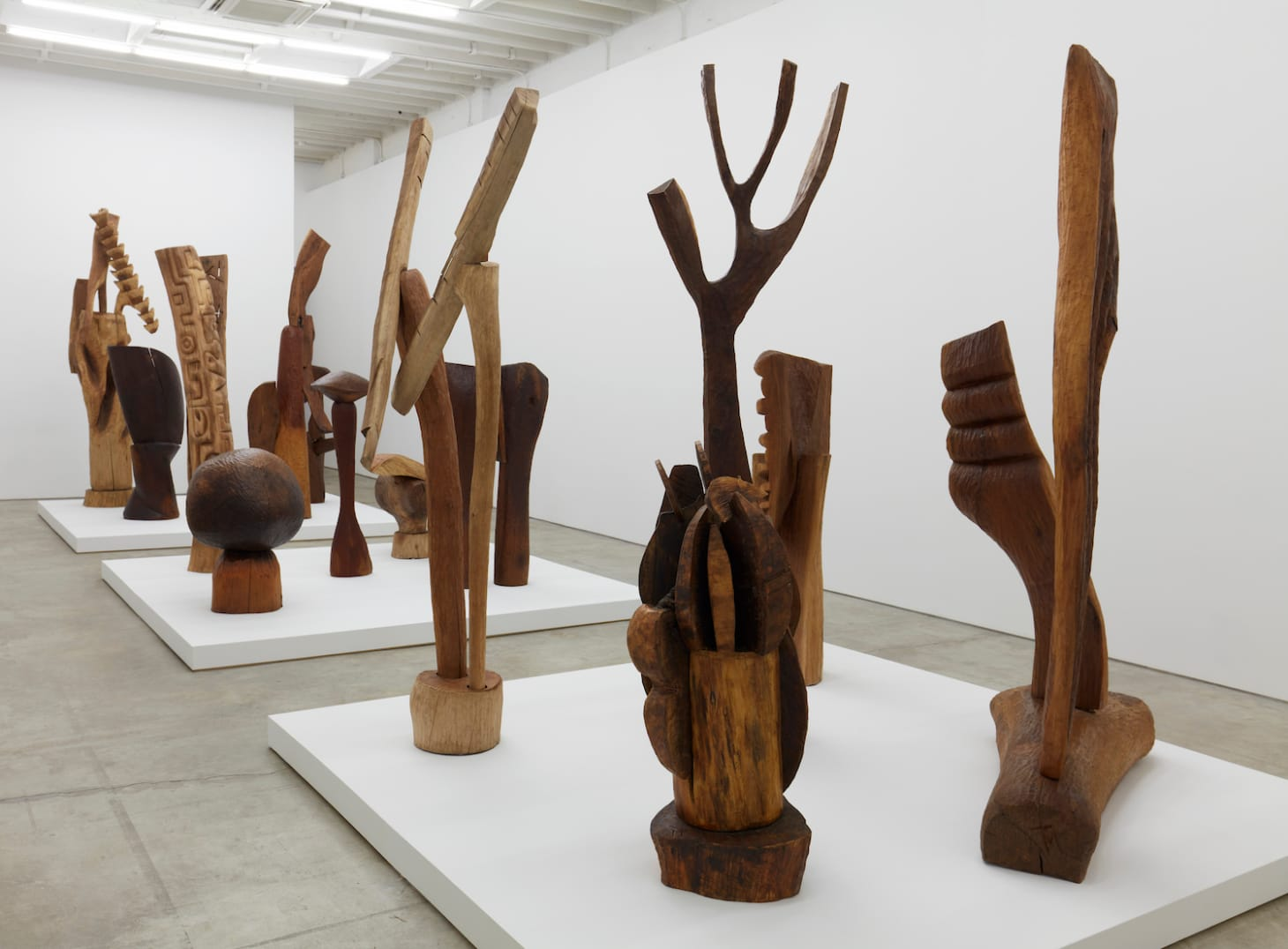
For years, driven only by his passion and curiosity, and with the support of a small group of close friends and family, the self-taught artist carved wooden sculptures out of logs he salvaged from the Pennsylvania forest on weekends, patiently transforming them into art during his spare time. Constructed from notched sections that he fitted and balanced together without nails, they often reached quite high.
Much has now been written about Mosley’s magnificent, tender, abstract sculptures, and how he transmuted his encounters with Constantin Brâncuși and Isamu Noguchi at the Carnegie Museum of Art into something all his own, but today that seems beside the point. Regarding him as an extension of modernist art and mid-20th-century innovators strikes me as superfluous, the stuff of museums (or what Robert Smithson called “mausoleums”).
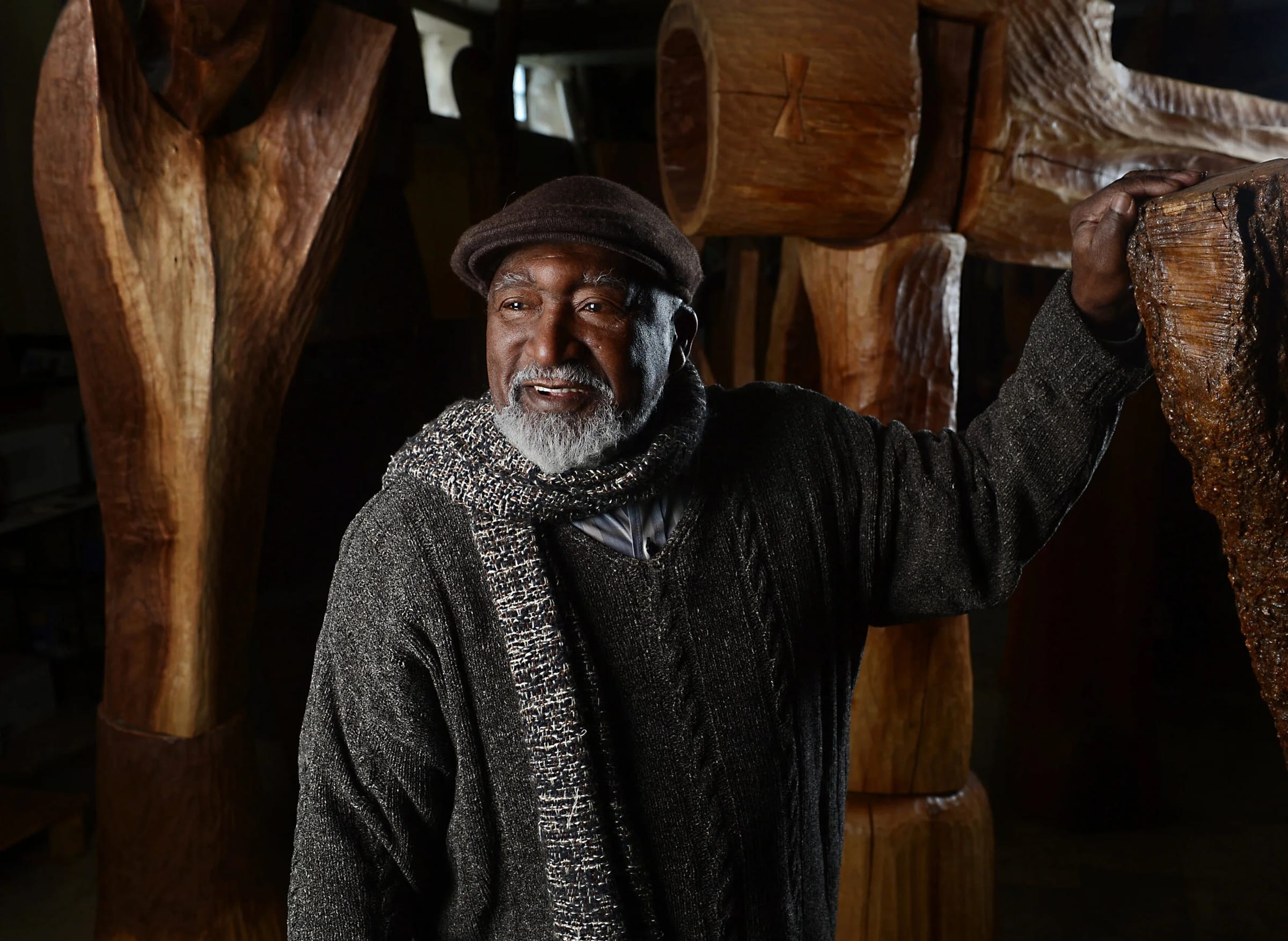
Thinking about his work, which stood without a pedestal, self-supporting, rising and reaching, each section joined seamlessly to another, I realized his art came from improvisation, and what the wood told him to do. Inspired by jazz (particularly John Coltrane and Tommy Turrentine, who was a friend) as much as by Modernist art and the visual culture of Central and West Africa and the American South, he played with the unique qualities of walnut, cedar, and other woods until something unexpected arrived.
As I wrote this piece, I thought about what Charles Olson wrote in his poem, “Maximus to Gloucester: Letter 2”: "people don’t change. They only stand more revealed.” As much as Olson’s line suggests a useful way to see Mosley’s work, now that there will be no more of it, I feel like it does not capture something that has been nagging me for days. Instead, I keep going back to what Ed, who was more than a decade younger than Mosley, told me at a literary conference in Louisville, Kentucky, a few weeks ago, when he alerted me that Thaddeus was in hospice. At the end of the conversation, Ed, speaking for those who revered him, said: “Mosley was a model for us.”
You only have to look at Mosley’s sculptures and the process by which he made each one to understand what Ed meant. His work has little to do with Modernism in a conventional sense and everything to do with the circumstances of each making and what it means to be an artist and member of a community. This is why I wanted to go to his studio and sit with him.