Yayoi Kusama, Artist of Infinities, Dies at 97
She channeled her mental health struggles into kaleidoscopic artworks that enamored the world, rendering her an icon closer to a spiritual leader than a contemporary artist.

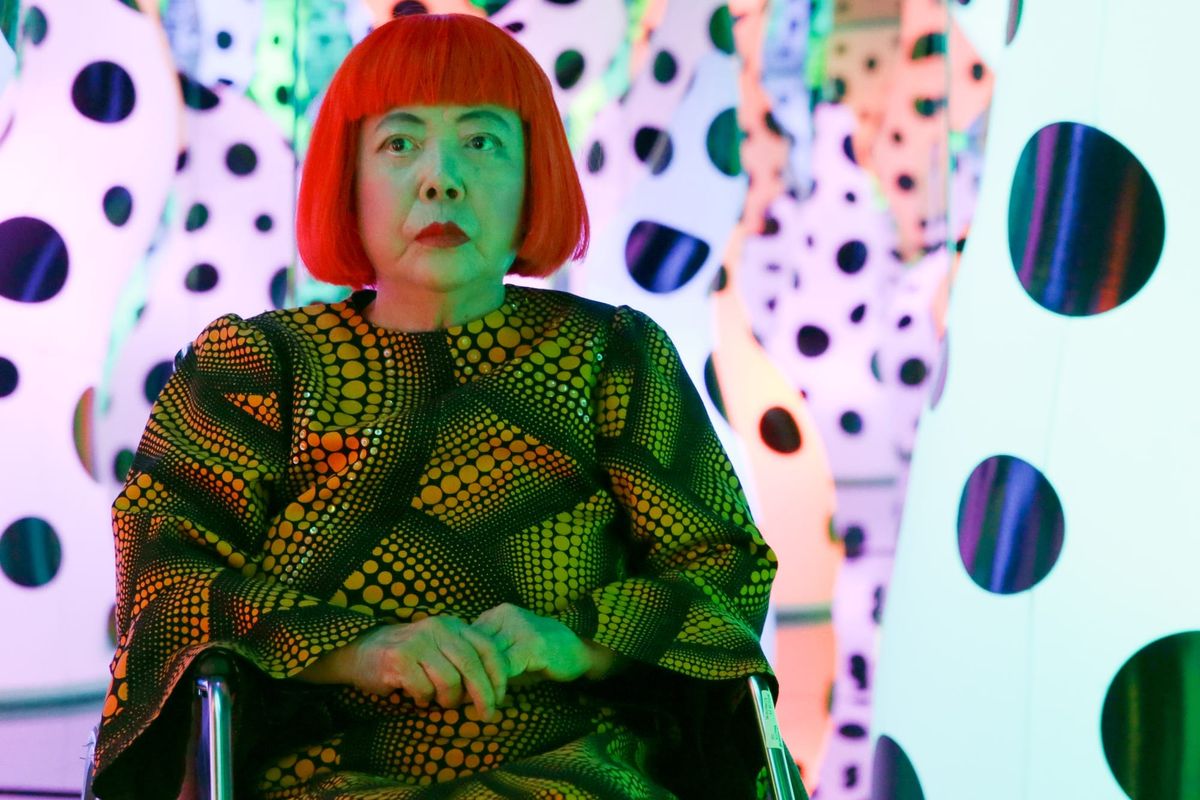
Artist Yayoi Kusama, who channeled psychological phenomena into impossibly kaleidoscopic artworks that enamored millions around the world, died in a hospital in Tokyo on August 14 at the age of 97. The news of her death was announced by her studio and David Zwirner Gallery today, August 26.
The labor-intensive quality of her works, combined with a Borgesian fascination with mirrors and the infinite, an openness about mental health struggles, and her ever-present red bob, rendered her an icon closer to a rock star or a spiritual leader than a contemporary artist.
“She continued to paint until her final days, never setting aside her brush, and continued [her] exploration of forever love and eternal soul,” the studio's statement said. “We will carry forward Kusama’s wishes and, through art, continue to bring hope and strength for the future to people around the world.”
Kusama was born in 1929 in Matsumoto, Japan, and began painting at an early age as a way to find relief from persistent hallucinations and the distress caused by emotional and physical abuse at home. Despite her family's disapproval, the young artist continued to create works with compulsive fervor and, after high school, enrolled in the Kyoto School of Arts and Crafts, where she studied the traditional Nihonga (日本画 ) style of Japanese painting. But she ultimately found it a suffocating and restrictive environment, and after exchanging impromptu letters with the American artist Georgia O’Keeffe, Kusama moved to New York City in 1958.
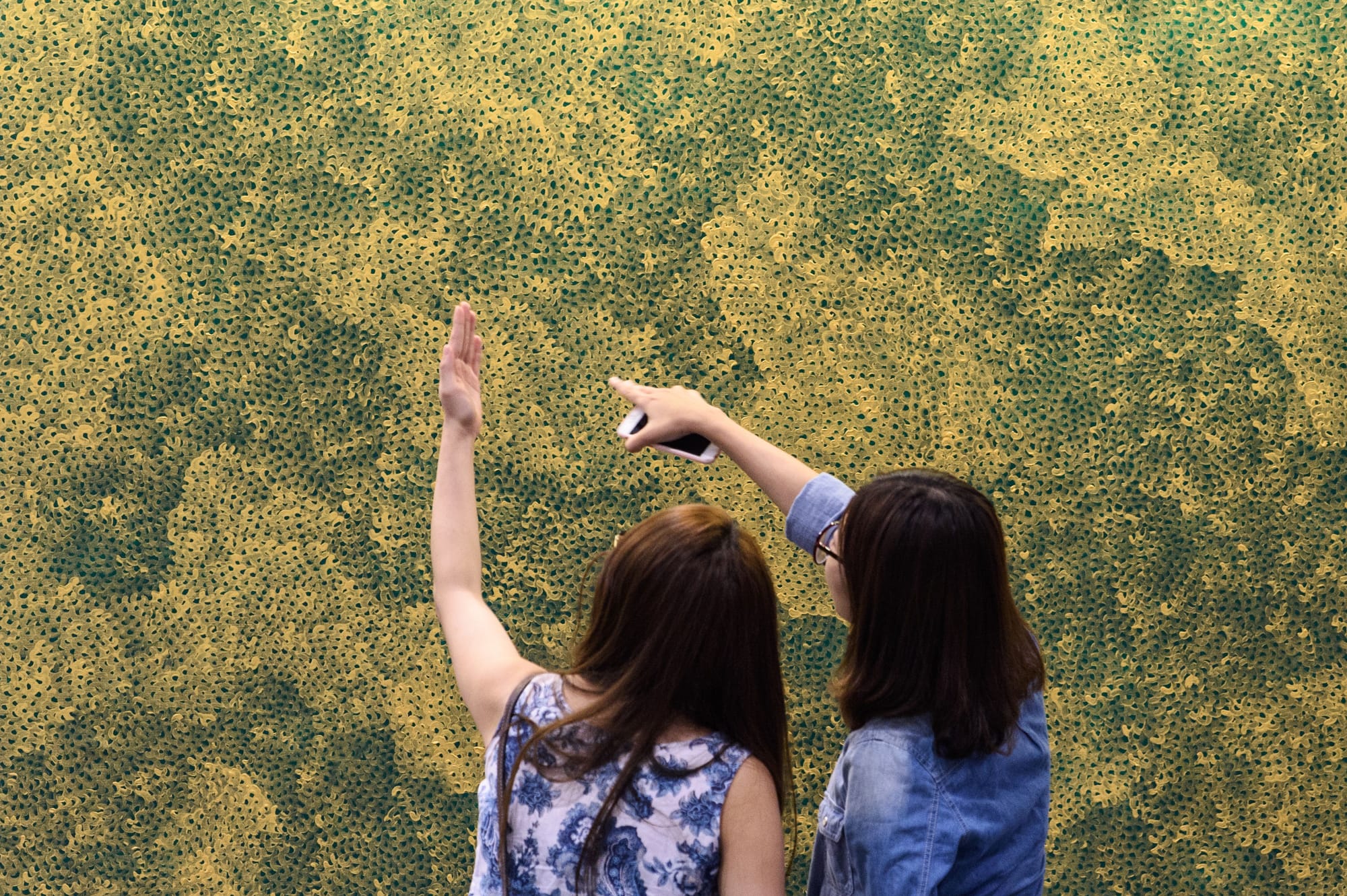
The city was the perfect incubator for Kusama to forge her avant-garde artistic identity, staging happenings and body art performances. She enrolled in the Art Students League of New York, and later shared a studio building with sculptors Eva Hesse and Donald Judd. It was during this period that Kusama debuted iconic, long-running series such as her famed Infinity Nets paintings, first exhibited at the artist-run Brata Gallery in 1959. The otherworldly canvases, swathed in intricate netting or dot patterns at once delicate and hypnotic, represented her quest to “predict and measure the infinity of the unbounded universe, from my own position in it.”
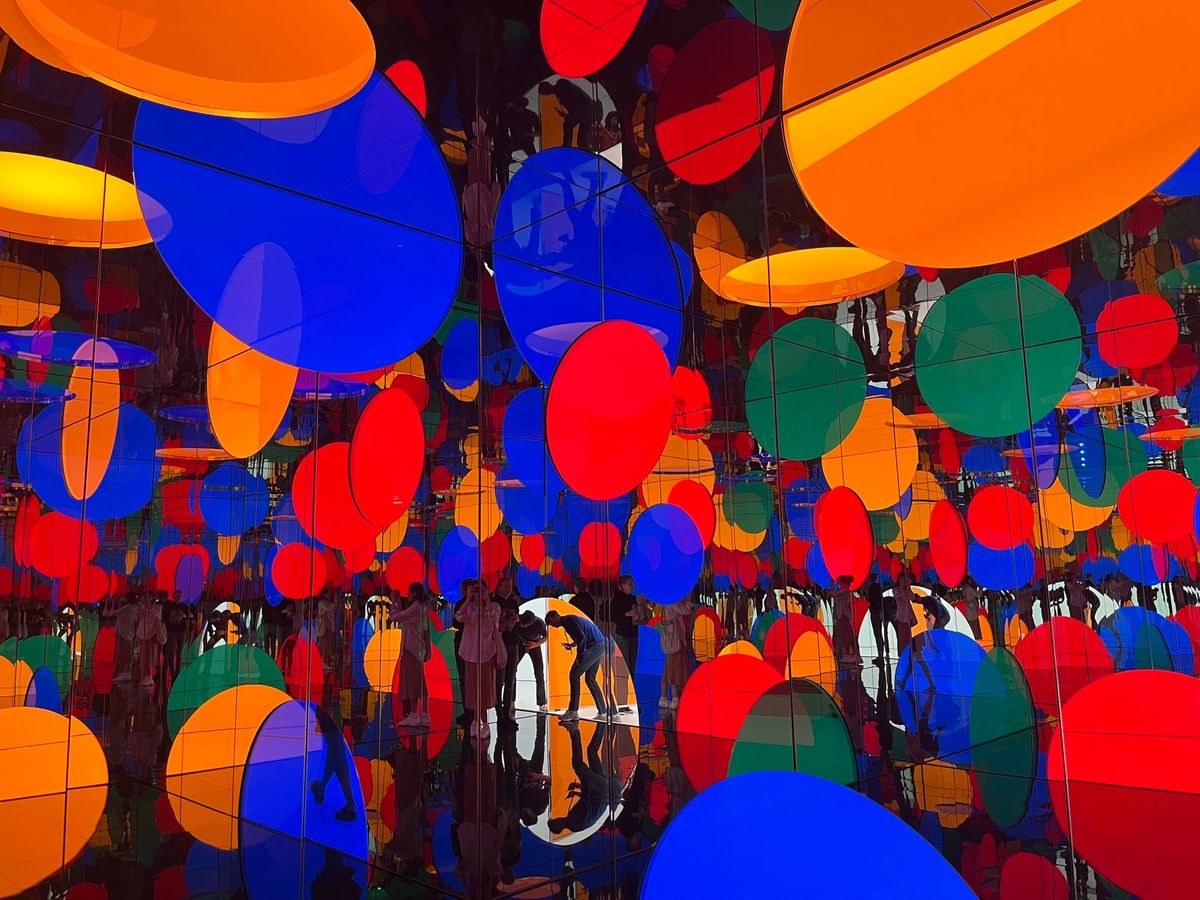
In addition to her Accumulation sculptures, consisting of furniture and other domestic objects covered in stuffed fabric phalluses, the 1960s saw a milestone moment for Kusama with her first-ever Infinity Room, included in an exhibition at the Castellane Gallery. Pioneering the immersive experiences that would rise to viral popularity decades later, the entrancing installations plunge viewers into an illusion of endless space achieved by chambers lined with lights, mirrors, or repeating shapes. These would become among her most beloved, recognized, and sought-after works, with international stagings of Infinity Rooms perpetually drawing thousands of visitors lining up street blocks for hours to spend mere minutes in the dizzying, hyper-Instagrammable environments.
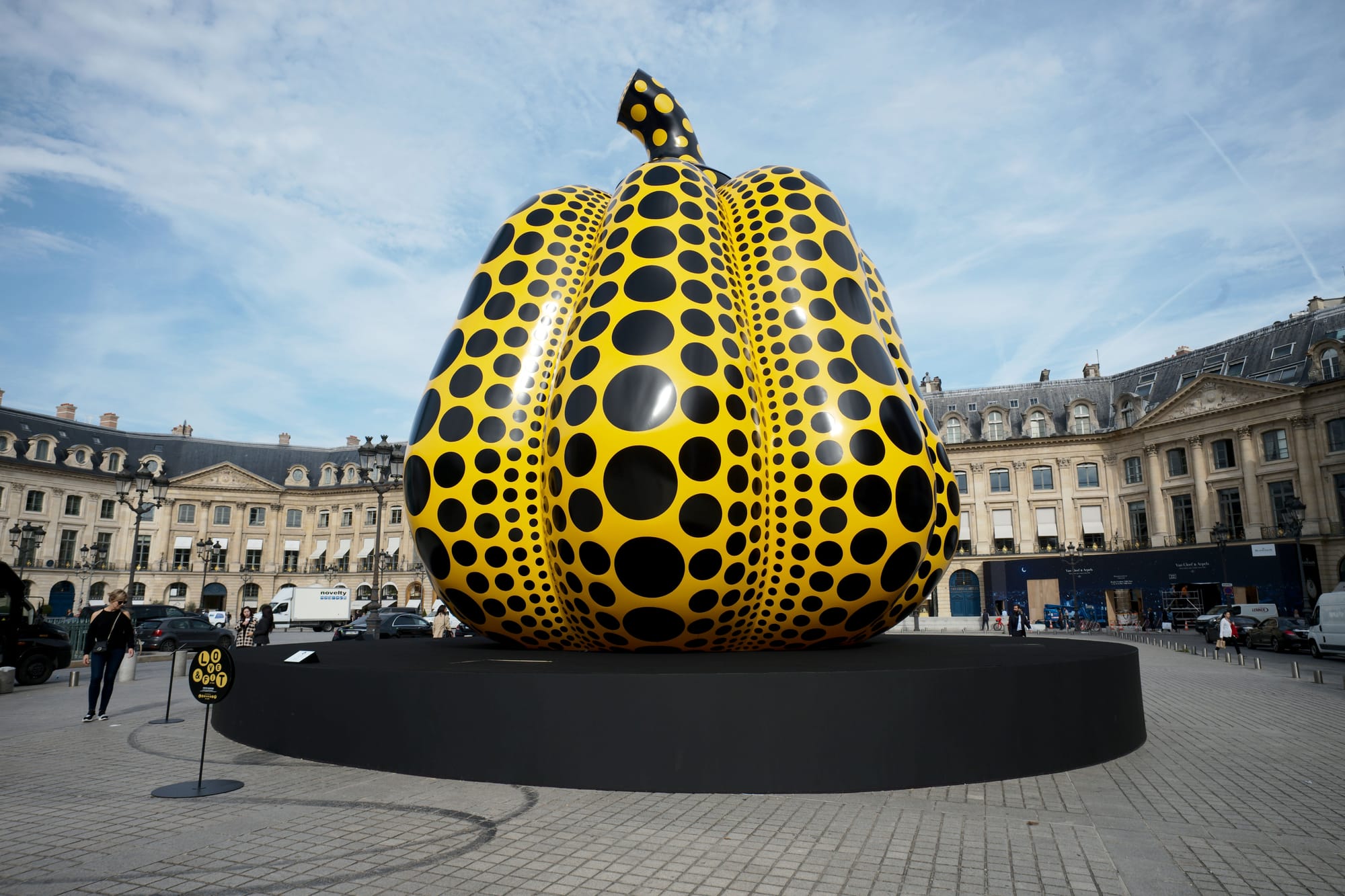
She resided in New York until 1973, when she returned to Japan. A few years later, Kusama voluntarily checked herself into a mental health facility in Tokyo where she remained a lifelong resident. Far from slowing down her career, she continued commuting to her studio every day and maintained an active practice, eventually rising to fame in a meteoric ascent that placed her monumental dotted pumpkins, psychedelic flower sculptures, and inhabitable installations among the most coveted and identifiable artworks in the world.
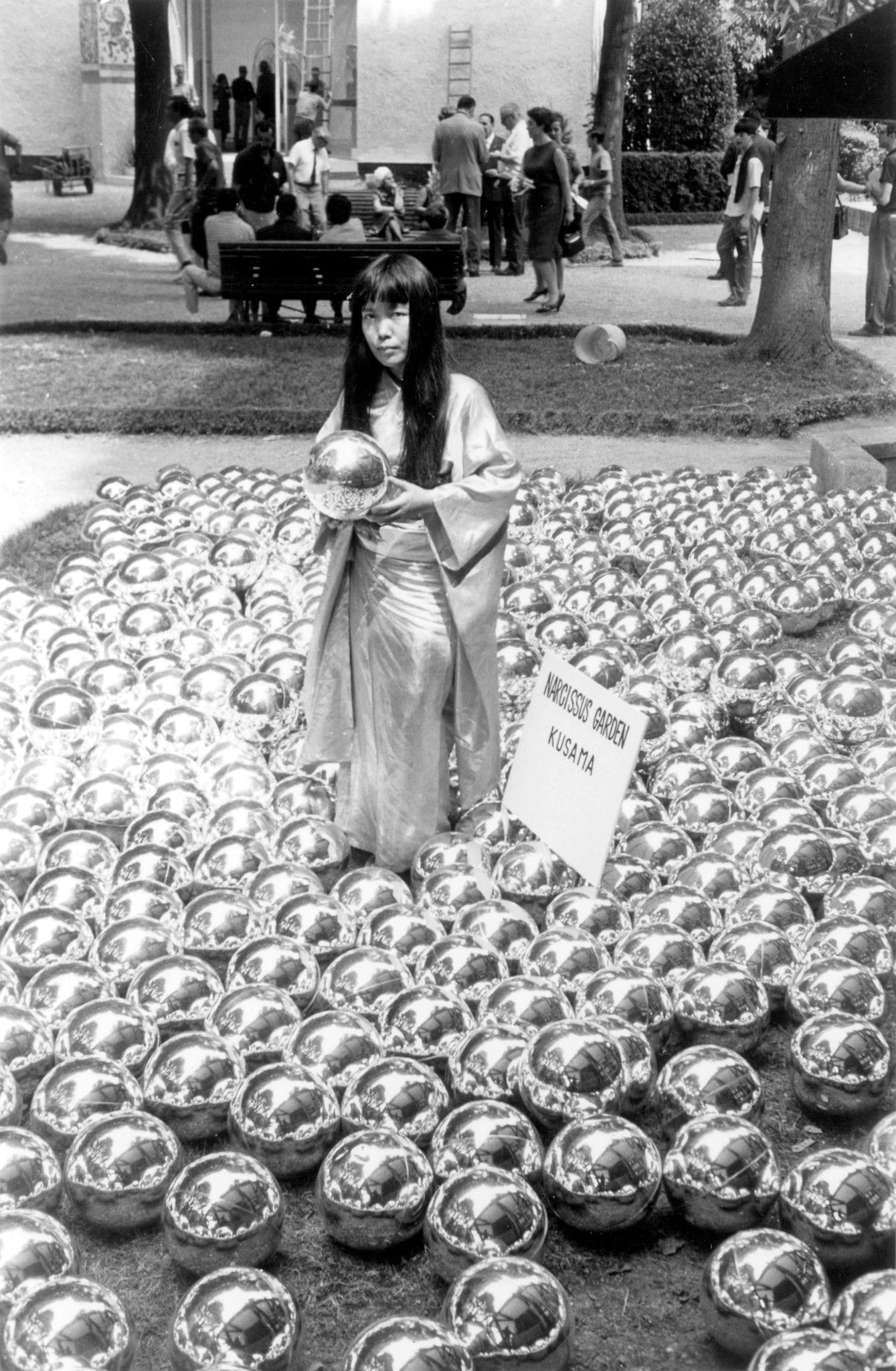
Kusama officially represented Japan at the Venice Biennale in 1993 — almost 30 years after being expelled from the premises for selling hundreds of mirrored orbs to passersby in a historic 1966 guerrilla installation. That irreverent streak was a constant through her oeuvre. During the United States's deadly invasion of Vietnam, she staged a series of anti-war “naked protests” including a memorable demonstration outside the New York Stock Exchange in 1968. The following year, she gathered a group of performers, nude except for painted polka dots, in the fountain of the sculpture garden at the Museum of Modern Art for a “Grand Orgy to Awaken the Dead at MoMA.” The unauthorized actions distilled the artist's radical pursuit of the body as a site of protest, sexual liberation, and political dissent.
But Kusama also faced criticism for what some viewed as her inconsistent adherence to feminist values and, more recently, racist comments the artist made in her 2002 autobiography. On the eve of the opening of her exhibition Infinite Love at the San Francisco Museum of Modern Art in 2023, the artist publicly apologized and expressed “deep regret” for her “hurtful and offensive” characterizations of Black people.
Since her first solo show in Japan in 1952, Kusama has been the subject of countless exhibitions around the globe. Most recently, the Museum Ludwig in Cologne held a career retrospective that was the institution's most successful in its history, as revealed by David Zwirner, the artist's longtime dealer, in a statement on Kusama's passing.
Her works left a deep and lasting mark on key art historical movements, from 20th-century Minimalism and Pop Art to today's wave of experiential art. But it is without a doubt her transcendental vision of humanity, and her relentless pursuit of a meaningful existence, that will continue to stir hearts and minds well into the infinite future that she always imagined.
“I’ve sought for truth of art with an ambition and fought like hell all my life to accomplish my purpose as a human being,” she said in an interview with the Tate in 2015. “Even after I finish my life, I’d like to keep telling posterity about my way of art. I want younger people, or everyone, to talk about my enthusiasm reaching to space and also, my art as a token of my life even after my death.”
“For that reason, I worked all this morning,” Kusama continued. “I’d like to keep creating art until the day I die.”