Americans Are Losing the Art of Signing Their Names
To some of us, the doodle in the corner of a canvas is often as interesting as the painting itself.

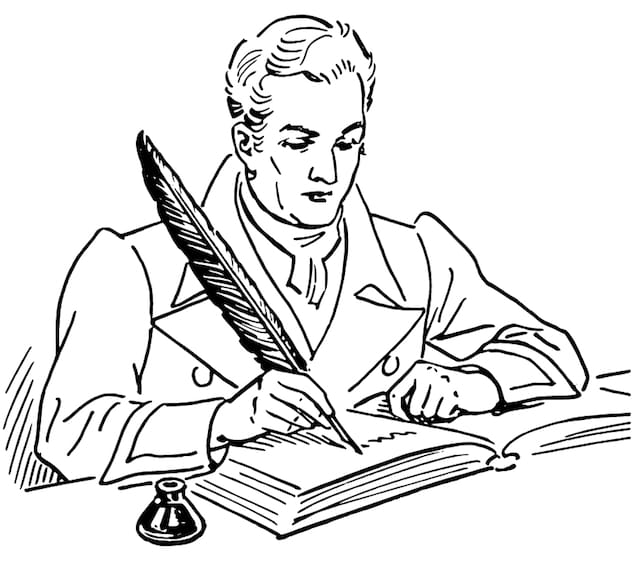
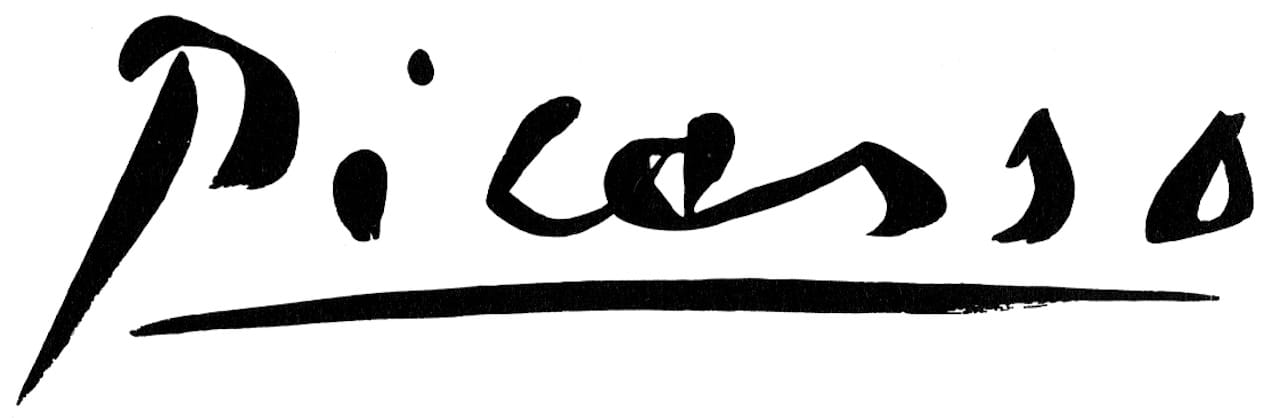
To some of us, the doodle in the corner of a canvas is often as interesting as the painting itself. Consider Albrecht Dürer’s monographic signature, Picasso’s calligraphic one, or even Banksy’s primordial scrawl. Plenty of non-artists have had memorable autographs, too — Mozart and Jane Austen, to name a couple. Writing one’s name has long been a kind of art that anyone can practice.
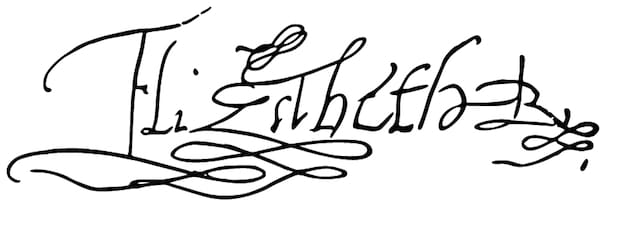
But a recent survey suggests it’s being lost. As the New York Daily News reported, a poll of 1,000 US adults commissioned by RightSignature and conducted by OnePoll found that few take the time to leave their mark. While 61% of responders sign paper at least once a week or more, nearly half do so in a hurry and a full 30% just scribble something fast to get it done. It seems that in our rushed, digital age, the curlicues immortalized by Queen Elizabeth I have become unthinkable.
That’s sad news for those of us who still find pleasure in autographs. I’ve always enjoyed reading other people’s signature’s, as well as signing my own; more than likely, I’m that annoying person in line ahead of you who takes as much care with a credit card receipt as with, say, a marriage license. But the survey suggests that fewer and fewer people share my conviction that signatures are sacred.
Among responders my own age (between 18 and 34 years old), 30% said they have a “flexible” signature, with 64% saying it’s because of computer use. A full 81% of people admitted to faking someone’s signature three or more times a year, and a quarter said they wouldn’t be able to tell if someone had forged their own.
The demise of the signature seems connected to that of penmanship: of respondents aged 18–24, 45% were never taught penmanship in school, compared to just 24% over age 55 who never learned it. And when American educators developed the Common Core State Standards — adopted by 45 states and the District of Colombia — they decided to leave it out altogether. “Cursive should be allowed to die,” Morgan Polikoff wrote in the New York Times.
This seems to be the way we’re going, in our increasingly sterile, paperless world. It may sound old-fashioned, but to me the death of the signature — a non-digital expression and record of self — feels like a terrible loss for society. Signatures aren’t merely written names; they’re intimate assertions of existence, of our commitment to living honestly in the real world. Luckily, anyone can quietly protest, even just by taking a second longer at the cash register to finish writing. For my part, I’ll be carefully spelling out my name to the last.