The LA County Fair Unearths Long-Buried Stories of Route 66
Alt 66 gives insight into the lives of those who built, traveled, and lived along the interstate — a diverse blend of race and class, all dreaming of the West.

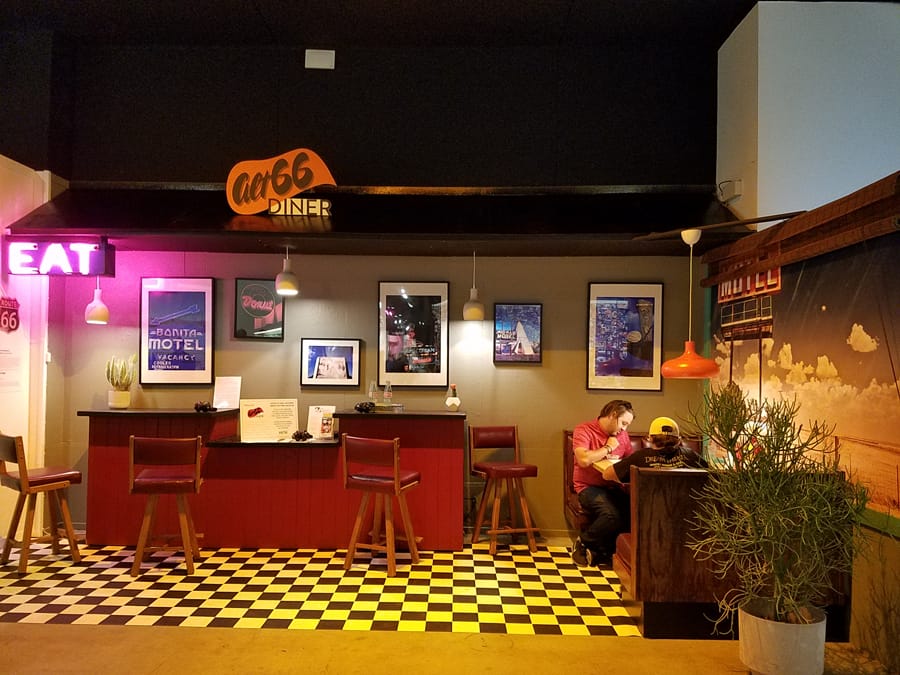
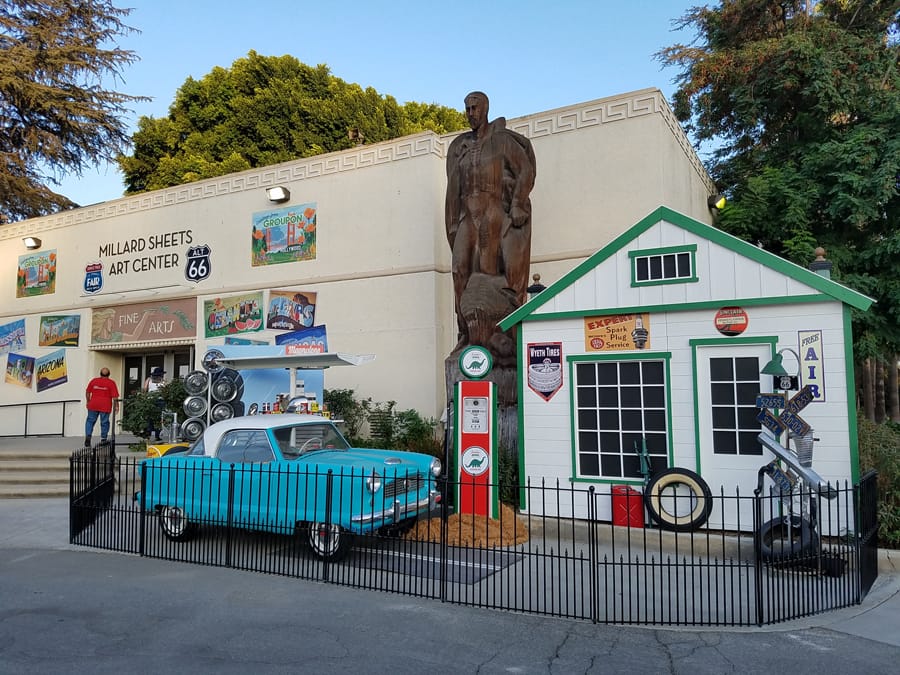
LOS ANGELES — The Alt 66 Diner in the Millard Sheets Art Center, located at the Fairplex currently hosting the LA County Fair, welcomes guests with a familiar setting: an old-school roadside diner with a neon sign shining “EAT,” glass bottles of Coca-Cola, and a colorful, Googie-style menu. But this is the last of wholesome, all-American imagery guests see before stepping into Alt 66, an immersive exhibition that explicitly focuses on less popular narratives told along the Mother Road. The artworks give insight into the lives of those who built, traveled, and lived along the interstate — a diverse blend of race and class, all dreaming of the West.
For the first time in its 81-year history, the Millard Sheets Art Center exhibition is centered around a theme. When Alt 66 curator Thomas Canavan learned that the fair would be paying tribute to Route 66, he challenged himself to find a new way of telling the story of this iconic interstate. “We saw it as an opportunity to create new images, tell stories from different perspectives, and create new iconography or revisions of things we’re so used to seeing,” Canavan told me while sitting in the plush two-seater booth at the Alt 66 Diner. For instance, instead of the iconic red convertible, the exhibition replaces it with Phoebe Beasley’s “From the Garden of the Buick to the Shores of C.A.,” a series of mixed-media paintings that includes the Buick 225, one of the most coveted cars among African Americans in the 1950s and ’60s.
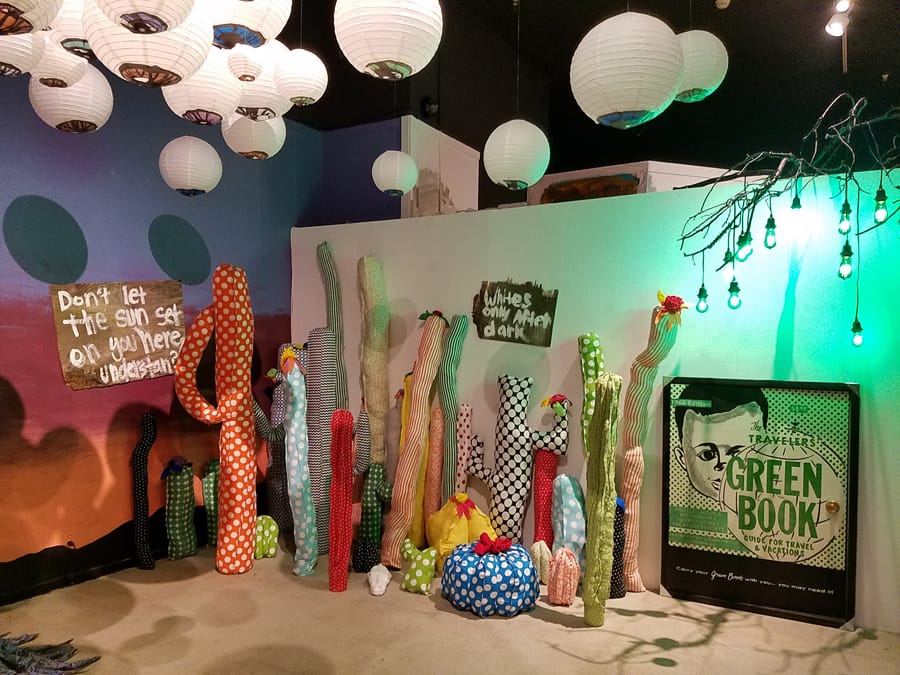
Revisiting the history of Route 66 meant unearthing long-buried, difficult stories that are embedded into the Mother Road’s history, especially those belonging to Black, Latinx, and queer voices. One artifact that plays a prominent role in two installations is the “Green Book,” Victor Hugo Green’s annual motorist guidebook for African Americans traveling across the country published between 1936 and 1966. The book became an invaluable source to those who were often refused service or felt threatened on the road. “That’s the best example of a really significant experience for travelers along Route 66 that no one ever talks about,” Canavan said.
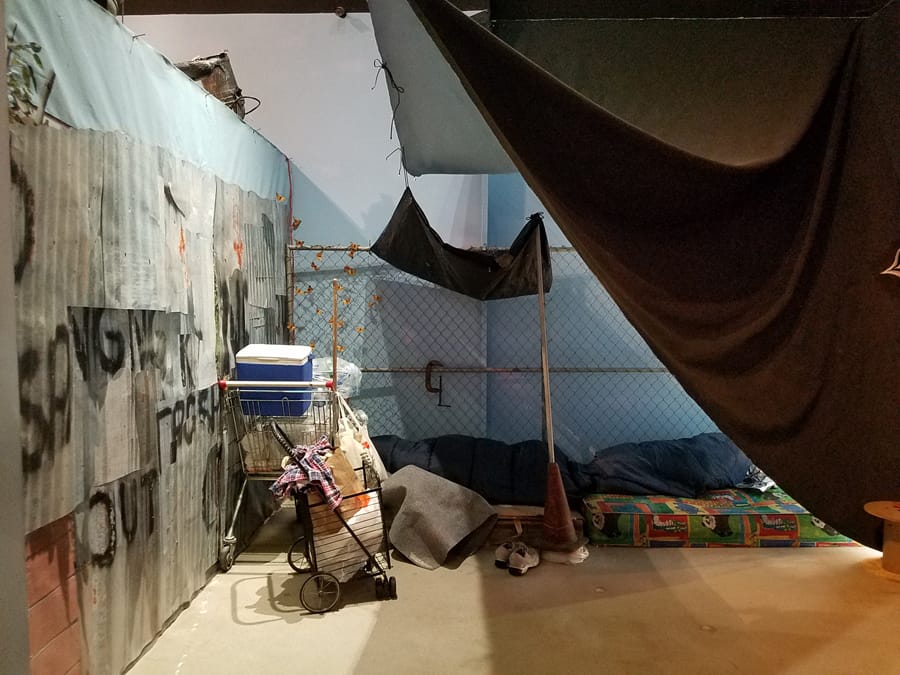
Telling these stories, however, means including some uncomfortable and jarring imagery. Erin Elizabeth Adam dominates the back of the gallery with “Under the Same Sky,” a sprawling to-scale replica of the type of homeless encampment displaced Angelinos currently inhabit on the curbside of what was once the most hopeful road in America. Just a few yards away are a cluster of rotting trees with nooses dangling from their branches sewn by Julia Bui and Lethia Cobbs, which illuminate the potential dangers black travelers faced when traveling alone during the Jim Crow era. “At no point did we censor anything,” Canavan said.
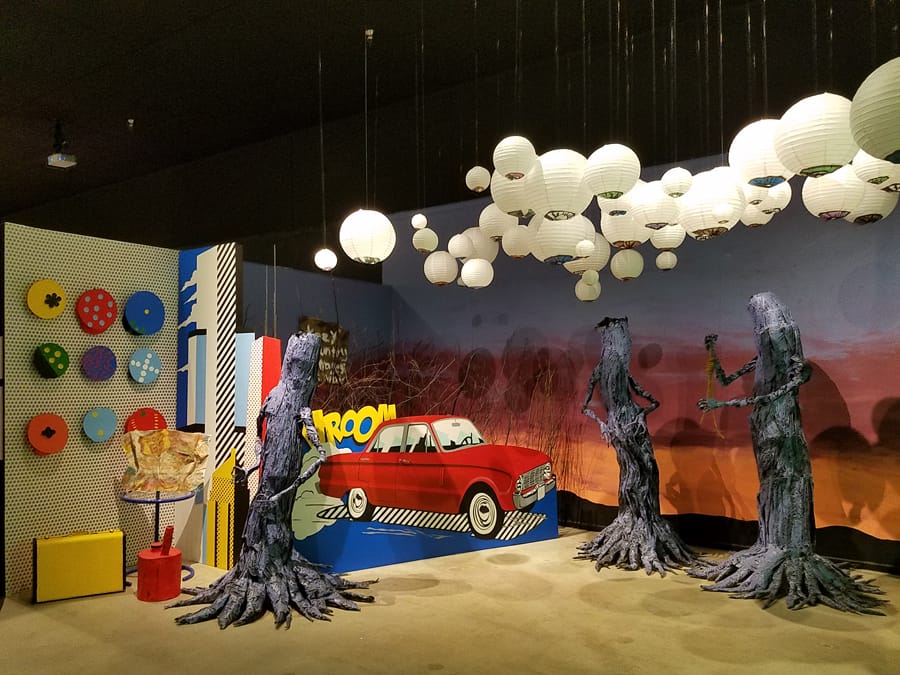
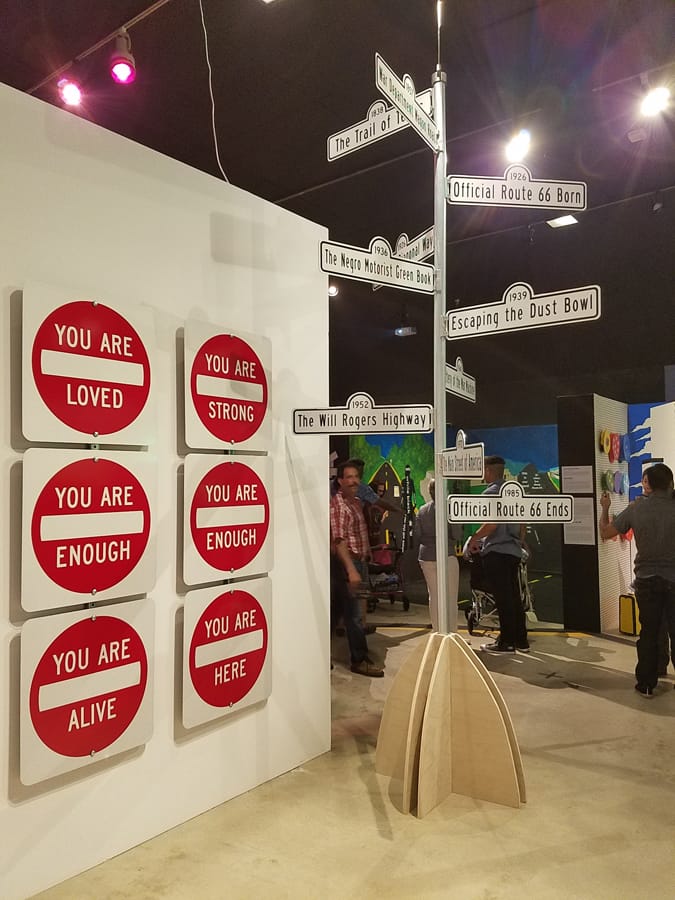
Though, to a certain extent, the annual fair exhibition seems to need some populist appeal, as Canavan does juxtapose some upbeat artworks alongside the difficult subject matter. One notable example is Scott Froschauer — who took first place in the juried exhibition — whose aspirational highway signs carry messages like “you are loved” overlaid onto the template of a “Do Not Enter” road sign. But Froschauer also takes an opportunity to dig deeper into the Alt 66 theme. Part of his installation includes a new work, “The Mother Road,” a wayfinding sign that points towards many glossed-over parts of history that geographically overlap with Route 66, like the Trail of Tears, the path thousands of Native Americans trekked when the Jeffersonian government forced them to relocate from their ancestral homes to reservations; the artery of the war machine the US Military uses to transport weapons; and the route people took to escape the Dust Bowl, a devastating drought that destroyed homesteads, plunging farmers and ranchers further into the Great Depression.
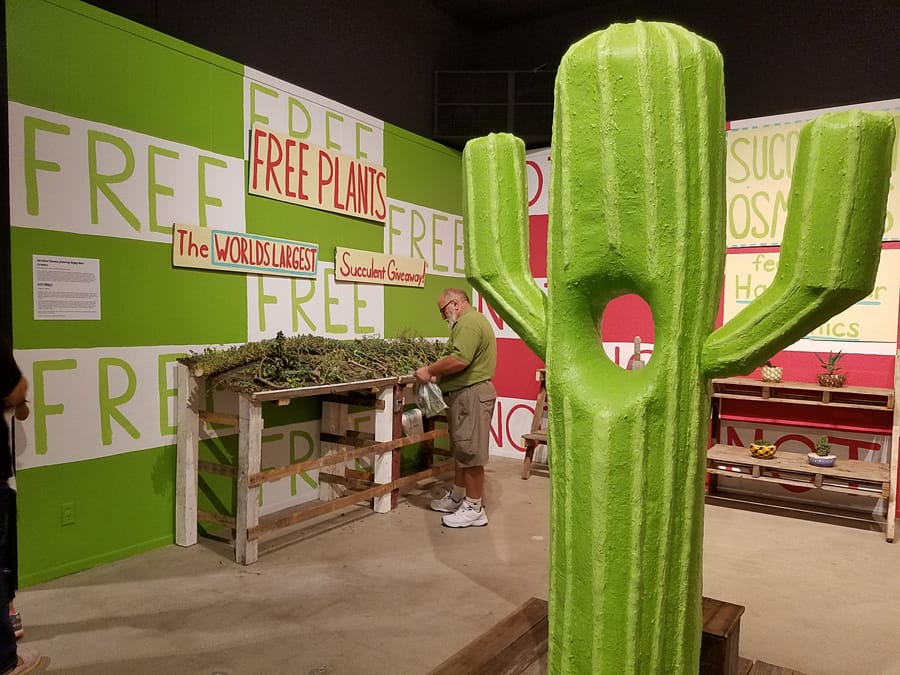
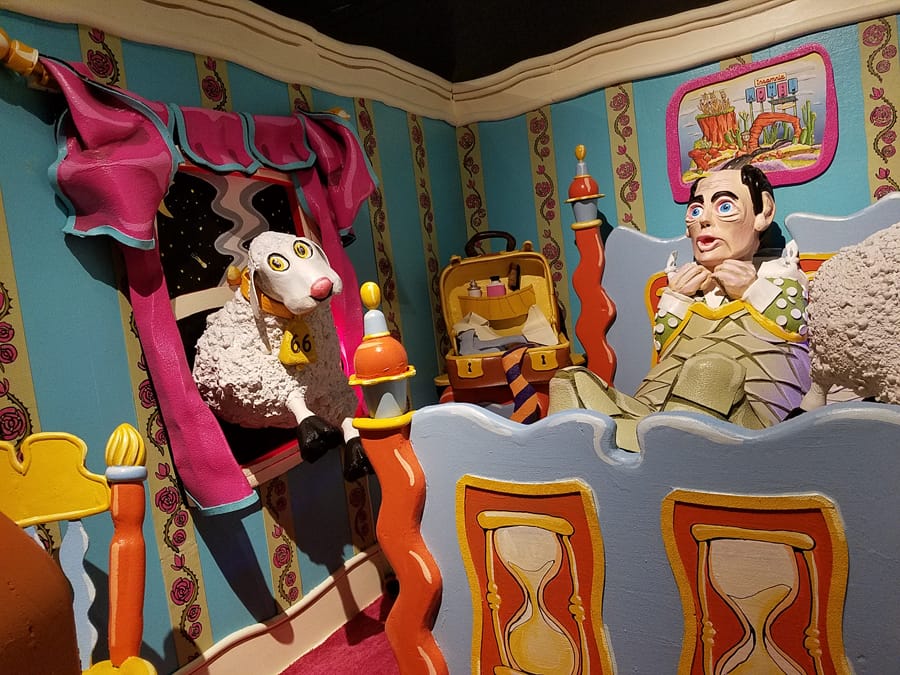
There are also whimsical insights into Route 66’s history, like Seth Pringle’s “Succulent Osmosis featuring Happy Hour Ceramics,” a free succulent garden modeled after roadside fruit stands, complete with a papier mâché saguaro cactus cutout that makes the perfect tourist trap photo. There’s also Marcus Pollitz’s “Insomnia Motel on Route 66,” where a plastic, deranged wayward traveler counts giant sculptural sheep in a bedroom that could blend into the set of Pee-wee’s Playhouse.
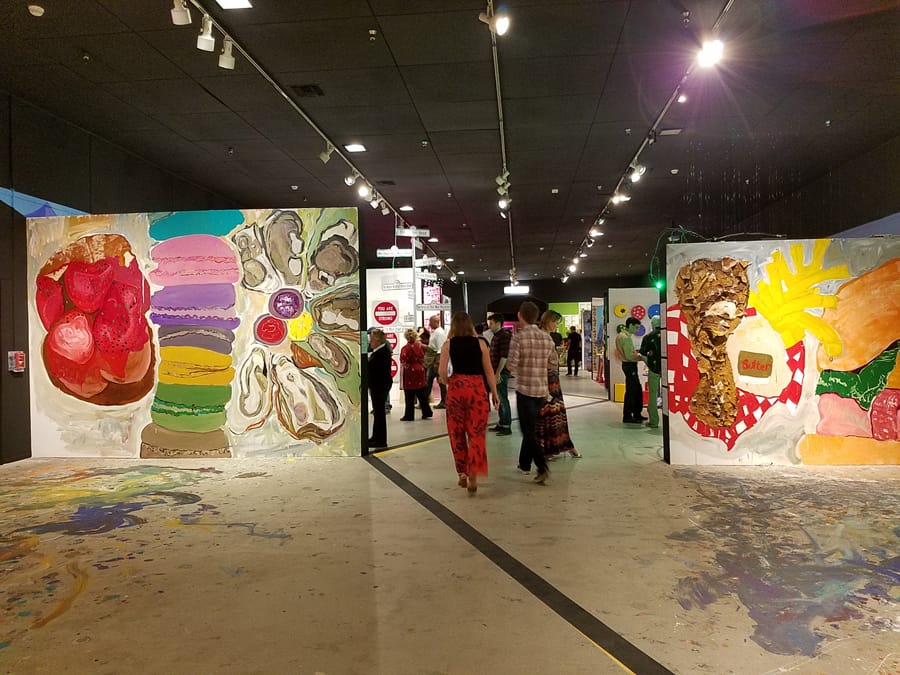
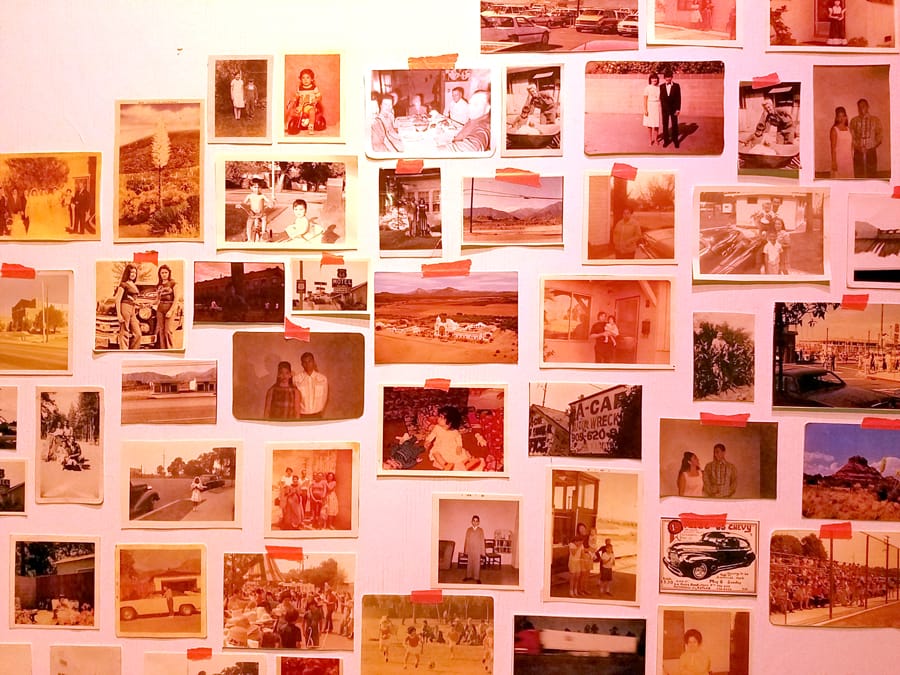
As people walked through the fair, they posed for cheerful photos with Tania Alvarez’s mural of milkshakes and burgers, while also taking the time to take in the more serious works, pausing to study the sepia photograph of a sign that reads, “we serve whites only, no Spanish or Mexicans,” in Fiona Baler and Margo Gutierrez’s archival work, “La Ruta Madre.” With Alt 66, Canavan hopes he’s begun to make fair goers see slices of Americana a little differently. “It would be great if people, when they’re reintroduced to aspects of our history, that they remember there are other layers to those parts of that history because of what they saw here.”
Alt66 continues at the Los Angeles County Fair (Fairplex, 1101 W McKinley Ave, Pomona, CA) through September 23. Open Wednesday–Sunday; hours vary.