A Persian Garden Blooms on Governors Island
Bahar Behbahani convened artists and cultural practitioners for a four-hour event, blending performance and dialogue with rest and community.

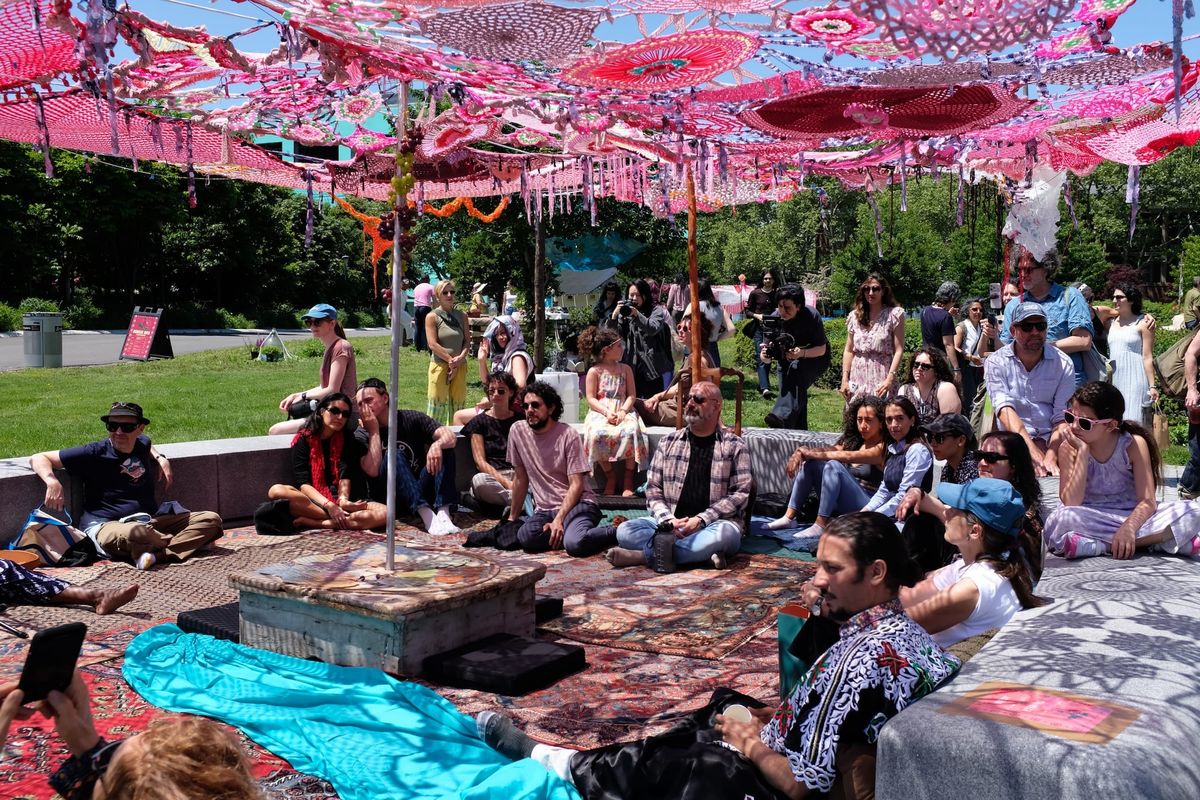
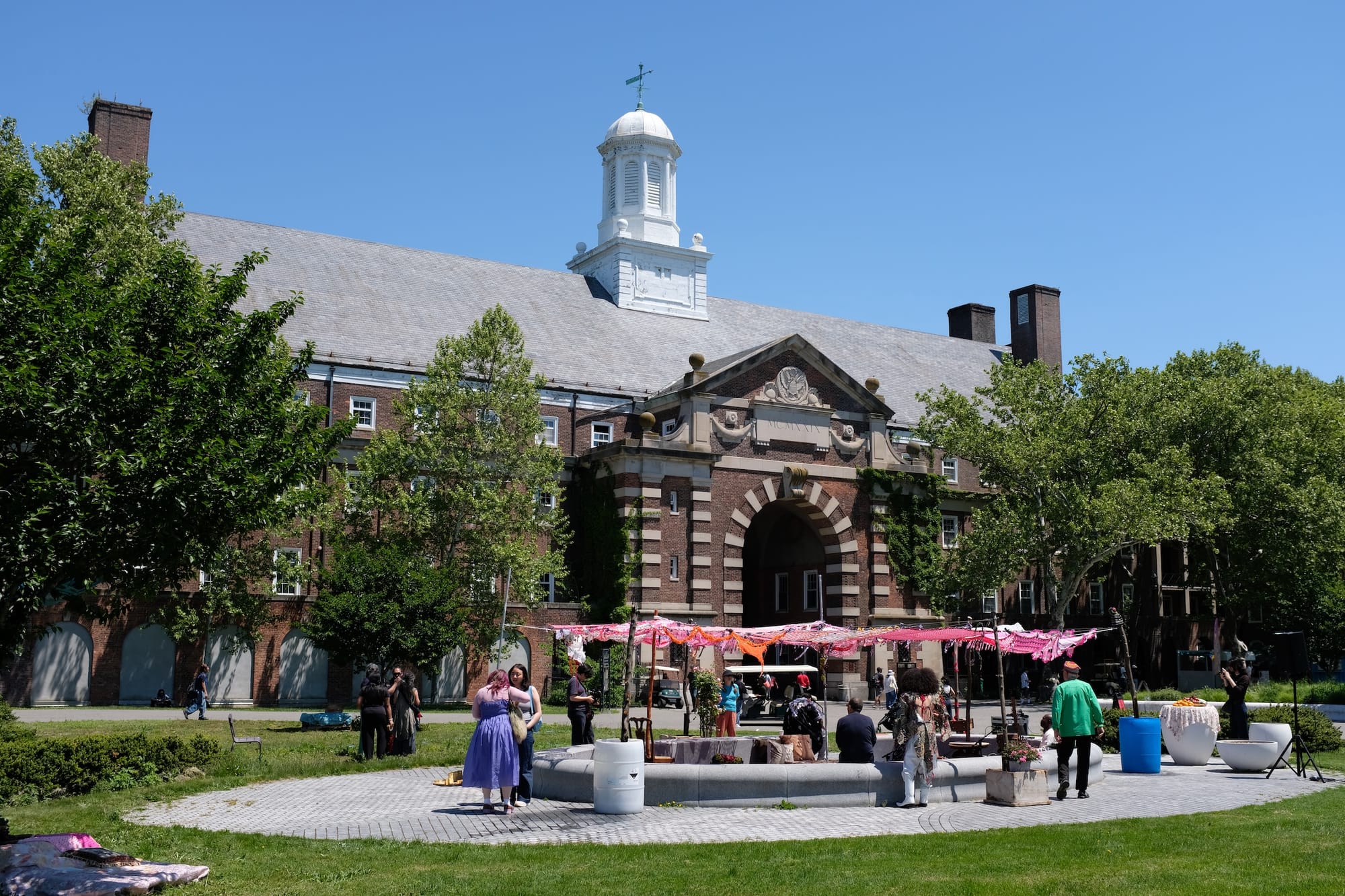
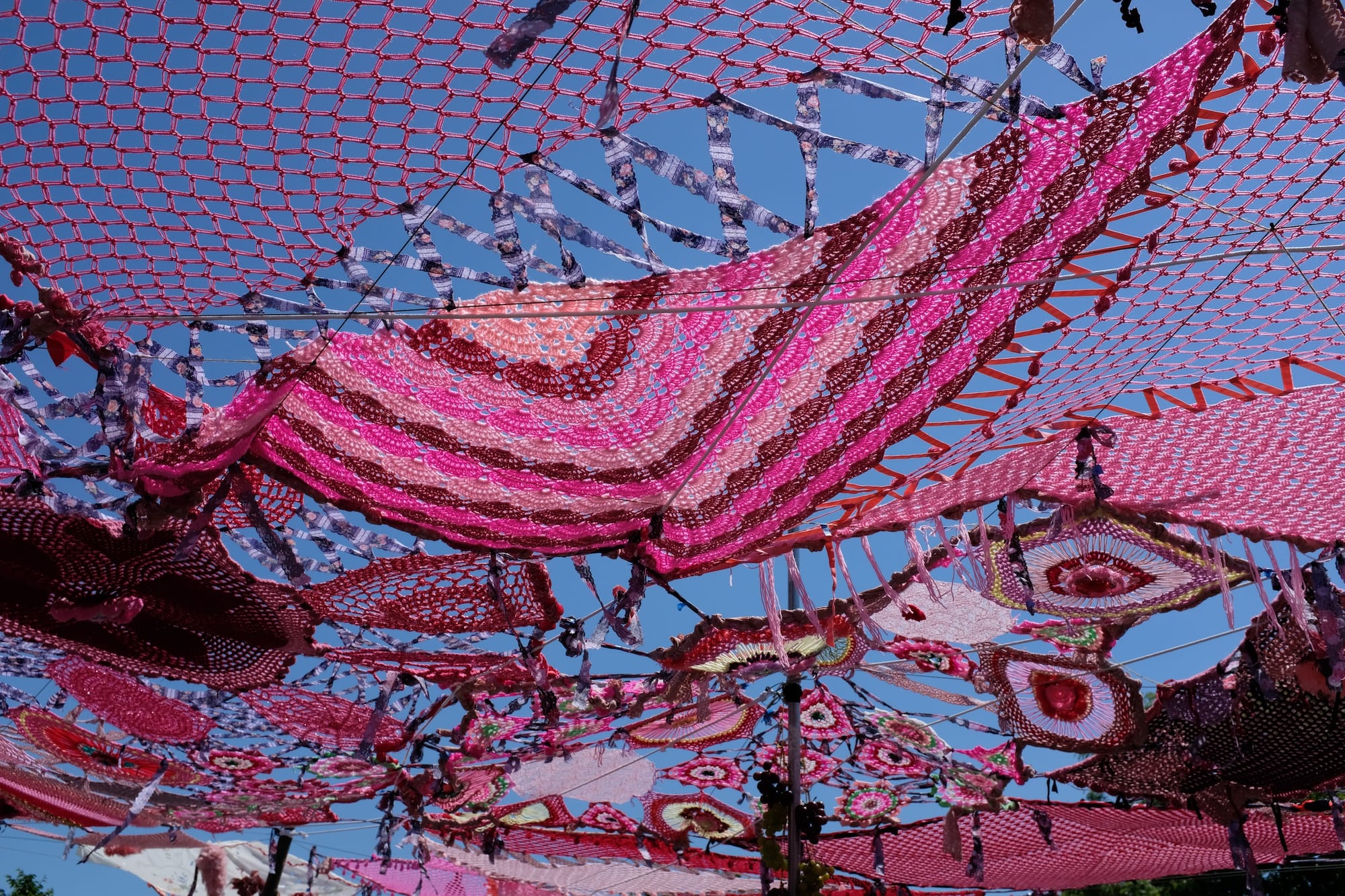
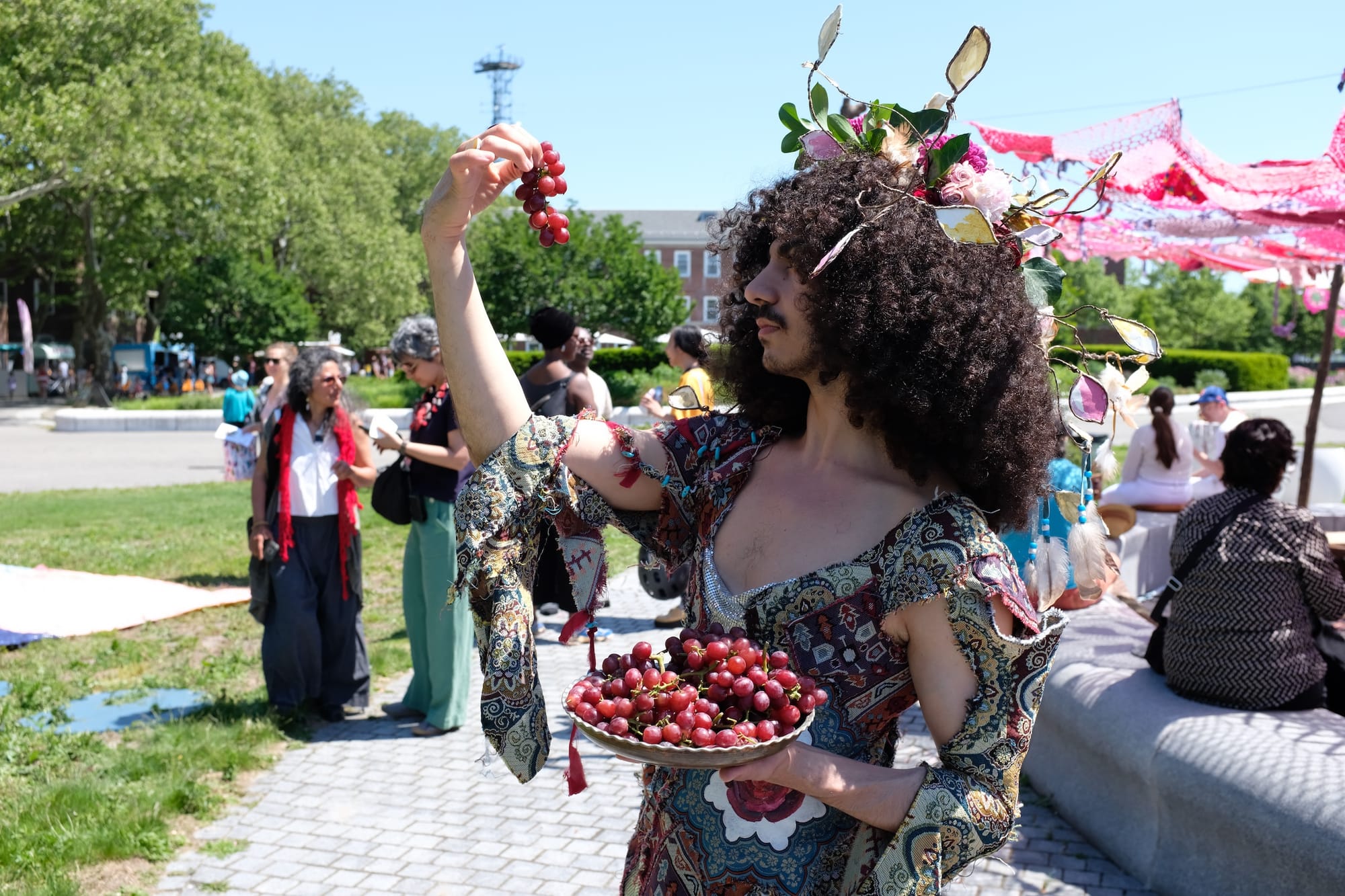
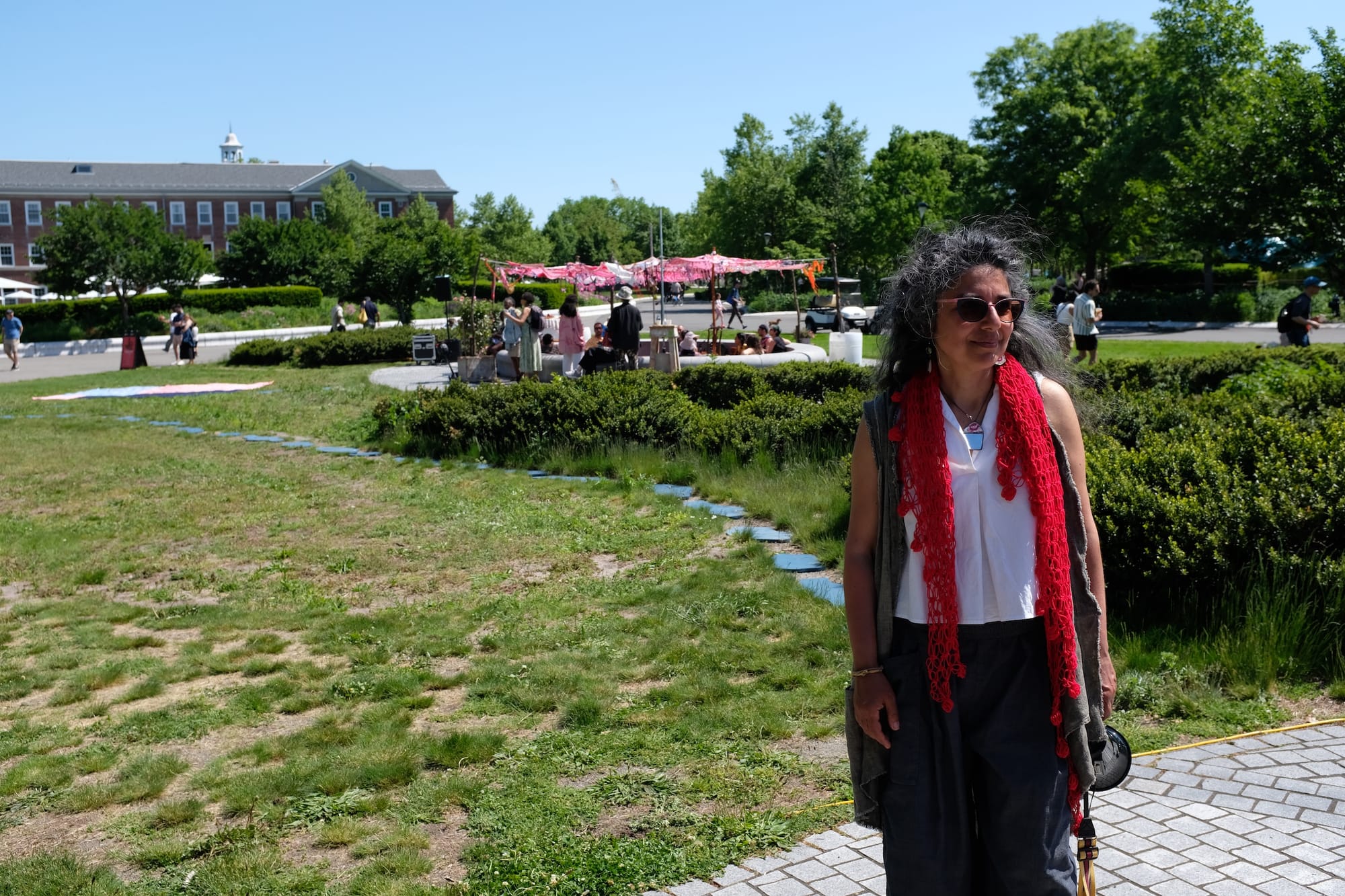
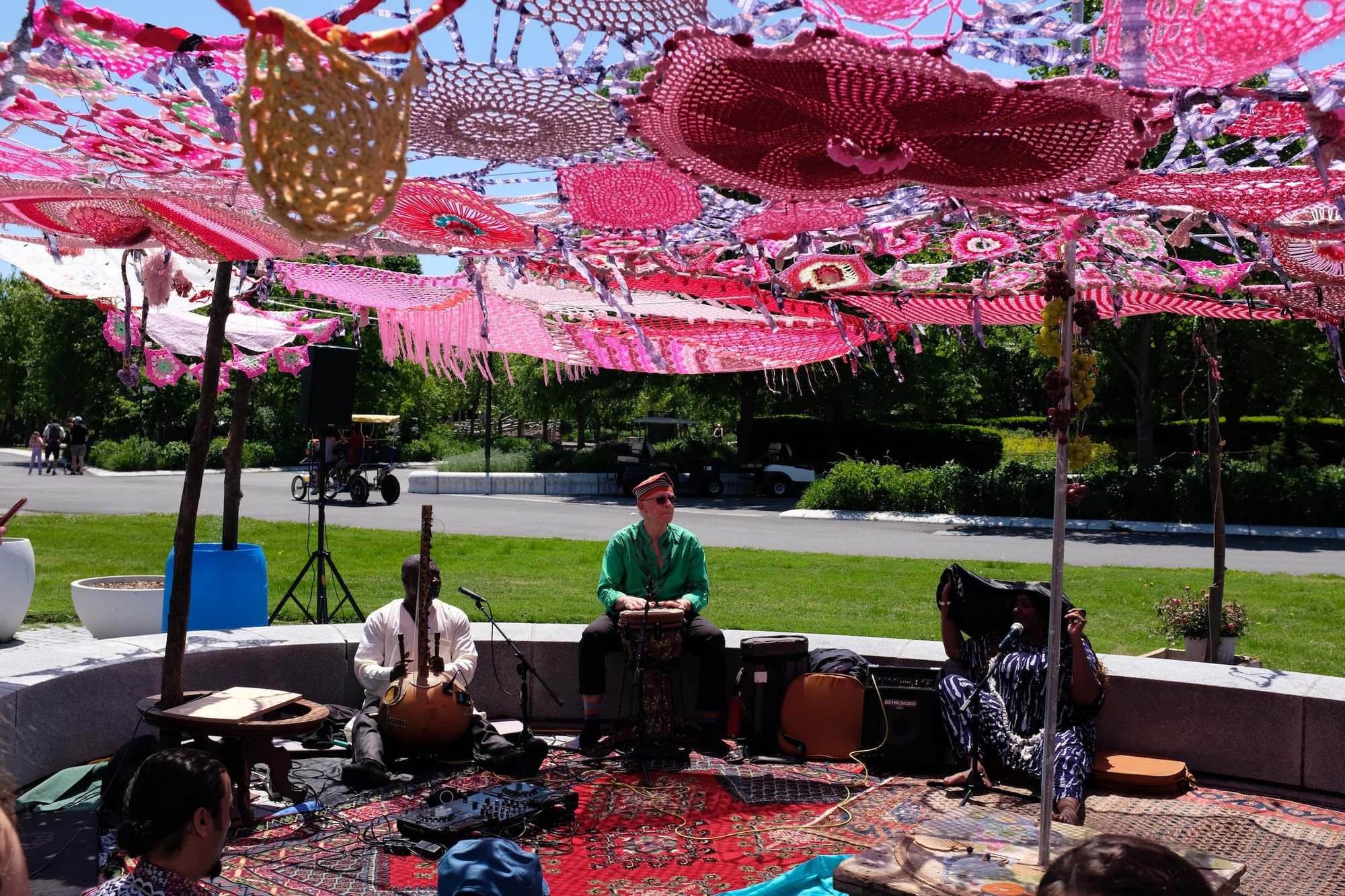
On the unseasonably warm afternoon of Saturday, May 16, three shallow fountains on Governors Island were transformed. Handwoven, antique carpets across regional weaving traditions lined the oval pools while pink, red, and purple crocheted canopies stretched overhead, setting the stage for artist Bahar Behbahani’s Damask Rose: A Gathering.
As part of Governors Island Arts’s annual Interventions series, Behbahani worked with the organization’s associate curator and producer, Juan Pablo Siles, to convene over two dozen community practitioners and cultural groups — among them the Asia Contemporary Art Forum, Pardis for Children, and Eat Offbeat — for a four-hour event blending storytelling, communion, and rest.
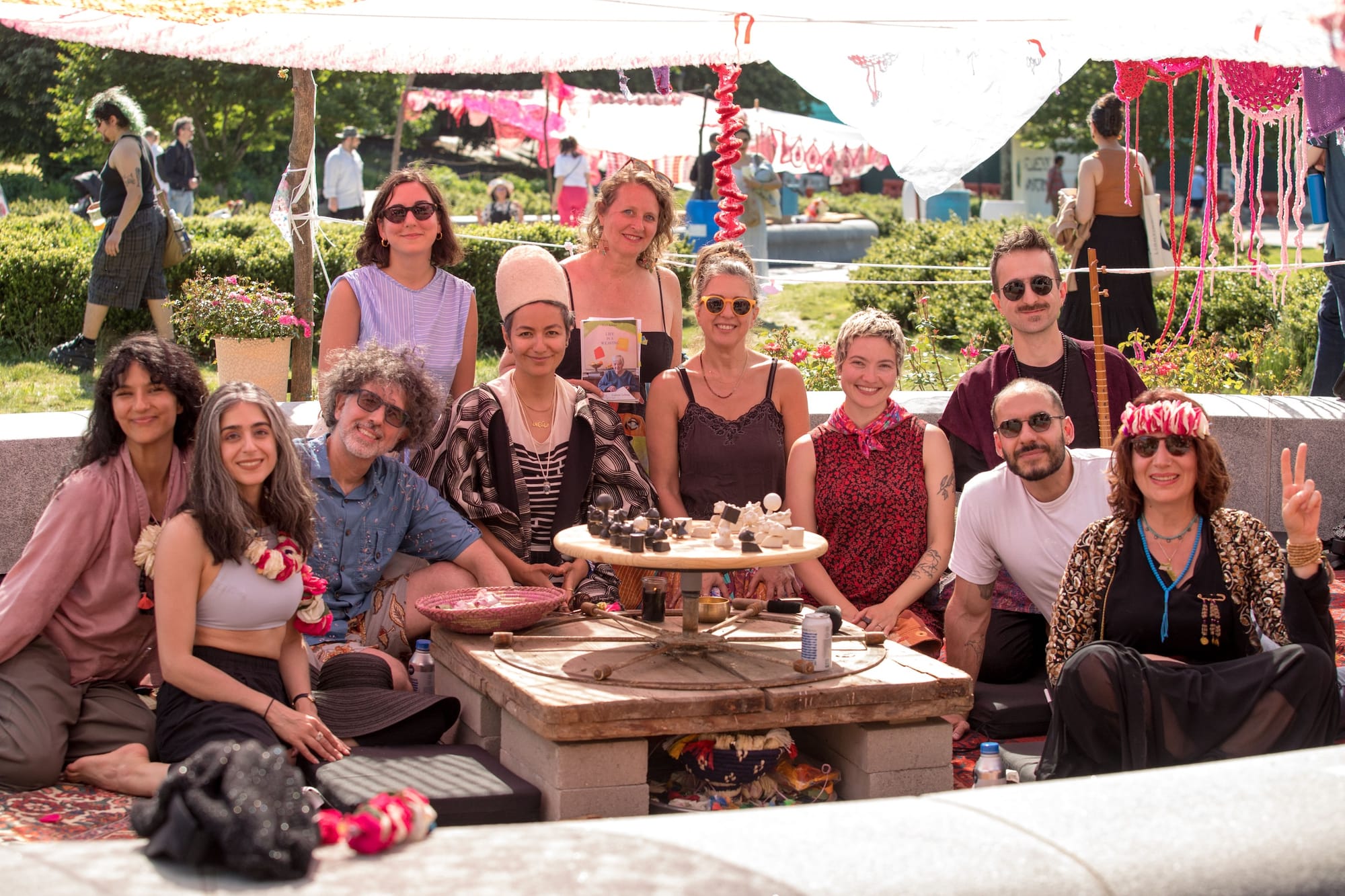
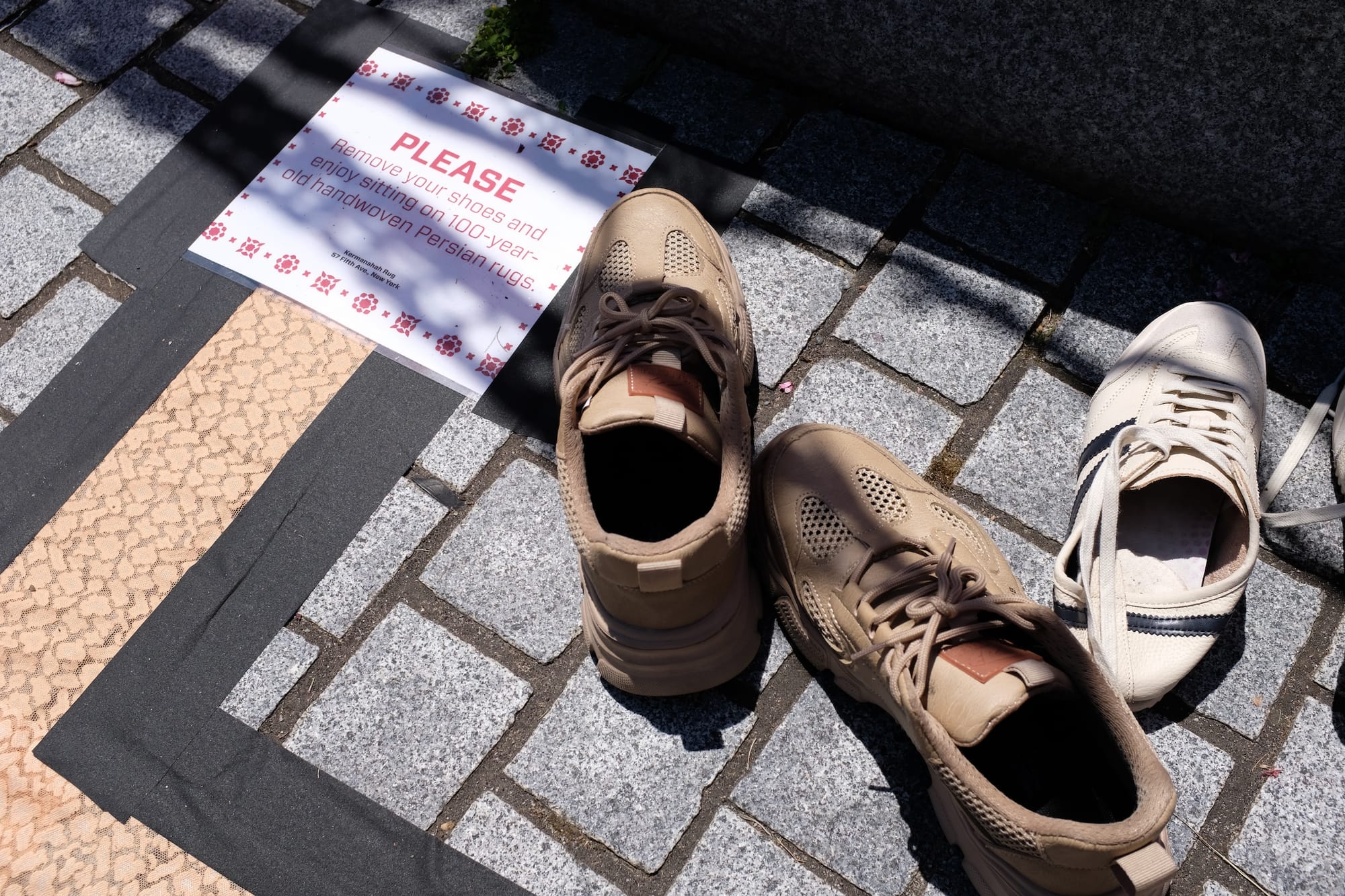
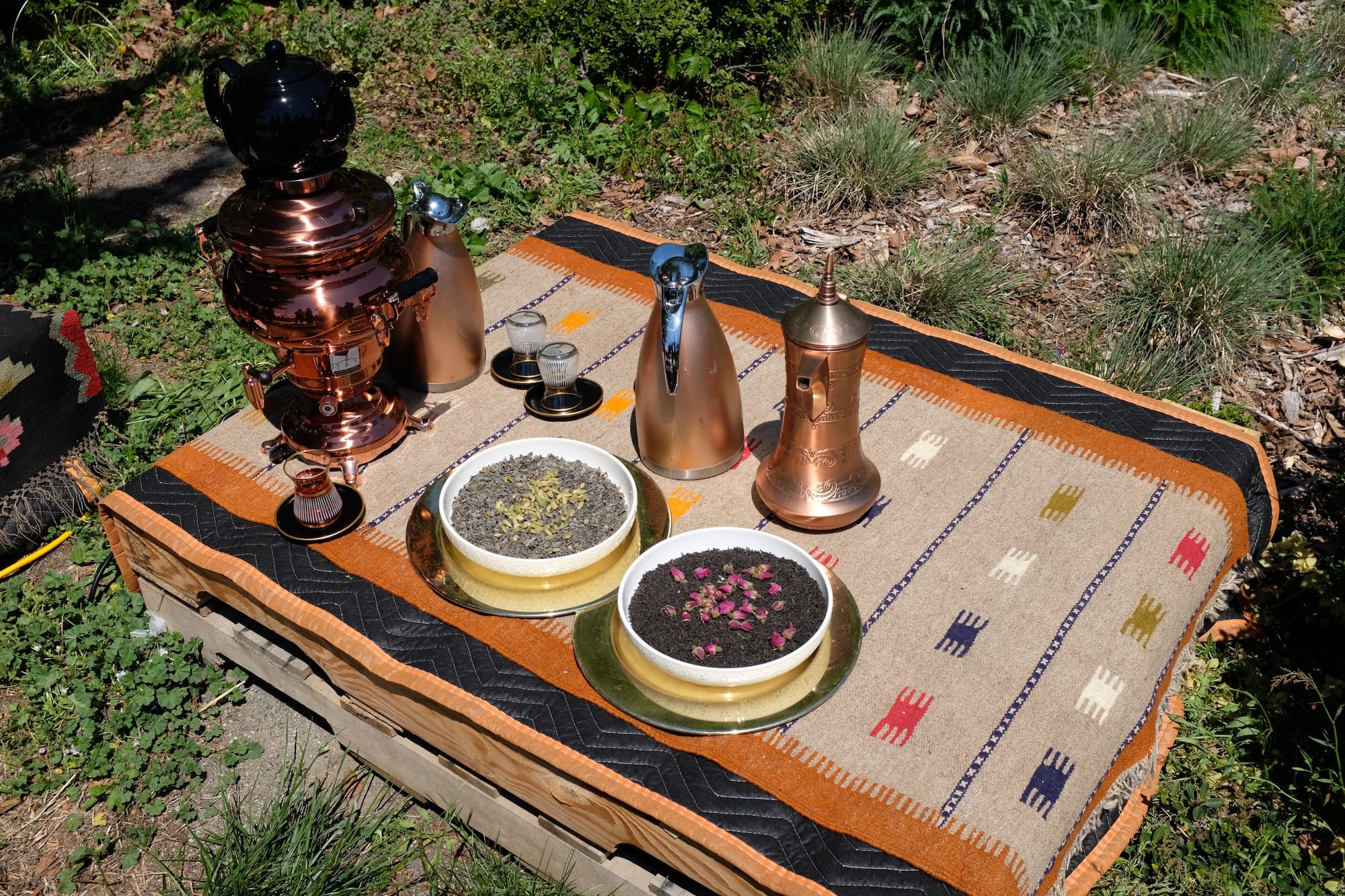
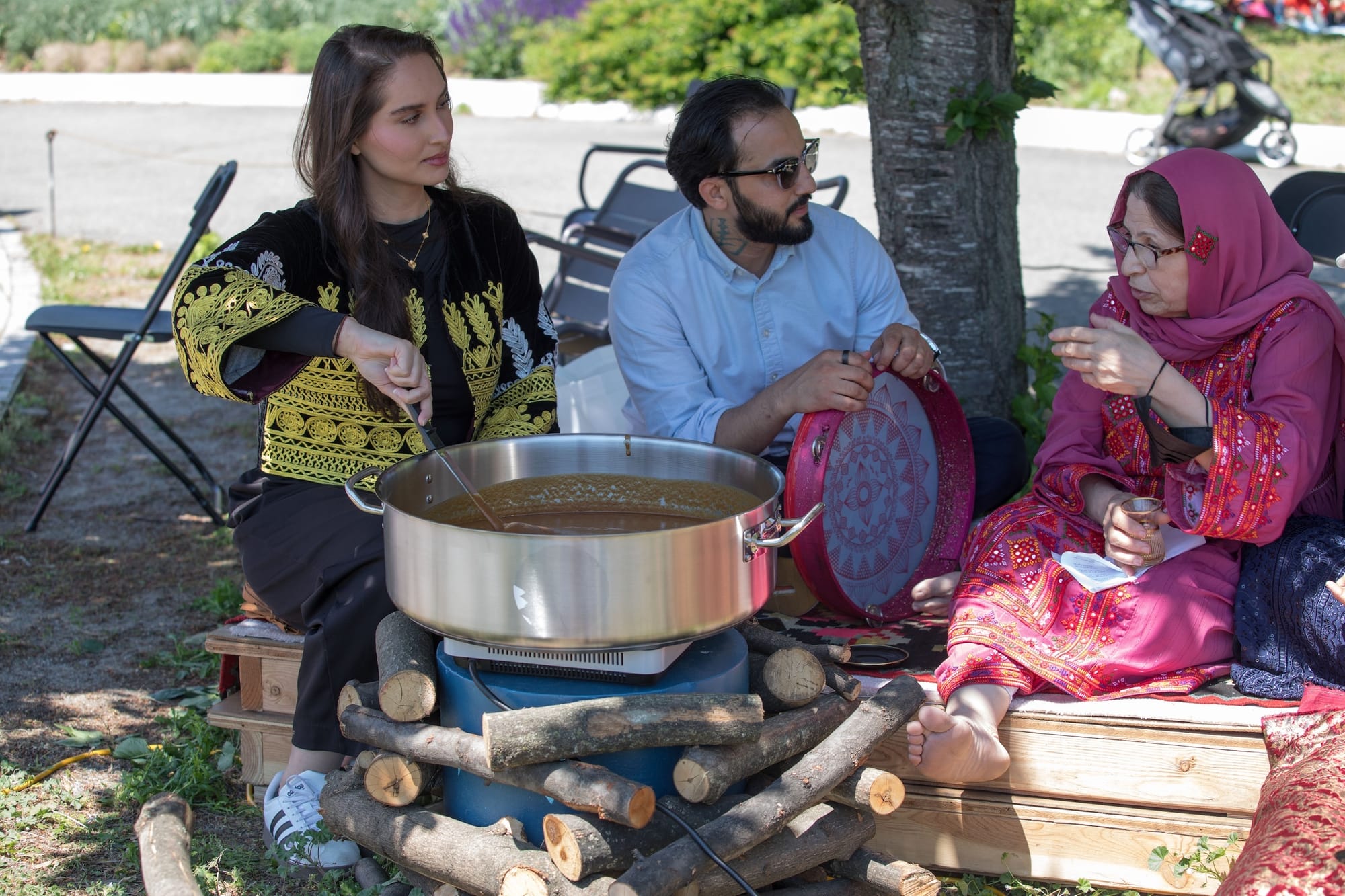
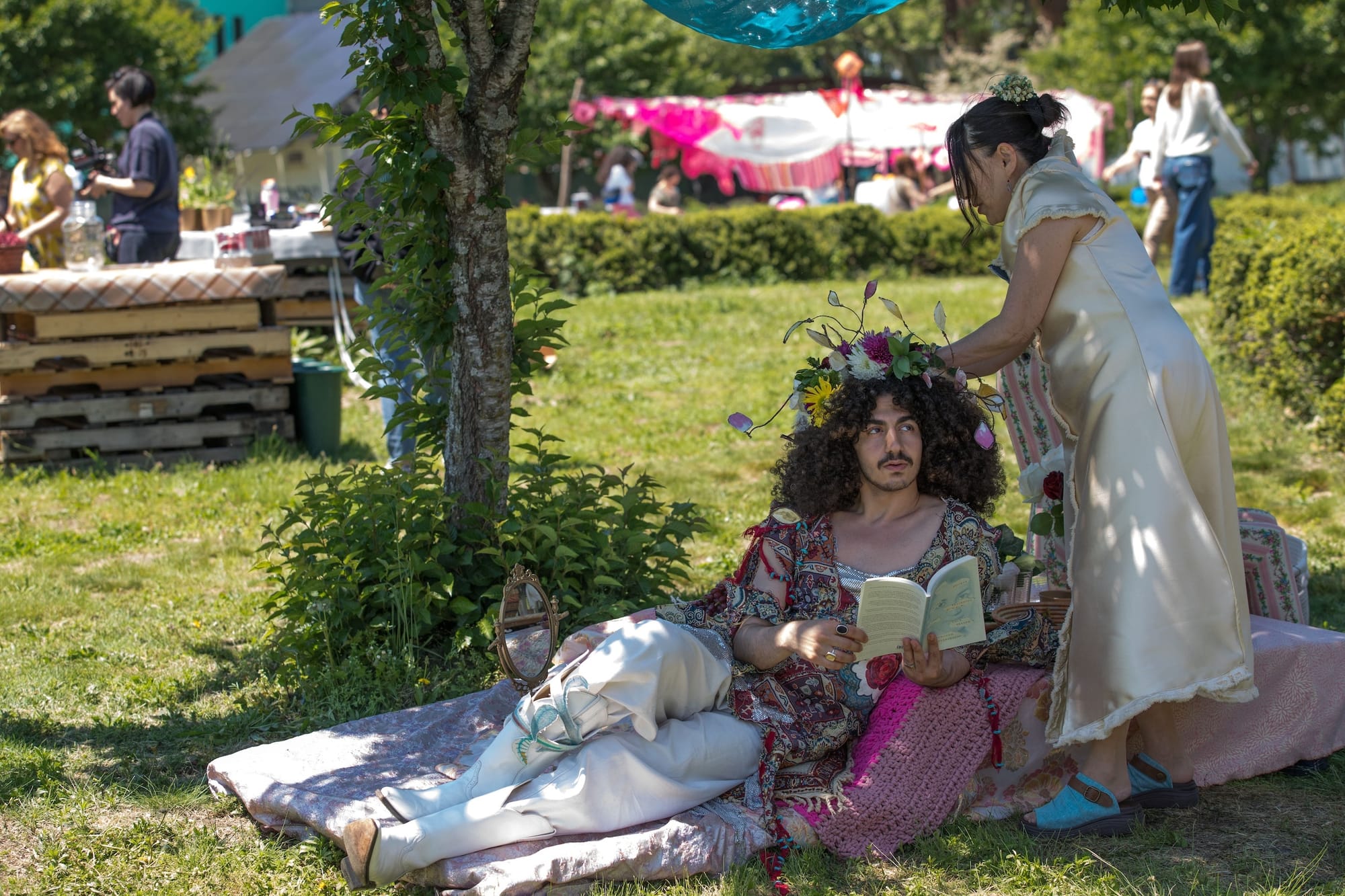
The gathering included West African musical improvisation, mythical folklore storytelling, Kurdish poetry recitation, and a cyanotype workshop. Attendees moved freely between designated areas, where they were invited to remove their shoes and lounge under the shade while being offered Afghan green tea, red grapes, and samanoo, a traditional wheat pudding that had been stirred for days to build its sweetness.
“This is not an art event,” Behbahani, who was born in Tehran and now lives in Brooklyn, said during remarks at the start of the gathering. “This is the way that we live.”
Damask Rose took inspiration from the Persian garden motif, which Behbahani — whose first name means "spring" in Farsi — has spent more than a decade exploring in her practice.
In the Western imagination, she told Hyperallergic in a phone interview, the garden is often reduced to a “romantic oasis,” its technical, ecological, and political dimensions overlooked. She made reference to Persian miniature paintings, which might depict lovers resting alongside physicians in debate outdoors, all within the same densely composed frame.
Damask Rose was devised through months of meetings and preparations, which unfolded deliberately as gatherings in themselves. Even the crochet pieces that formed the canopies were woven by Behbahani’s mother, Shamsy, and her circle of friends in Tehran at the beginning of this year, amid unrest and state violence, an internet blackout, and subsequent US-Israeli bombardments.
Behbahani explained that the pieces later arrived together as hundreds of small fragments, patched together in New York by younger volunteers who, each time, were told the story of how they had traveled across borders.
“I look at this gathering almost like the crochet my mother and her community wove together,” Behbahani told Hyperallergic. “I kept asking myself: How can we weave ourselves together?”
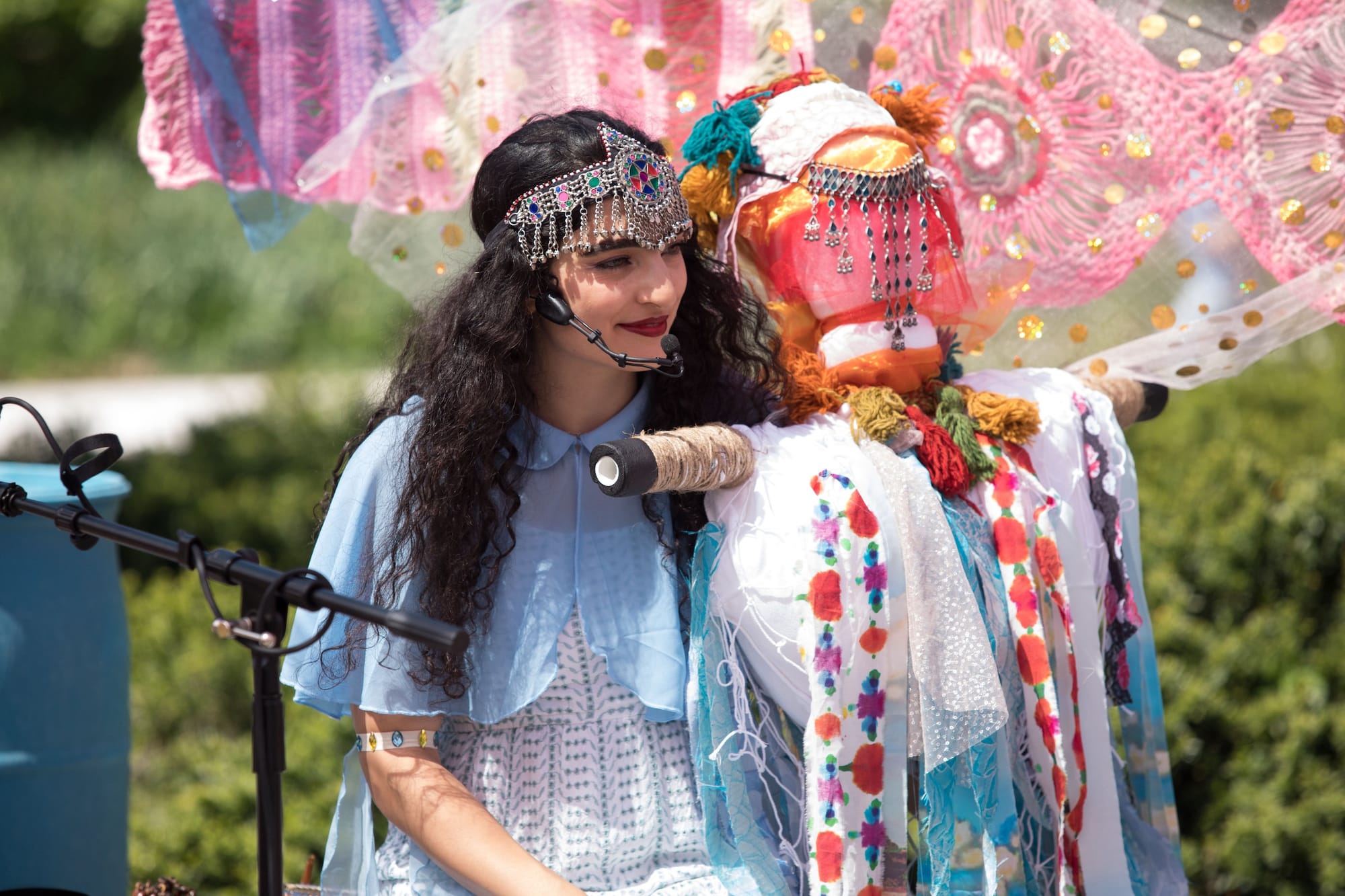
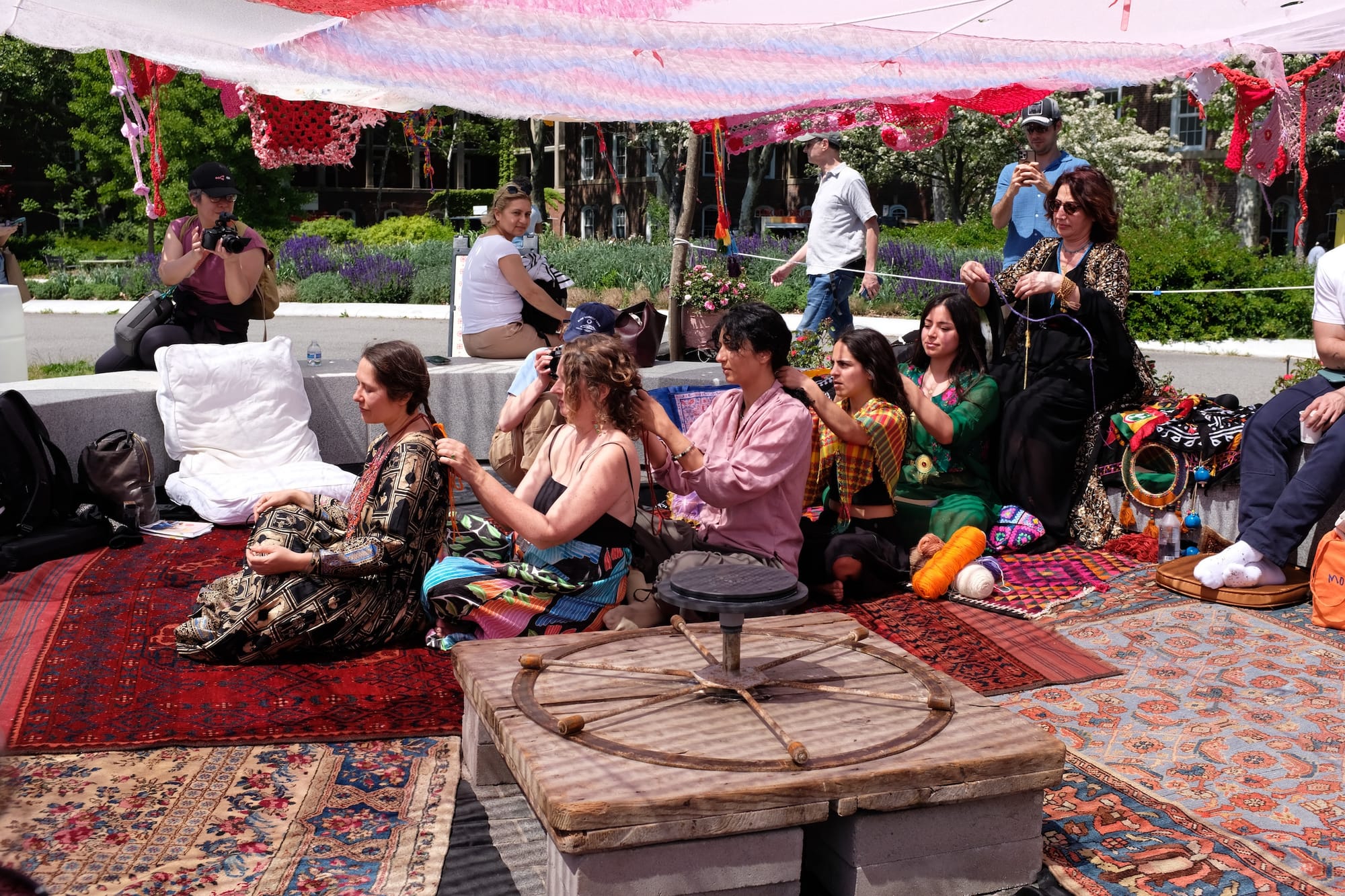
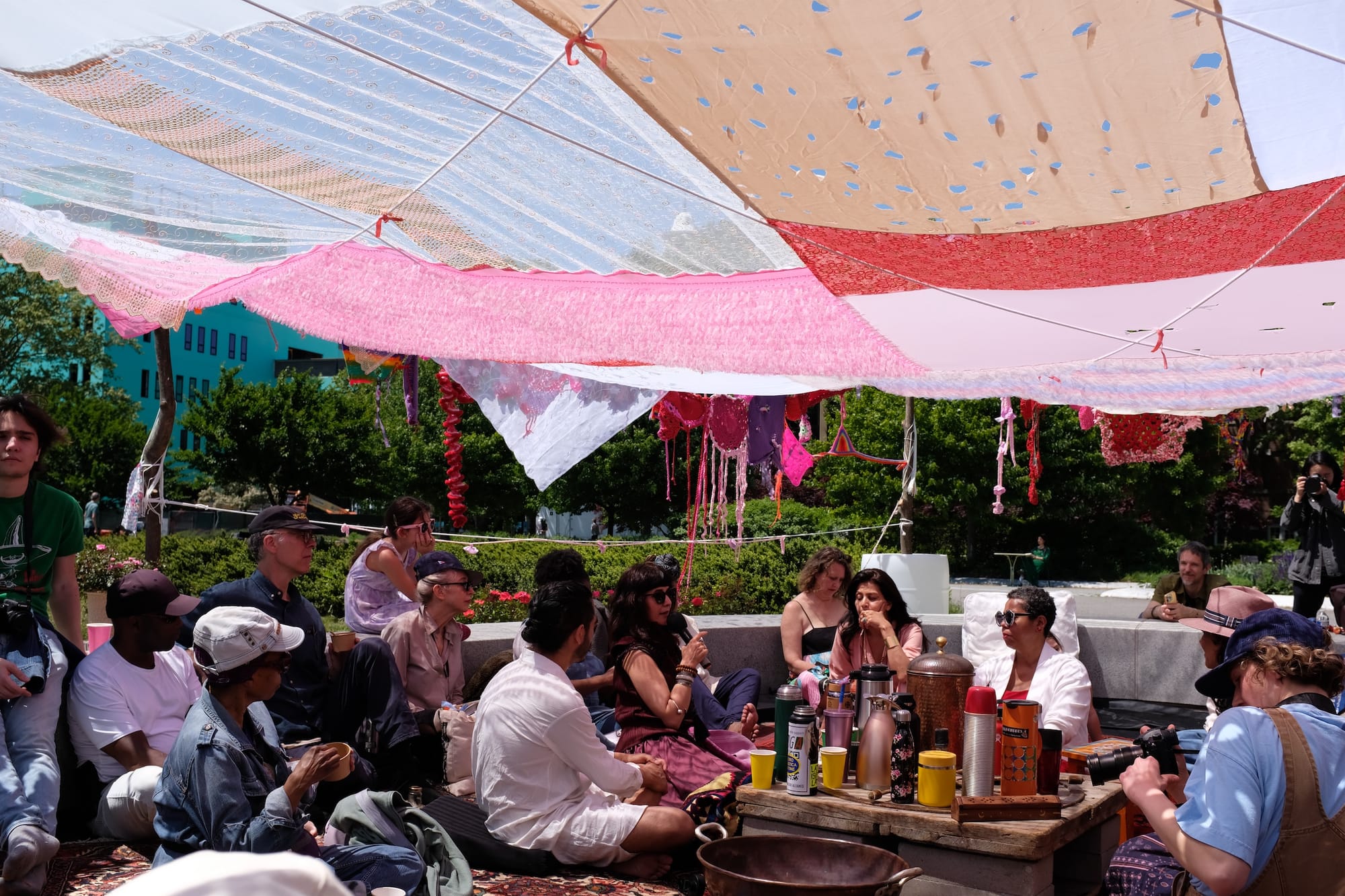
That concept was palpable in one of the final performance discussions, hosted by the nonprofit ArteEast as part of their Hikayat series, which drew on the concept of khiāl-bāfi, literally “dream-weaving” in Farsi.
Poets, academics, artists, and other participants — including Hyperallergic Co-founder and Editor-at-Large Hrag Vartanian and Lebanese-Armenian urbanist Garine Boghossian — engaged in discussions about the fragility of maintaining Indigenous languages post-displacement and memory mapping, countering historical revisionism. Between them, a circular chessboard with interchangeable pieces was periodically rotated, allowing more than two players to take part.
“What if there’s a chess game where there’s no white or black? Where there’s no soldier or no queen?” asked Iranian artist Nooshin Rostami while turning the wheel to the next person. “Where we get together and look at the possibilities, and decide collectively what’s the next best move?”
During a time of such profound global grief, the reimagined chessboard and larger public space became a way to sit with the collective heaviness. At the edges of the pool, listeners passed along a ball of orange yarn that grew longer and more entangled, while others constructed ceremonial wreaths provided by artist Aminah Al Huqail by threading through a hard wire individual pale-pink rose petals.
“For me, the Persian garden has never been only about beauty or ornament,” said Behbahani. “It is a technology of care — a way of designing for shade, water, gathering, cooling, rest, and coexistence within difficult climates.”