A View From the Easel
“There is something so magical about the dyeing process that has continued to captivate me.”

Welcome to the 315th installment of A View From the Easel, a series in which artists reflect on their workspace. This week, artists mark an incredible 51 years in their woodworking school-turned-studio and fall in love with the magic of indigo.
Want to take part? Check out our submission guidelines and share a bit about your studio with us through this form! All mediums and workspaces are welcome, including your home studio.
Hùng Lê, Kansas City, Missouri
How long have you been working in this space?
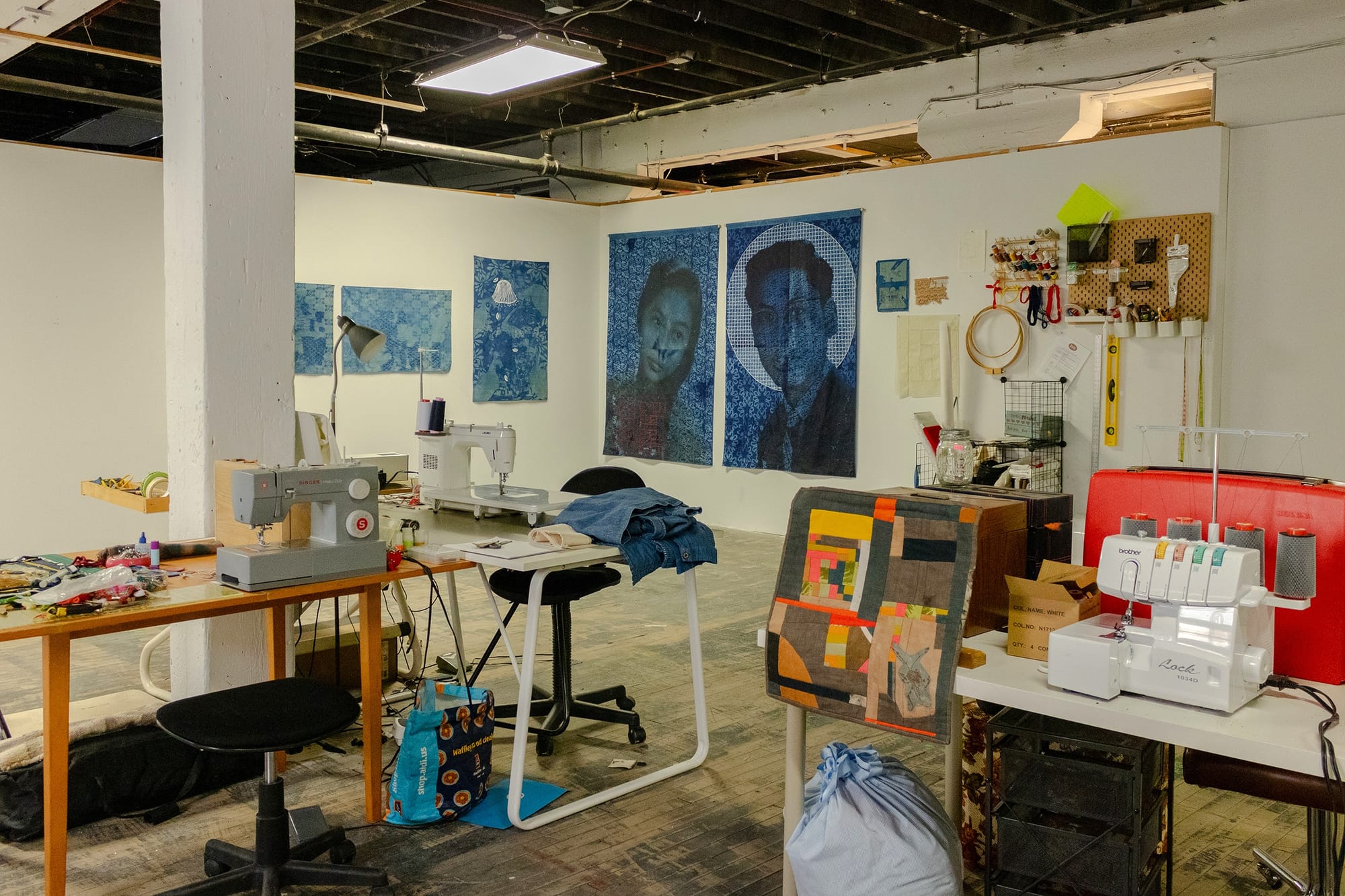
I’ve been working out of my home studio for almost two years. Recently, two of my friends and I moved into a new studio space together in the West Bottoms of Kansas City.
Describe an average day in your studio.
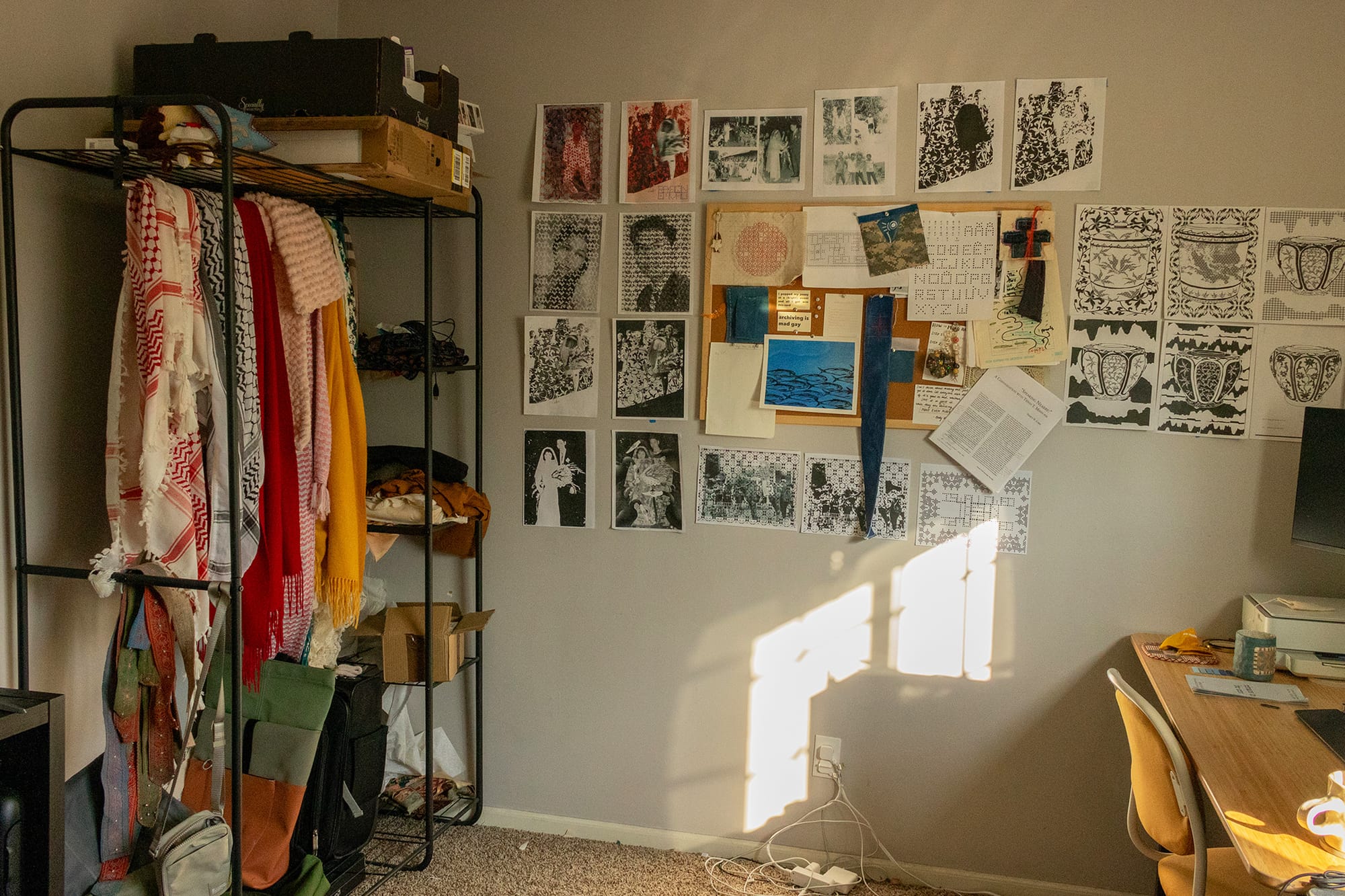
I try to maintain a schedule of starting my studio day around 10am and working till the evening. Many factors will determine where I'll spend my day. I work primarily with fiber processes such as indigo dyeing, embroidery, and beading, and combine them with digital tools such as laser engraving. I typically do my digital processes, such as editing, collaging, and researching, along with other administrative tasks at my home studio, and complete the more complex and messier processes in the shared studio. I enjoy working on multiple projects at once to allow time for others to “marinate” when I am at a standstill with a piece. There’s always music playing when I am working.
How does the space affect your work?
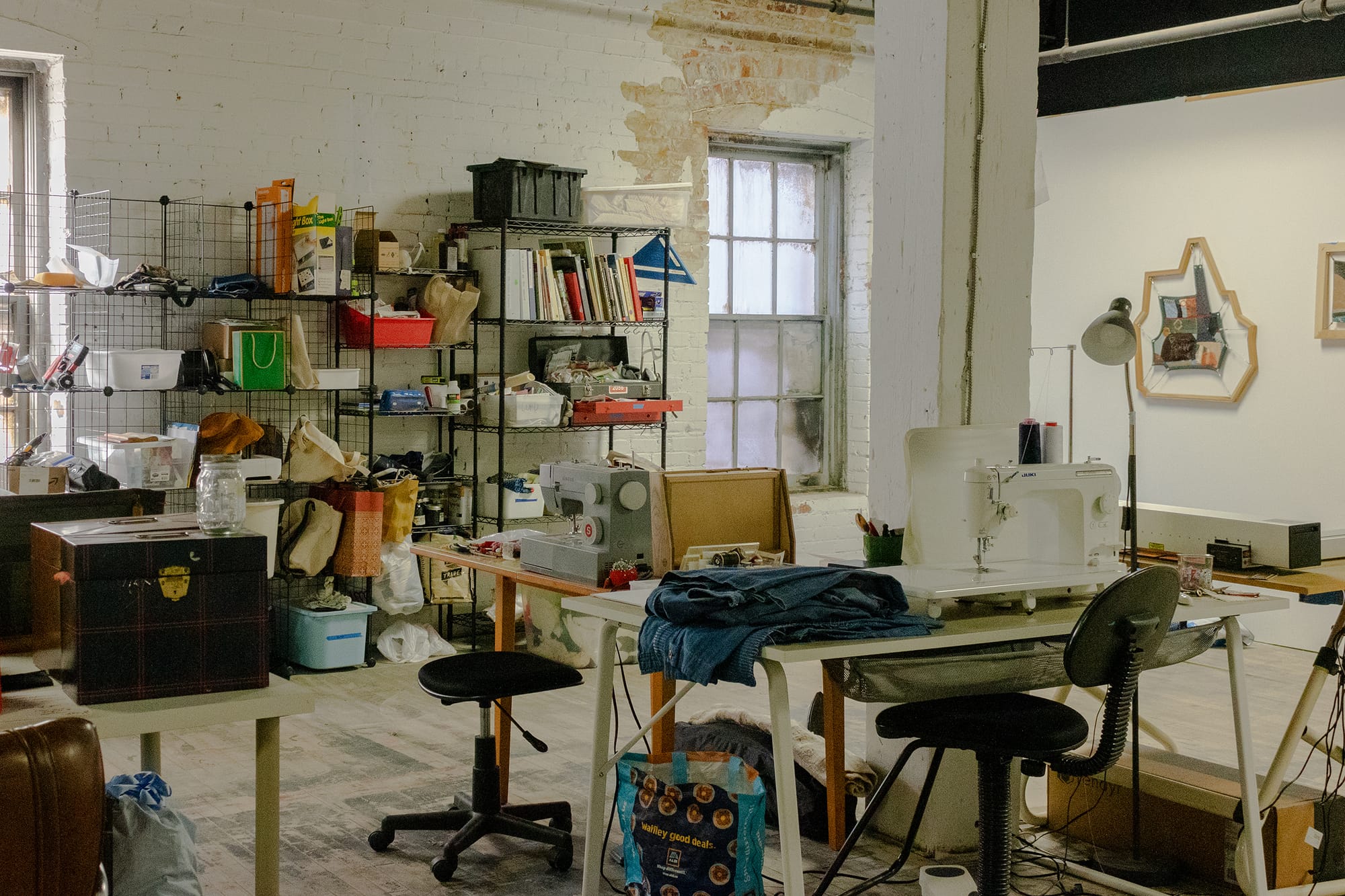
My home studio enables me to easily transition between my projects and personal daily chores around the apartment. However, because it is a smaller space, I often work on more “contained” processes such as editing, embroidery, and beading. Comparatively, my shared studio space provides me more freedom and allows me to work on “messier” processes. Additionally, the shared studio space is part of a bigger collective of studios and artist-run spaces, creating more opportunities to exchange ideas, provide feedback, and share skills and techniques.
How do you interact with the environment outside your studio?
The art community in Kansas City is very interconnected. A lot of the people I look up to and work with in the art scene here are also fellow artists and community organizers. The shared studio space is part of a bigger collective that has been utilized for open studios, public engagements, and various community events. I also teach classes and workshops on indigo dyeing, which has allowed me to stay engaged within the community outside of my studio.
What do you love about your studio?
I love the time and space that it provides me to slow down and meticulously work through my thoughts and inquiries.
What do you wish were different?
I wish there were more natural lighting in my shared studio. I didn’t realize how much natural lighting affects my mood and motivation during the making process. I also wish it were within walking distance of where I live.
What is your favorite local museum?
I live within walking distance of two large museums, the Nelson-Atkins Museum of Art and the Kemper Museum of Contemporary Art. However, my favorite art spaces are artist-run galleries such as 100,000,000 and The Waiting Room.
What is your favorite art material to work with?
I’ve been working with indigo for the past five years and have only become more obsessed over time. There is something so magical about the dyeing process that has continued to captivate me.
Drew Langsner, Marshall, North Carolina
How long have you been working in this space?
Fifty-one years. (I'm 83.)
Describe an average day in your studio.
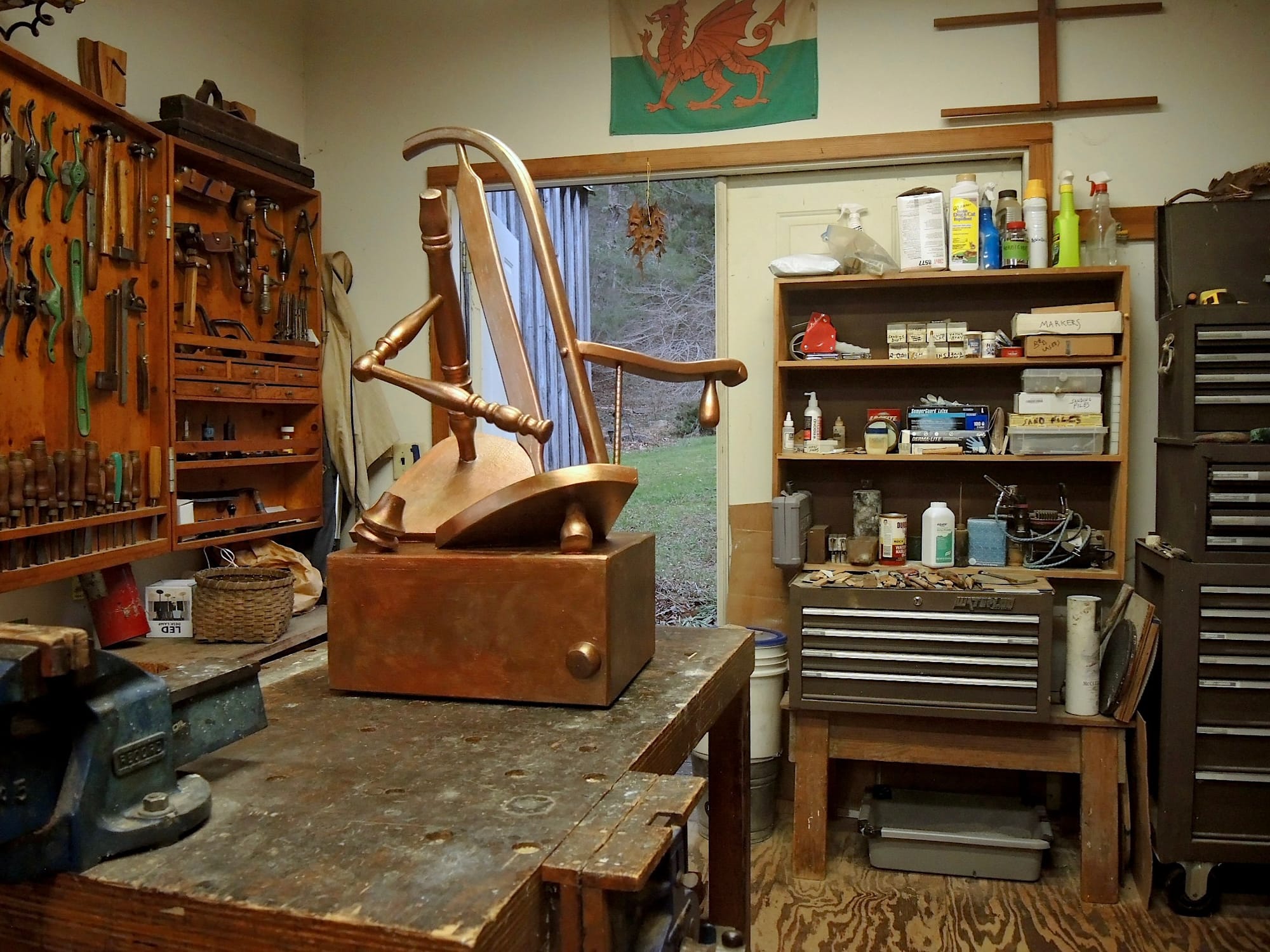
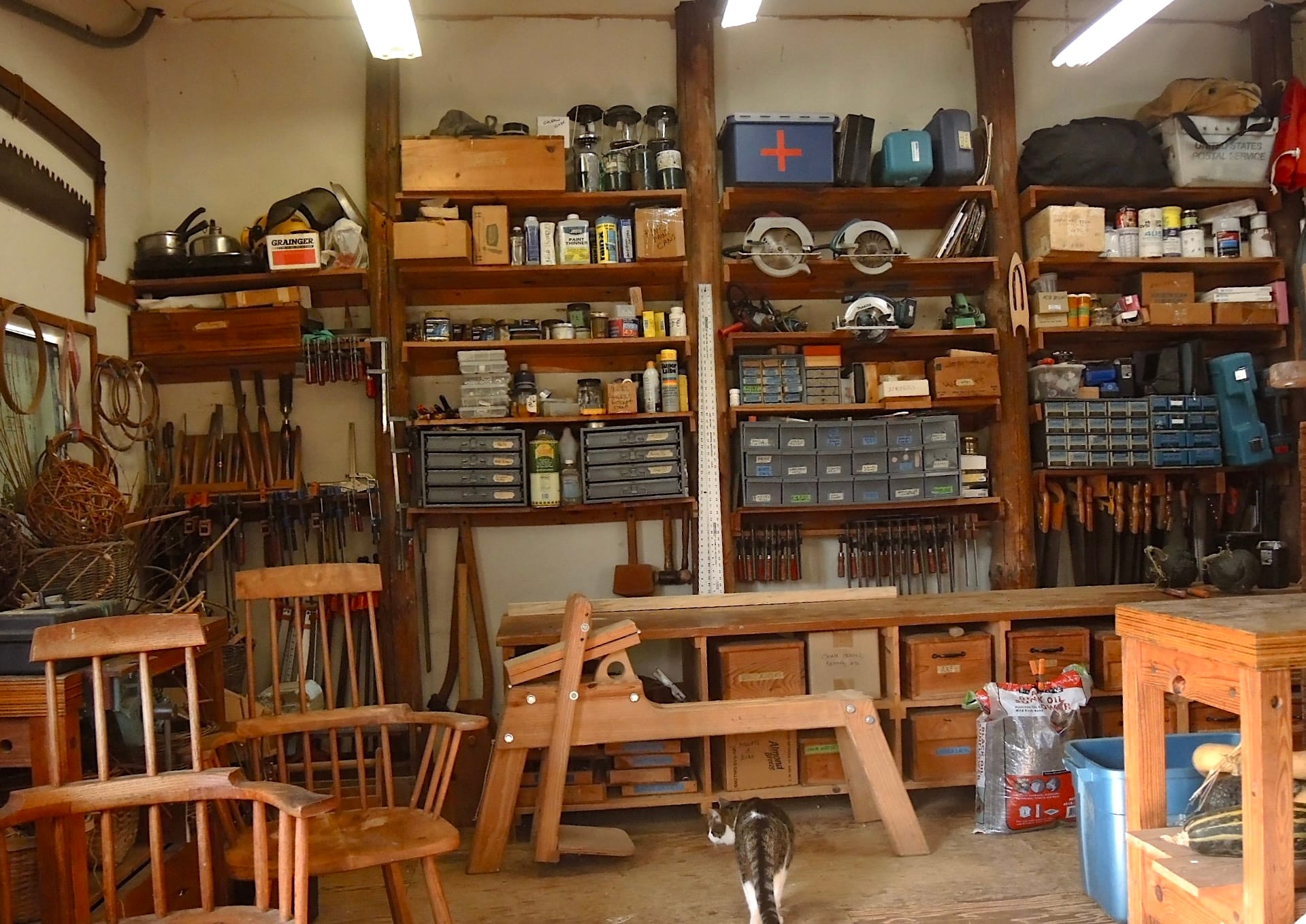
Typical art days for me are fragmented. Since 1974, we have lived on a 95-acre mountain farm and forest 45 miles north of Asheville, North Carolina. My studio is a converted tobacco drying barn, which we converted into a woodworking school that we ran for 40 years. There's so much that needs to be done here, but I get into the studio whenever possible. It's usually late afternoon, for one to three hours. Also, getting older seems to take up more time.
How does the space affect your work?
It's a great space! About 22 by 35 feet for hand-tool, brush, and workbench work. My oldish woodworking machines are in a separate area, so there is a little wood dust in what we still call "the shop."
How do you interact with the environment outside your studio?
I'm outside almost every day. Taking care of this property, and also enjoying it. Pruning trees is one of my favorite activities. My wife has a huge garden, we have a pond for swimming, a wood-fired bake oven, and so much more. There is a vibrant arts community in our area. But we're scattered over a large area.
What do you love about your studio?
It's 60 feet from the house. I almost never play music while working on art. It's a concentrated effort for me.
What do you wish were different?
Being closer to a large city would make it much easier to share and show my work, and to interact with other artists who have similar interests.
What is your favorite local museum?
The Asheville Art Museum is small, but impressive. I also miss big cities, having grown up in Los Angeles, with college years (the '60s) in the San Francisco Bay Area.
What is your favorite art material to work with?
Wood — I currently cut up old wooden chairs for materials. And paint — mostly metallic acrylics. Long ago, I worked with ceramics and welded steel, which I miss. But I'm also okay with that.