A View From the Easel
“In retrospect, what I created in that basement astonishes me.”

Welcome to the 318th installment of A View From the Easel, a series in which artists reflect on their workspace. This week, artists recall working furiously in their basement and dance when an artwork is going especially well.
Want to take part? Check out our submission guidelines and share a bit about your studio with us through this form! All mediums and workspaces are welcome, including your home studio.
Maxine Davidowitz, West Shokan, New York
How long have you been working in this space?
Three years.
Describe an average day in your studio.
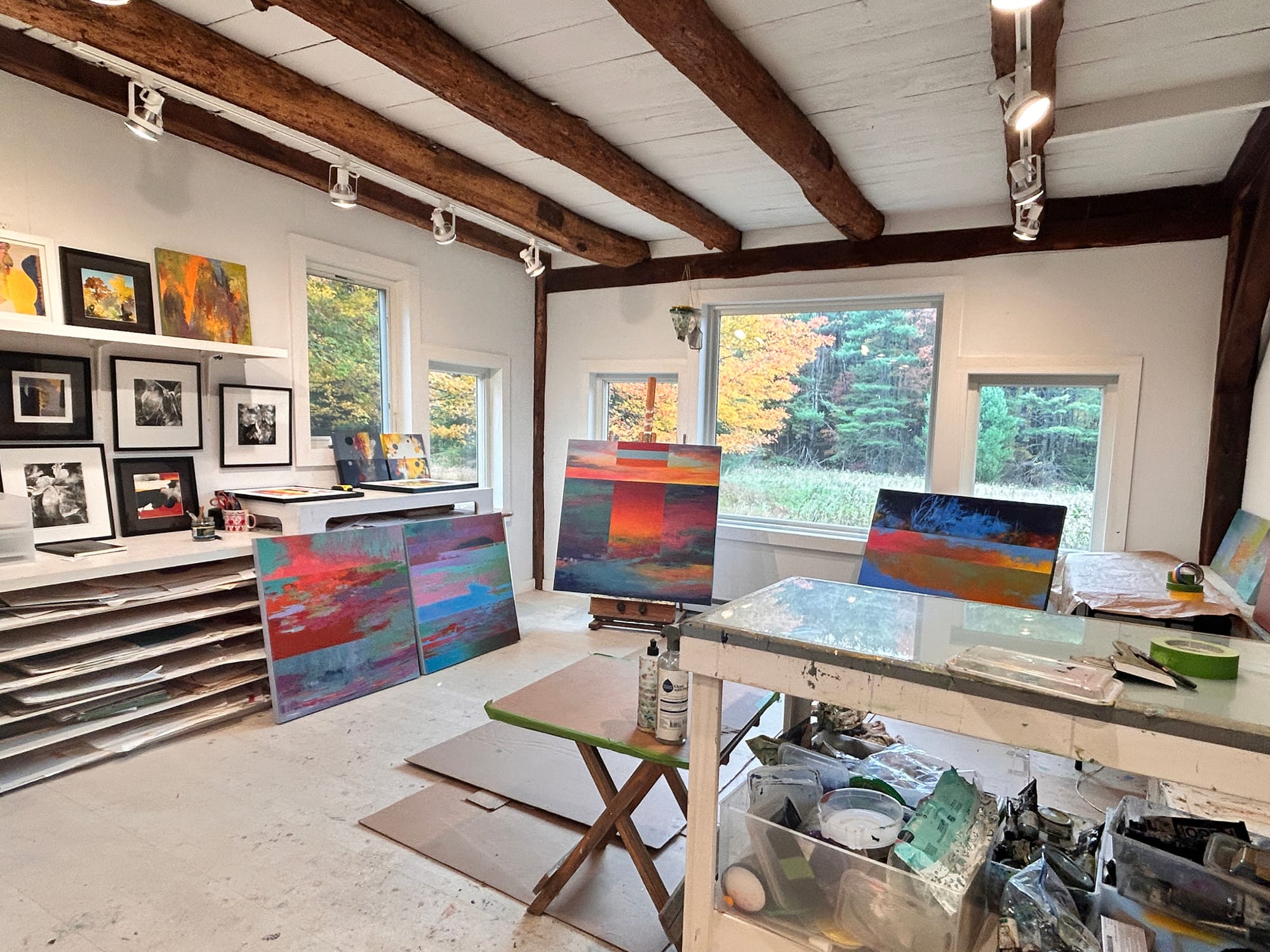
I get to my studio by 10-ish via a very easy commute (it’s at the end of my driveway). I start my Spotify “painting music” playlist with over 2,000 songs, a wildly eclectic collection leaning towards female singer-songwriter and harmonies. (Love to sing along or dance around when things are going well!) I open my iPad with Procreate sketches of what I’m working on. I work on several pieces at a time, taping off areas and letting layers dry overnight, taking in-progress pictures to ruminate on next steps.
How does the space affect your work?
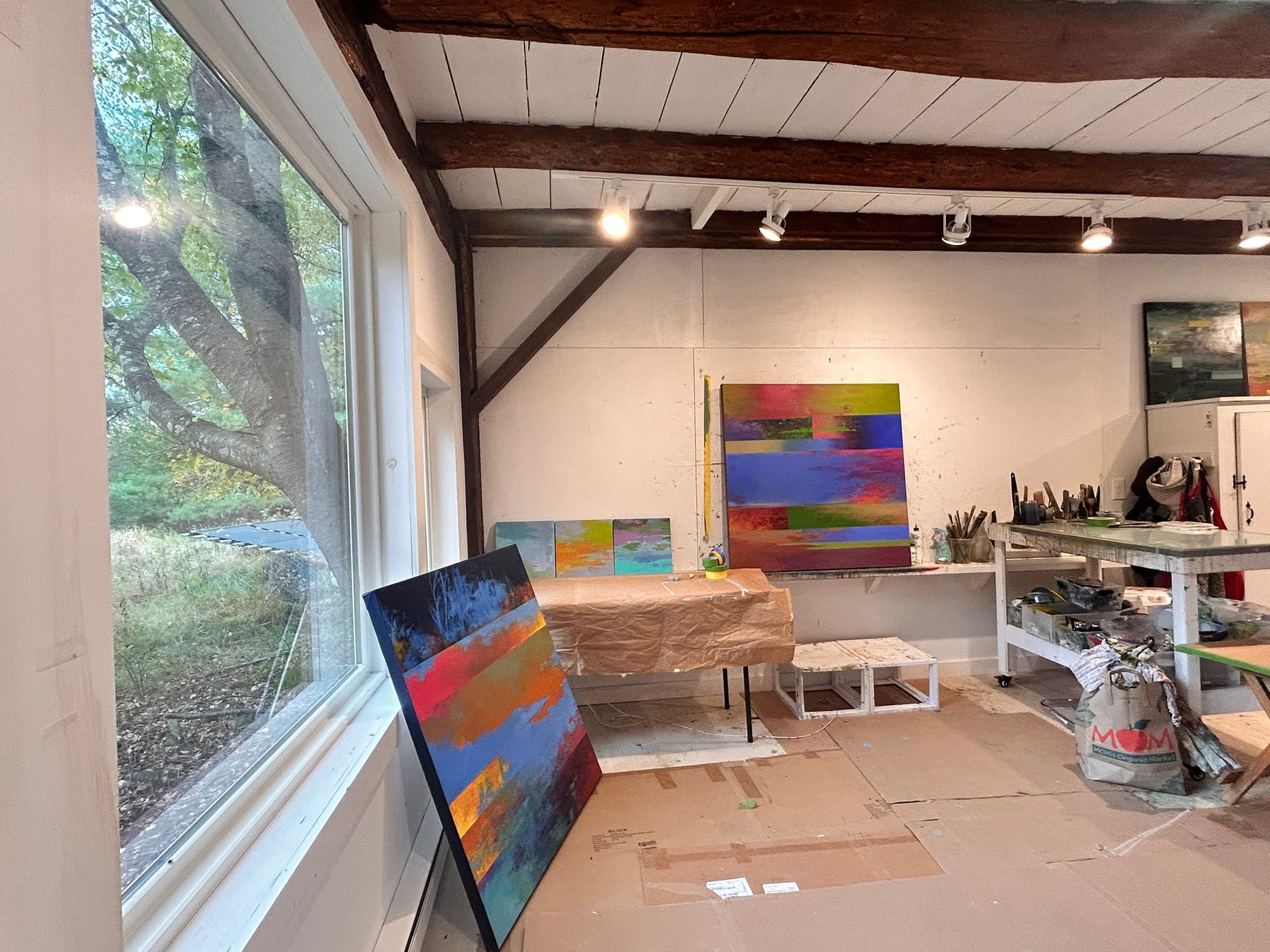
My work is deeply affected by the nature right outside my windows. I face a meadow edged by woods, with an outcropping of stones and branches in the foreground. I look out the window when I need a dose of organic life to inspire me. And sometimes I just sit and look at it, and feel very, very lucky to be living and working here.
How do you interact with the environment outside your studio?
There's a huge art community surrounding me, in Woodstock and all over Ulster County and the Hudson Valley. I’ve served as board chair of the Woodstock Artists Association and Museum, and continue to be involved there.
What do you love about your studio?
Where to start? It’s in a barn that’s over 120 years old, with exposed original hand-hewn beams. The north-facing large windows face a stunning view. I worked closely with my contractor — a neighbor and good friend — to make it just right for my practice, with a ledge for leaning canvases, a desk for collage-making and framing works, a rolling cart with a glass-topped palette (and holes for cradling containers of soaking brushes), and vertical slats for storage.
What do you wish were different?
I occasionally wish I’d had the money to put in running water. I deal with the lack of water by carting dirty brushes to my kitchen. But I dare not complain! It’s heaven.
What is your favorite local museum?
The Woodstock Artists Association and Museum is a gem, with multiple contemporary juried exhibitions, plus a large collection of historic work. Woodstock is blessed with many other terrific arts organizations: The Byrdcliffe Guild, the Woodstock School of Art, and the Historical Society all have strong exhibitions.
What is your favorite art material to work with?
I love wood panels for smaller work and portrait-smooth canvases for larger. I use Golden Open Acrylics and my tool of choice: silicone color shapers (a cross between a spatula and a paintbrush).
Robert Mango, Tribeca, Manhattan
How long have you been working in this space?
I arrived in New York City in November of 1977. Finding work was imperative — I did so as a nightwatchman and more advantageously as a carpenter/builder, in a neighborhood under transformation named Washington Market, now known as Tribeca. I wrangled my way into renting an empty wholesale butter and egg storefront in a building I had been hired to maintain, in trade for a salary. I lived on the edge of eviction for several years there, cavorting with a group of artists at night who had a similar lot. I battled landlords in court and survived.
Describe an average day in your studio.
I like to rise early at first light. I read two newspapers, respond to emails. Then I run or do an alternate athletic activity. The quiet and solitude before working is very enabling. Then I step into the studio and execute plans often conjured while running. If not a new drawing or painting, I alter and adjust the current one. I do listen to music, tapping its energy. I have varied musical taste and generally mix genres. Other times, I work in stone silence to concentrate best.
How does the space affect your work?
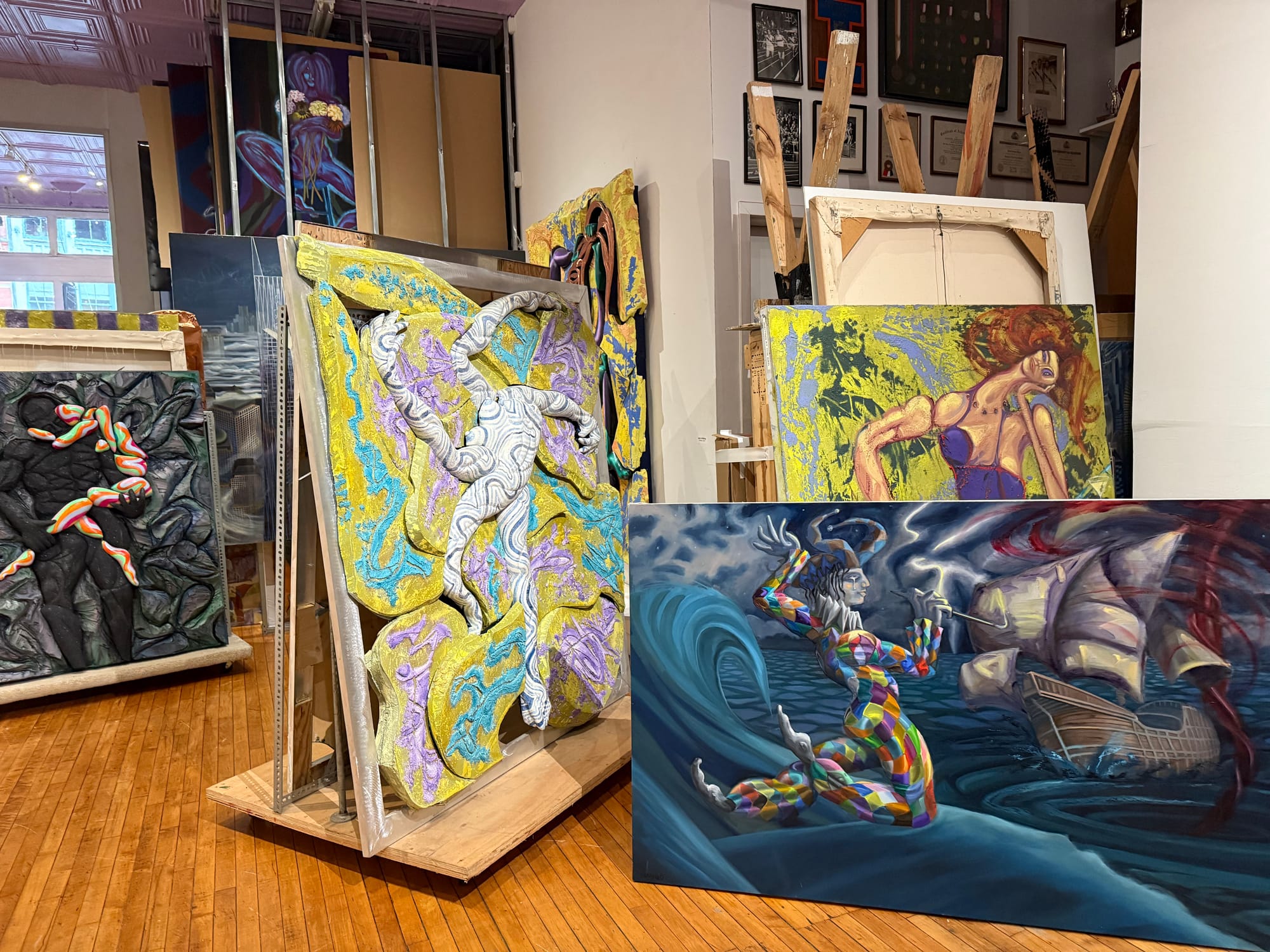
In the mid 1980s, after our children were born, I moved my studio to the basement of my loft building. There was absolutely nothing enviable about this space … a former walk-in freezer. Artificial light, cement floors and walls, but a back door opened to a small concrete courtyard, which I used for welding, sanding, and spraying. My studio was all about creating art, not its surroundings. The isolation generated explosive results. What was in my mind’s eye burst out to become art. I walked in, flicked on the lights, and emoted artistically. This process went on for 35 years. In retrospect, what I created in that basement astonishes me.
How do you interact with the environment outside your studio?
New York offers endless intrigue and visual stimulation. Just outside my door in Tribeca exists my legacy, history, and new experiences. It is rich and unpredictable. In the early '80s it was a fight for survival. I gathered select neighborhood artists that I mostly encountered on job sites, and formed a gallery: Neo Persona. It prospered for 10 years, until the calling of my own work became too great to continue the gallery.

What do you love about your studio?
My studio is so much like my mind, sometimes the two blur together. I feel an agile power here, like anything is possible. Unexpected visions and energy emerge. I have access to the deepest recesses of the unconscious. It is a long hewed process.
As a younger artist, I decided everything was valid as a subject. The cracks in the sidewalks, the cloud shapes passing overhead, faces on the street, or whatever passed before my eyes; all deferred to the unconscious. I came to know this is the true nature of "stream of consciousness." This studio on Duane Street in Tribeca is the place where I feel alive. From the moment I walk in, it is my realm. I am fearless here.
What do you wish were different?
Nothing. Current studio-family-professional status is quite satisfying.
What is your favorite local museum?
The Metropolitan Museum of Art.
What is your favorite art material to work with?
Oil on canvas over sculpted foam, or oil over sculpted foam. Everything starts with graphite on paper.