A View From the Easel
“As a photographer, a studio can be where I am: walking, traveling, struck by light, demanding that I take a snapshot.”

Welcome to the 251st installment of A View From the Easel, a series in which artists reflect on their workspace. This week, artists relish the versatility of paper, eschew prescribed roles of artmaking and mothering, and consider their studio to be wherever inspiration strikes.
Want to take part? Check out our submission guidelines and share a bit about your studio with us through this form! All mediums and workspaces are welcome, including your home studio.
Odeta Xheka, Tampa, Florida
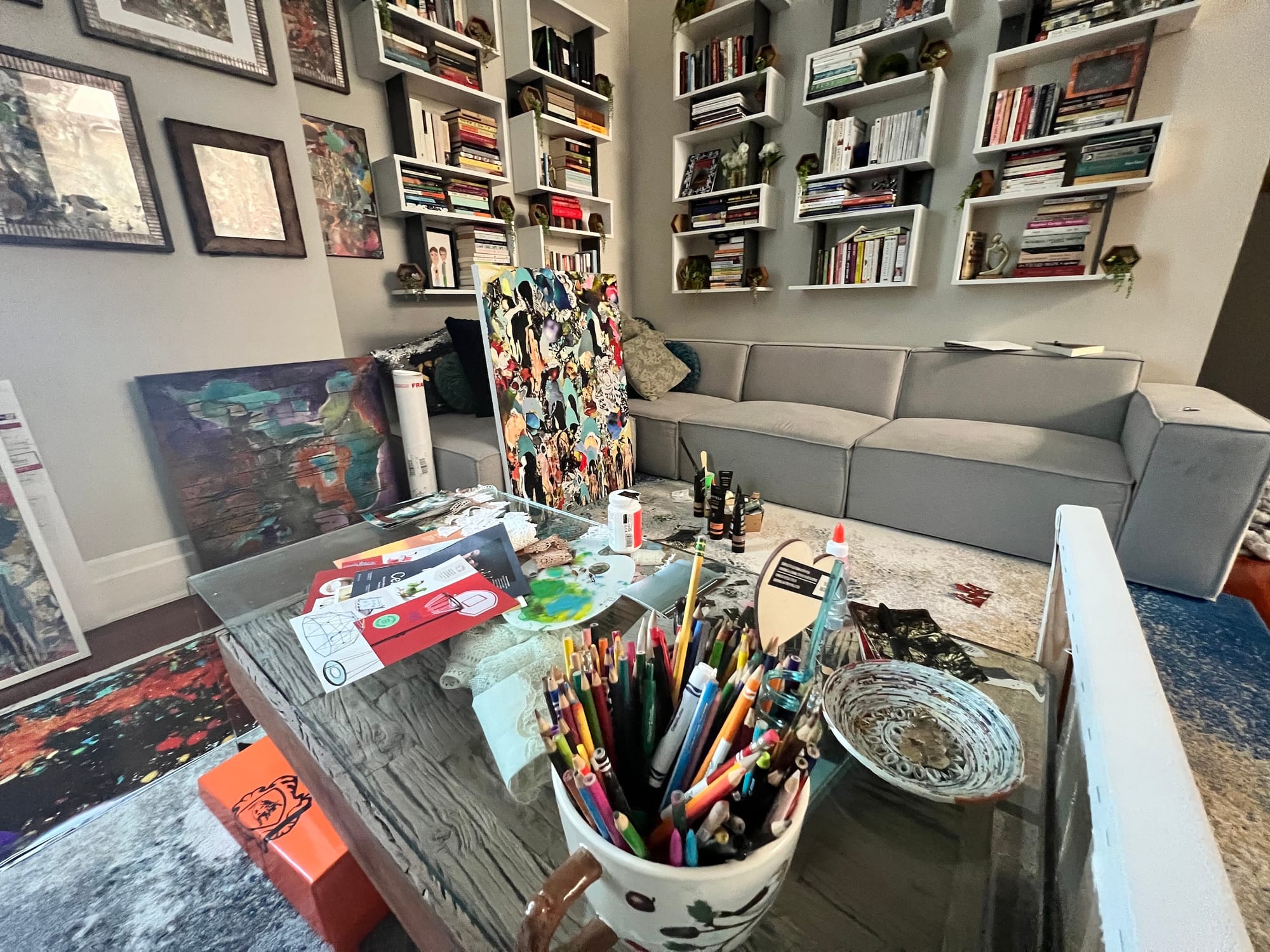
How long have you been working in this space?
Four years.
Describe an average day in your studio.
Like clockwork, I drop my kids off at school and return home to the solitude of an empty house (an artist retreat of sorts) ready to nurture the embryonic ideas in my head, never knowing what kind of noise my art makes in the world. Does it even matter? Not particularly, especially as the gurgle of the espresso machine and the bubbles in the glass of sparkling water mark that first moment, so deliciously mired in possibility, when everything is once again fresh in the mind.
Ritual over, it is time to turn to the big table carrying a laptop, sharpened pencils, private sorrows, heaps of laughter, store-bought lace, scissors, brushes, paint. I typically work on one piece at a time, but as I progress, a new idea starts to germinate in the outer edge of my conscious thinking. Inevitably it will spill into the work at hand. This is how certain works are closely related and form series, although someone recently said to me, "You work in series? Who do you think you are, Monet?"
How does the space affect your work?
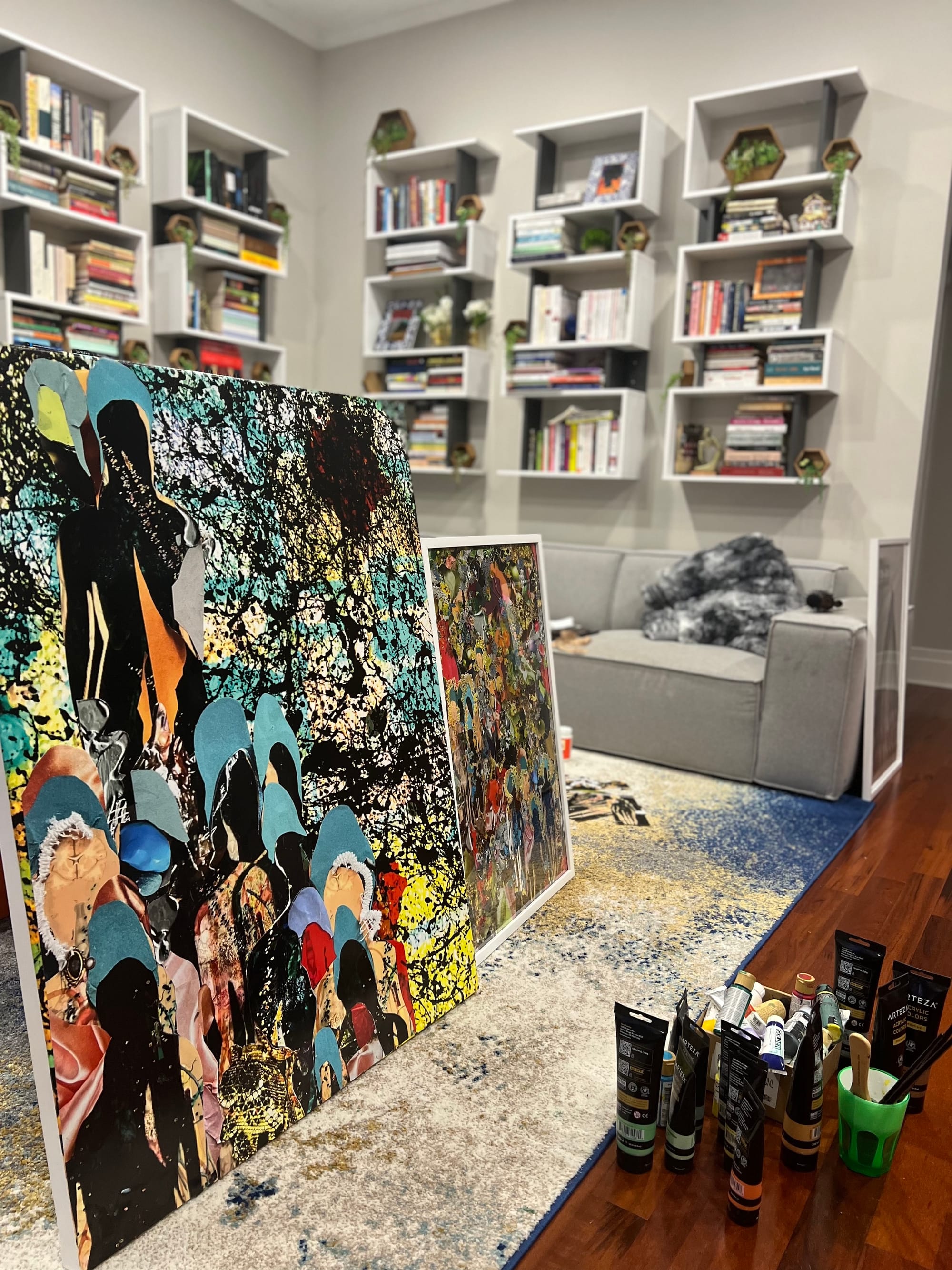
Rather than the studio space itself, it is the overlapping of activities and responsibilities that affect the direction of my work. Early on, as I acknowledged the invasion of the domestic in the art studio as a fact of life — a fact as relentlessly persistent as my two toddlers crawling on the studio floor — it also became clear that my oil-on-canvas era was over. Too small and having only one window to dissipate the fumes, my studio at the time couldn’t accommodate both art and children. My current art space is larger, airier, brighter … it is also my family den. As a result, my canvases have become smaller but denser and more intricately layered with materials pertaining to the entire house as much as the art studio.
How do you interact with the environment outside your studio?
Having left my native Albania at 18 years old for a four-year stint to study art history in Athens and another 16 years in Brooklyn, moving to Tampa in 2019 brought about a renewed and unsettling sense of feeling uprooted and in need of making a home away from home again. Part of grounding myself has been my active search for like-minded artists both locally and more broadly. To this end, I founded OXH Gallery to celebrate what makes us all human. It has granted me the possibility to get in touch with many artists, a few of whom I can proudly call friends.
What do you love about your studio?
I love how central to the household my studio has become, in more ways than one. Even though neither my husband nor my children are prone to grabbing a brush and painting the evening away, they have taken to calling the art-making space the “good corner,” since they associate “Mom painting,” “Mom collaging,” and “Mom writing” with “Mom being good to herself.” Given the undeniable challenges involved in being an artist and a mother, it makes me happy to be able to offer a nuanced portrayal of adult selfhood for my children simply by breaking from prescribed roles. In a roundabout way, my studio and family den being one and the same has allowed me to be authentically myself.
What is your favorite local museum?
The Ringling Museum of Art.
What is your favorite art material to work with?
Most recently, paper and thread on canvas.
Ann Tarantino, State College, Pennsylvania
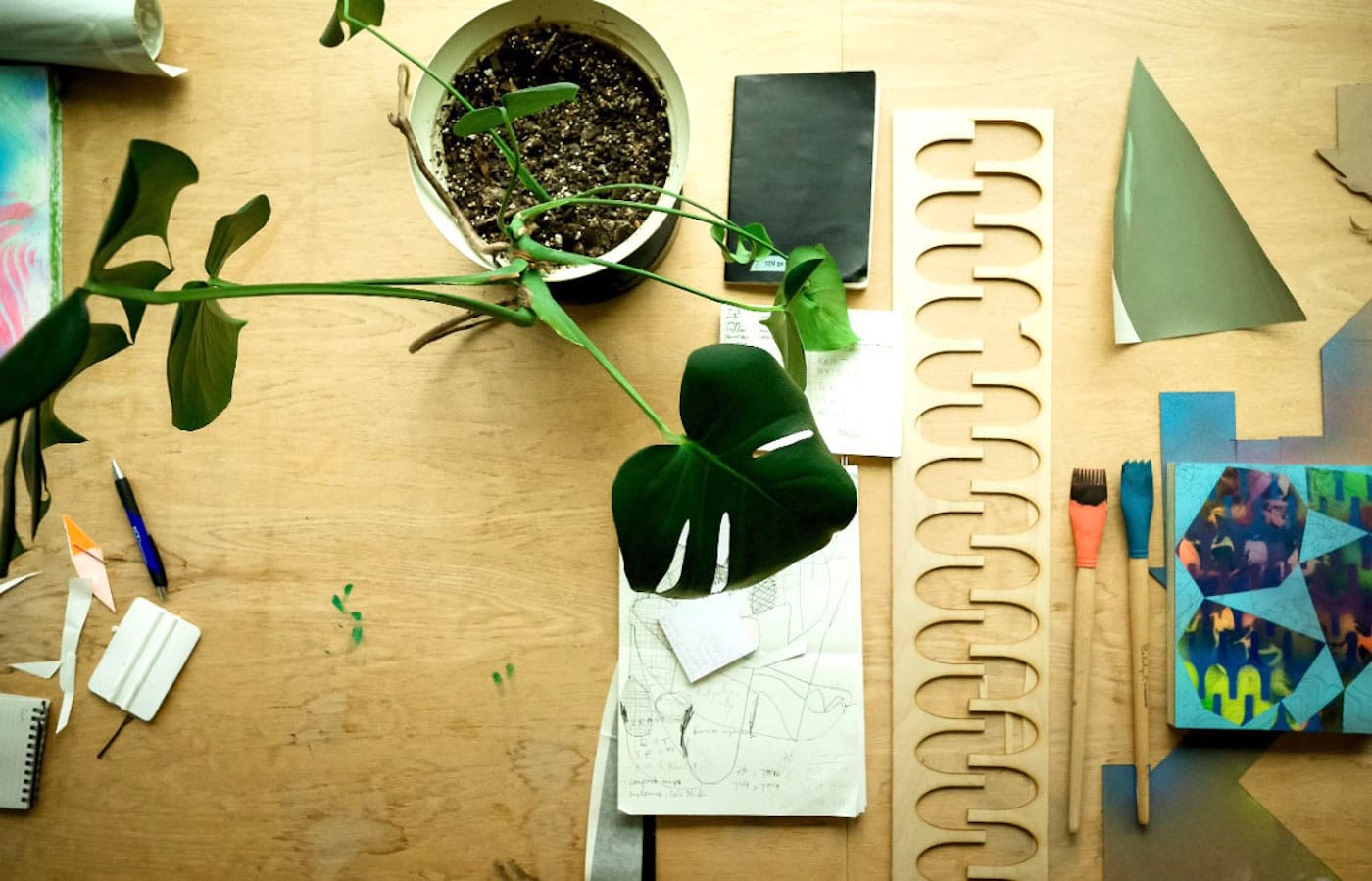
How long have you been working in this space?
Six years.
Describe an average day in your studio.
I like to start around 9am, early but not super early. I often work on as many as five or six things at once. Usually, I have both paintings and drawings going, and work on digital plans for larger-scale public projects. I find it very settling to clean up even when it doesn’t need to be done, as it helps to organize my thoughts. I listen to podcasts in Spanish, which becomes background noise but allows me to check in and out when I want to pay more attention.
How does the space affect your work?
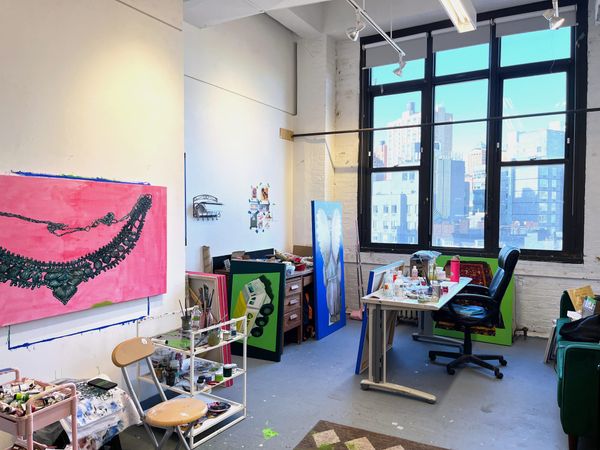
The space is attached to my home, but it has a separate entrance. We had a porch with a roof on it and built the studio right on top. It is approximately 300 square feet. It is filled with light, which I love, and I bring the shadows and patterns cast through the trees outdoors into my work. I love being up in the trees and find that I refer to the natural world in my work.
How do you interact with the environment outside your studio?
My studio has a lot of windows looking out onto the tops of trees. It is a natural setting in a rapidly urbanizing college town. There’s not a large community of working artists, but last December I had an open studio with three other artists that brought the local community in. It really felt like a time of community and connection.
What do you love about your studio?
I love that it is separate from my home. It’s a private, light-filled space with a very long built-in table that I love. I can work on a variety of collages and drawings all at once on it.
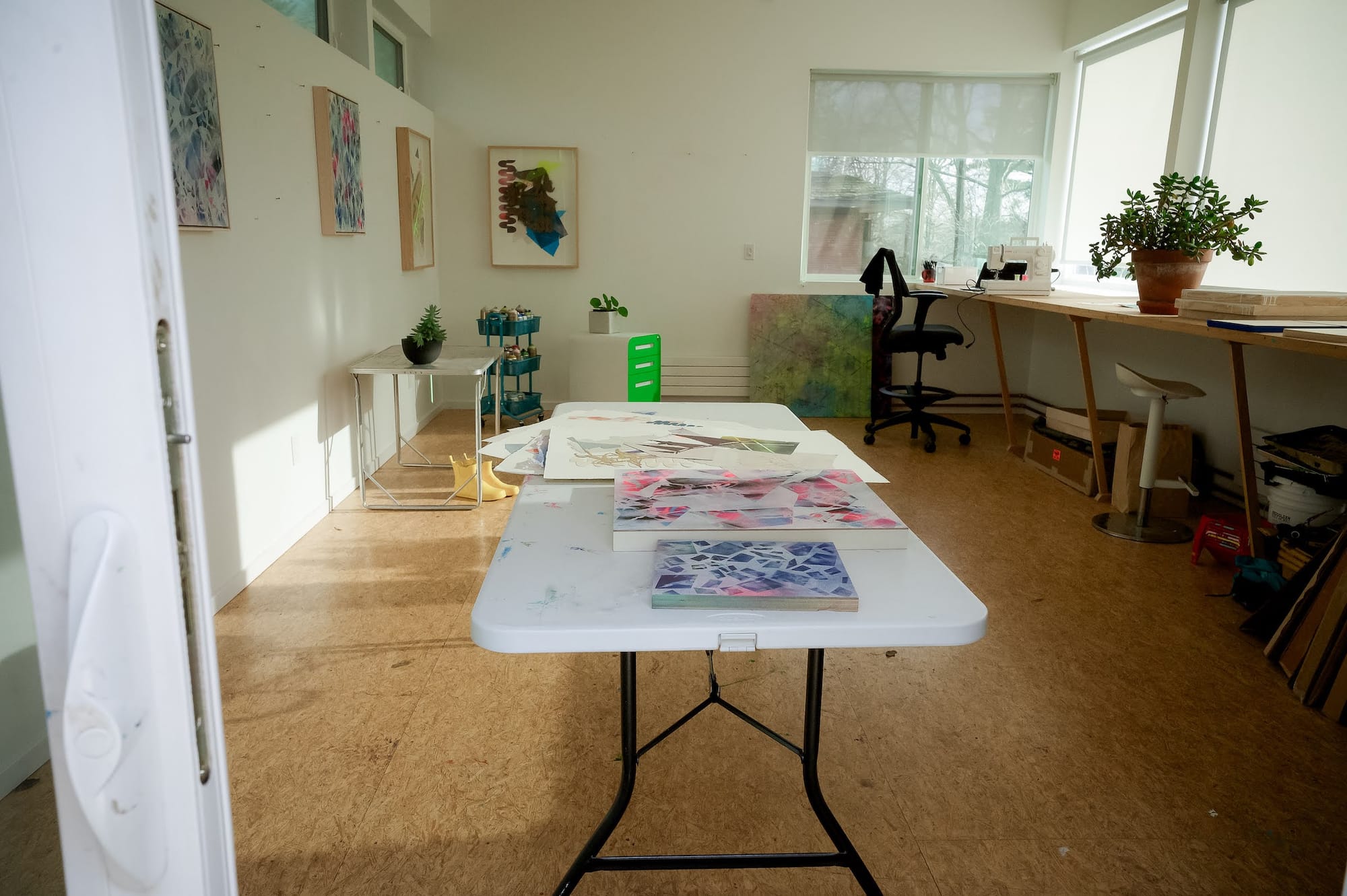
What do you wish were different?
I wish I had an attached outdoor space or better ventilation, as I work a lot with airbrush and aerosol and have to go out onto the (flat) roof of the house to do so.
What is your favorite local museum?
Pennsylvania State University’s main campus is here and has a massive new museum, the Palmer. It has very cool outdoor and indoor areas, with walls of windows, and it uses local sandstone. There is a beautiful arboretum space that mixes the built and the natural. The museum also has its own collection, but the opening exhibition, Made in PA, which I visited, included all local artists.
What is your favorite art material to work with?
Paper, because it can be so many things. It’s so versatile: It can be folded, etched, cut, or painted; it can be small or large; it can assert itself as its own material or it can simulate canvas or other materials. It really is a wonderfully flexible, shapeshifting medium.
Janet Sternburg, San Miguel de Allende, Mexico
How long have you been working in this space?
Two years.
Describe an average day in your studio.
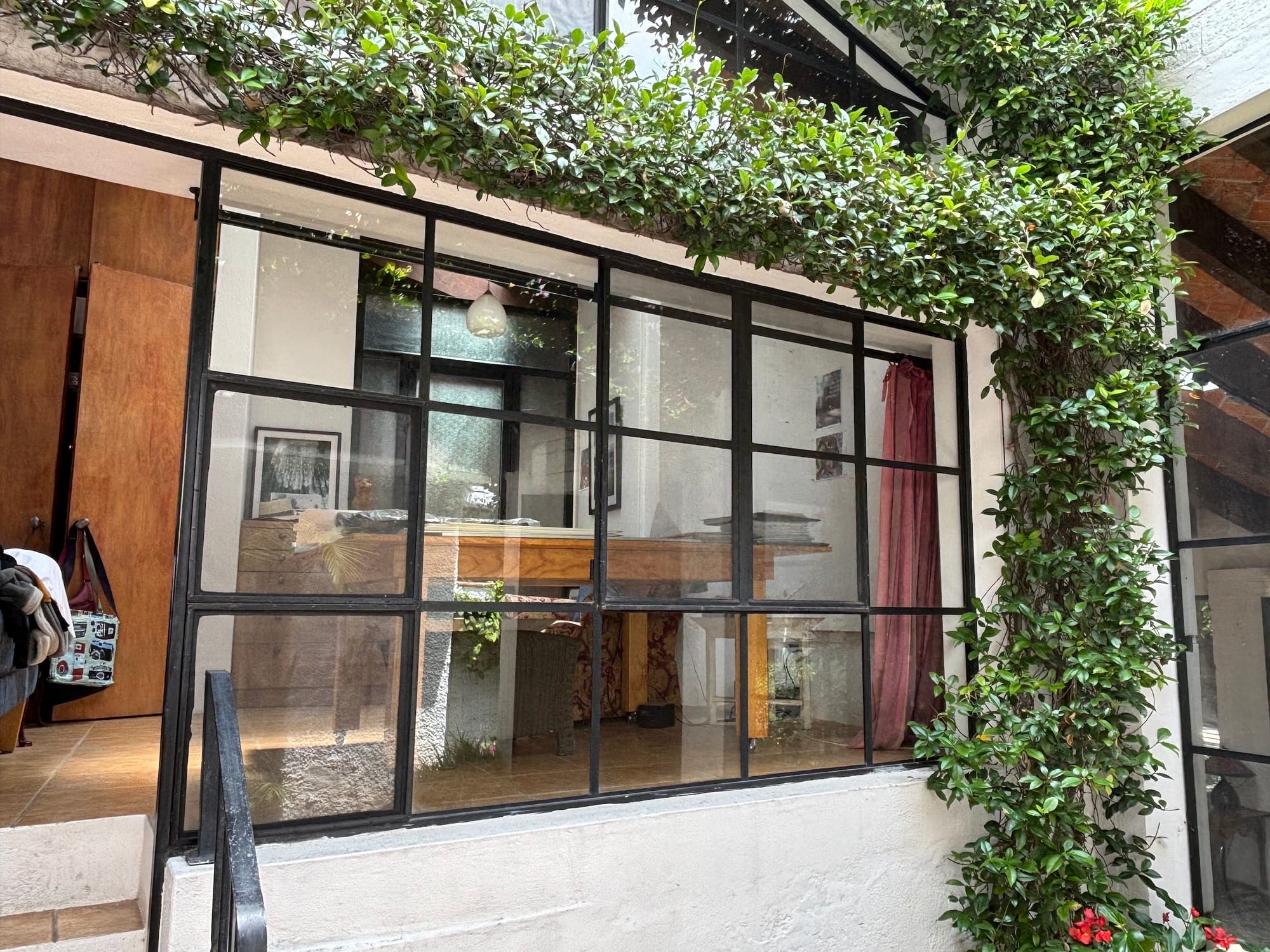
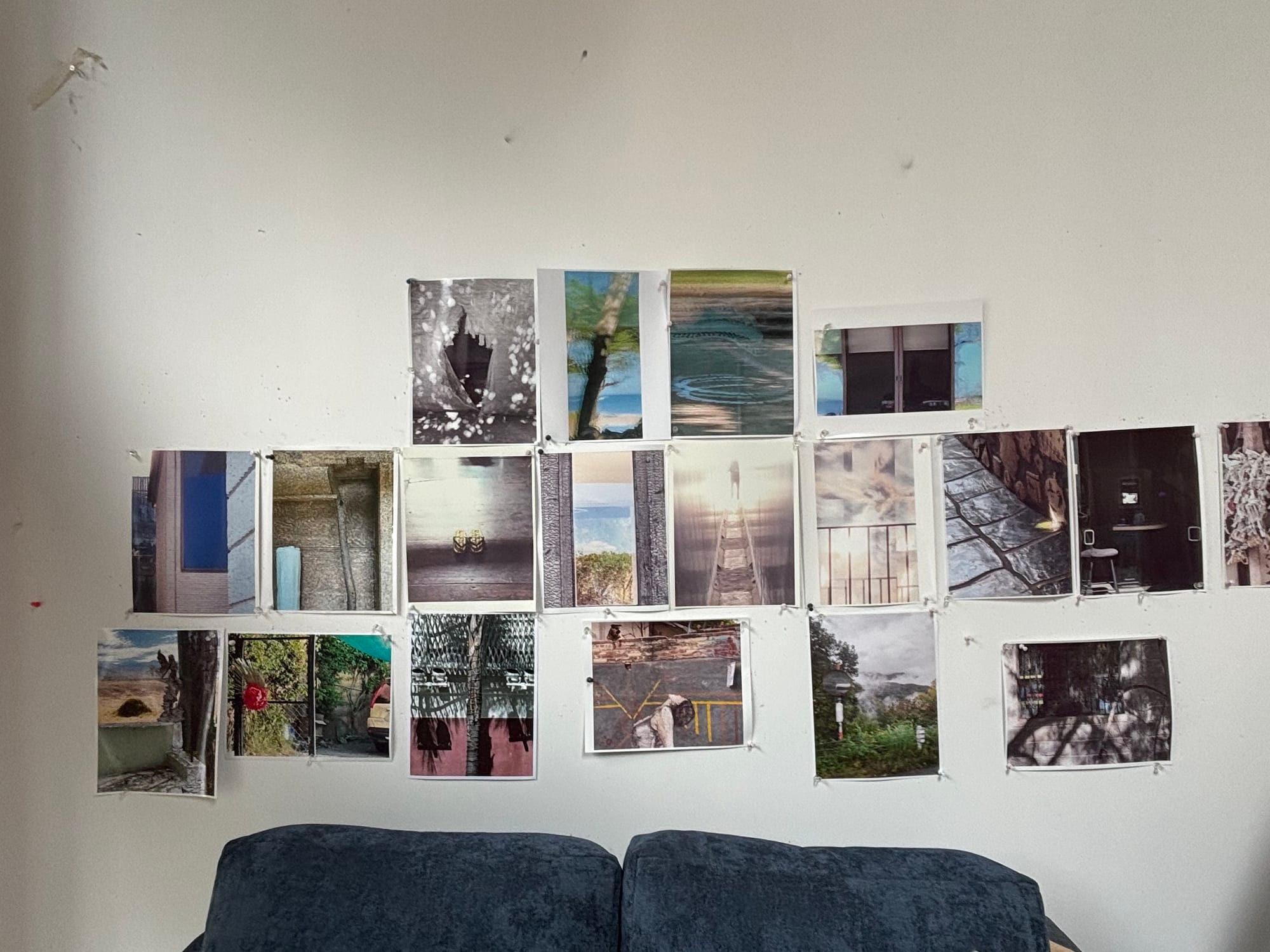
I'm a work nomad. I can be found in my literal studio, a room in my house where I have walls with sheetrock I can use to pushpin photographs from different series. I can look, take down, and rearrange as I work on several projects. However, other times I can be found sitting in a comfortable chair in my living room, looking out at my garden, or on the couch. In other words, I wander as needed for the work. As a photographer, a studio can be where I am: walking, traveling, struck by light, demanding that I take a snapshot. I don't listen to any media while I'm working. I listen to music when I need space for the soul; not to work but rather to be filled.
How does the space affect your work?
The literal studio space is where I think, which I like to do; pile materials onto a very large table and look through them; sit with my computer to work on plans for books and exhibitions; and revel in the light. It is, in other words, a thinking and making space, but not a place where I literally make objects like paintings and sculptures, because that's not what I do.
How do you interact with the environment outside your studio?
I need a lot of quiet solitary time. In the past, when I was affiliated with the California Institute of the Arts, I was part of a large community of artists working in many mediums and involved in organizations. Now, in Mexico, I prefer to be unaffiliated. But I am part of my neighborhood and community in many ways: friendships with other artists, occasionally giving public talks, loving Mexico in all the ways that are apparent in my writing.
What do you love about your studio?
It's mine. No one can enter without my permission.
What do you wish were different?
I wish it were much larger, to afford space for bookcases and storage.
What is your favorite local museum?
Centro Cultural Nigromante San Miguel Allende (aka Bellas Artes).
What is your favorite art material to work with?
My cameras, which are usually low-tech (iPhones) by choice. And I love picking the right paper for my books, making decisions about the color and texture of endpapers, the cover, the fonts. I love production. Also I love making maquettes for forthcoming exhibitions. I love sitting beside a fine arts expert printer, making minute adjustments, color corrections.