A View From the Easel
“The longer I paint, the more I realize what I don’t know or cannot do. Simply exploring the material could keep a person busy forever.”

Welcome to the 254th installment of A View From the Easel, a series in which artists reflect on their workspace. This week, artists find rhythm in mixing colors, exercise while paint dries, and find encouragement in a collection of art books.
Want to take part? Check out our submission guidelines and share a bit about your studio with us through this form! All mediums and workspaces are welcome, including your home studio.
Kimberly Copeland, Southgate, Michigan
How long have you been working in this space?
Three years.
Describe an average day in your studio.
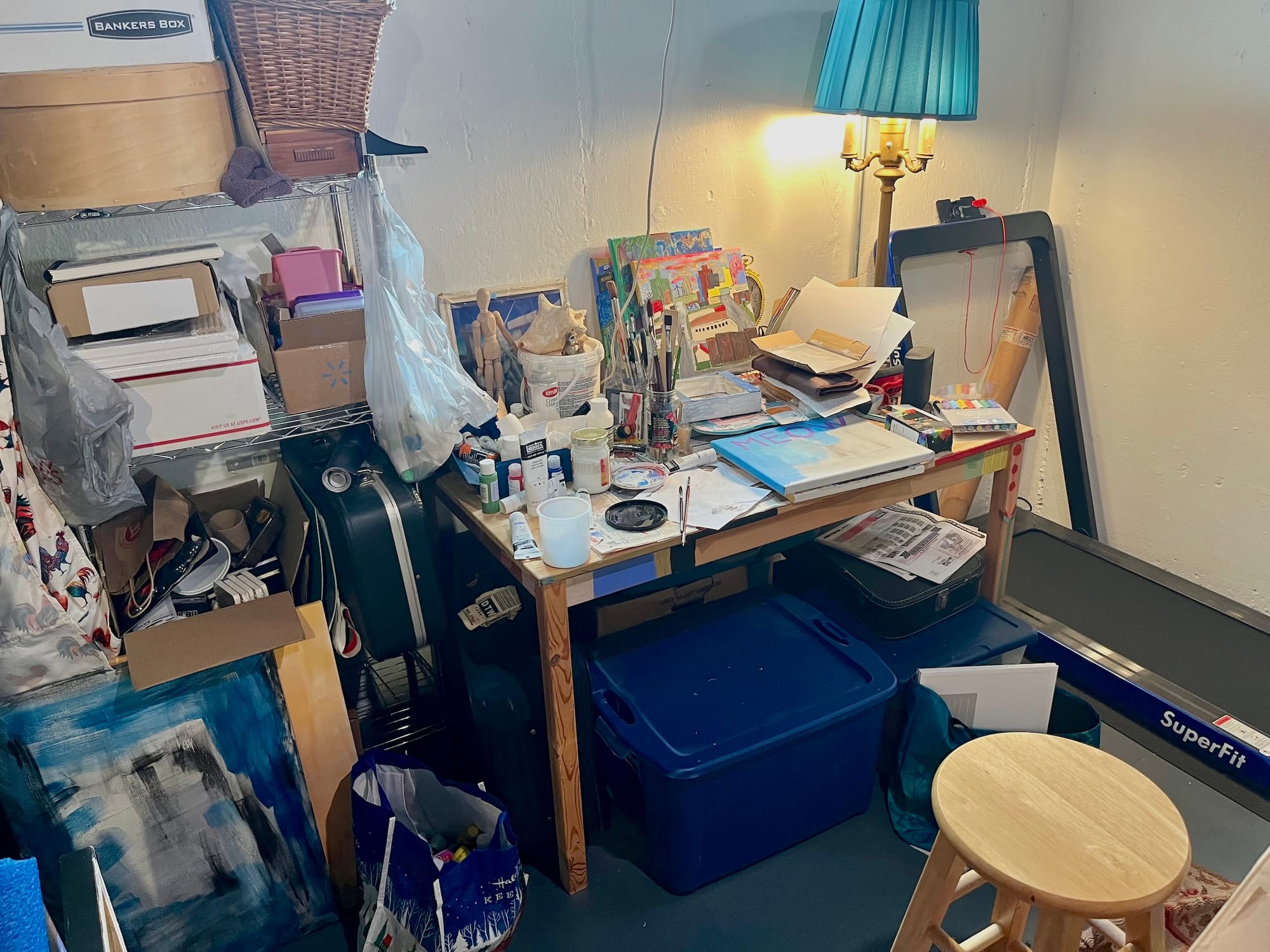
I usually work in the afternoons and evenings. Following the advice of one of my art mentors, the late Ericc Tascott, I have a certain set of clothing to wear when I paint. My space is in our basement, and there’s a fridge down there, so I grab a cold pop to sip on while I work. I always put on some music; lately it’s been Éliane Radigue. I work on four or five pieces at a time. There’s a treadmill in my art cave, and I walk for a while while the paint is drying between layers.
How does the space affect your work?
My space is small, and I have to be creative about how I paint on my canvases. Oftentimes I paint on a tabletop easel, but sometimes I lay the canvas on my table. I want to paint in bigger canvases, but I can’t fathom how I’d manage a large canvas in my small space. The largest I usually go is 24 by 36 inches, but often smaller, as small as two by two inches.
How do you interact with the environment outside your studio?
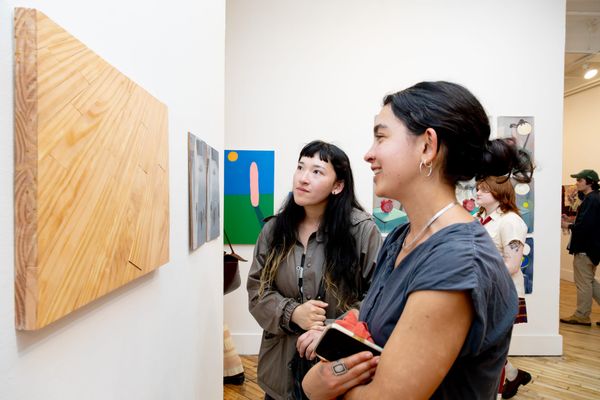
There is a wonderful art community here! My city is considered part of Downriver Detroit, and I am very involved with the Downriver Council for the Arts. I am on the board and gallery committee, and I show work in their exhibitions a couple of times a year.
What is your favorite local museum?
My favorite art exhibitions are at the Downriver Council for the Arts. For a museum, I really like the Muskegon Museum of Art.
What is your favorite art material to work with?
I usually work with acrylic paint, but have recently discovered tempera paint sticks after they were an offered art supply at the Monster Drawing Rally at the Museum of Contemporary Art Detroit.
Gabe Benzur, Brooklyn, New York
How long have you been working in this space?
Fifteen years.
Describe an average day in your studio.
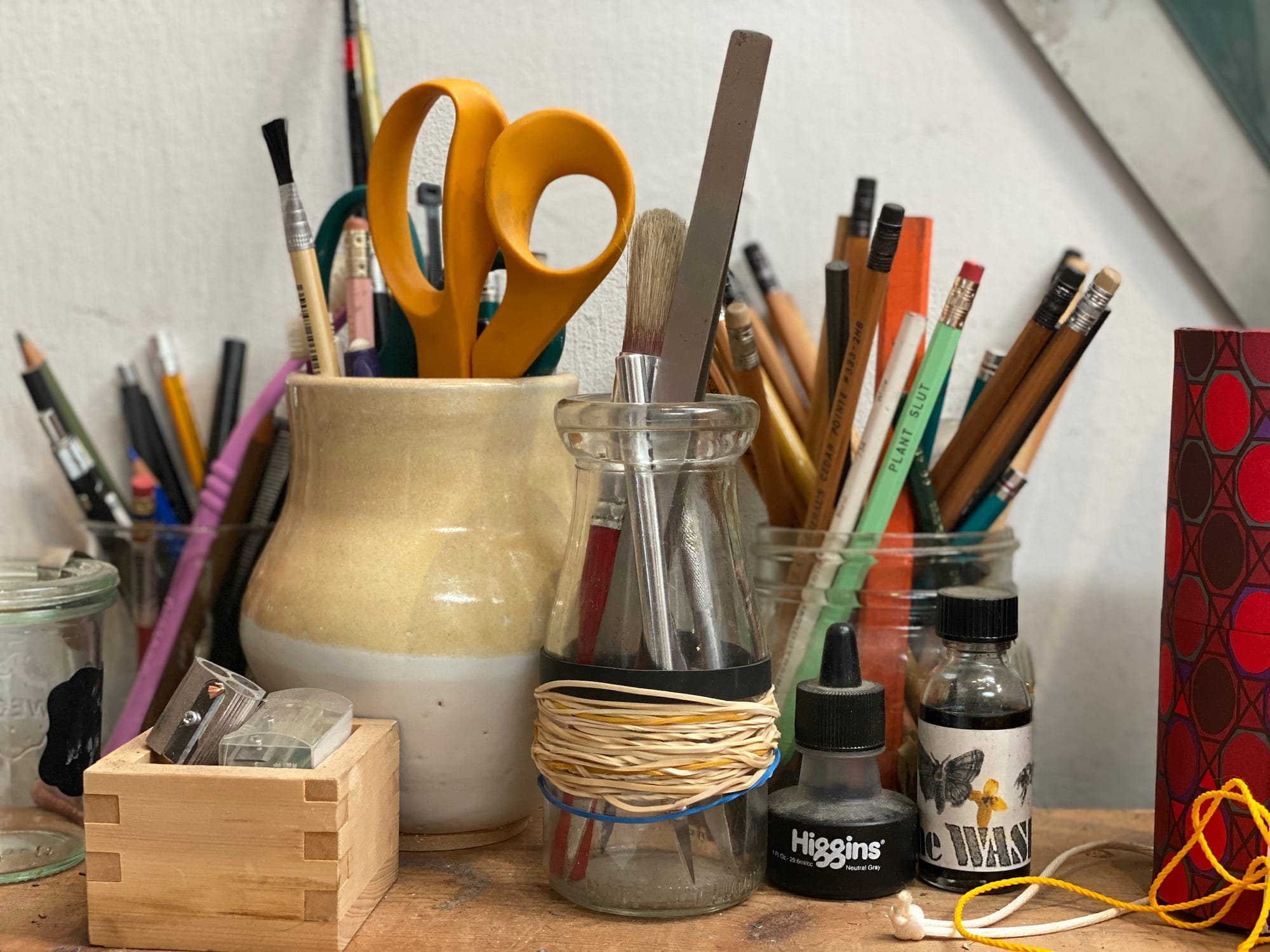
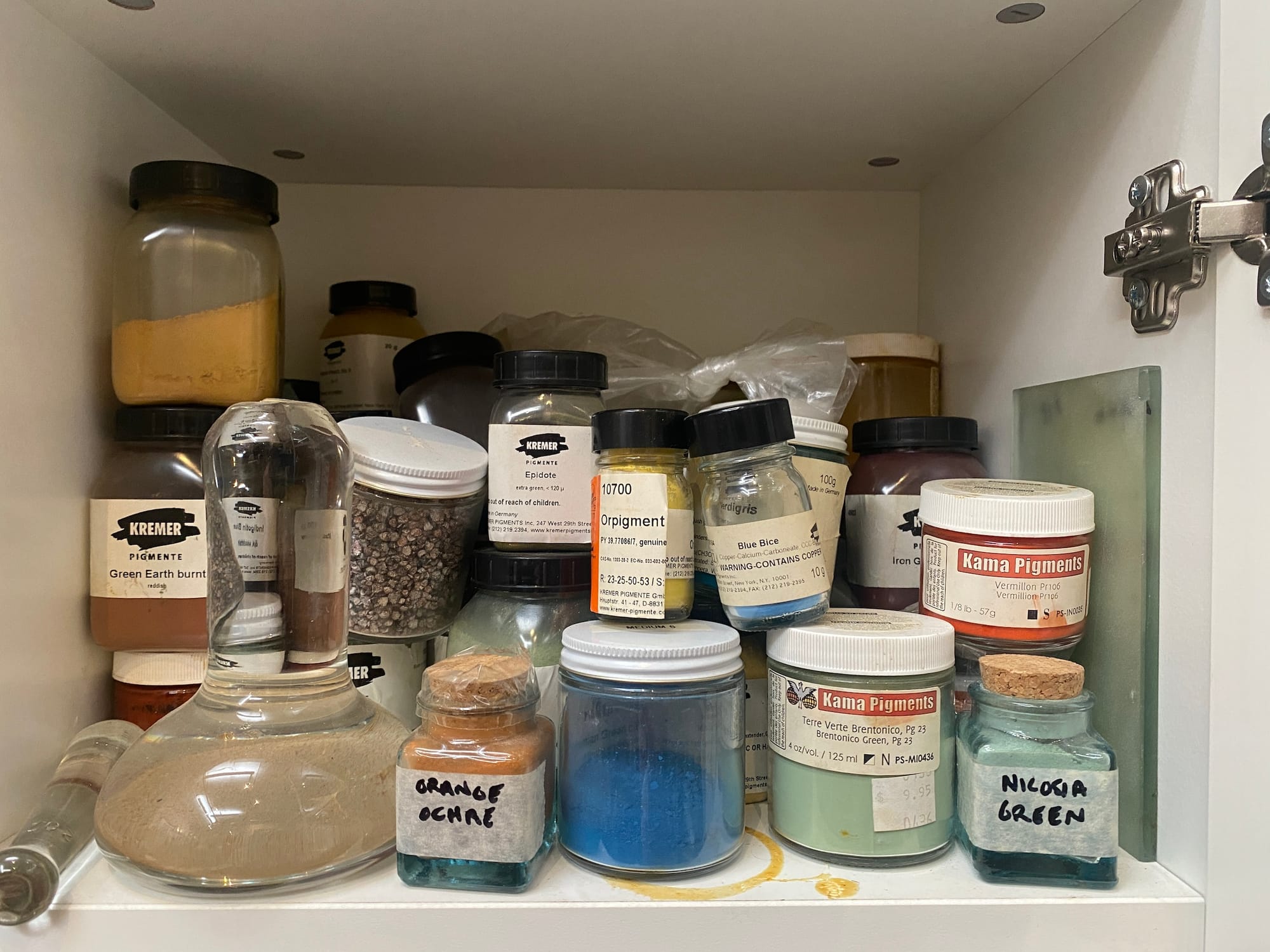
There isn’t a set routine in the studio. I show up around 9 or 10am and think about how I’ll split up the work. I write out a notecard with the things I want to paint on a particular piece, and go through it like a to-do list. I’ll do this for any paintings I think I can complete a passage on that day, usually divided into five-hour units. I like to keep smaller paintings nearby when I’m working on larger works in case I have extra paint – mixing colors is time-consuming and it’s inefficient to mix a color for 30 minutes only to paint a fingernail-sized area in 30 seconds. I have a great sound system at the studio, so there is always music playing. If I need to concentrate for several hours straight I’ll listen to immersive, consuming stuff with a large discography like Aleksi Perälä or Deepchord. I listen to lots of left-field disco, too, but it depends on what I’m painting because it can break my concentration.
How does the space affect your work?
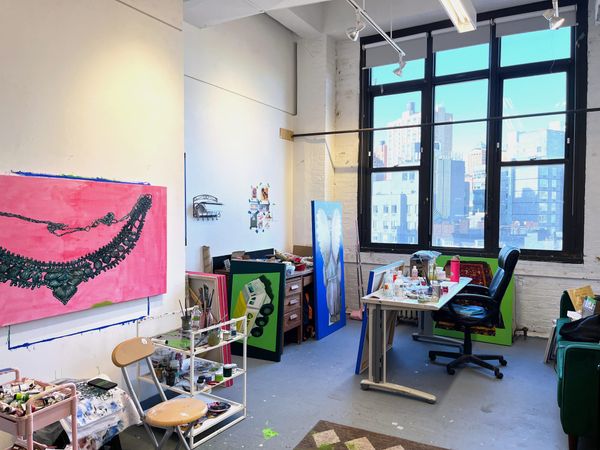
My studio is a workspace but it’s also a cabinet of curiosities for things that I don’t want the cats to break or don’t have space for at home. I have a mask collection but there are simply too many for home, so there are some here. Also a harpoon, a skull collection, meteorites, shells … things that would otherwise be hidden in a drawer. A good-sized natural history collection. In this way, the space is a reflection of my personality. It is full of stimulating things, and so it becomes a stimulating space. It’s a good space for visitors too, despite being small. There is an energy in here that I like.
How do you interact with the environment outside your studio?
The Invisible Dog Art Center has its own built-in art community. The ground floor is used for exhibitions, performances, and events while the second and third floors are artists' studios. The space is an island in the community.
What is your favorite local museum?
The Met. Hands down. I like the breadth of the collection and the quality of everything. It’s probably the best museum of its kind in the world.
What is your favorite art material to work with?
Oil. Once I started oil painting, I never looked back. There are things you can do with oil paint that you cannot replicate in other mediums. The sheer variety of available pigments and paints is staggering. This is a golden age for oil paint. The longer I paint, the more I realize what I don’t know or cannot do. Simply exploring the material could keep a person busy forever.
Cheryl Appe, Shelburne, Vermont
Describe an average day in your studio.
After taking some time for movement in the morning, I'm in my studio by 10am. Typically, I'm working on several paintings at once and the first thing I do is look at the pieces in progress and decide what to work on that day, trying not to overthink it too much. I find it grounding to listen to audiobooks while I work; it helps me to get into a workflow. I like the soothing voice of good narration.
How does the space affect your work?
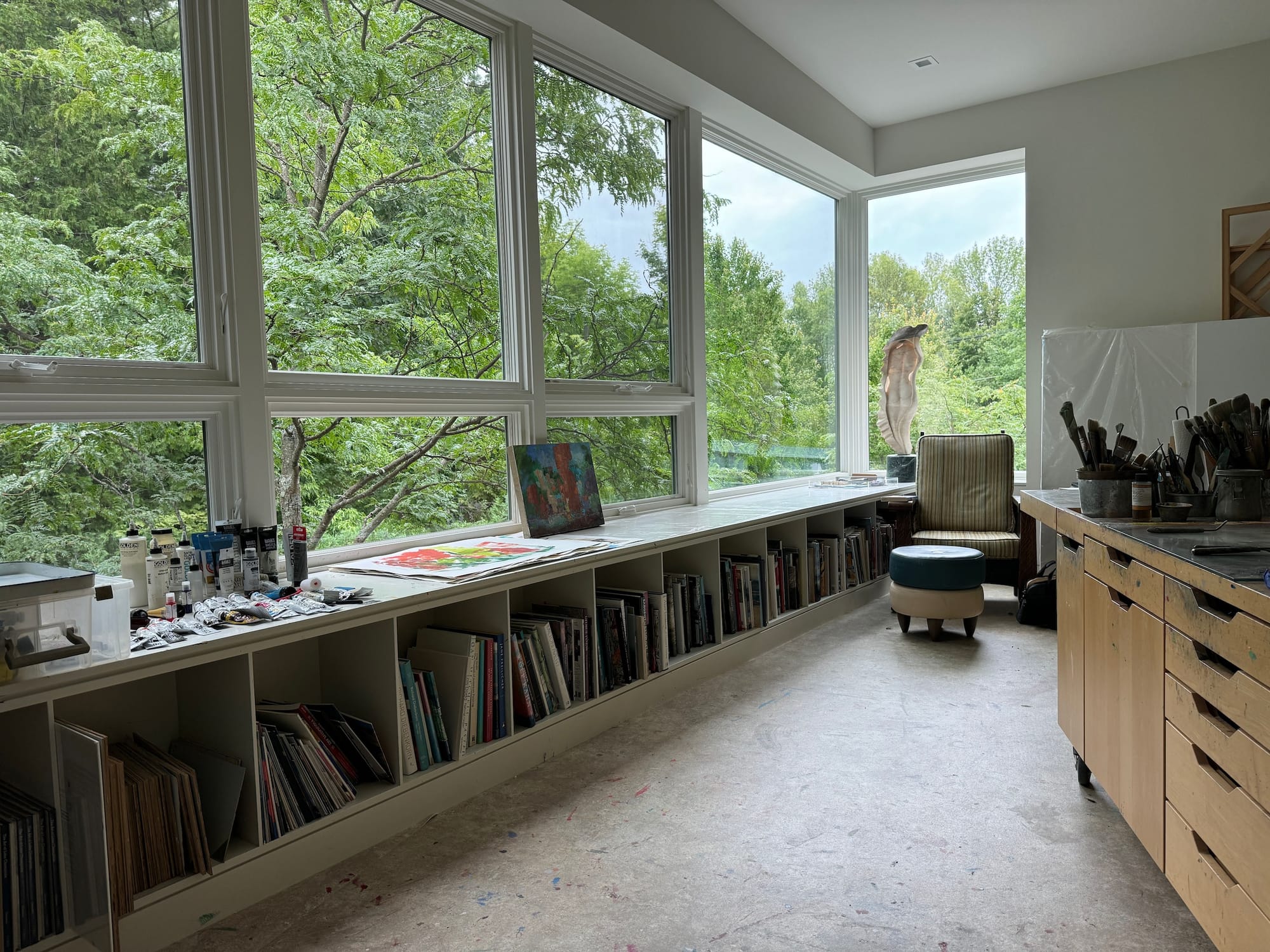
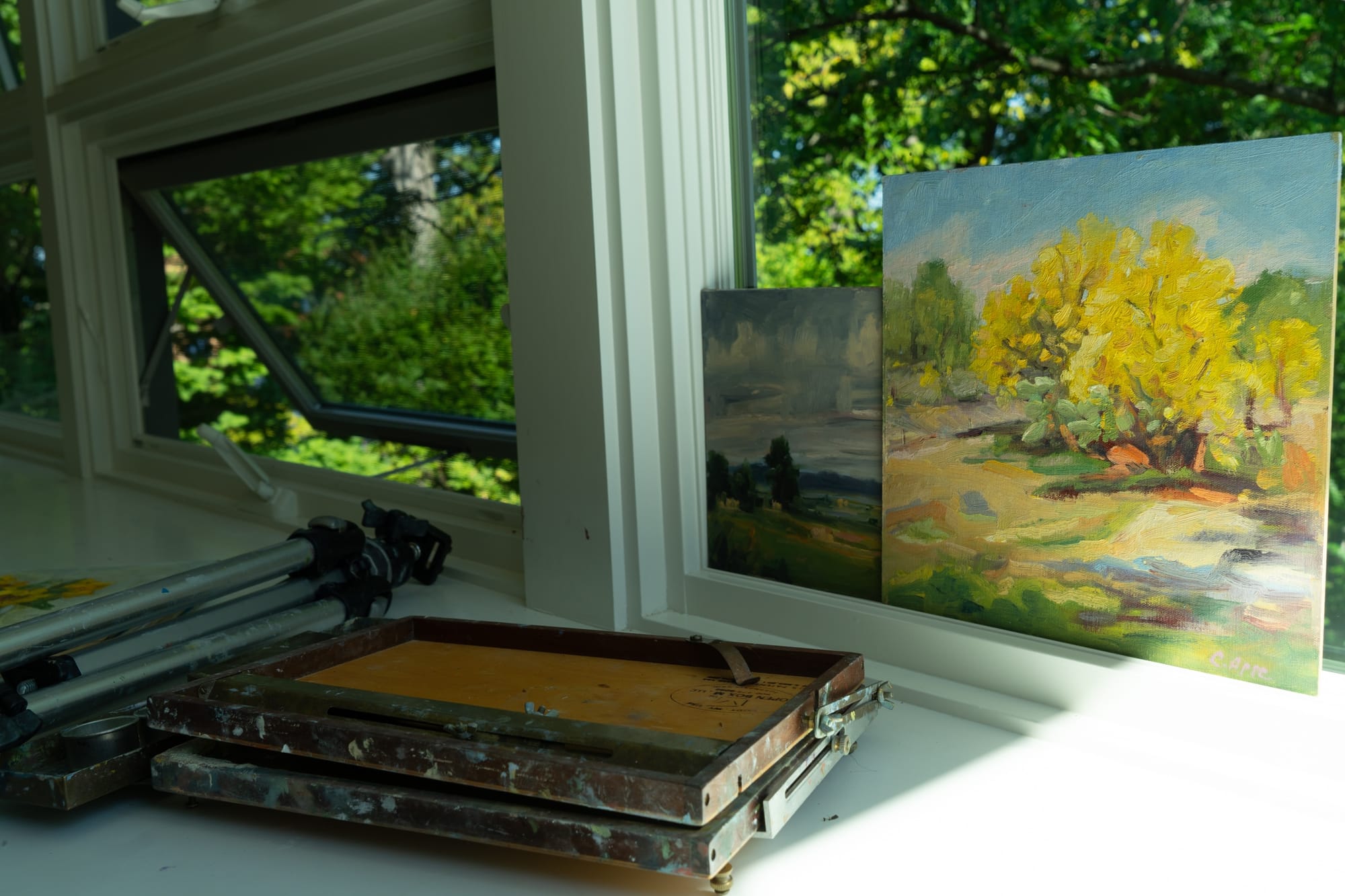
With a bank of north-facing windows that end three feet off the floor, I'm blessed with light. The green of Vermont reflects into the studio. There's a challenge in correcting for greens, but I wouldn't give up the trees and birds for anything. Below the windows sit my many art books, collected over five decades. There is a comfortable chair where I sit and look at books and at work in progress.
How do you interact with the environment outside your studio?
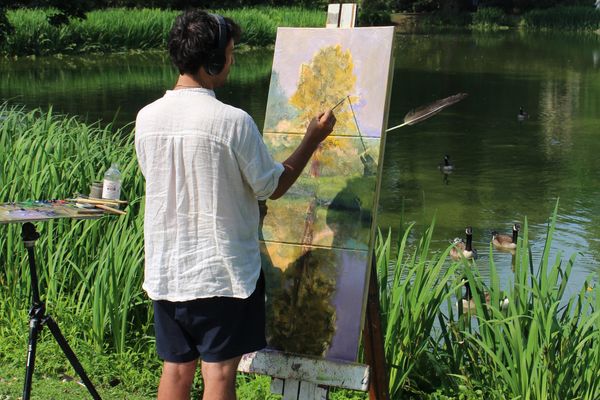
Nature often beckons me outside to paint here in Vermont. The out-of-doors is my second studio. My plein air set-up is always ready to go, and being surrounded by nature allows me to be on location and ready to paint very quickly. There is nothing like standing outside listening, looking, and capturing the fleeting effects of light on the landscape.
What do you love about your studio?
My studio is a place with few distractions. I'm fortunate to have a place for my art-making materials and books as well as enough room to paint pretty large. Art books are my constant companions; they are encouragement from artists past and present to keep working. Having a consistent studio practice, no matter what studio situation I've had, is what has kept me growing. It's the most important thing we can do as artists.
What do you wish were different?
More time. Time to create; time to engage with other artists in my community and beyond. Time, time, time.
What is your favorite local museum?
The Shelburne Museum in my town is the largest art and history museum in northern New England a resource for visual art and material culture. Collections range from a restored carousel to paintings by Monet, Corot, Cassat, and Daubigny. It's a joy to walk around the 25 buildings and gardens on a beautiful day.