A View From the Easel
“I have a day job, too, so studio time is precious.”

Welcome to the 256th installment of A View From the Easel, a series in which artists reflect on their workspace. This week, artists consider water amid leakage issues, experiment with color photograms, and return to the creative communities where they got their start.
Want to take part? Check out our submission guidelines and share a bit about your studio with us through this form! All mediums and workspaces are welcome, including your home studio.
Li-Ming Hu, New York City, New York
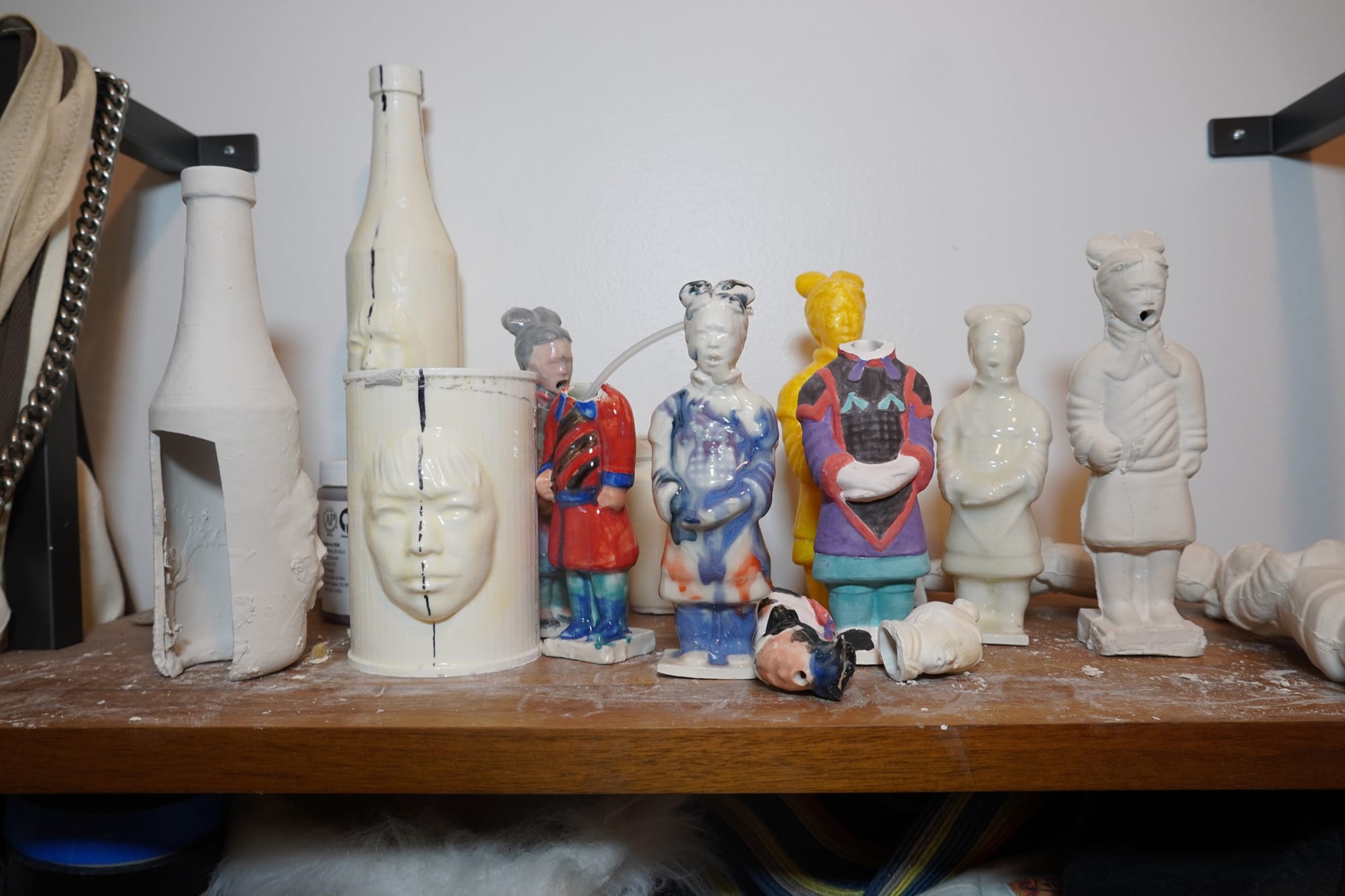
How long have you been working in this space?
Two years.
Describe an average day in your studio.
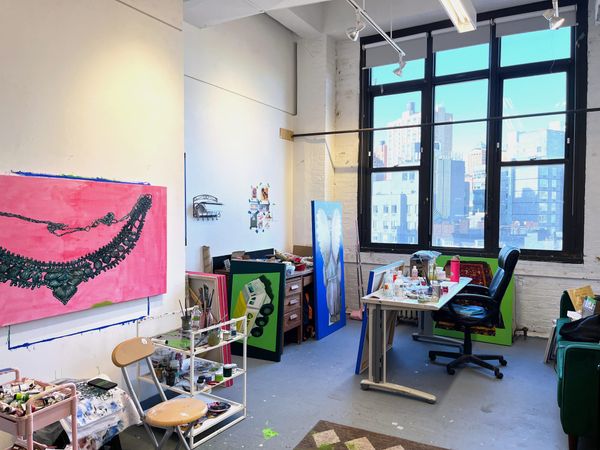
It really depends on what I'm working on. I have a day job, too, so studio time is precious. In downtime, I'll just read or try and teach myself some software. Other times, like now, I'll be working on a number of things at once, both digital and analog which means a lot of space reconfiguration — greenscreen and ceramics do not go well together!
How does the space affect your work?
I've had to scale down what I make, dispose of more stuff instead of holding onto it on the off chance I'll use it, and try to resist my natural lean toward working in chaos.
How do you interact with the environment outside your studio?
I did a residency at Flux Factory in Long Island City when I first moved here, and the seeds of my community are still there. I'm fortunate to still be able to pop in to use their woodshop or make some molds.
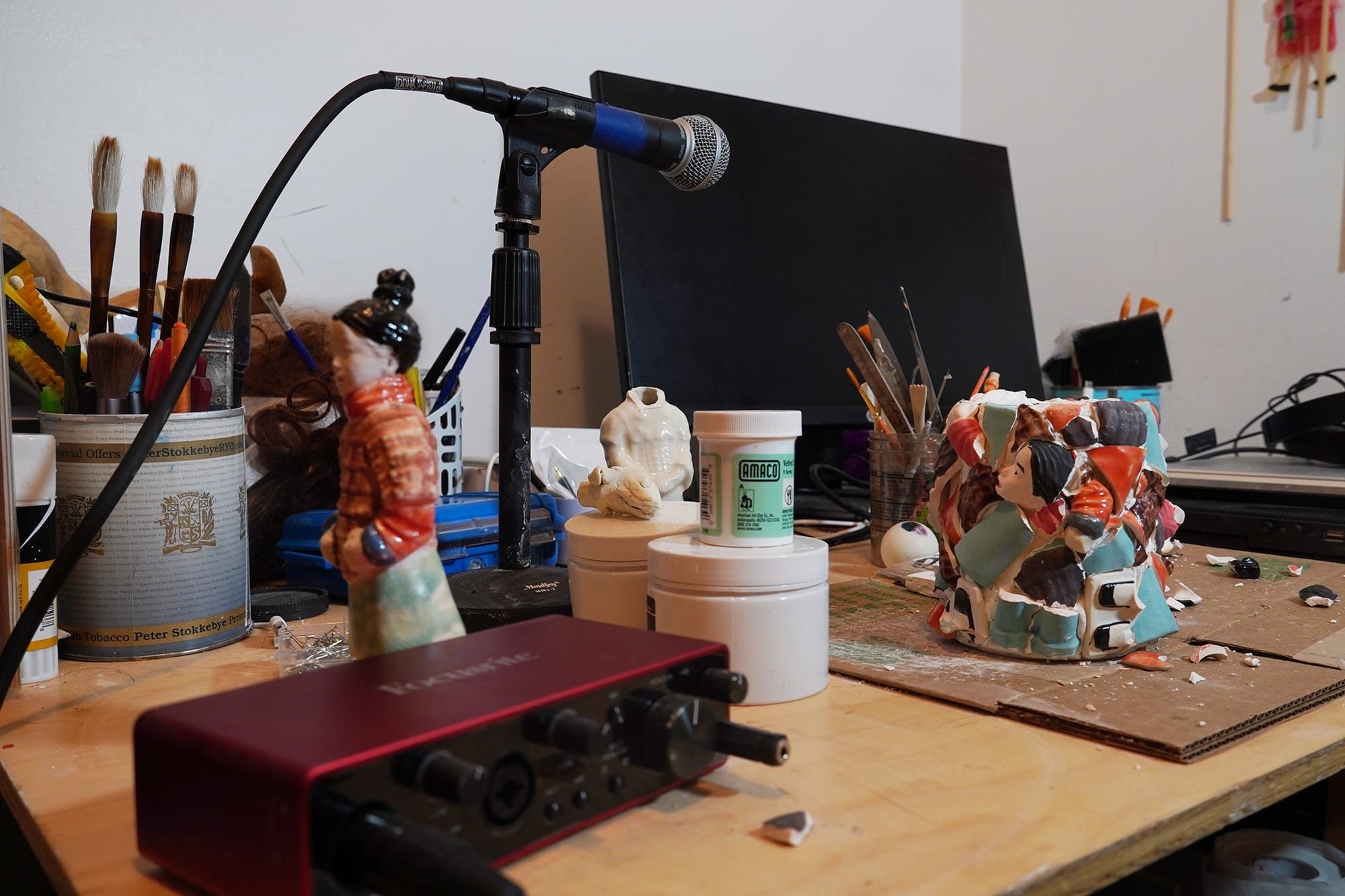
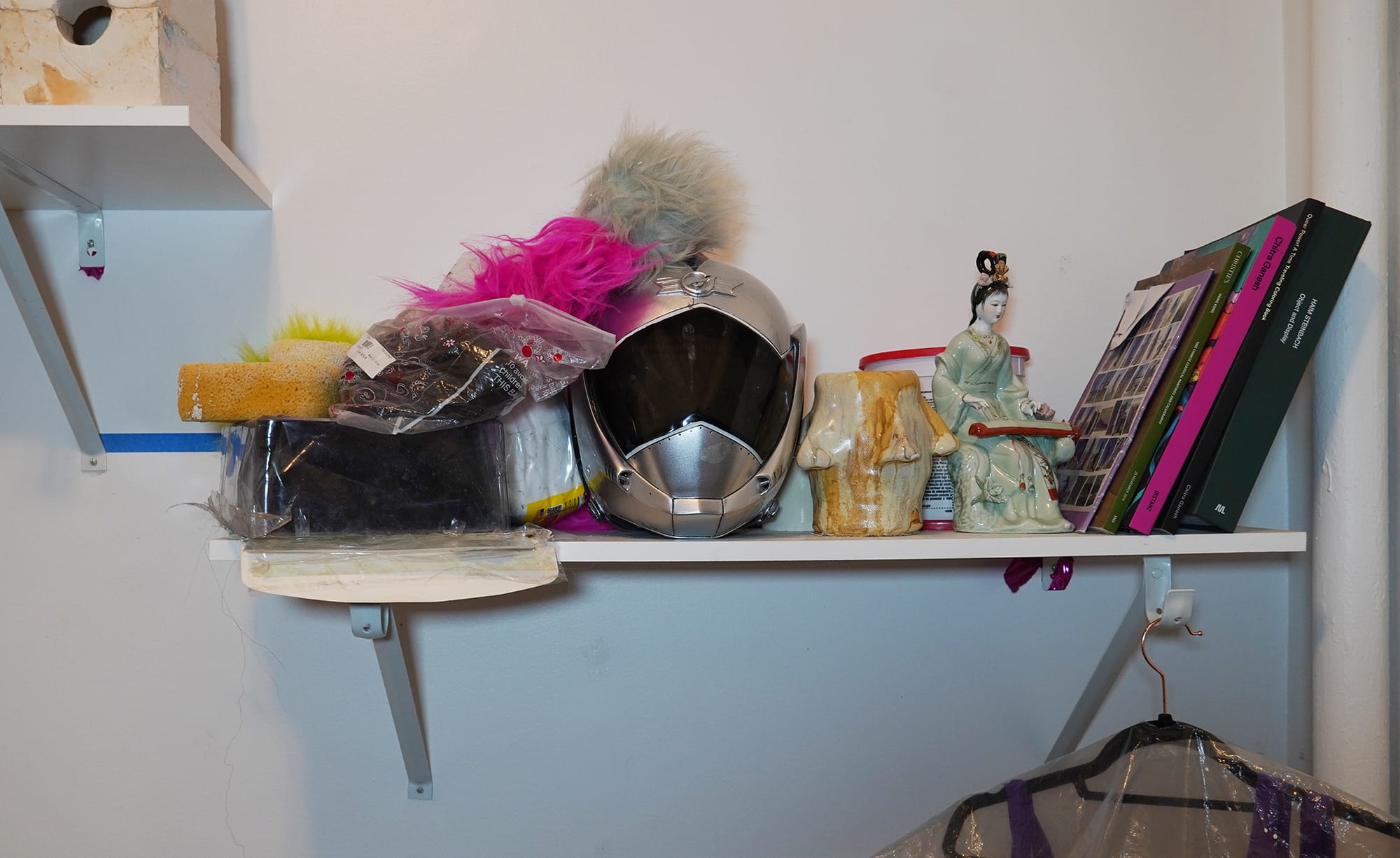
What do you love about your studio?
The fact that I have one.
What do you wish were different?
More space! Ideally one where video and sculpture could coexist harmoniously.
What is your favorite local museum?
The New Museum. I'm sad it's closed for expansion — I'd rather have it stay the same size and stay open.
What is your favorite art material to work with?
I'd have to say, for now, ceramics. It's only been six months so I'm very much still in the honeymoon period.
Young Grace Cho, Brooklyn, New York
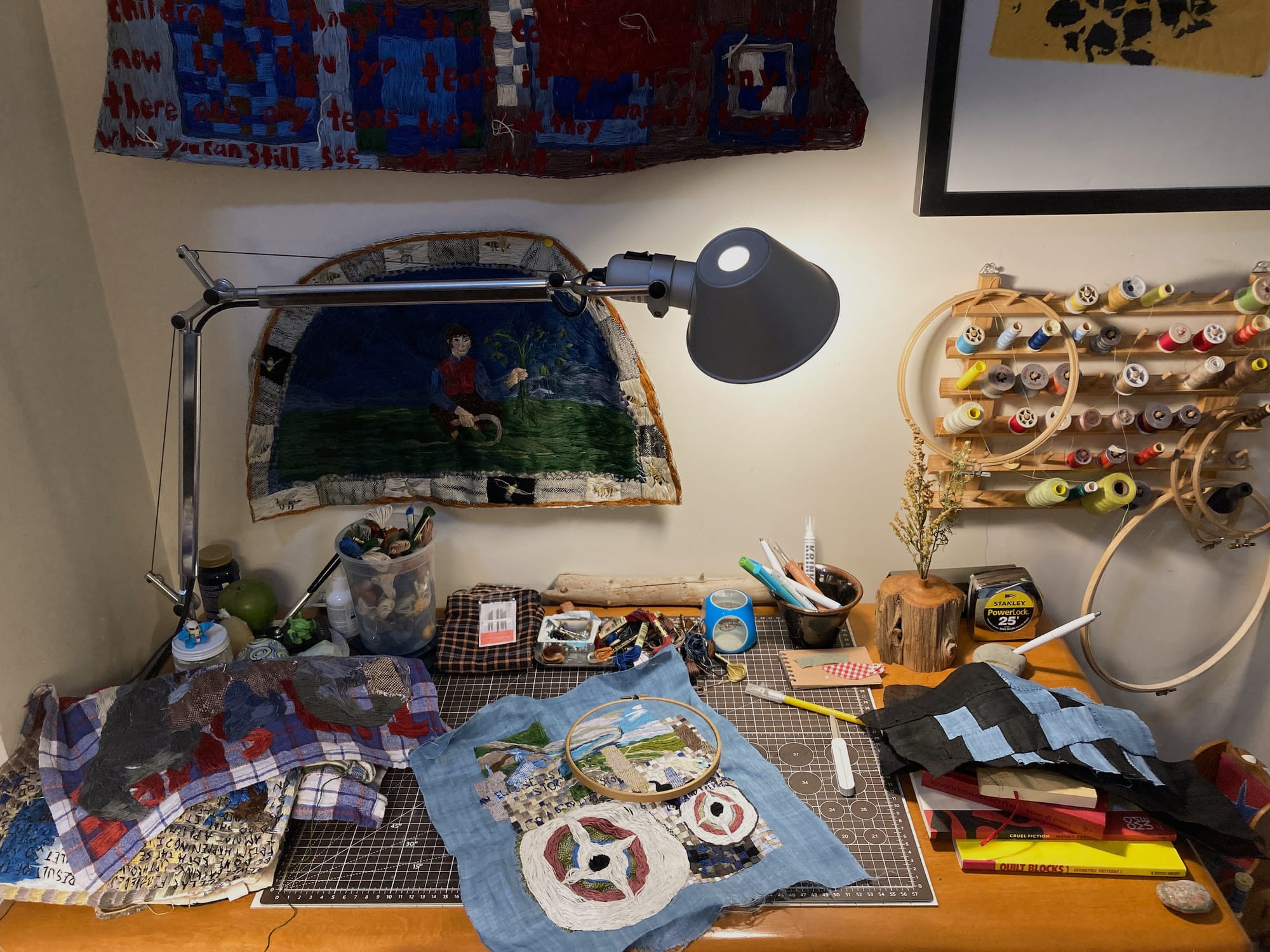
How long have you been working in this space?
Two and a half years.
Describe an average day in your studio.
I work in the evenings and nights, after I finish my day job as a pastry chef. I work on one thing at a time until it's finished.
How does the space affect your work?
My studio is in my home, and my home is a tiny shared apartment in Brooklyn. It's shaped like a wide hallway, with two windows in the front and one at the end. Anything that affects my home life affects my work. In parts of Brooklyn, and in crappy apartments in general, there are always water problems; a few months ago the sealant around the toilet cracked, leaking foul toilet water; later, our upstairs neighbors installed a faulty bidet and water came through the ceiling; now, the sealant on the shower is cracked and water seeps out every time we use it. In my studio I think about water all the time.
How do you interact with the environment outside your studio?
I am most involved in my neighborhood through aspects of my food practice — I've baked to help fundraise for a local Community Supported Agriculture, sold kimchi at a nearby bar, and been a part of community markets.
What do you love about your studio?
I work mostly at a desk in my living room; my partner and I bought the desk in pieces off Craigslist from a woman living on Canal Street. It had been her father's and halfway through refinishing it she abandoned the project and sold it to us. We mostly finished it, except for the side drawers; it has a massive amount of storage and a built-in bookshelf and it is a great place to sit and sew. Above the desk is a print by Maia Ruth Lee that I won in a raffle, an incredibly special thing. It's the only raffle I have won in my life. On the desk is one of my favorite objects: a stone with a hole eroded in it just large enough that it can be a pen stand.
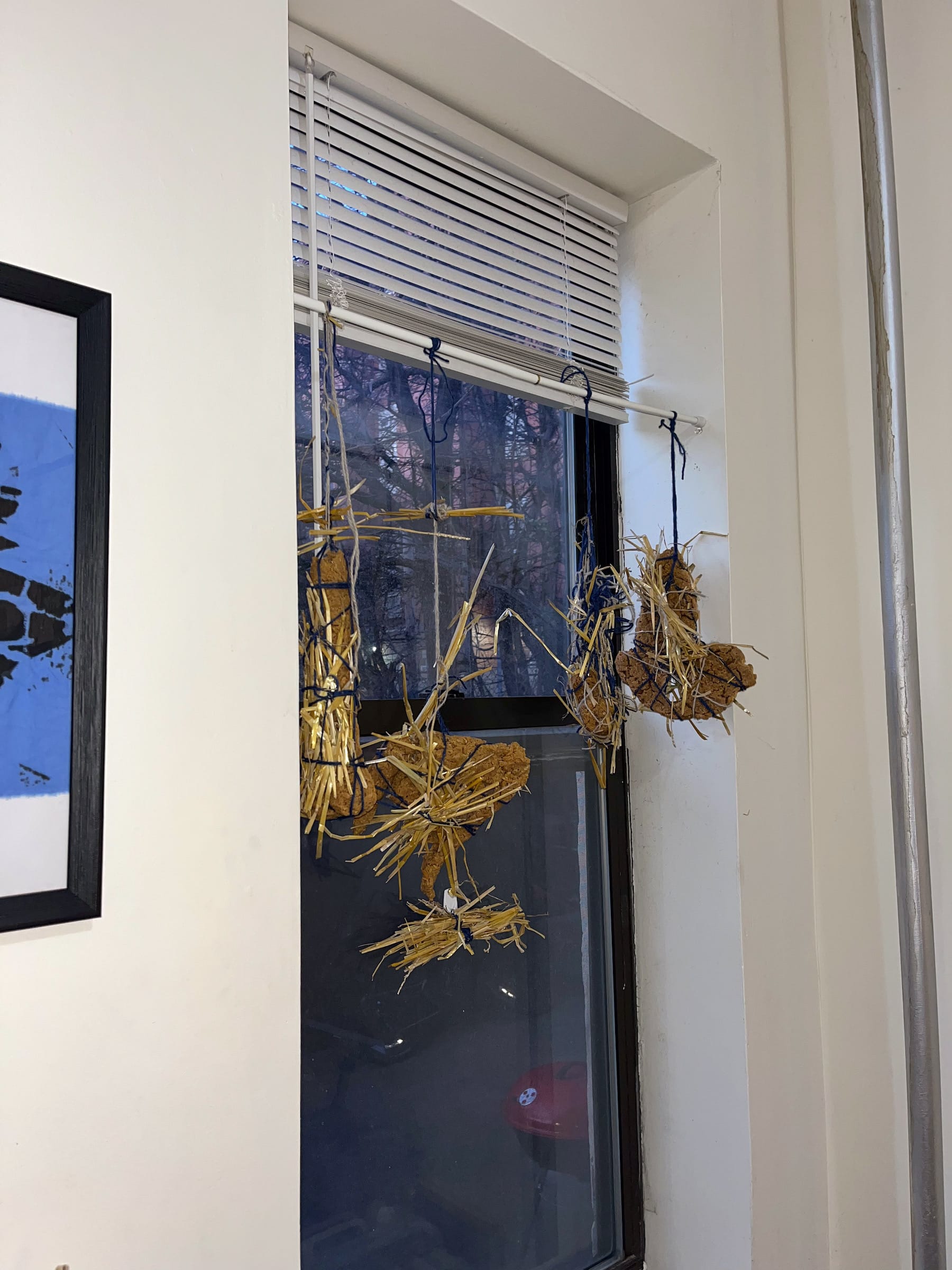
What do you wish were different?
When I work at night and the window is open, I can hear the rats that live in the yard behind ours. When the sun sets they move into our yard and all of the neighbors' yards looking for food, and to play and hang out. They can be really loud; our cat, Eggy, used to sit at the window looking out at them, so badly wanting to hunt; now, two and a half years later, she's not as interested because they visit every night.
What is your favorite local museum?
The American Folk Art Museum on the Upper West Side is great. Admission is free and it's a block from Central Park. Their exhibition What That Quilt Knows About Me was one of my favorite shows I saw last year.
What is your favorite art material to work with?
I work a lot with found textiles and I like working with them the most when they're threadbare. Mending is a significant part of my embroidery work, and it is especially enjoyable when the wear on a textile affects the final product.
Ellen Carey, Hartford, Connecticut
How long have you been working in this space?
Seven years.
Describe an average day in your studio.
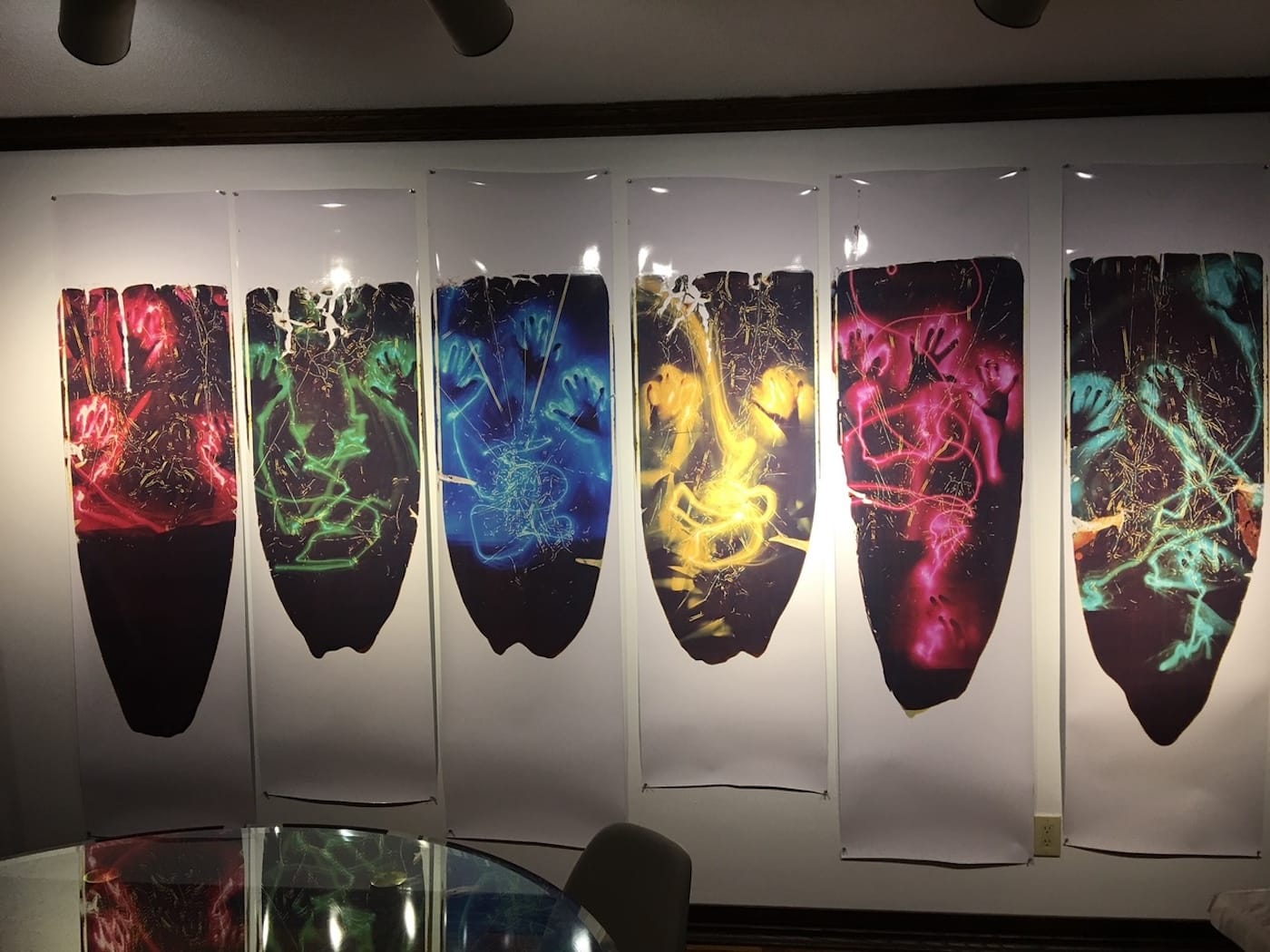
It is a full work-a-day world. I start work with music, take a brief lunch break, then work until the end of the day. It is divided into three categories: pre-production (get ready to work); production (all work); post-production (document work) — or color darkroom for photograms.
How do you interact with the environment outside your studio
There's lots to do in Connecticut with the New England corridor: many museums — Wadsworth Atheneum, New Britain Museum of American Art, Yale University Art Gallery, MASS MoCA, plus Real Art Ways and others.
What do you love about your studio?
Time to create with my imagination.
What do you wish were different?
More time and more funds.
What is your favorite art material to work with?
Polaroid 20x24 camera and color photograms, both unique.