A View From the Easel
“After teaching middle school for years, quiet still feels like a rare and precious luxury. Many ideas come to me amidst this silence.”

Welcome to the 268th installment of A View From the Easel, a series in which artists reflect on their workspace. This week, artists thrive in the equilibrium between chaos and order, and thank the bees who co-author paintings by producing wax for encaustic.
Want to take part? Check out our submission guidelines and share a bit about your studio with us through this form! All mediums and workspaces are welcome, including your home studio.
Cecile Chong, Manhattan, New York
How long have you been working in this space?
Fifteen years.
Describe an average day in your studio.
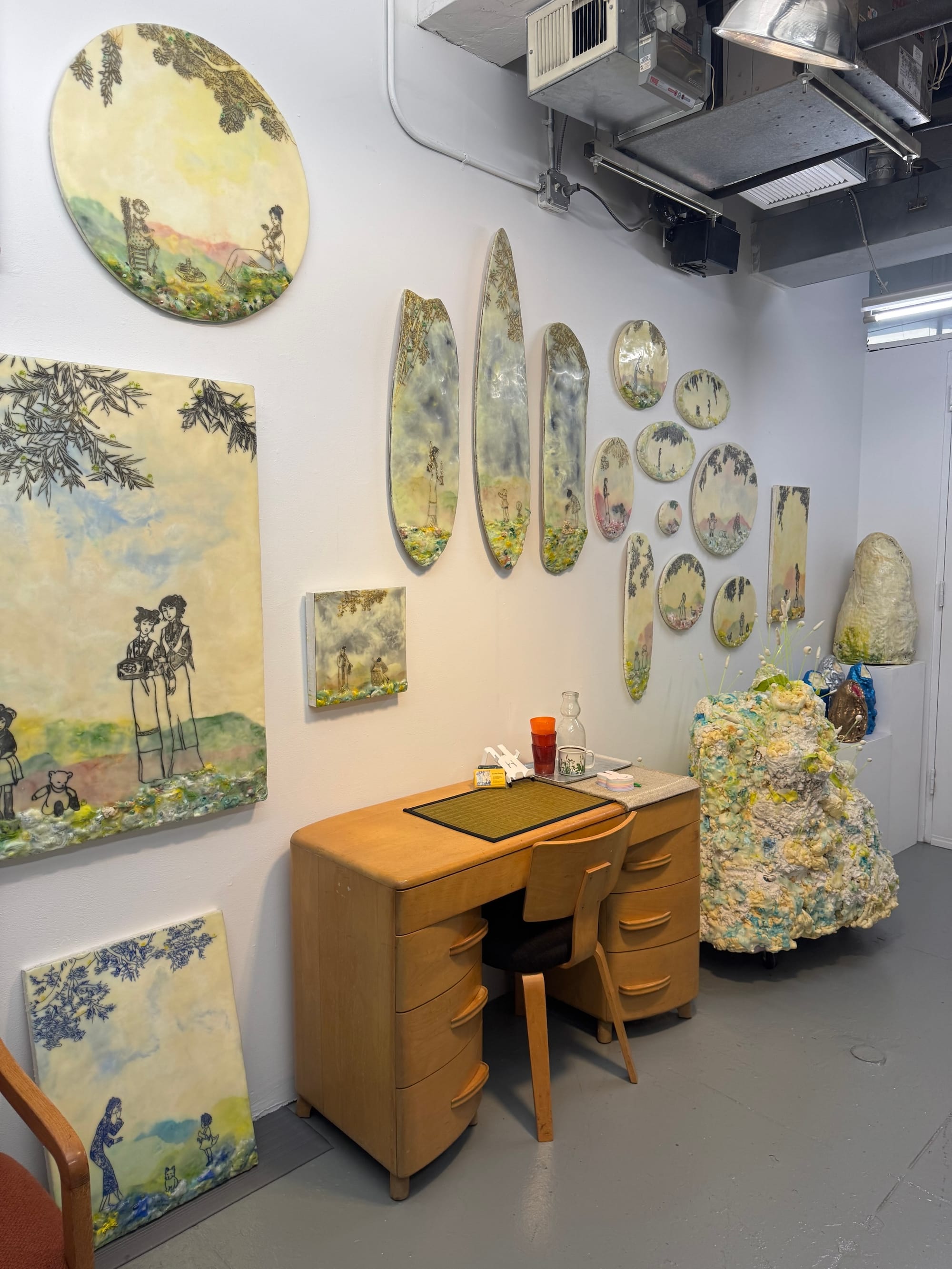
I avoid rush hour like the plague, so I usually get to my studio around 10am and work until 6pm. The first thing I do when I arrive is plug in my hot palette. I wait for my encaustic to melt to that perfect, buttery consistency which takes about one to one and a half hours. During this time, I prep my materials, put compositions together, or organize my space. I prefer to work on three pieces simultaneously because each layer of encaustic needs to cool and cure before the next. This way, I’m always moving but not rushing, a pace that suits my process. At the end of the day, I like to tidy up and put everything back in its place. I work in complete silence; after teaching middle school for years, quiet still feels like a rare and precious luxury. Many ideas come to me amidst this silence.
How does the space affect your work?
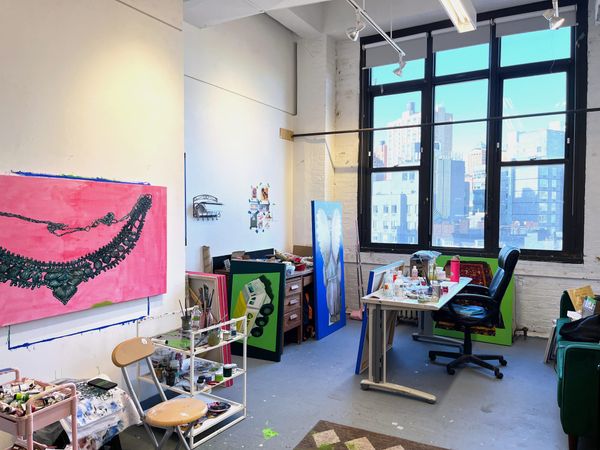
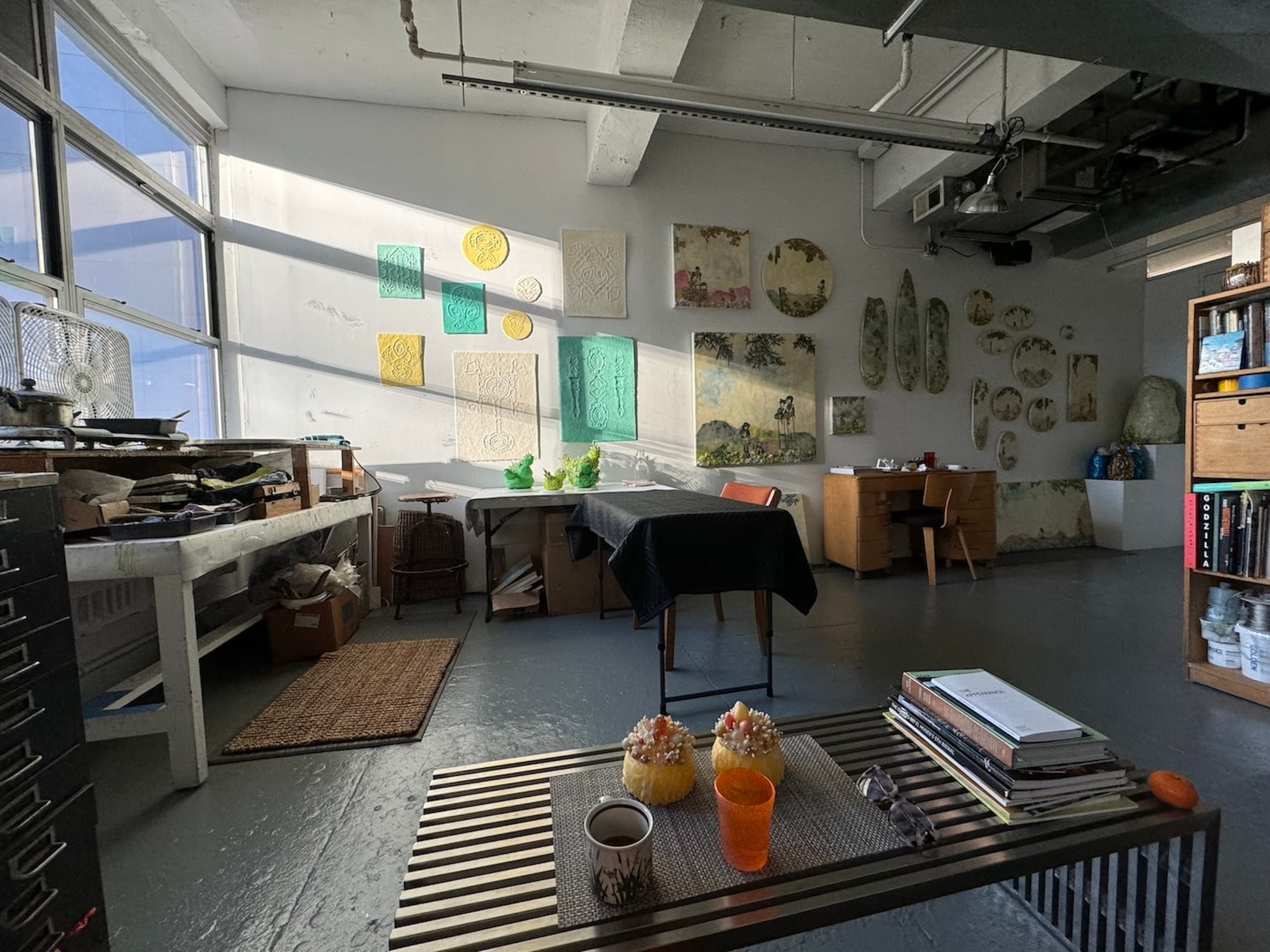
I see my studio as my playground, my lab, and my kitchen. Being on the seventh floor, the natural light streaming through the windows at certain times of the day feels like nature’s gentle nudge to pause, reflect, and keep experimenting.
How do you interact with the environment outside your studio?
My studio is in the Garment District and a few blocks from Times Square, I’m constantly reminded of the dynamic pulse of New York City. The location keeps me connected to the realities of urban life. When I’m done working at 6pm, I’m usually out to openings, events, or having drinks or dinner with friends. I’m constantly engaging with the city’s broader artistic and cultural ecosystem.
What do you love about your studio?
What I love most about my studio is the incredible community within the Elizabeth Foundation for the Arts Studios. Sharing the building with around 70 talented and supportive artists creates an atmosphere of camaraderie. It’s a space that feels like an oasis, offering not only physical space to create but also a sense of connection. I love the dialogue and shared energy among the artists.
What do you wish were different?
The presence of unhoused individuals near my studio serves as a constant reminder of the systemic inequities that exist not just in the city, but across the world.
What is your favorite art material to work with?
I absolutely love working with encaustic and have been using it for over 15 years. It still feels like magic to me. The material’s translucency and transparency never cease to captivate me. Plus, its dual function as both a paint and an adhesive lets me build 25 to 30 layers in each painting, creating rich depth and texture. As I layer away, I often find myself silently thanking the bees for their hard work. If only they knew they had a side gig in the arts!
Ufuk Ali Gueray, Kjipuktuk/Halifax, Canada
How long have you been working in this space?
Six years.
Describe an average day in your studio.
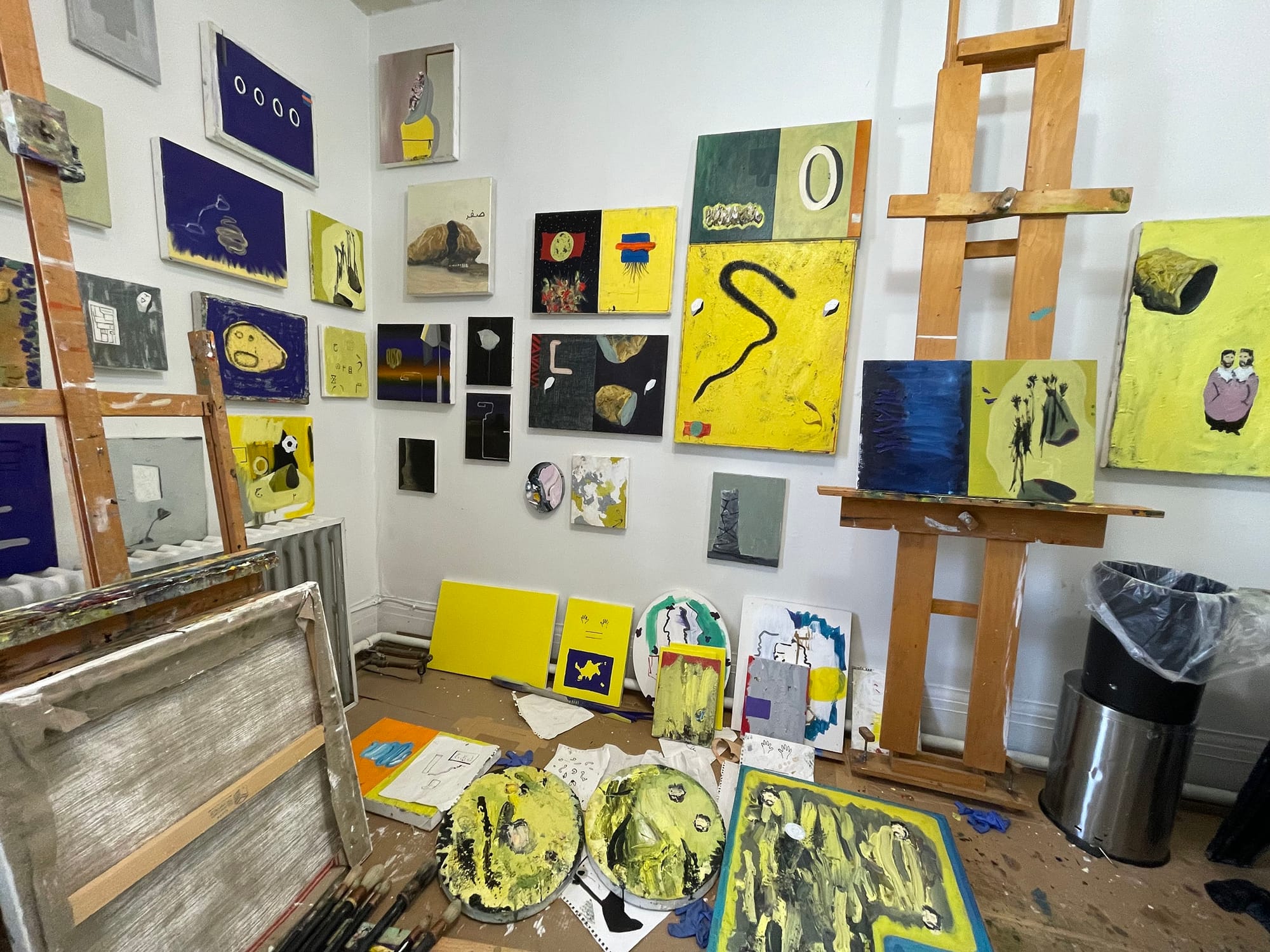
I usually have multiple pieces going at once. If one isn’t ready for the next step — or I’m just not sure what to do with it — I’ll switch to another. I get changed when I arrive, do some drawing, and then try to settle into the day. The view of the harbor helps — it’s calming, but there’s always something happening out there, like tugboats moving barges or sailboats passing by. It’s a nice contrast to the more introspective work I’m doing inside.
How does the space affect your work?
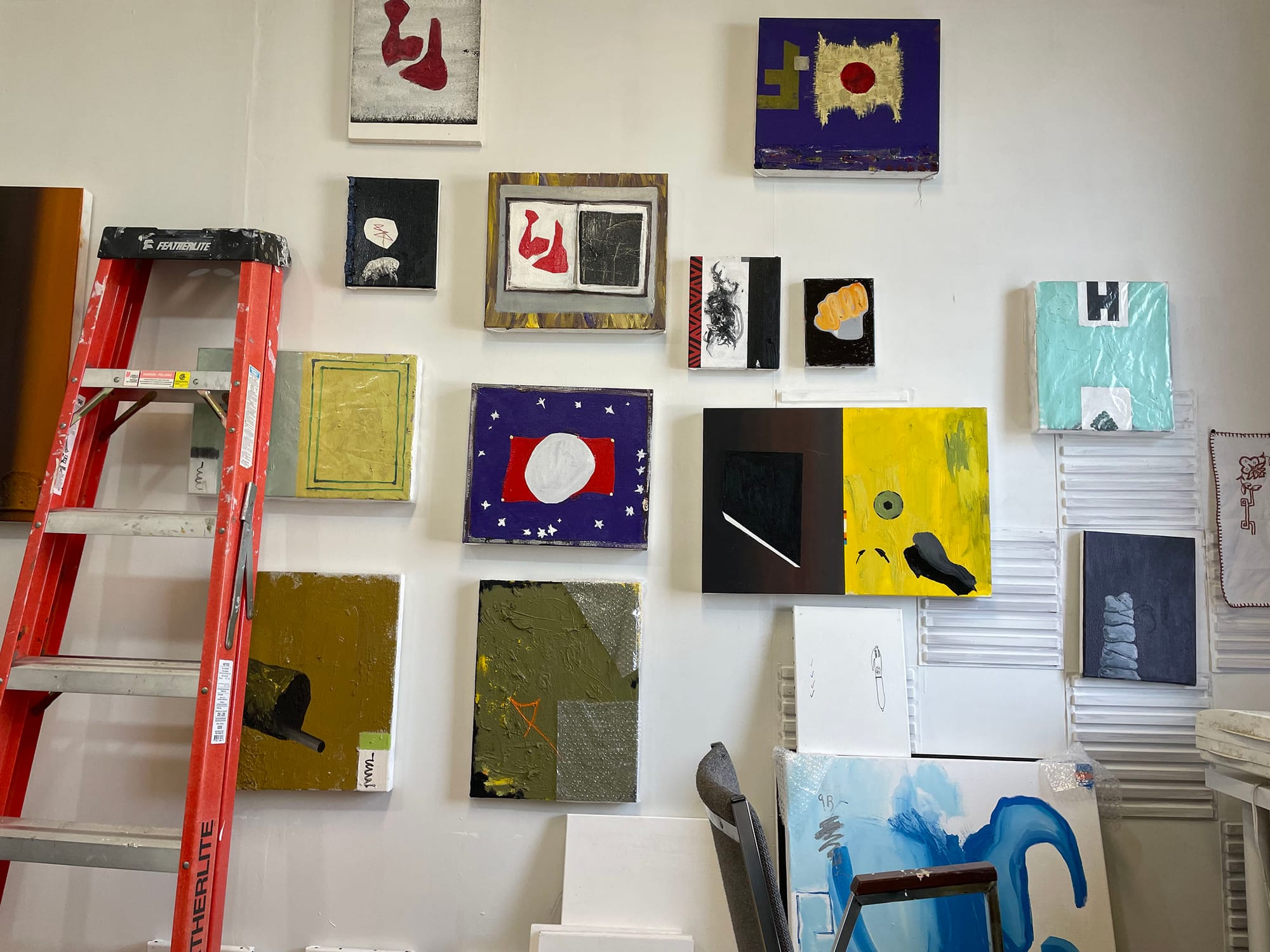
It’s not very big, but it’s entirely mine, and that makes it invaluable. I don’t bring my phone or computer in — I want it to be a place free from distractions. The studio is an extension of my artistic process. I need a certain balance of chaos and order to work effectively, and this space provides that. Plus, it’s separate from my living space, which is crucial for me.
How do you interact with the environment outside your studio?
The studio is part of a community hub that hosts nonprofits and other artist studios. My partner also has a studio here, and I enjoy the occasional conversations with the other artists in the building. It’s a busy, active space, which I like. It’s also close to Espresso 46, where I often stop for a coffee or snack — it’s one of my favorite places in the city.
What do you love about your studio?
I love that it’s small and intimate. It feels like a space I can fully own, where everything is an extension of my practice. The scale of the space suits the smaller works I’m focused on right now, and it encourages me to experiment and work quickly.
What do you wish were different?
I wouldn’t mind a bit more room. The small size works for now, but more space would let me embrace the chaos a little more without it taking over.
What is your favorite local museum?
Halifax doesn’t have a lot of large art spaces, so my favorite depends on what’s being shown. A lot of the cultural energy here revolves around the Nova Scotia College of Art and Design and its community, which I really appreciate. I also gained a lot from the Centre for Art Tapes's Media Arts Scholarship — it’s an example of how supportive Halifax’s art scene can be. That program helped me dive into media arts and electronics, which have influenced my practice in ways I didn’t expect.
What is your favorite art material to work with?
Painting has always been central to my practice. I love the tactile qualities — the smell, the surface, the texture. That said, I don’t like staying in one lane. I’ve collaborated on installations, photography, and sound pieces, and during the Media Arts Scholarship, I built a prediction machine inspired by the Irk Bitig. I like introducing new challenges into my process — it keeps me engaged and pushes the work in unexpected directions.