A View From the Easel
“I always have at least two dogs keeping me company while I work.”

Welcome to the 274th installment of A View From the Easel, a series in which artists reflect on their workspace. This week, artists collaborate with typewriters to fuel civic engagement and work alongside beloved horses and dogs.
Want to take part? Check out our submission guidelines and share a bit about your studio with us through this form! All mediums and workspaces are welcome, including your home studio.
Helen K. Garber, Santa Fe, New Mexico
How long have you been working in this space?
Five years.
Describe an average day in your studio.
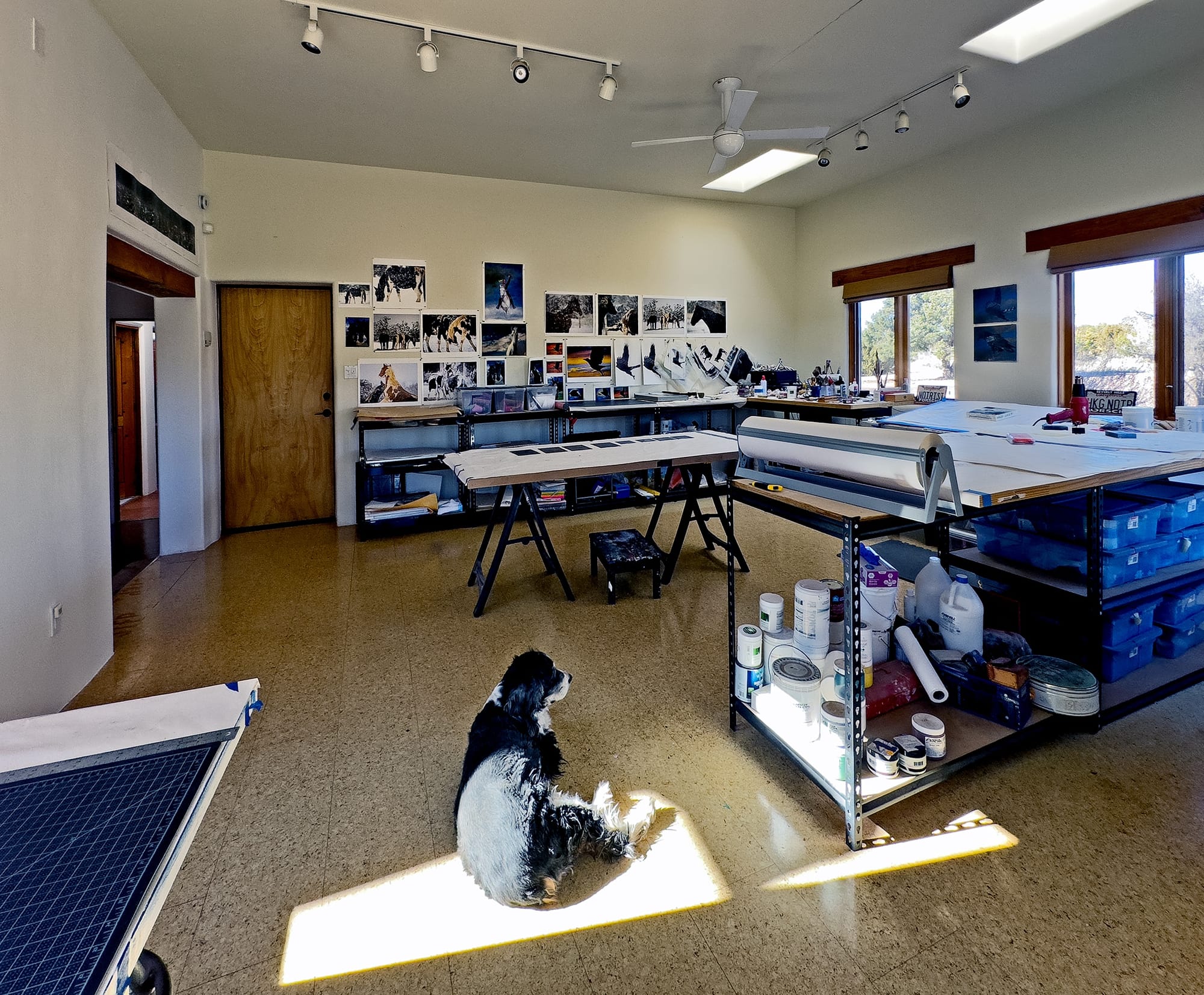
This studio space is small, and I create small works here. I like to work on three works at once in my series The Magic Boxes and it is a three-day process. I work for two hours and take a break to feed my horses and have lunch myself. Then back to work for a bit, until I go out and work with my horses. Then back in the studio until their next feed break. Back to work until my sunset break, and then finished for the day.
How does the space affect your work?
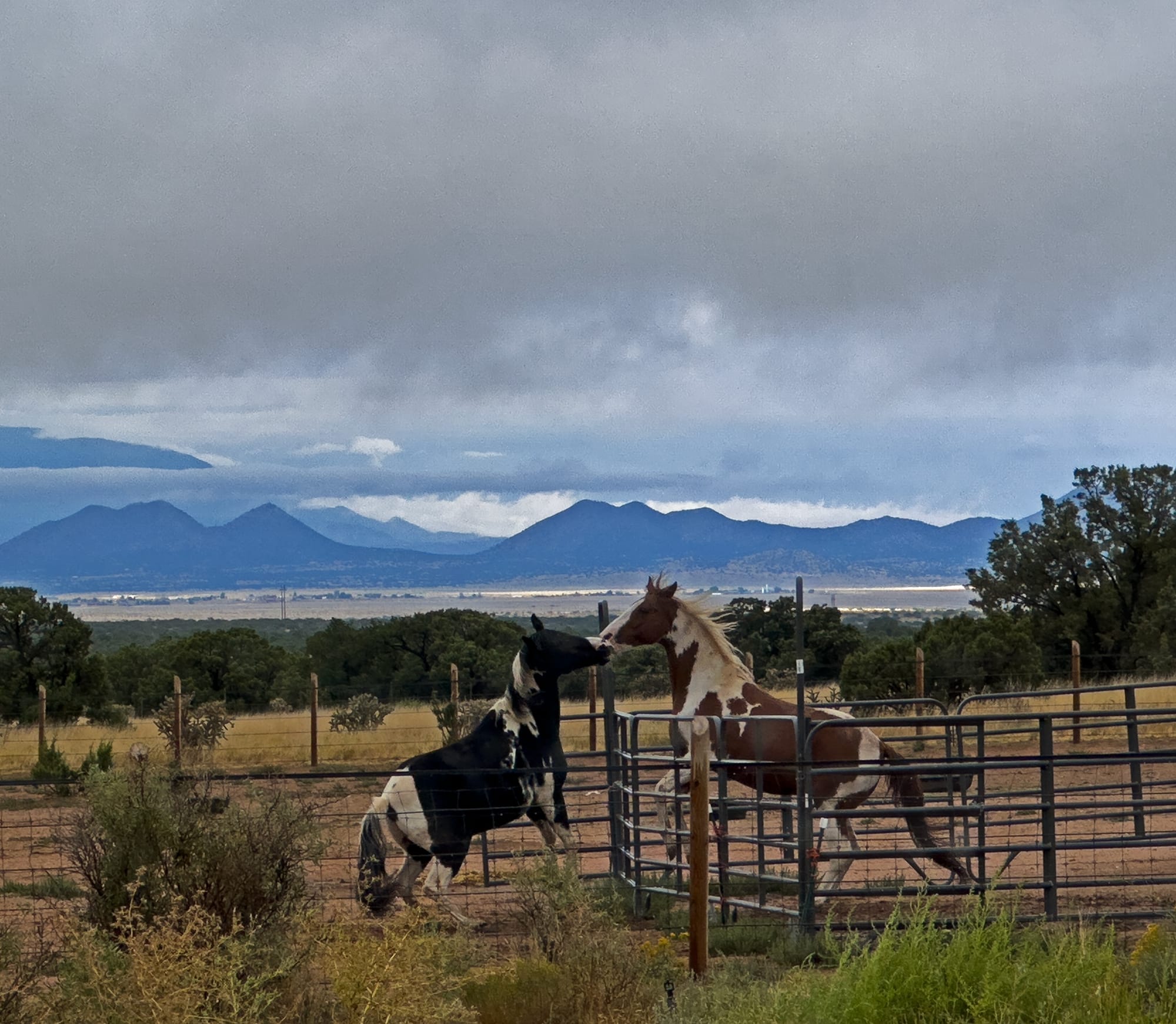
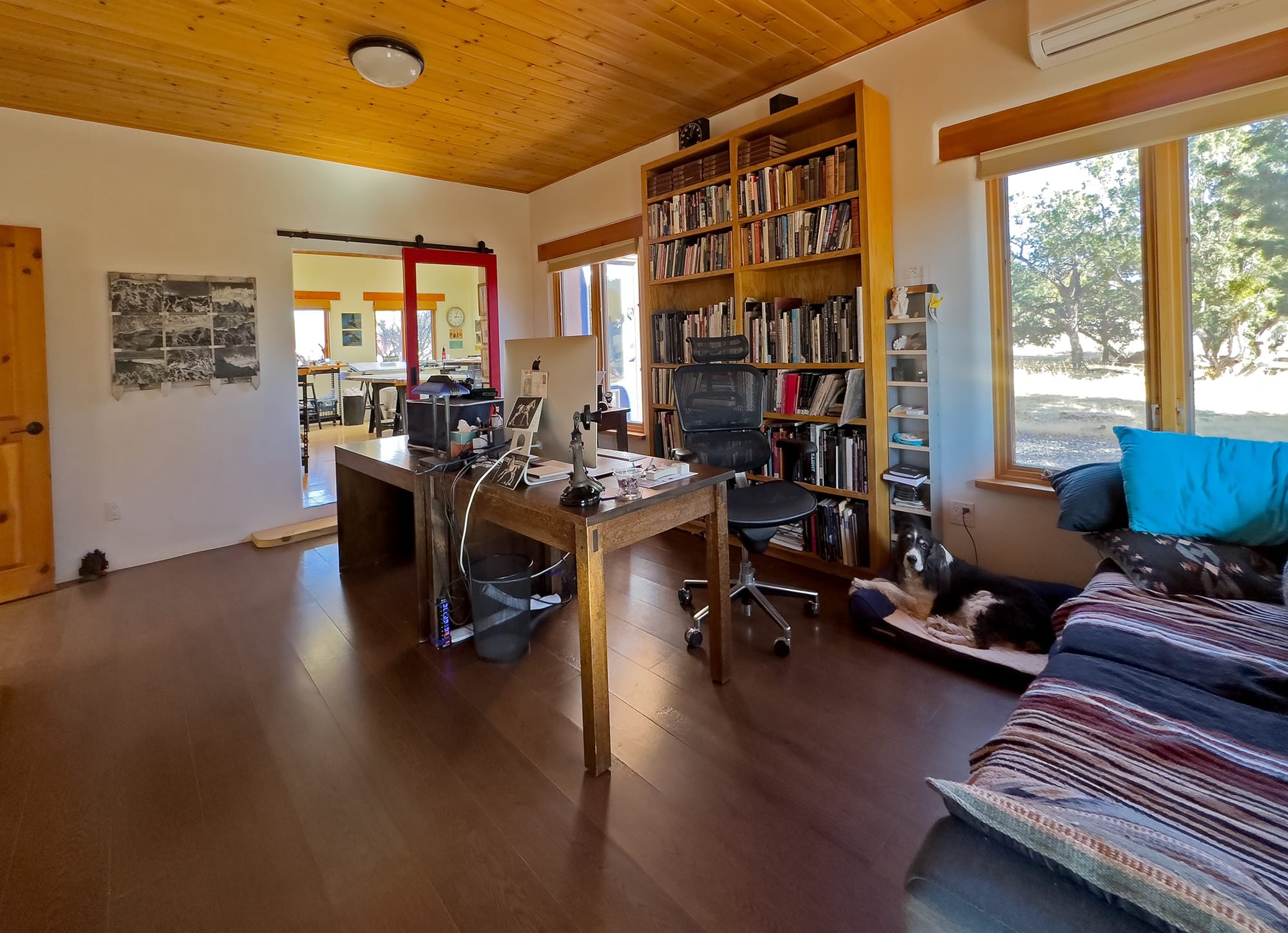
I am surrounded by glass doors and windows so I can interact with my environment. I can see my horses, birds, and other wildlife, and especially the sunrise/sunset through my windows. The studio was an addition by the last owners of my home and I adjusted the space to accommodate my needs with a small budget. I put a window and doggie door in so my five dogs can run in and out. I also broke down a wall and put glass doors in between my office space and workspace so I can hear and see my horses. As my photographs are generally environmental portraits, I use my entire house and land as workspace. I photograph birds from our portal that I use as a hide. I will stand in three-foot snow drifts to shoot my horses playing in a blizzard, and then use the photos as an integral part of my mixed-media work. The images seem to take on the positive energy of the land that my studio stands upon.
How do you interact with the environment outside your studio?
I used to have an exterior studio on Venice Beach in California and a huge art community. I moved to Santa Fe to bring horses into my life at 60 years old. I needed my studio to be in the house so I could interact with my animals all day. The neighborhood is filled with equestrians and artists such as my immediate neighbor, MacArthur Fellow Tom Joyce. I am surrounded by brilliant and creative people. The pandemic stopped much of the social activity, but we are back out there again.
As with Venice Beach, there is a creative vortex that grows stronger until you reach the apex. In this case, the vortex is strongest at the end of the road where our property is along with a 100-mile, 360-degree view including all the local mountain ranges. The light and space are awe-inspiring, and my work is plentiful despite all my duties associated with caring for eight animals. I drink a lot of coffee, which I never did before. Also rarely drink alcohol because it slows my body and brain down now that I am 70. My subject matter has changed from the urban landscape to equines, birds, dogs, sky, and desert as my environment informs my work. I am lucky to have a gallery that attracts the right-minded people and sells my work on a regular basis.
What do you love about your studio?
The light and the fact that it is attached to my house. I go in and out all day between animal, land, and domestic duties. I always have at least two dogs keeping me company while I work. As I write this, I can look out my window and see my horses and the sun setting.
What do you wish were different?
I would enjoy more space to create larger works.
What is your favorite local museum?
SITE is an oasis for me here in Santa Fe, although the art museums have been changing for the better in the eight and a half years we have been here. But after growing up in New York and spending most of my adult life in the LA art scene, it took me a while to adjust to my surroundings. I became concerned that my environment was affecting me and my work would become less sophisticated, but then my allowing the environment to inform my work was affirmed after revisiting the Georgia O'Keeffe Museum and seeing how her palette changed while living here. There are many great artists here, and my hope is to document contemporary artists of New Mexico in the not-too-distant future for a publication.
What is your favorite art material to work with?
Photography, papers, found objects, and beeswax.
Sheryl Oring, Philadelphia, Pennsylvania
How long have you been working in this space?
I’ve been in this studio for two years.
Describe an average day in your studio.
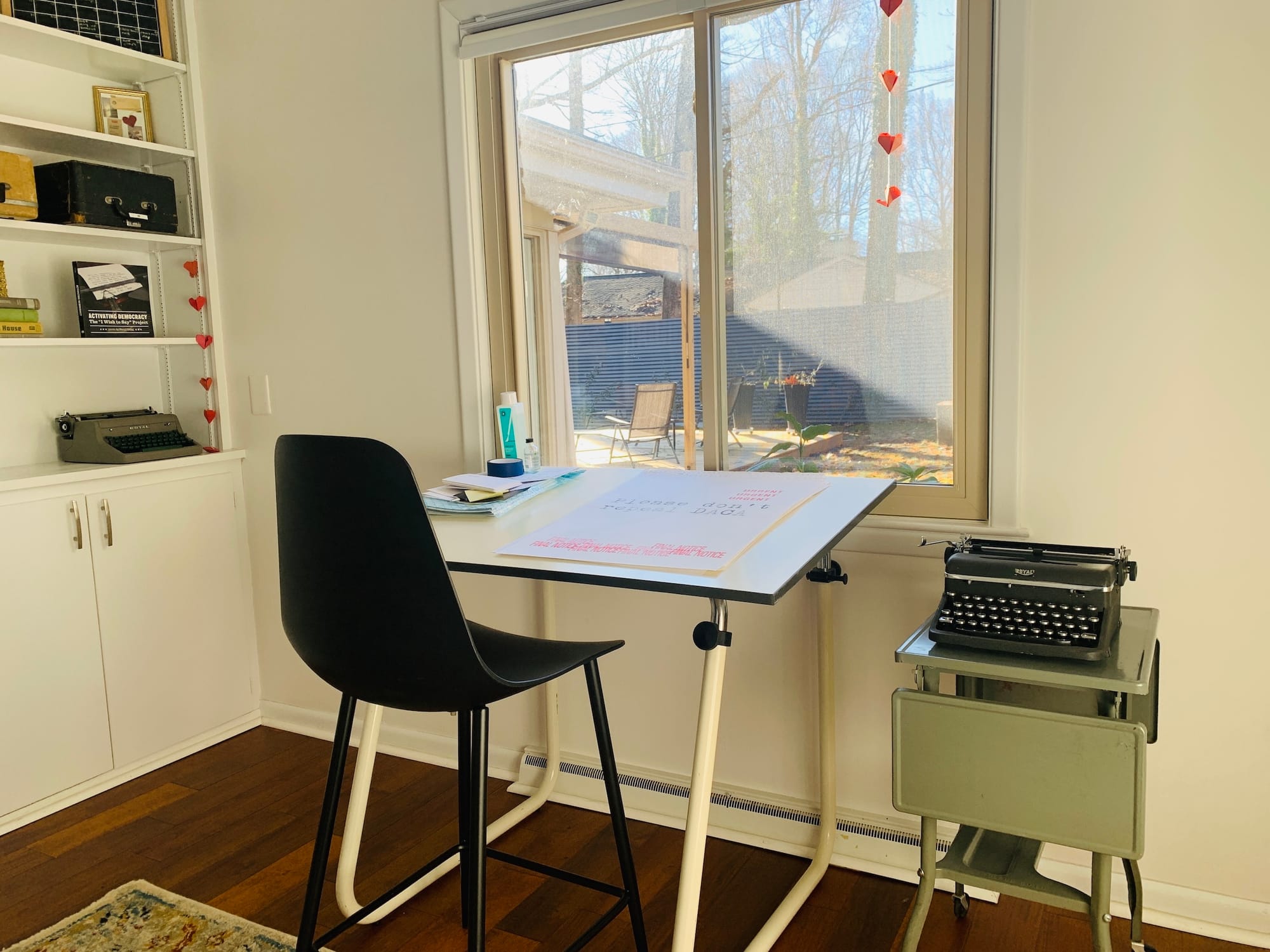
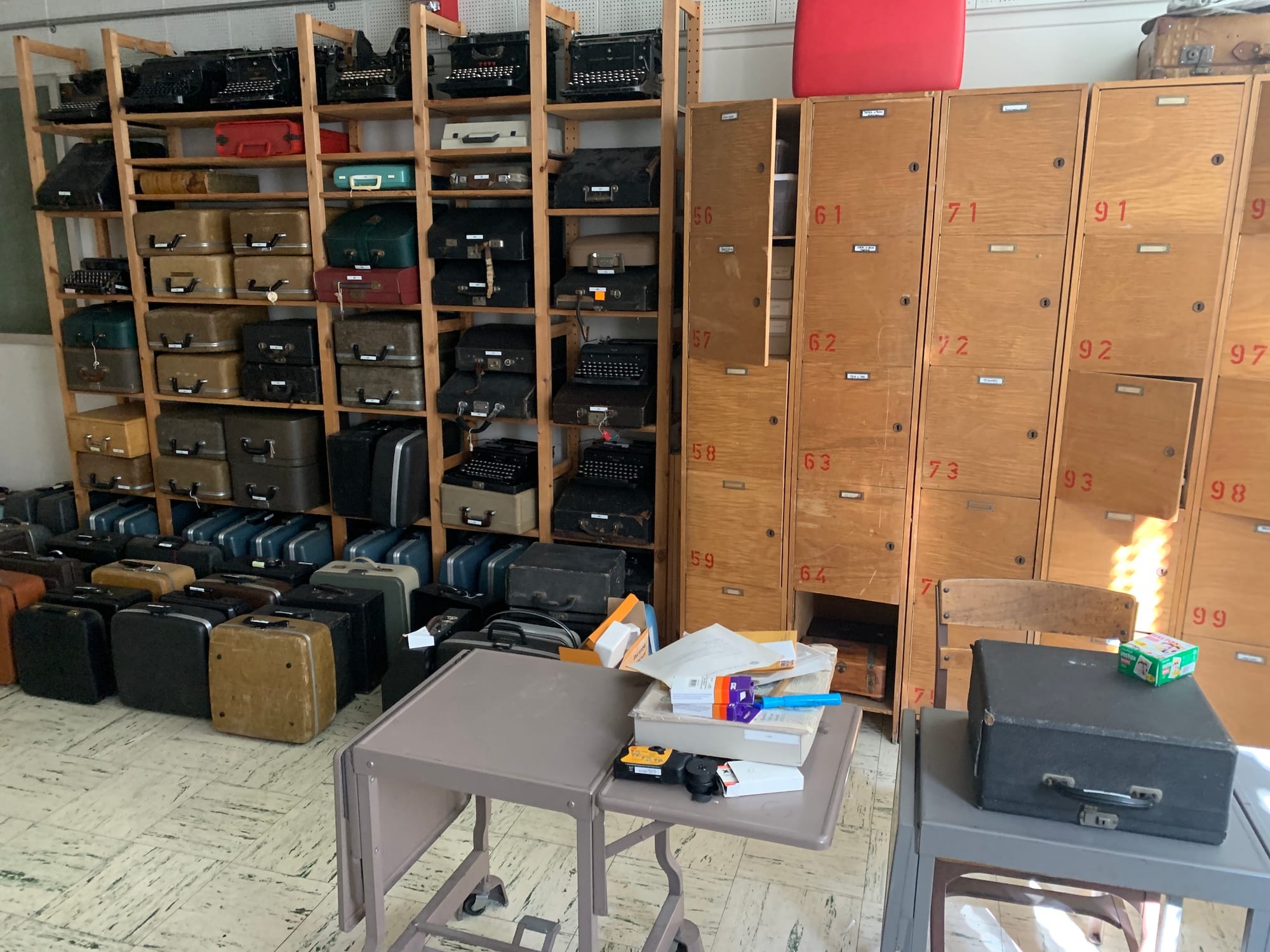
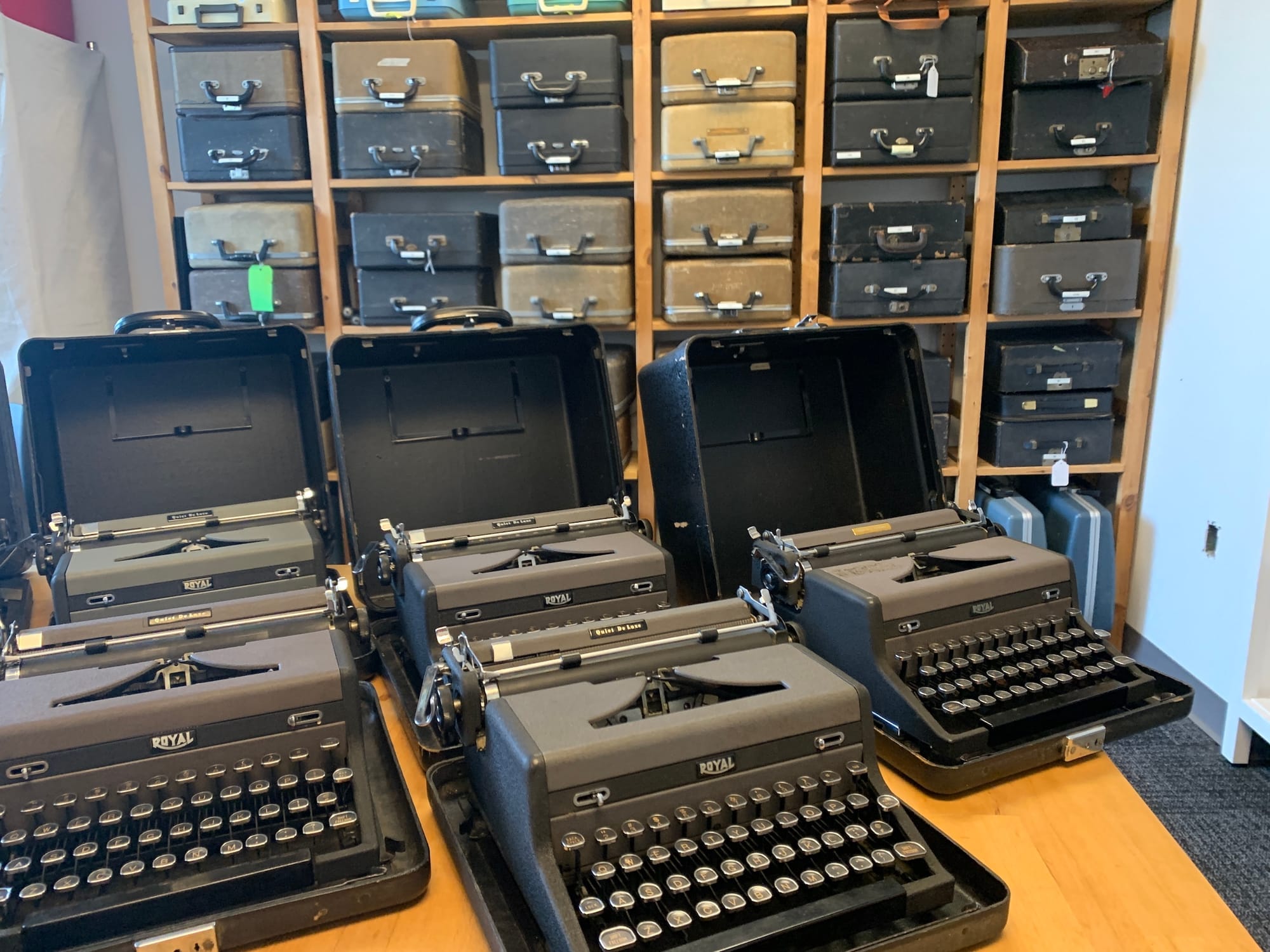
I begin reviewing archives or creating new works like Xerox transfer prints inspired by my projects. I also spend a lot of time planning projects and love having space to spread out and visualize upcoming events. Using vintage typewriters means I also spend time maintaining and organizing my tools. I’m lucky because Philadelphia is also the home of Philly Typewriter, which takes care of my machines when they need a tune-up or repair.
How does the space affect your work?
My studio serves as a starting point, where I clean, test, and prepare my typewriters before bringing them into public spaces. The machines need care — ribbons replaced, keys adjusted — before they can function as tools for civic engagement. But once they leave the studio, they take on a new role, drawing people into conversation and transforming the streets, libraries, and campuses where I work.
How do you interact with the environment outside your studio?
My work thrives on community engagement. Whether typing postcards in city squares or collaborating with universities and museums, I prioritize amplifying voices and fostering dialogue. My public projects connect directly with communities, creating opportunities for civic engagement and reflection.
What do you love about your studio?
I love the balance between solitude in my print and typewriter studios and the energy of public interaction. These spaces allow for reflection, experimentation, and engaging directly with people, keeping my work dynamic and grounded in community.
What do you wish were different?
I wish for a larger, more cohesive space in Philadelphia where I could integrate printmaking, my typewriter collection, and preparation for public projects. A dedicated area to host collaborators would also enhance my practice. As my typewriter collection, my archive, and my works on paper grow in size and scope, having a larger studio space would be super helpful.
What is your favorite local museum?
I admire the Philadelphia Museum of Art for its remarkable collection and cultural significance. The Free Library of Philadelphia is also deeply meaningful to me, as it is currently hosting my retrospective Secretary to the People, reflecting my focus on democracy and public memory.
What is your favorite art material to work with?
The manual typewriter is central to my practice. I love typewriters for their tactile and sensory qualities. The rhythmic sound of the keys creates a meditative focus, while the touch and resistance of each key connect me physically to the act of writing. The weight and feel of the machine ground me in the moment, and each typewriter’s design carries its own history and character. They’re not just tools — they’re collaborators, adding texture and presence to my creative process.