A View From the Easel
“Touching the soil fuels my imagination, and it shows in the canvases.”

Welcome to the 324th installment of A View From the Easel, a series in which artists reflect on their workspace. This week, artists experiment with papier-mâché and crave natural light.
Want to take part? Check out our submission guidelines and share a bit about your studio with us through this form! All mediums and workspaces are welcome, including your home studio.
Ileana García Magoda, Acatitlán, Mexico
How long have you been working in this space?
I moved here just four months ago.
Describe an average day in your studio.
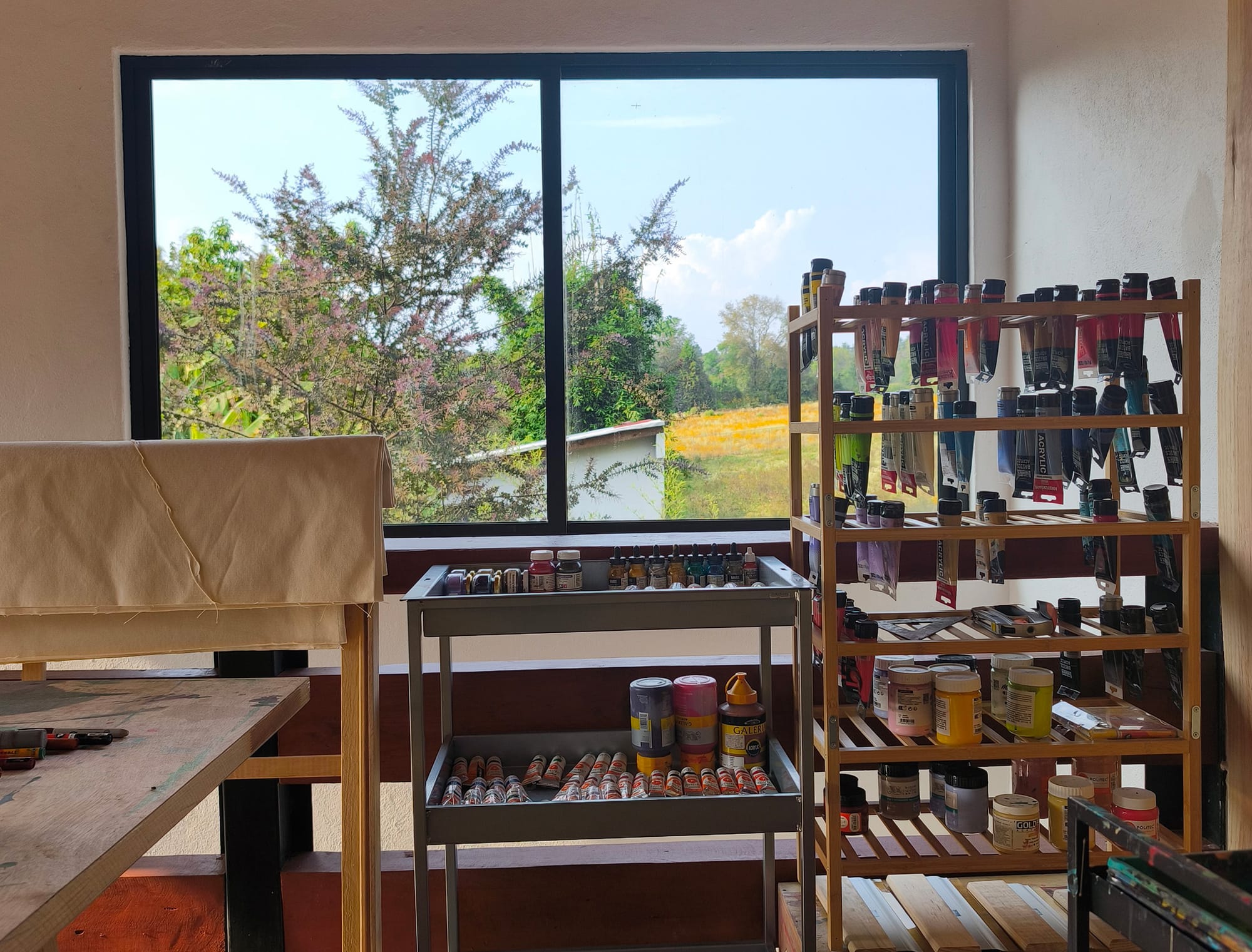
The studio is at my house within a ranch, surrounded by nature. It's on the second floor of the house, where there's better light. My routine all day shifts between studio work and housework, including outdoor garden work. I get up a bit before 7am, drink coffee in the yard, and get morning sunshine. Then my husband and I eat breakfast and do a bit of cleaning or some chores in the garden.
Before noon, I take a little more sun, right before starting to work in the studio all afternoon with a lunch break around 3pm. Getting sun helps me focus and acts as a warm-up before painting. The ranch is very quiet and I barely listen to music now, but when I do I like Ravi Shankar, medieval guitar, Tárrega, or very meditative music like that. However, if the workload is heavy or I'm under pressure, I listen to chill UK garage mixes or drum and bass. I also like listening to old Alan Watts lectures. I generally finish working at sunset when there's no more natural light.
How does the space affect your work?
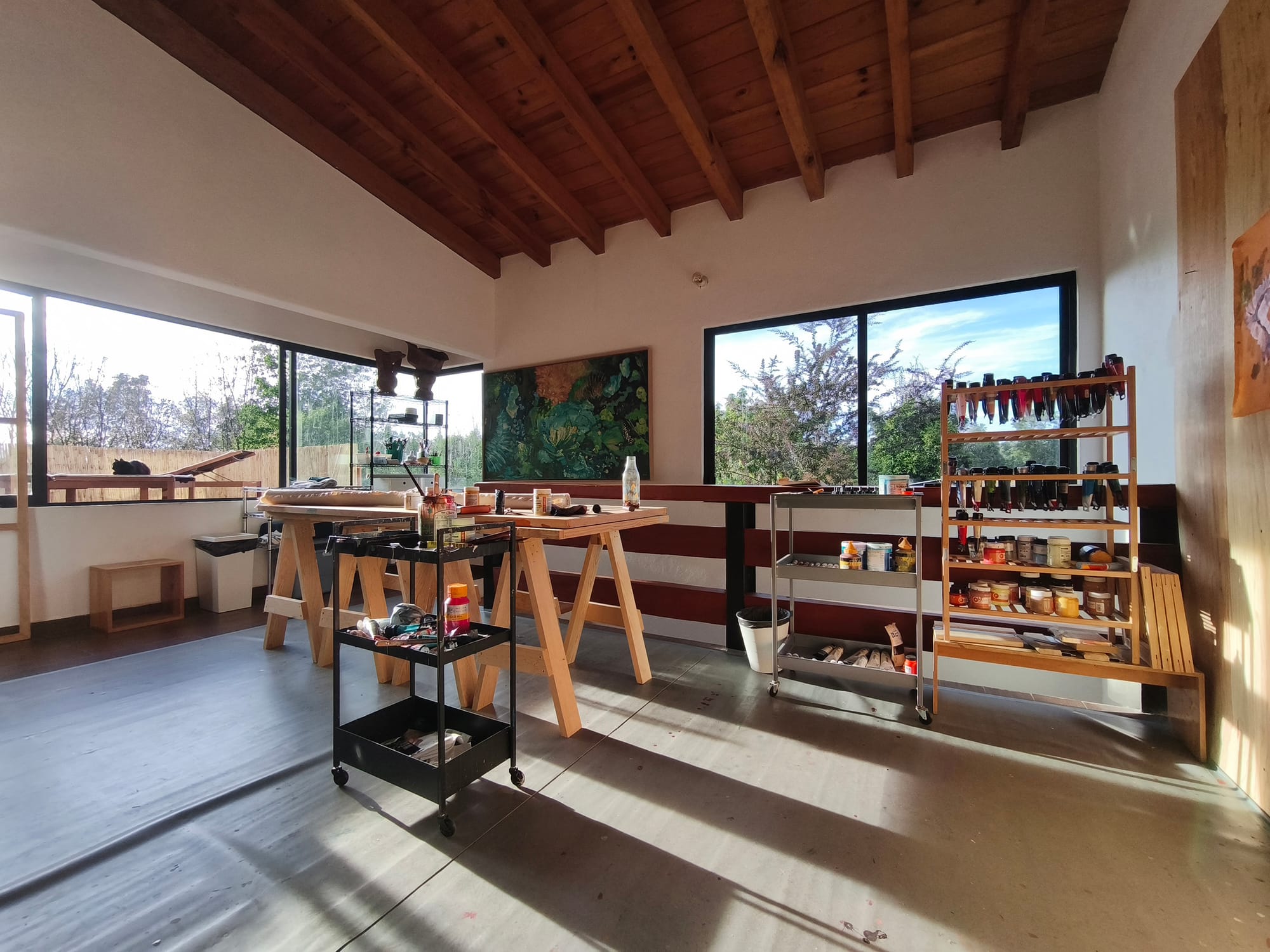
The studio has big windows overlooking the forest. Looking out the window after painting is very relaxing. Being surrounded by nature influences my work — I have more time to spend outside in the garden, and I feel that feeds the work. Taking care of plants, being outside, working in the garden, and touching the soil fuels my imagination, and it shows in the canvases. There's a natural spring close by and walking there is inspiring, too. In general, living in the countryside is improving my health, and as a result the work feels easier, more focused, and more fun.
How do you interact with the environment outside your studio?
Being a small town I've been meeting people fast. There's a strong community of creators — I've been meeting artists, ceramists, chefs, architects, landscapers, writers. There's a lot of creativity here and people have been very supportive. We've all left Mexico City and gravitate toward the joy of living a more relaxing lifestyle in nature.
The local people of Acatitlán and all the Valle de Bravo area are very receptive, hardworking, and very nice to all the newcomers. We support each other and I highly admire them. To me, the builders, carpenters, gardeners, and cooking and cleaning workers are all admirable. The ranch where I live is home to both people from the city and many people who work in the community. We talk a lot and try to learn from each other, but I think I have way more to learn from them!
What do you love about your studio?
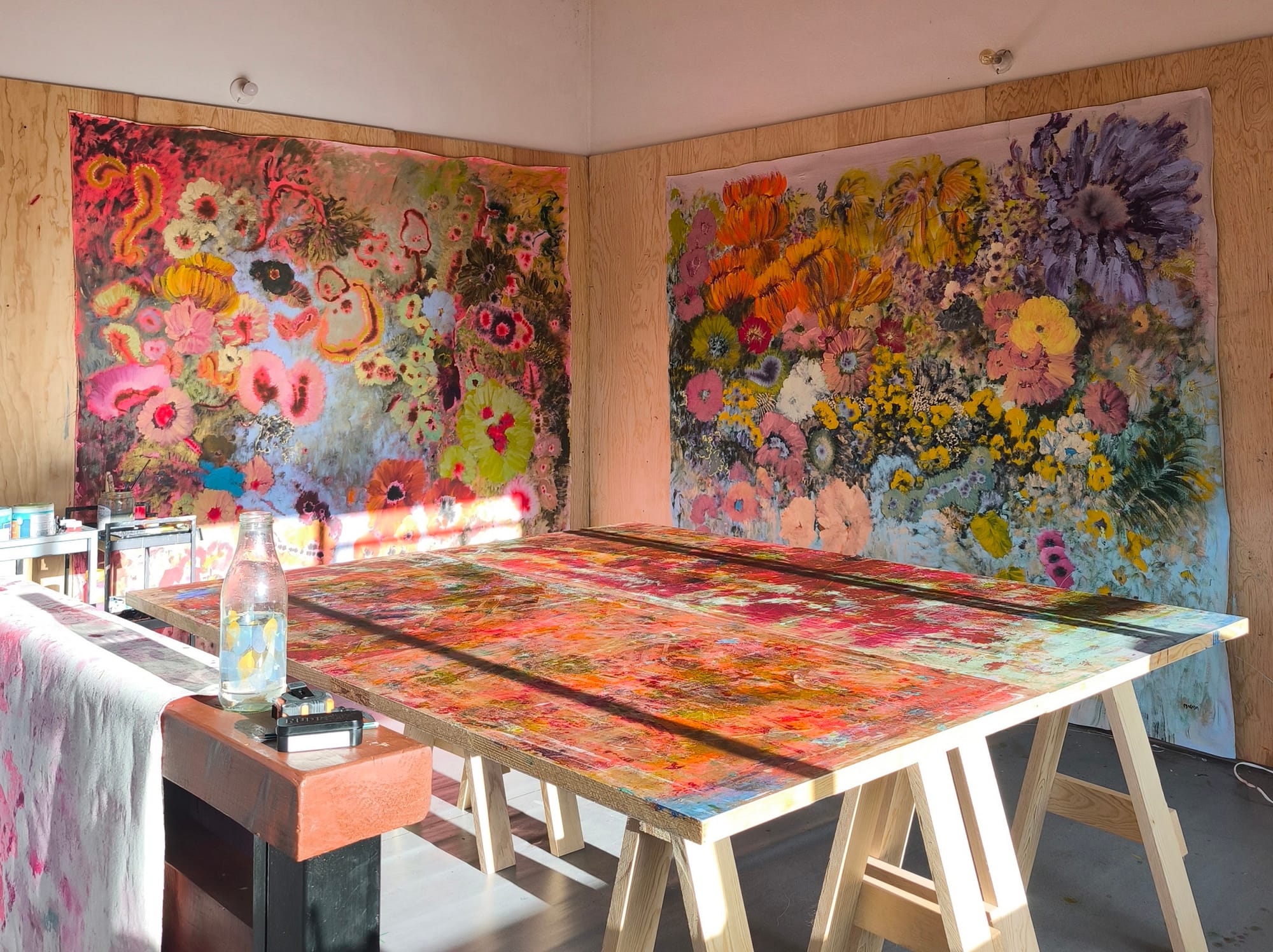
I love the light, the view, the quiet — despite the fact that I don't have a lot of space compared to the size of my works. It's in an area originally intended as a "family room," so it's basically in the middle of the house and has no privacy, which I like because I want my work to be impersonal, more about nature and the unknown. Not having any privacy helps me detach myself from the work easily.
I also like that it's right upstairs from the kitchen, where I can get my water and tea. I can also easily do some processes that need to be done in the kitchen, like heating rabbit skin glue for priming my paintings, washing brushes, or mincing paper for my sculptures.
What do you wish were different?
I dream of having a massive studio with big windows and skylights, where I can work on more than two pieces at a time — a workplace surrounded by an aromatic garden of flowers and herbs. Mostly, having lots of space for the scale of my works.
What is your favorite local museum?
The local museums are focused on anthropology, history, and local crafts, which is interesting, but not my favorite. I'm from Mexico City, and growing up there I always liked Museo Tamayo de Arte Contemporáneo. The way they present contemporary art feels very accessible and the building itself is beautiful. I also like the Museo Universitario Arte Contemporáneo located at the National Autonomous University of Mexico, my alma mater — it's an incredible space for experiencing experimental and contemporary Mexican art. Visiting these museums helped me not forget that I always wanted to be an artist, to not give up the dream.
What is your favorite art material to work with?
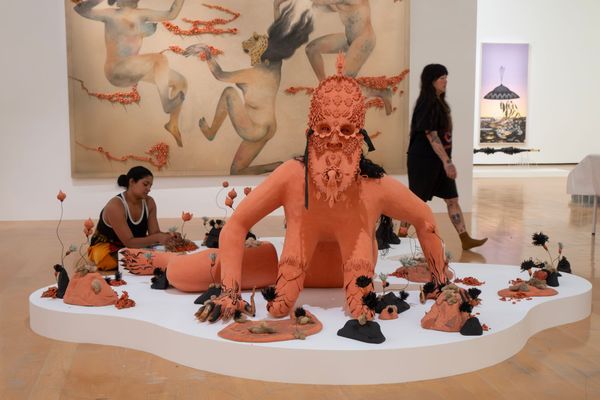
I love raw fabric, cotton, and linen. I feel a lot of freedom working with raw fabric. It's a material I've known since I was a kid — with my dad as a textile engineer and my mom a seamstress, fabric has always been available at home and almost like a toy to me. I feel that I'm able to go further creatively with raw canvas rather than pre-primed canvas. I also love ceramics. I love building when it's in the wet state, but unfortunately I feel limited when the clay goes hard and it's time to fire it — I lack experience. Because of this, I'm working now with papier-mâché. Building is fun, and adding the final touches of pigmented paper is very fun. There's something about getting my hands dirty that I enjoy a lot, similar to when I work in the garden. I love working with my hands. To me, most of being an artist is using my hands — without that, I would be lost.
Renee Levin, Rumson, New Jersey
How long have you been working in this space?
About two years.
Describe an average day in your studio.
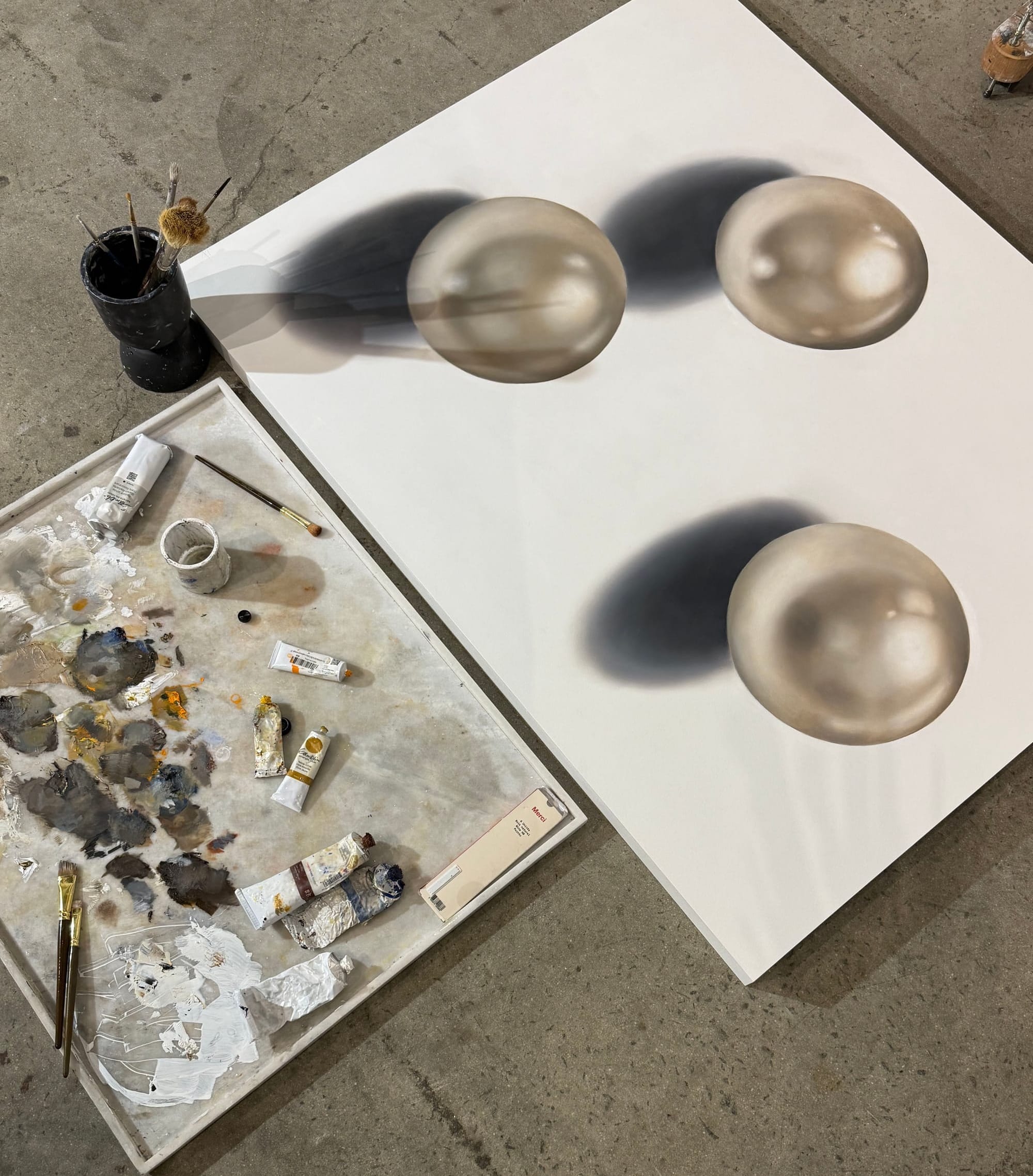
I usually arrive early, after a run or yoga, around 9 am and work for about five to six hours, depending on the day. I focus on only one painting at a time. While I multitask in many areas of life, the studio is different. Here, I slow down and work deliberately. I listen to music while I paint, letting it set the tone. I also love painting at night, when the world is quiet, and will come in from time to time to do so. Otherwise, my evenings are spent sketching or creating at home.
How does the space affect your work?
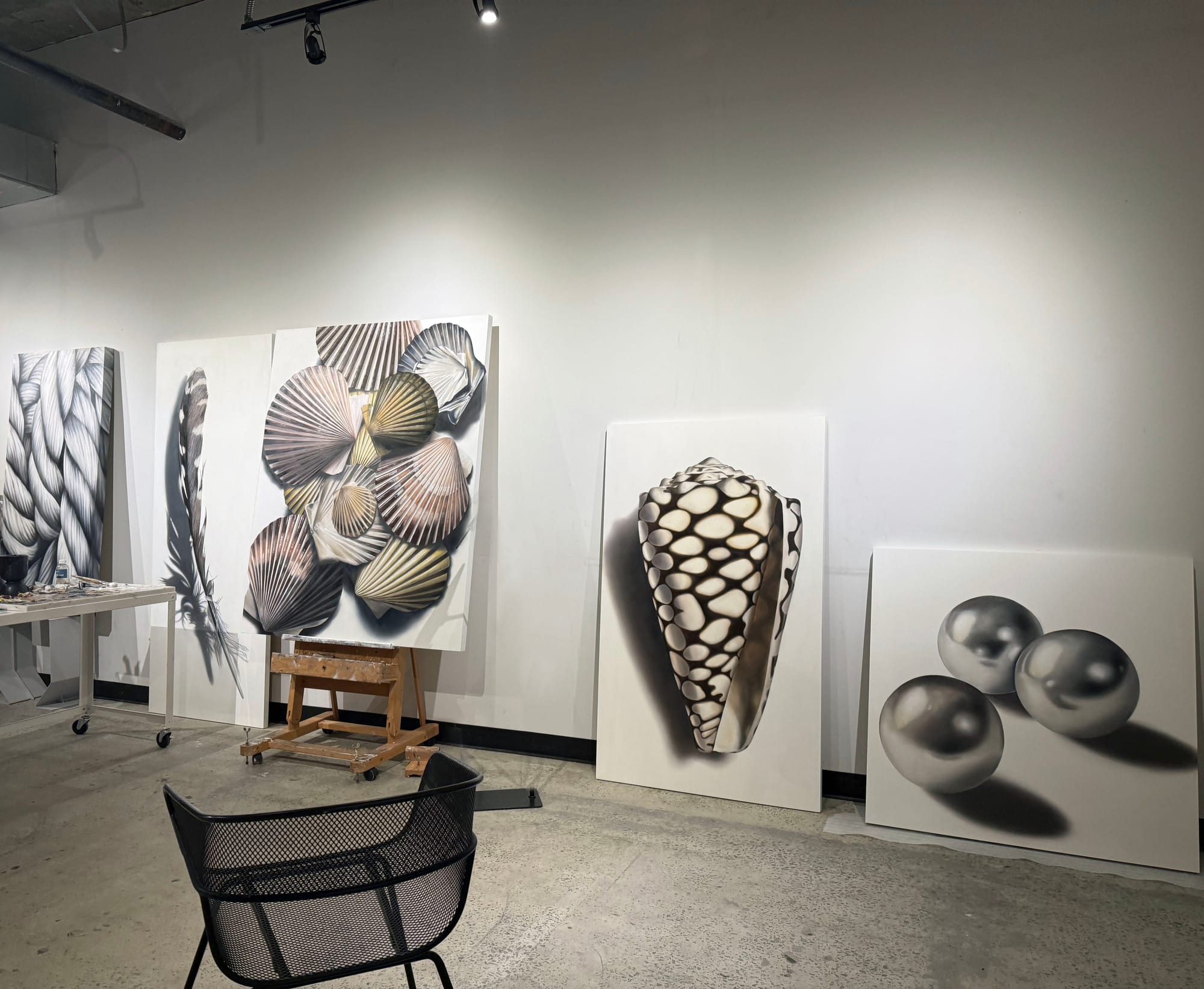
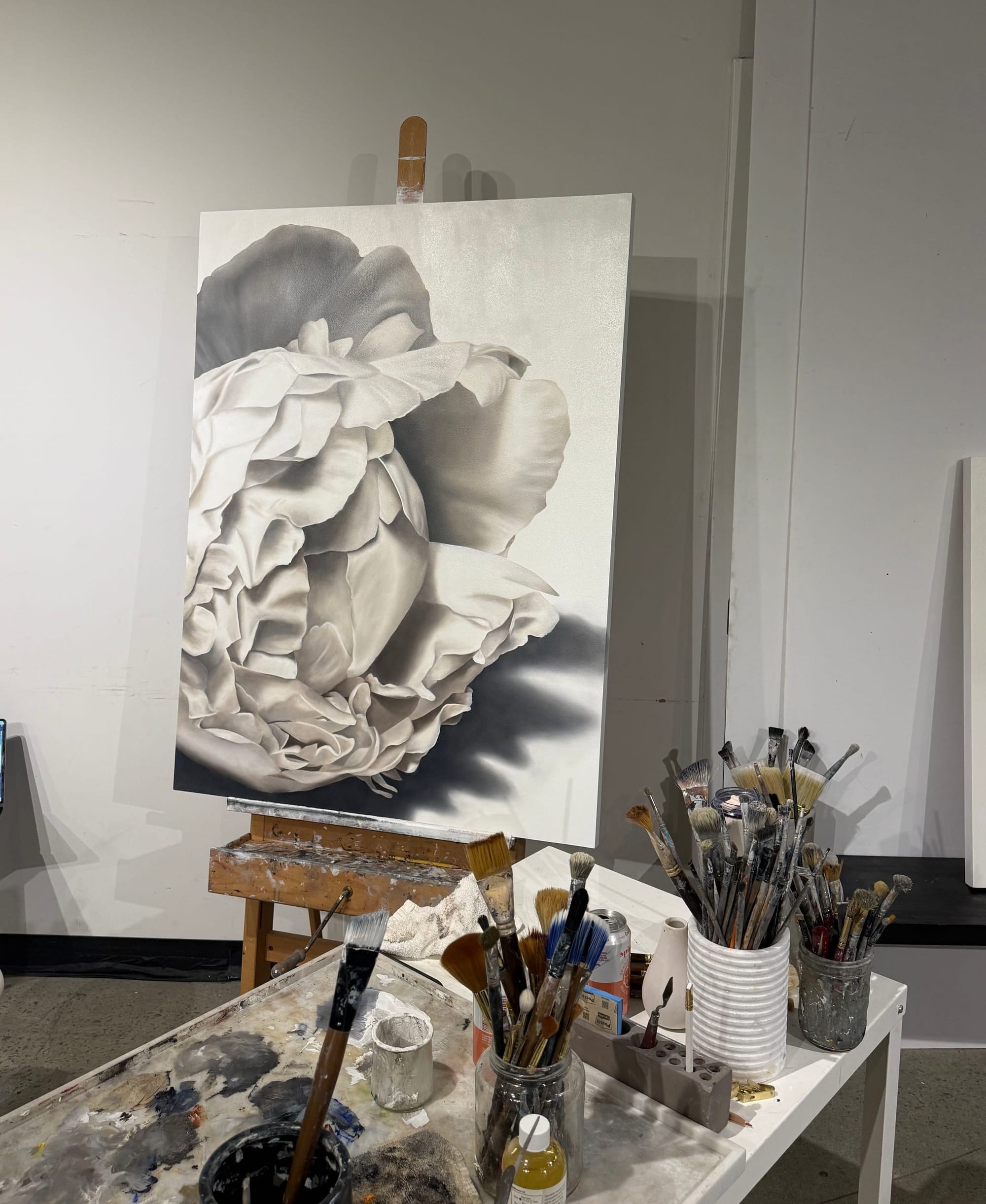
As with my home, I believe the space you surround yourself in is very important — there is surely a link between your surroundings and your mindset. This connection sets the tone for both my work and productivity. I like to keep my space minimal and uncluttered. This keeps me focused and calm, allowing ideas to flow.
How do you interact with the environment outside your studio?
Unfortunately the art community is not abundant here, but it does exist, it has just taken some efforts to navigate. I’ve built connections with local creatives and feel engaged in a small, growing community. Being not too far from Asbury Park is helpful as it has a broader arts community. New York City is a 45-minute ferry ride, which is nice to be able to access for my regular art fix, gallery hopping, and the unmatched energy of the city.
What do you love about your studio?
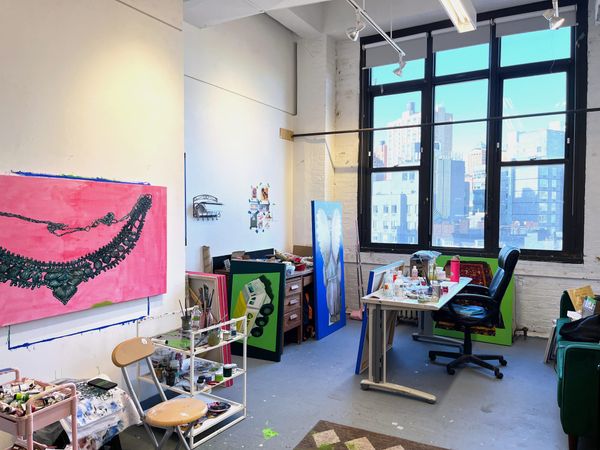
I love the openness of the space. The high ceilings lift the energy of the room, while the raw floors keep it grounded. There’s nothing precious about it — it feels honest, calm, and deeply supportive of my practice.
What do you wish were different?
I do wish I had more natural light. I have substituted it with artificial which mimics daylight fairly accurately, but there still is nothing like sunshine.
What is your favorite local museum?
The nearest major art institutions are in New York City, which isn’t exactly local, but close enough that I visit every other month or so. I’d say the Guggenheim is a favorite as the space itself is a work of art! The Whitney is a favorite as well — I have been paying visits there ever since art school. Its Biennial is a great way to see fresh work and gain new perspectives. Aside from museums, I do enjoy a good day of gallery hopping across the city. It’s a way to immerse myself in a wide variety of art and see work by current artists.
What is your favorite art material to work with?
I solely work in oil on wood panel. The richness of oil is unparalleled, as is the way it blends. The slower drying time of oil allows for a more thoughtful, deliberate process. I can refine and adjust over hours or even days, which aligns with the intentional way I like to work. Painting on panel allows for a sleeker finish with cleaner lines and precision. Both materials support my painting style.