Interview
Paul Pfeiffer on the Spectacle of Politics
“Perhaps the stadium is actually the replacement for the UN as a symbolic gathering point to conduct world politics,” the artist told Hyperallergic in an interview.

Brian Karl is a roving cultural worker who works in different media.

Interview
“Perhaps the stadium is actually the replacement for the UN as a symbolic gathering point to conduct world politics,” the artist told Hyperallergic in an interview.
Art Review
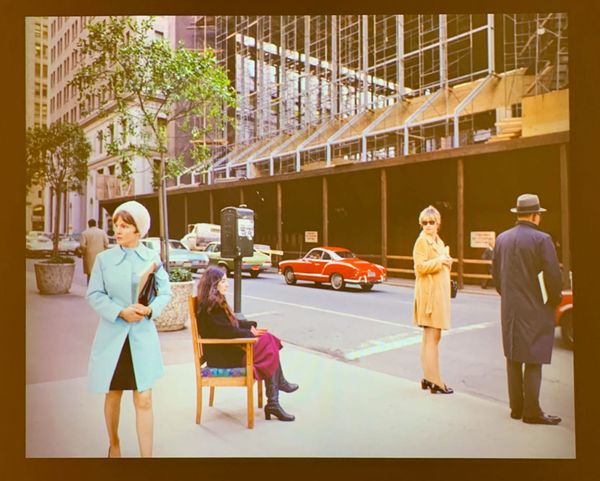
California performance artist Bonnie Ora Sherk was a cultural trickster and proactive spoiler in the business of everyday life.
Art Review
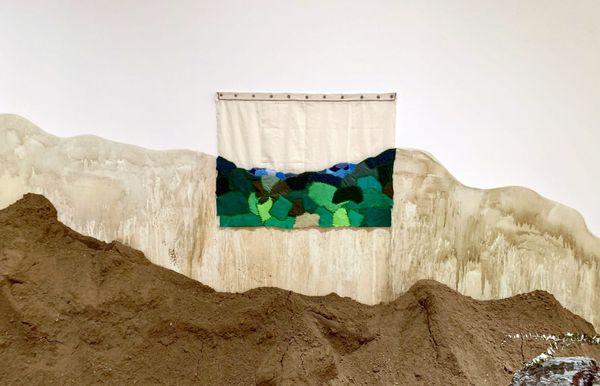
“Several Eternities” feels overly careful and unable to combust as fully as it could have.

Art Review
The artist’s game-like paintings and tapestries suggest an overactive imagination fueled by generations of crackpot supernatural lore.

Art Review
He repurposed bygone cartoon characters and gave them new life with a queer, magpie sensibility, which still pops two decades after his death.

Art Review
A show demonstrates how deeply meaningful creative processes can be for incarcerated people and the larger public.

Art
Alternately ominous and transcendent, Doug Aitken’s panoramic Lightscape cycles through scenes of human movement enthralled by highways and city streets.

Art
More context could have resulted in greater connections between viewers and the tantalizing glimpses of profound and difficult human experiences in Peters’s art.

Art
The artist’s transparent portraits reveal the larger forces of culture and society that define and marginalize his Brown and Black subjects.

Art
The artist unspools a playful and dark-edged narrative that refracts art deco and noir melodrama through the late-modern styles of video games, manga, and fantasy.

Art
SAN FRANCISCO — Curated by students of the Curatorial Studies program at the California College of the Arts, this compact, well-considered gathering of work across many media by Martin Wong is a marvel of what the small-scale and seemingly ephemeral can communicate.

Art
SAN FRANCISCO — It’s been two centuries since Jeremy Bentham introduced the panopticon into structures of confinement and surveillance, including penitentiaries and mental institutions.