Karla Knight’s Cosmic Conspiracies
The artist’s game-like paintings and tapestries suggest an overactive imagination fueled by generations of crackpot supernatural lore.

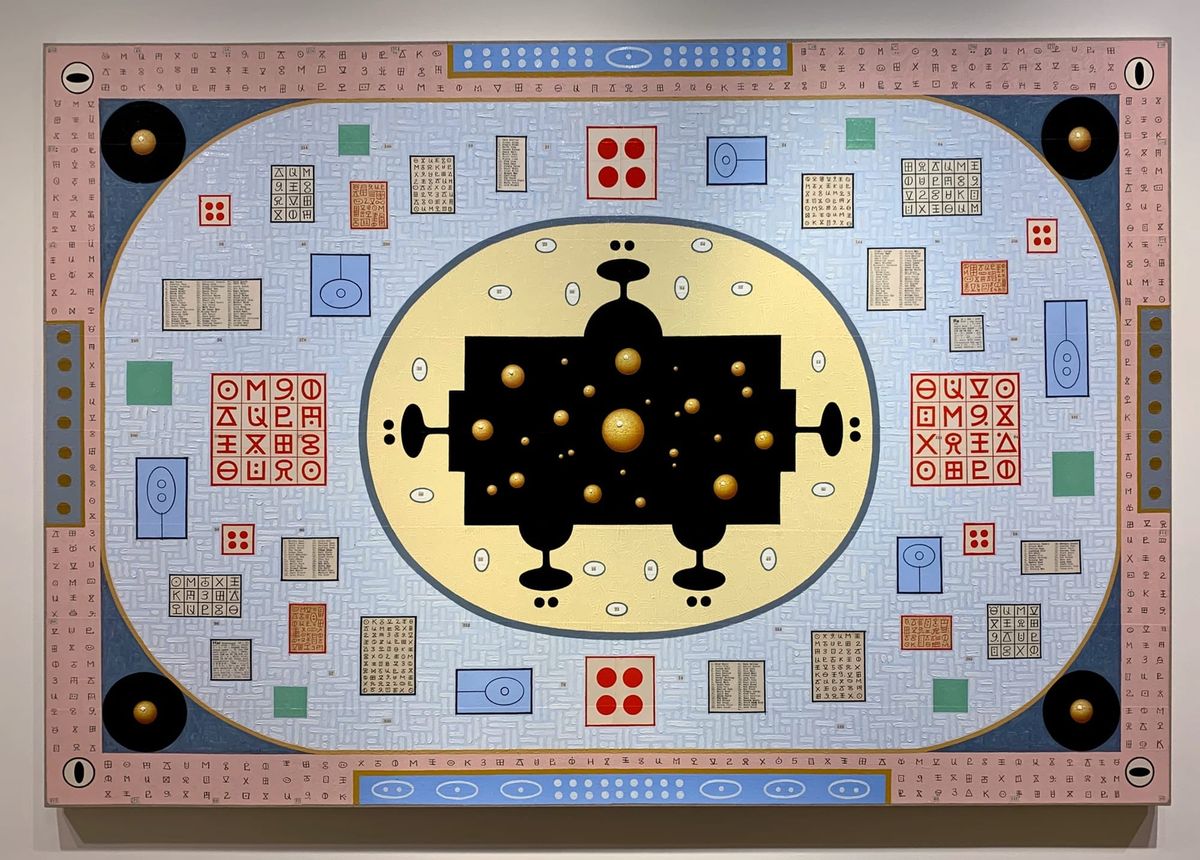
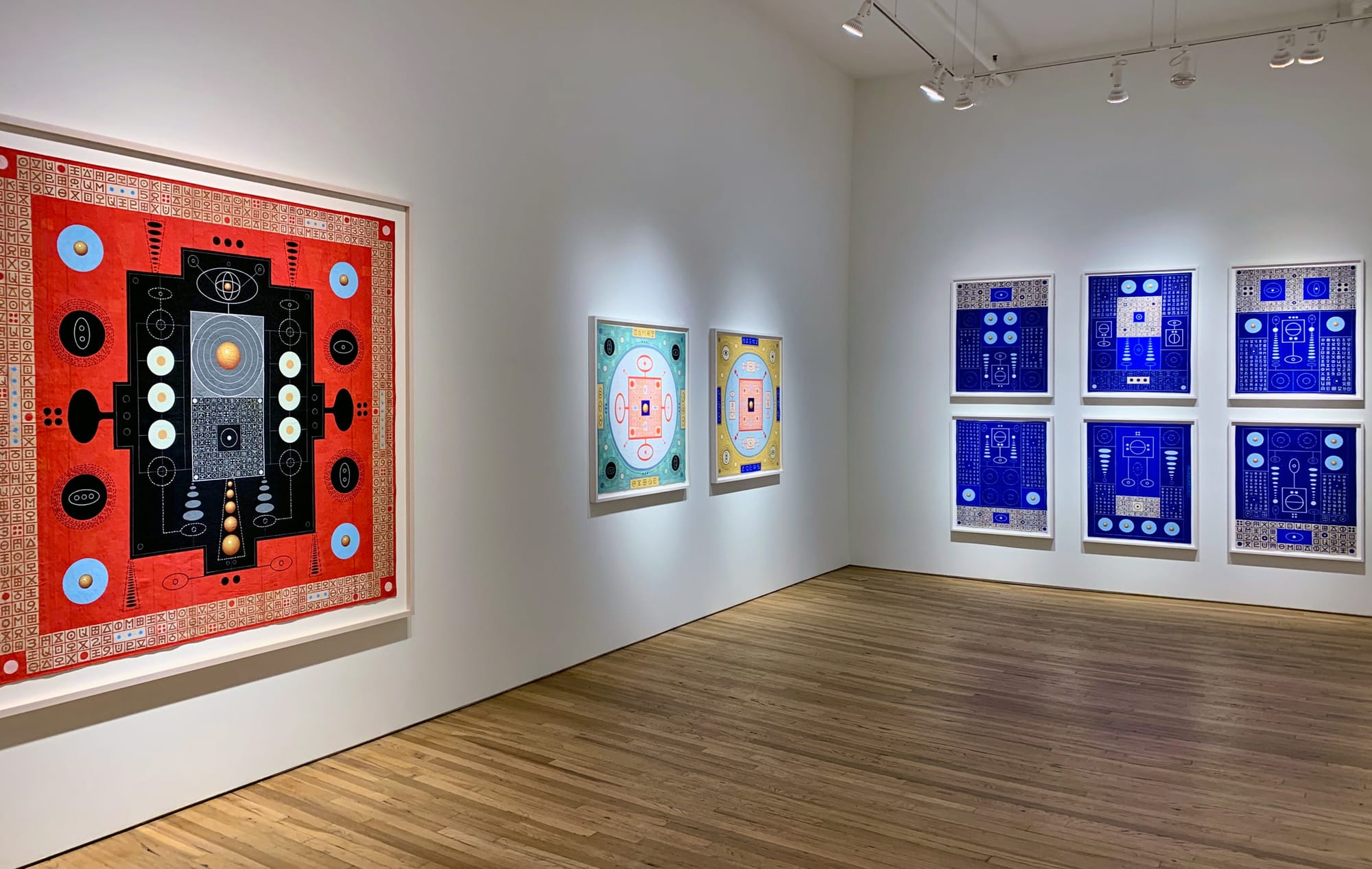
The image of an irregular black box with protuberances outlining some obscure device, floating in a larger field of red, confronts visitors to Orbit, an exhibition by Karla Knight at Andrew Edlin Gallery. In “Feelers” (2025–26), a large, square, wall-hanging painted cotton work, rows of cryptic symbols suggest some distant civilization’s written script — a challenge to codebreakers, perhaps. Within the central black device, another set of arcane symbols in a square surrounds and is in turn surrounded by floating spheres of white and gold. Circular lines — some broken, some continuous, ellipses within circles within ellipses — trace orbital paths of planets or stars or sub-atomic particles.
What to make of such half-familiar signs? Are they richly composed blueprints for mysterious systems connected to extraterrestrial lifeforms — schematics for advanced engines that could guide us toward wormholes to new coordinates of potential? Or attempts at mapping some underlying substrate of the universe?
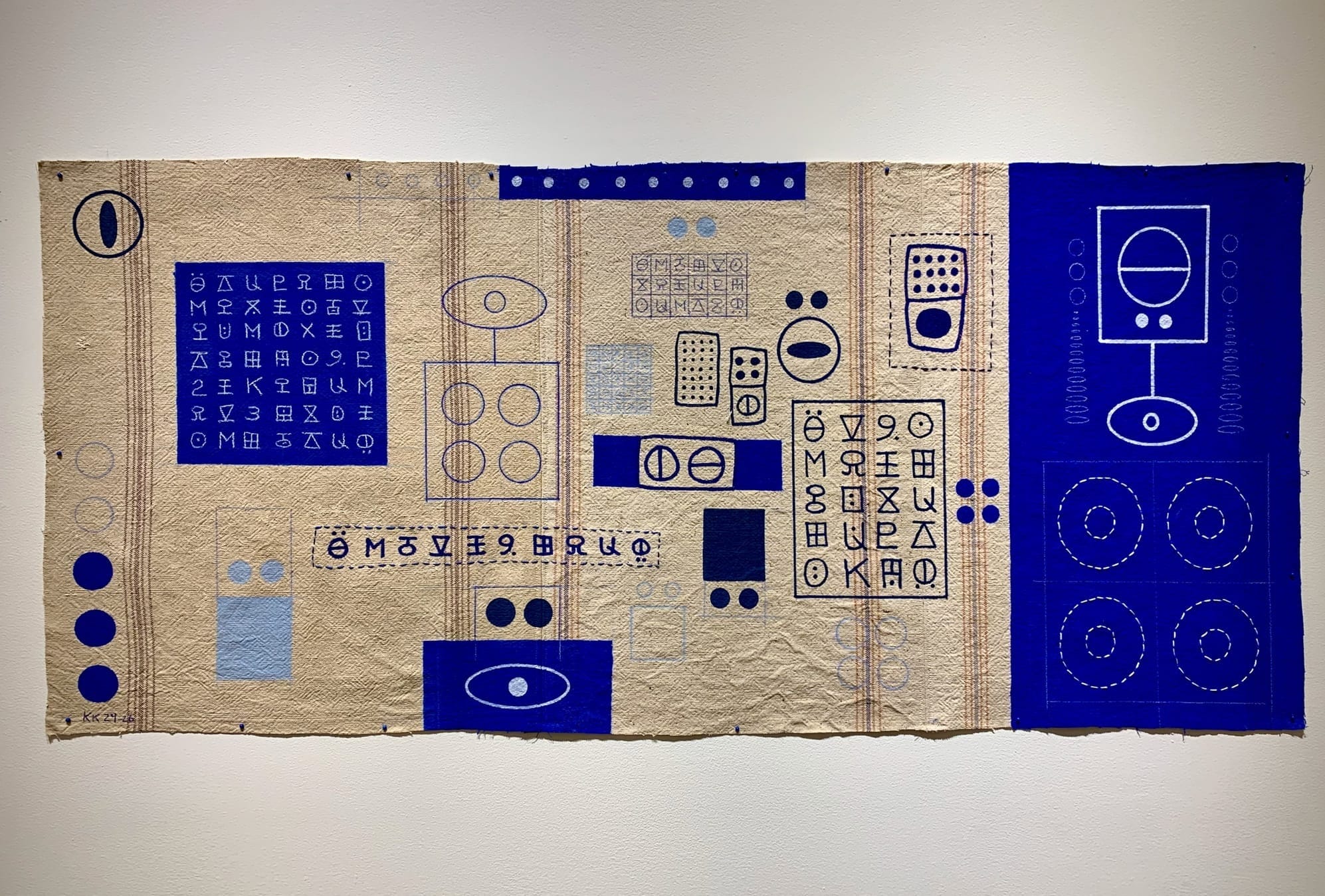
Such questions emerge from the shifting arrays in paintings and tapestries in Orbit. Culled from what might seem an overactive imagination fueled by generations of crackpot lore regarding supernatural phenomena, Knight nonetheless remains tethered. She manages this by vectoring us toward dimensions beyond the usual spatiotemporal anchors of planet Earth via meticulously tricky game boards and multi-dimensional plans for landing strips and takeoff zones. Principally a mix of cosmological and cipher-ish figures from languages of unknown provenance, Knight’s formal choices and steady-handed implementation make the paranormal seem, well … normal.
If all symbology is invented and if that arbitrariness extends even to science-generated models taken as fundamentally “true” representations of empirical realities, then perhaps deliberate and even crazy gestures by creative thinkers legitimately point toward valuable directions for understanding our place in the universe. Knight’s ongoing creative project intimates as much, inviting visitors to contemplate entry into new vistas, suggesting that there might be underlying forces working just beyond our perception. Her lively yet methodical two-dimensional grids imply not only a third dimension but further significant under-attended dimensions, if only we could parse the signs inscribed for us. Bold but not overly assertive saturated hues in primary colors contribute to a sense of seriously designed games in Knight’s work, presented as navigational cross-overs to numinous realms.
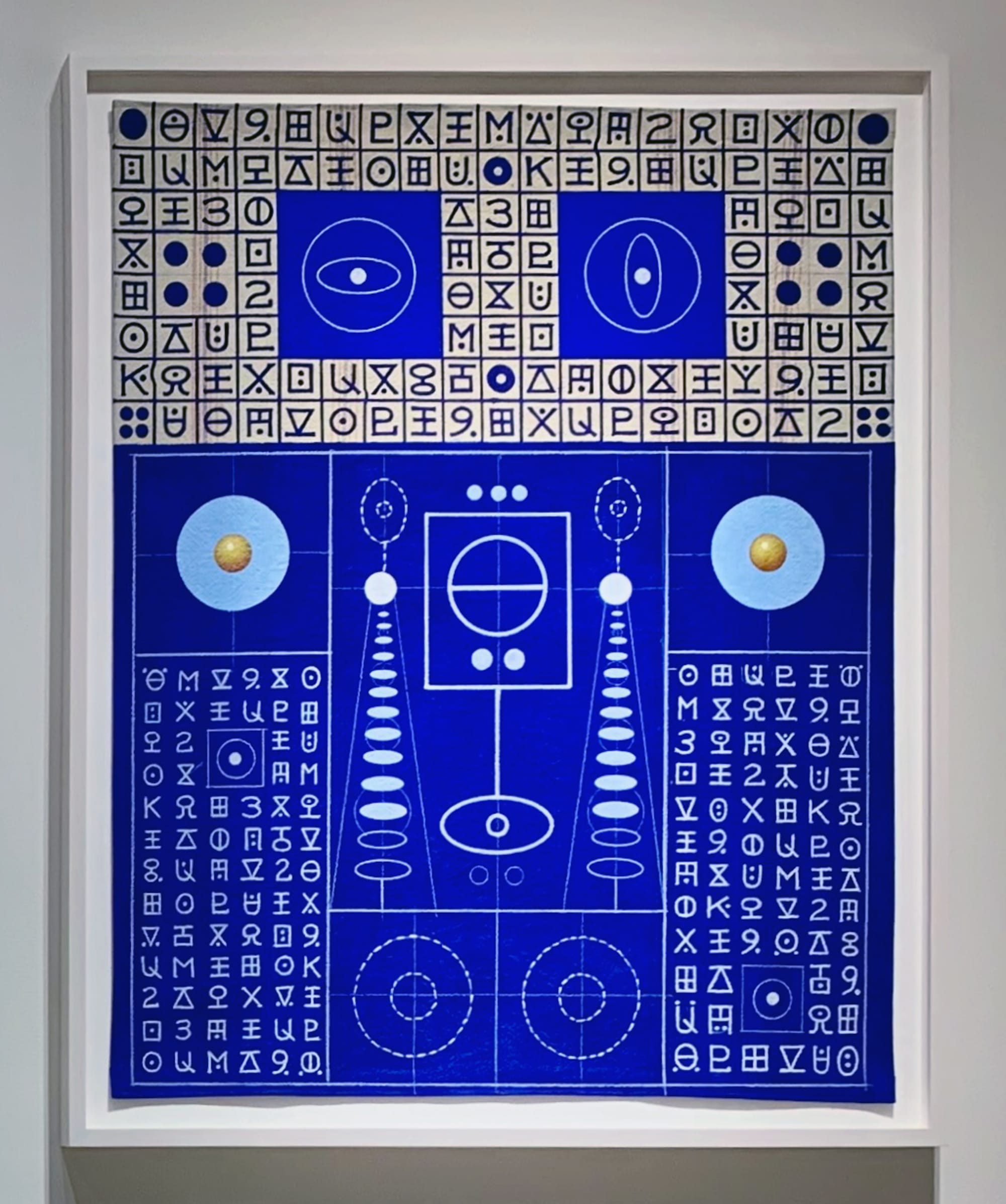
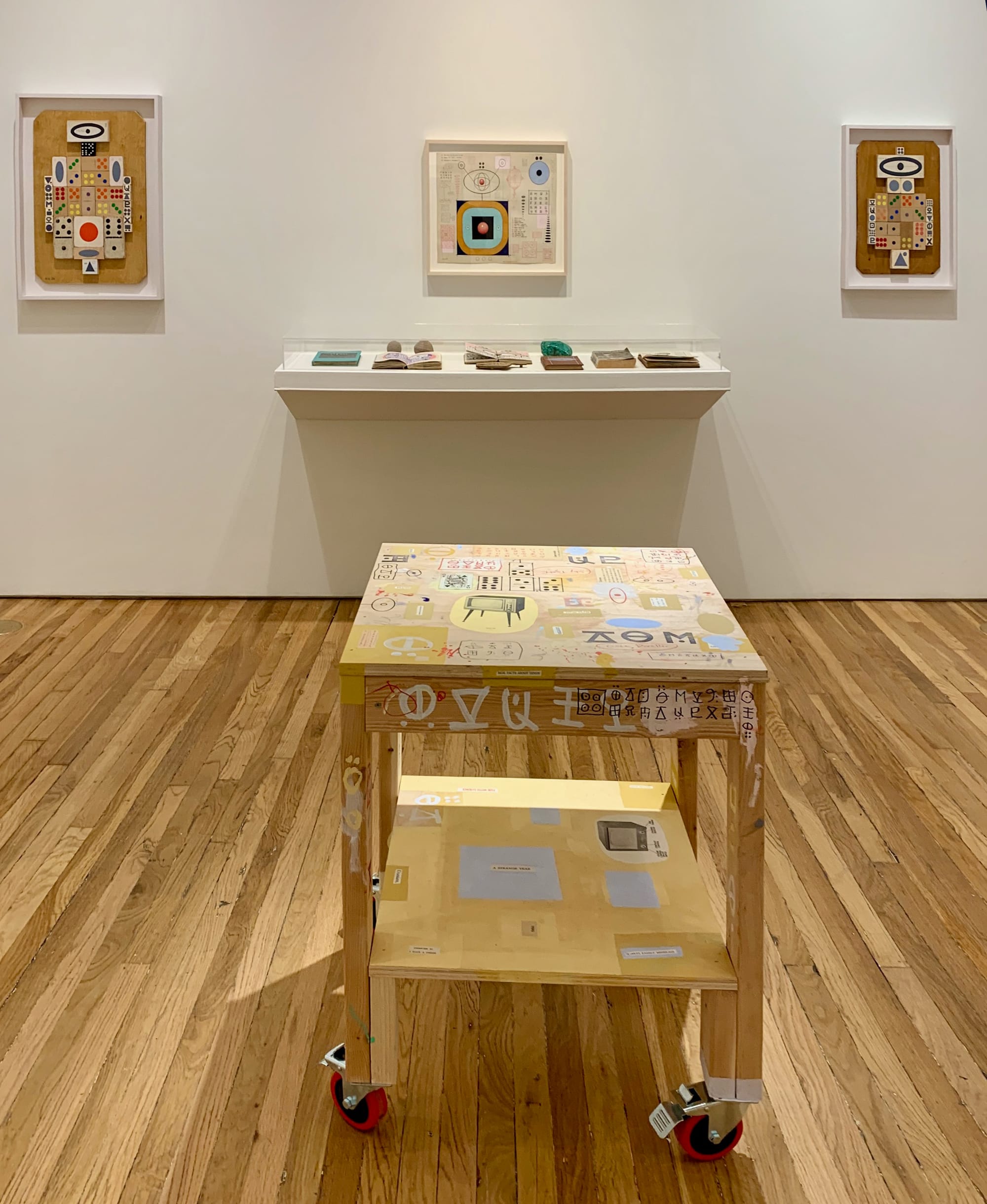
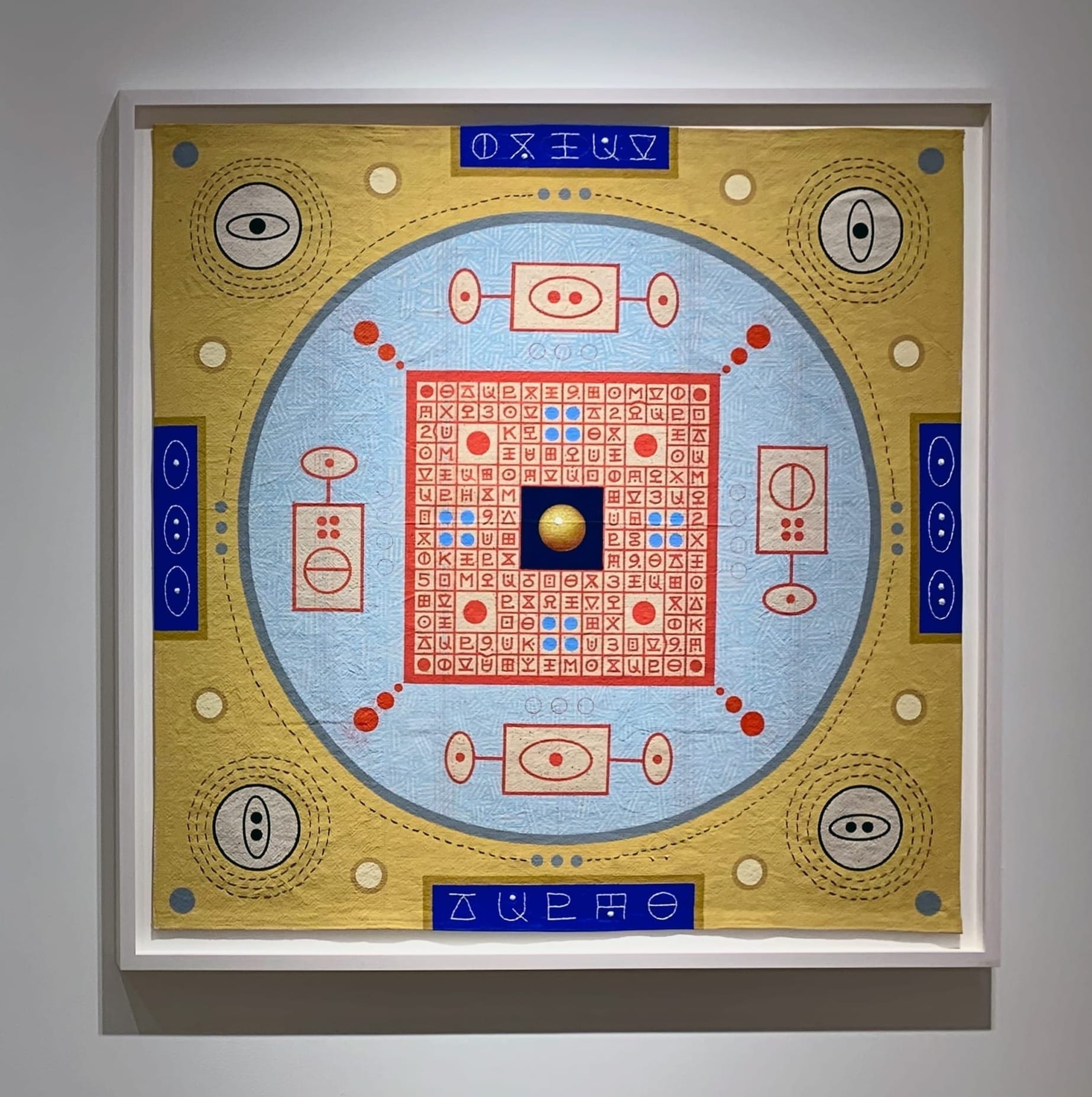
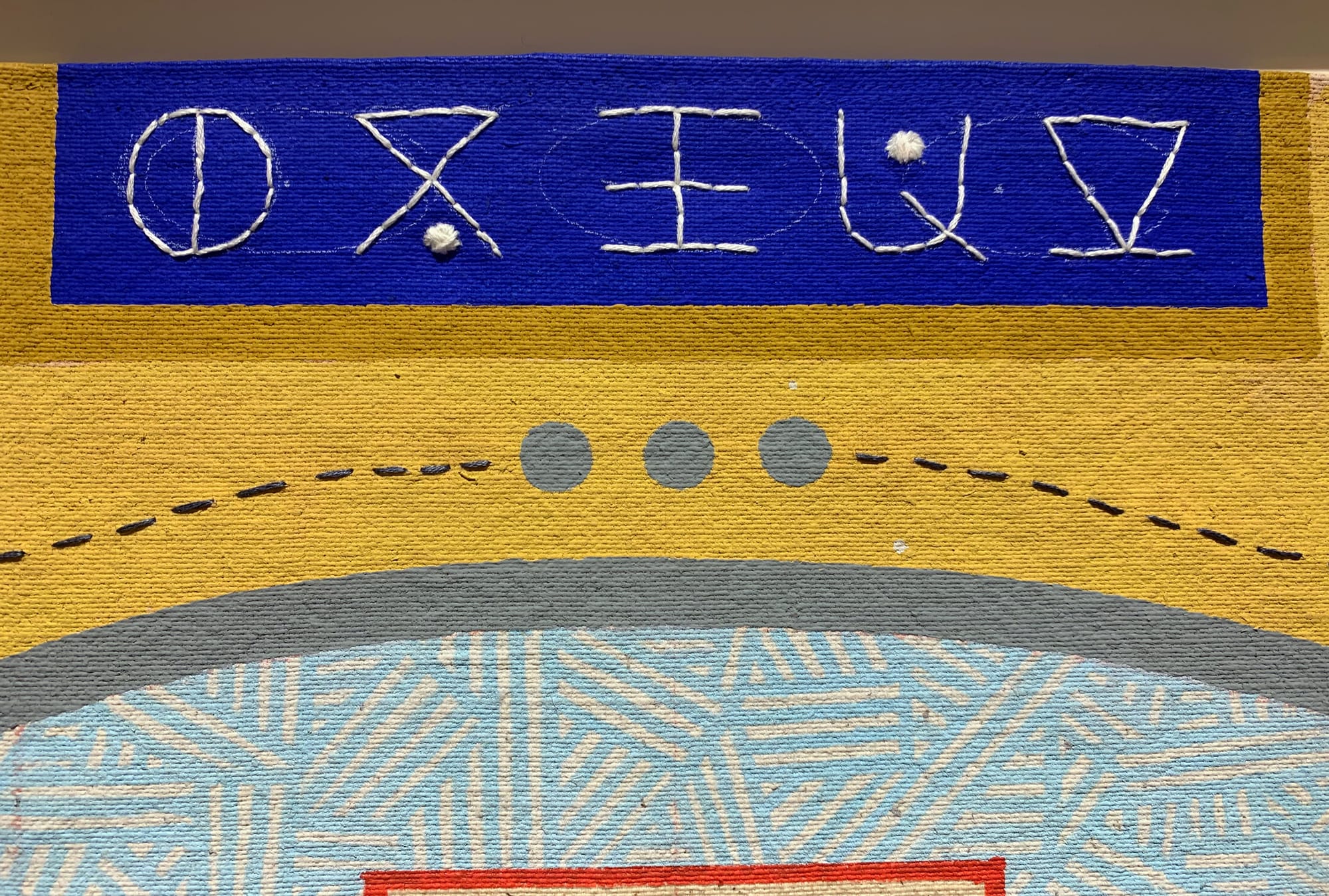
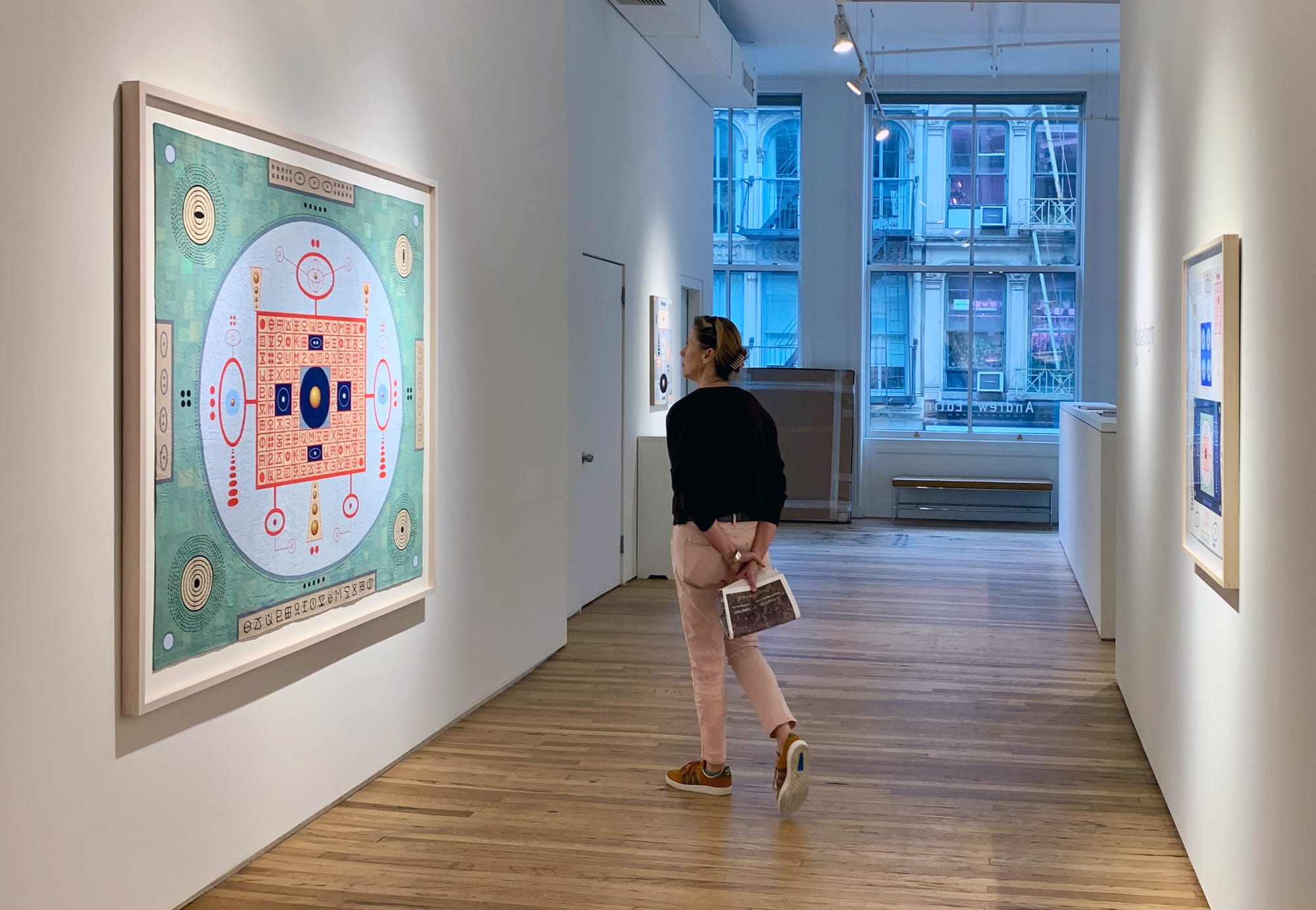
Left: Karla Knight, "Blue Libra" (2024–25), fabric dye, flashe, acrylic marker, pencil, and embroidery on cotton; right: installation view of Karla Knight: Orbit at Andrew Edlin Gallery
In works from the Blue Libra series (2024–26), sky-blue textures of cloth and paint pucker as if cosmic aureoles nestling around insulated golden heavenly bodies. These glowing spheres, with their talismanic presences, recur throughout much of Knight’s work. In pieces like “Astronomy for Everybody” (2024–26) and “Red Connector 2” (2025), series of these orbs decrease or increase in size as if heading toward or away from viewers to unseen vanishing points. Her most expansive vision — the landscape-oriented “Orbiter 2” (2024–25), marked out in a lighter color scheme on linen — features dozens of the shiny spheres occupying another dark device, surrounded by scores of smaller boxes containing symbolic character sets.
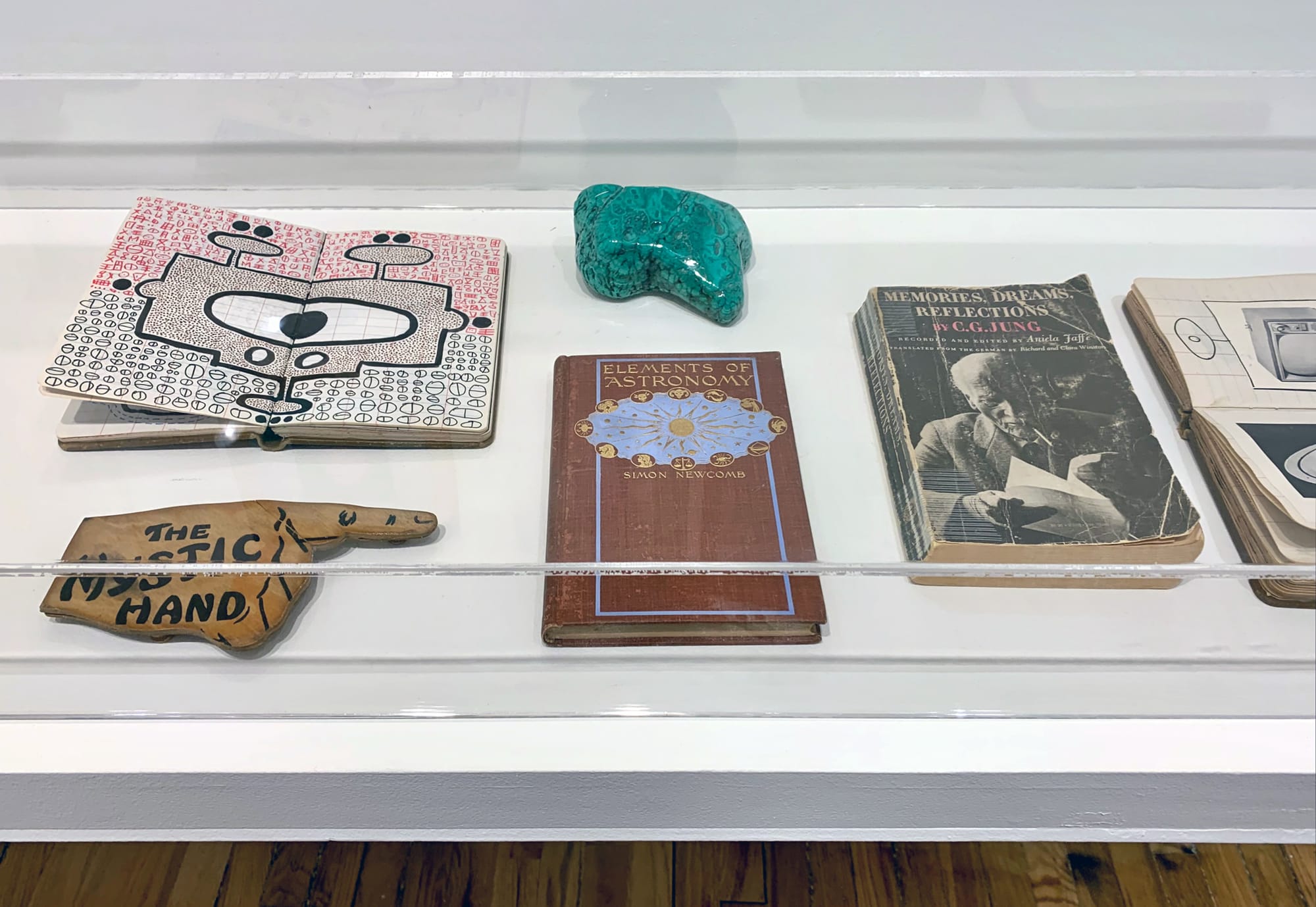
Knight’s diagrams and tables of coded figures resemble the would-be universal symbols loaded onto the Voyager spacecraft for contact with distant lifeforms — perhaps not coincidentally from the same era that Knight’s father was prolifically publishing books like Harnessing the Sun: The Story of Solar Energy (1976); Colonies in Orbit: The Coming Age of Human Settlements in Space (1977); and Those Mysterious UFOs: The Story of Unidentified Flying Objects (1975). Her intense clusters of glyphs are like inscriptions left on ancient tombs to broadcast knowledge now lapsed into the occult across generations, reminiscent of Sumerian and other archaic alphabets, or pathway indicators like Nazcal lines and other presumably extraterrestrial markings à la Chariot of the Gods?.
Reflecting the unsettling notion that some conspiracy-mongering has been right all along, Knight’s project might be seen as a counter to more risible earthbound conspiracies with glimpses of other universes, frequencies resonant with possibilities: extraterrestrial life, afterlife, communication via lesser-used senses. If it’s going to be conspiracies all the way down, just as well make your own set of potent symbols to see if anyone else is able to crack the codes, and perhaps join in co-creating. And if the steps she maps don’t resolve to any definitive meaning, no matter — putting thought and imagination into play might be the whole point.
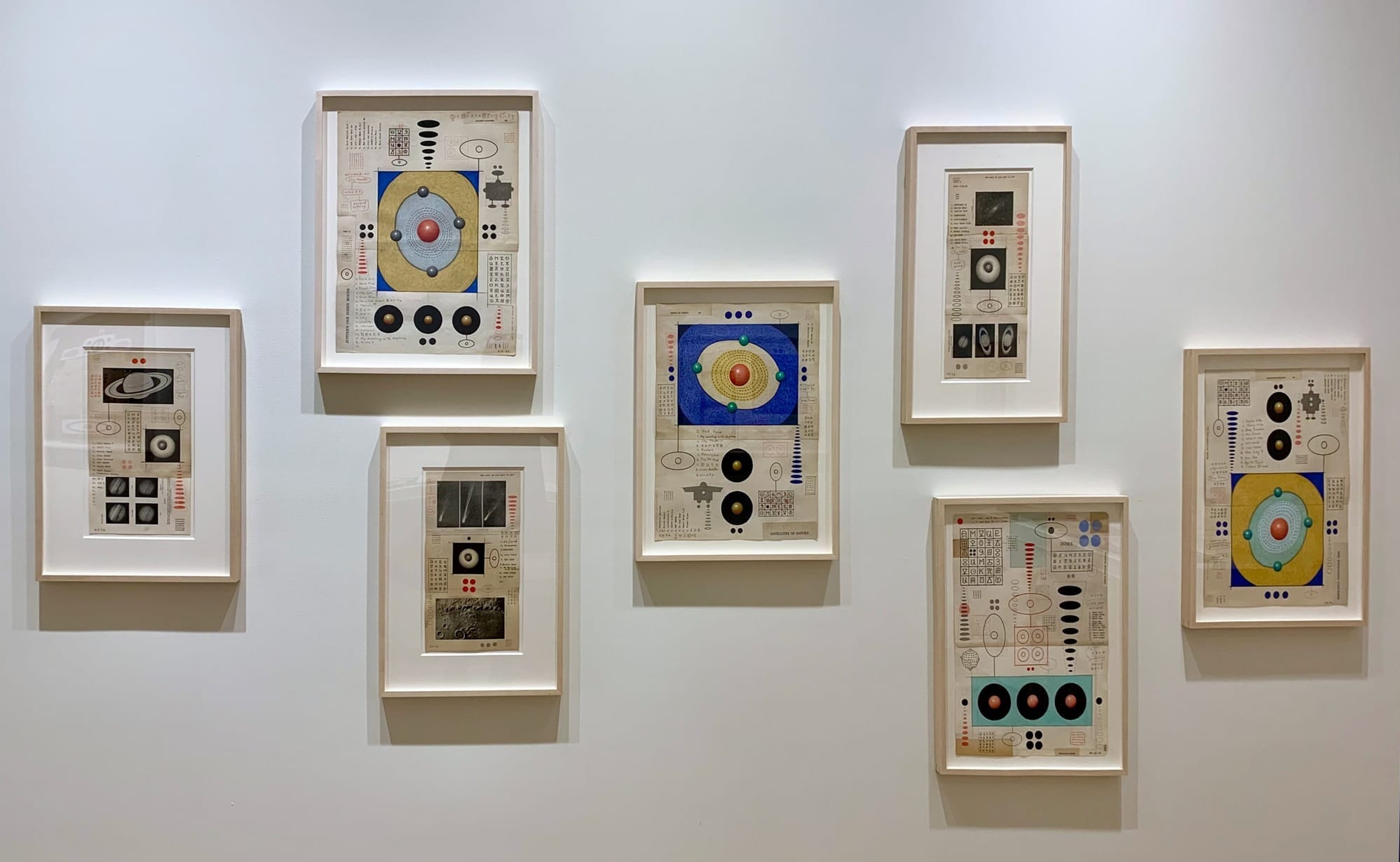
Karla Knight: Orbit continues at Andrew Edlin Gallery (392 Broadway, 2nd floor, Tribeca, Manhattan) through June 13. The exhibition was organized by the gallery.