Can Diya Vij Make NYC More Affordable for Artists?
Arts leaders speak about the tough challenges the new culture commissioner will face in the job.

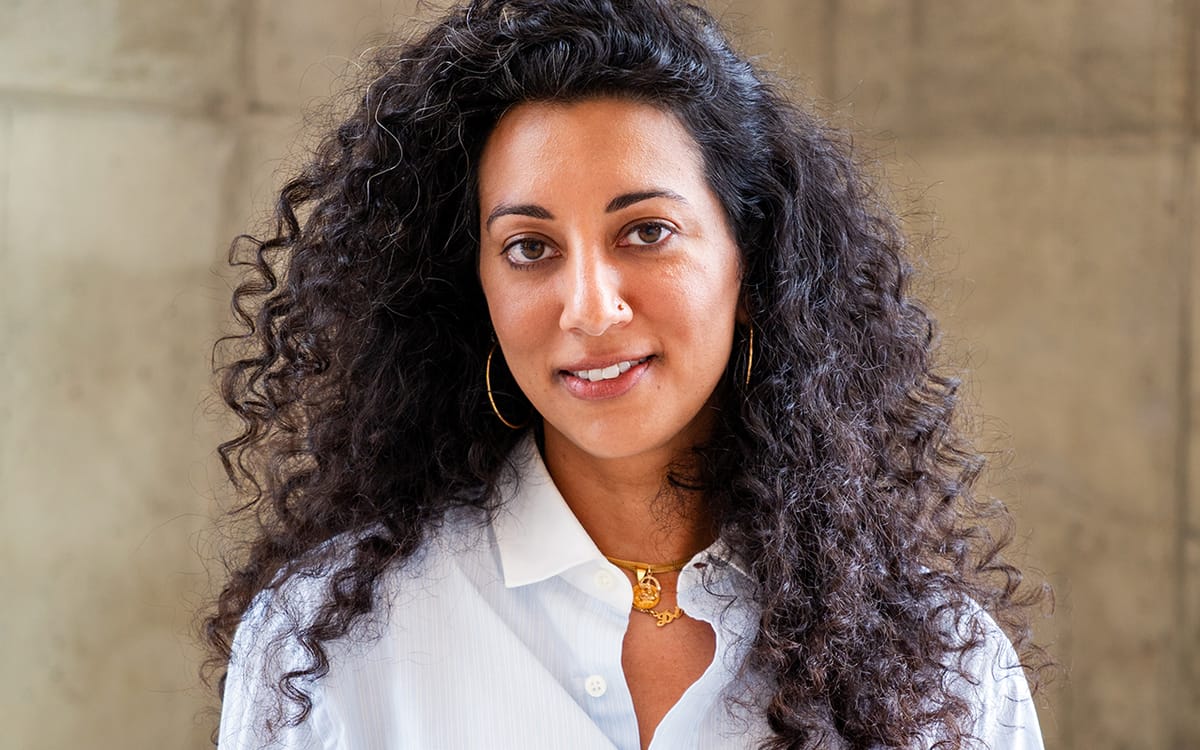
New York City arts leaders are hopeful the new cultural affairs commissioner Diya Vij will tackle the industry’s affordability crisis at a time when the Trump administration slashed federal funding for arts organizations and New York’s artists are increasingly leaving the city due to its high cost of living.
“I can’t think of anyone more appropriate for this role at this moment in time, particularly under Mayor Mamdani’s vision for the city,” former Queens Museum executive director Laura Raicovich told Hyperallergic. “Artists’ role in making New York an exciting place to live and work is quintessential, and current conditions make it increasingly difficult, if not near impossible, for artists to survive here.”
Mayor Zohran Mamdani tapped the veteran arts administrator and Powerhouse Arts’s curatorial vice president last week to run the Department of Cultural Affairs (DCLA), an agency with a $300 million budget that subsidizes some of the city’s most esteemed museums, theaters, and arts organizations.
Mamdani vowed to “fight to keep New York a city where artists can afford to live and create,” while Vij acknowledged that “too many artists have been forced out of the city they love” due to escalating expenses in public statements the city released on Saturday.
Curbing the costs it takes for New York’s artists to rent affordable studios and rehearsal space, let alone a place to live, will be an enormous challenge.
The city’s resident artist population has fallen 4.4% since 2019, its first measurable decline in decades, according to a new report in the Center for an Urban Future. The report’s authors attributed the exodus to a lack of affordable housing for artists and lower earnings compared with other parts of the country, noting that the city built zero units of housing dedicated for artists, while other cities in the US created more than 2,804 units over the past decade.
“Reversing this trend will require major steps to boost housing supply citywide. It should also include affordable housing set-asides for this vital and uniquely threatened population—a step policymakers have been reluctant to take in recent years,” the authors wrote.
Vij will be able to influence the Mamdani administration’s policies as a city commissioner, but the Department of Cultural Affairs primarily has three tasks. The agency serves as the landlord for 38 cultural institutions and pays for a portion of their operating budget, it distributes competitive grants to more than 1,000 organizations across the city, and it distributes capital funding for constructing new buildings or renovating existing ones.
Tom Finkelpearl, a former commissioner of cultural affairs who hired Vij to work in the agency about a decade ago, said she would be able to invest city funding in rehearsal and studio spaces and support citywide projects that benefit artists, such as IDNYC, an alternative identification card that provided deep discounts to cultural institutions for city residents.
However, creating new artist housing is far more complicated. Vij would have to work with multiple city agencies in order to create new housing for artists, but those projects could be complicated because federal laws do not consider artists a "targeted class" equal to low-income families, seniors, individuals with disabilities, and people experiencing homelessness, Finkelpearl said.
“In order to create housing for a particular group of people, it has to be a targeted class,” Finkelpearl told Hyperallergic in a phone interview. “It’s really hard to do this just for artists instead of, say, schoolteachers.”
Still, he touted Vij’s ability to understand the department’s role and limitations, synthesize lengthy action plans, and manage one of its standout programs, the Public Artists in Residence, which embeds an artist within a city agency to propose creative solutions to complex problems.
“She’s a big picture thinker and she has a great vision for affordability,” he said. “She is really good at putting her head down and thinking something out.”
Vij left a strong impression on Powerhouse Arts, where she worked for only about six months. The Gowanus arts nonprofit praised the “incredible rigor” she brought to its new slate of programs, including its CONDUCTOR art fair and an arts conversation series.
“Diya has long suggested that artists should be uplifted as key innovators and thought partners, collaborating to resolve social issues that face our community every day. We are enthusiastic to see this very advocacy applied at the highest level within New York City,” a Powerhouse Arts spokesperson said in a statement to Hyperallergic.
Conceptual artist Chloë Bass, who worked with Vij while she was a curator at Creative Time on a sound installation using the MTA’s public address system, said the city would benefit from Vij’s direct experience with a variety of artists.
“She isn’t distanced from the daily realities of art and community needs across New York City,” Bass told Hyperallergic. “This is really helpful as the mayor’s office considers the relationship between art and city life. At core, artists' needs are not elevated needs, they’re human needs, and can serve to strengthen and benefit spaces well beyond a traditional art world.”
Gonzalo Casals, co-director of the Culture & Arts Policy Institute and former DCLA commissioner under Mayor de Blasio, wants to see Vij strengthen the city’s partnerships with borough-based arts councils and service organizations while also ensuring that its grant payments are made on time.
“Faster payments and simpler grant paperwork matter because they determine whether organizations can keep the lights on,” he said. “And if those basics aren’t working, organizations and artists can’t plan, hire, or deliver for the public.”