Claude Cahun’s Survival Guide for the Ages
A new translation of the French artist’s 1930 memoir is a kaleidoscopic collection of dialogues, sketches, and Blakean proverbs.

In our present age of extractions and casual exterminations, when we seem forced to endure the rancid logics of the early 20th century anew, it feels improbable that a survival kit should reach us in the form of modernism itself. Yet the last several years have seen the translation, reissue, and recirculation of an audacious clutch of work by modernist writers and artists, from Gabriel Pomerand's buoyant Lettrism to Yi Sang's homophonic poetry, from Leonora Carrington's self-liberating oneirism to Joyce Mansour's reversed flight from margin to metropole. Taken together, these works offer a counter-arsenal of dreams.
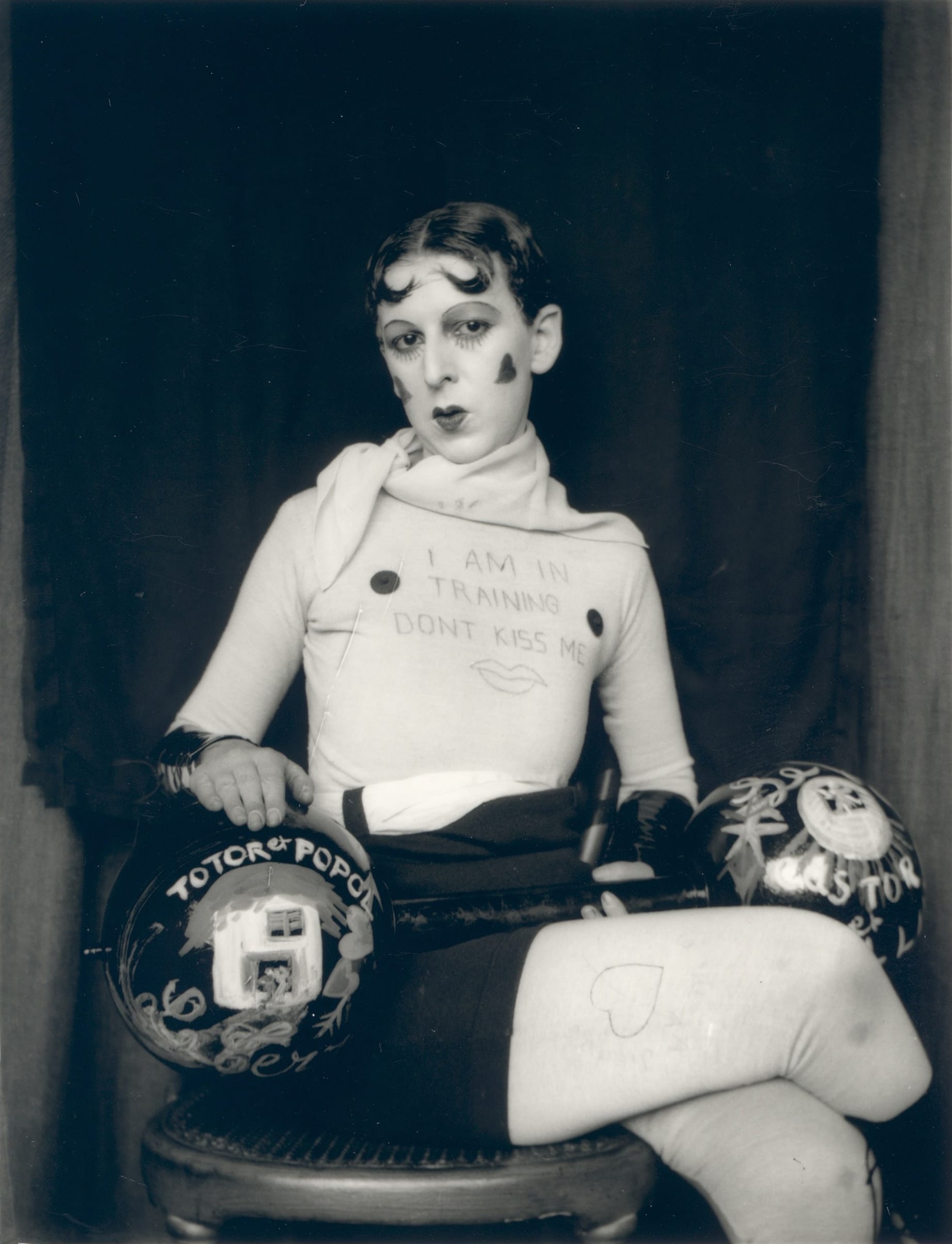
The latest of these is Claude Cahun's Cancelled Confessions (Or Disavowals) (1930), translated by Susan de Muth and republished by Siglio Press in October. To give a single biographical sketch of Claude Cahun is to offend against this artist’s refusal to be just one thing. The name itself is an invention, as is that of Cahun's partner in life and art, Marcel Moore. These alliterative noms-de-guerre suggest identity is less a fixed quality than something that can be snipped apart and re-stitched. Both members of the Paris Surrealist orbit who moved to the British Isle of Jersey in 1937, Cahun and Moore's queer life-and-art-making included works of theater, costume, photography, text, domesticity, and even anti-Nazi sabotage. Theirs were many decades of refusal, disavowal, and glittering possibility.
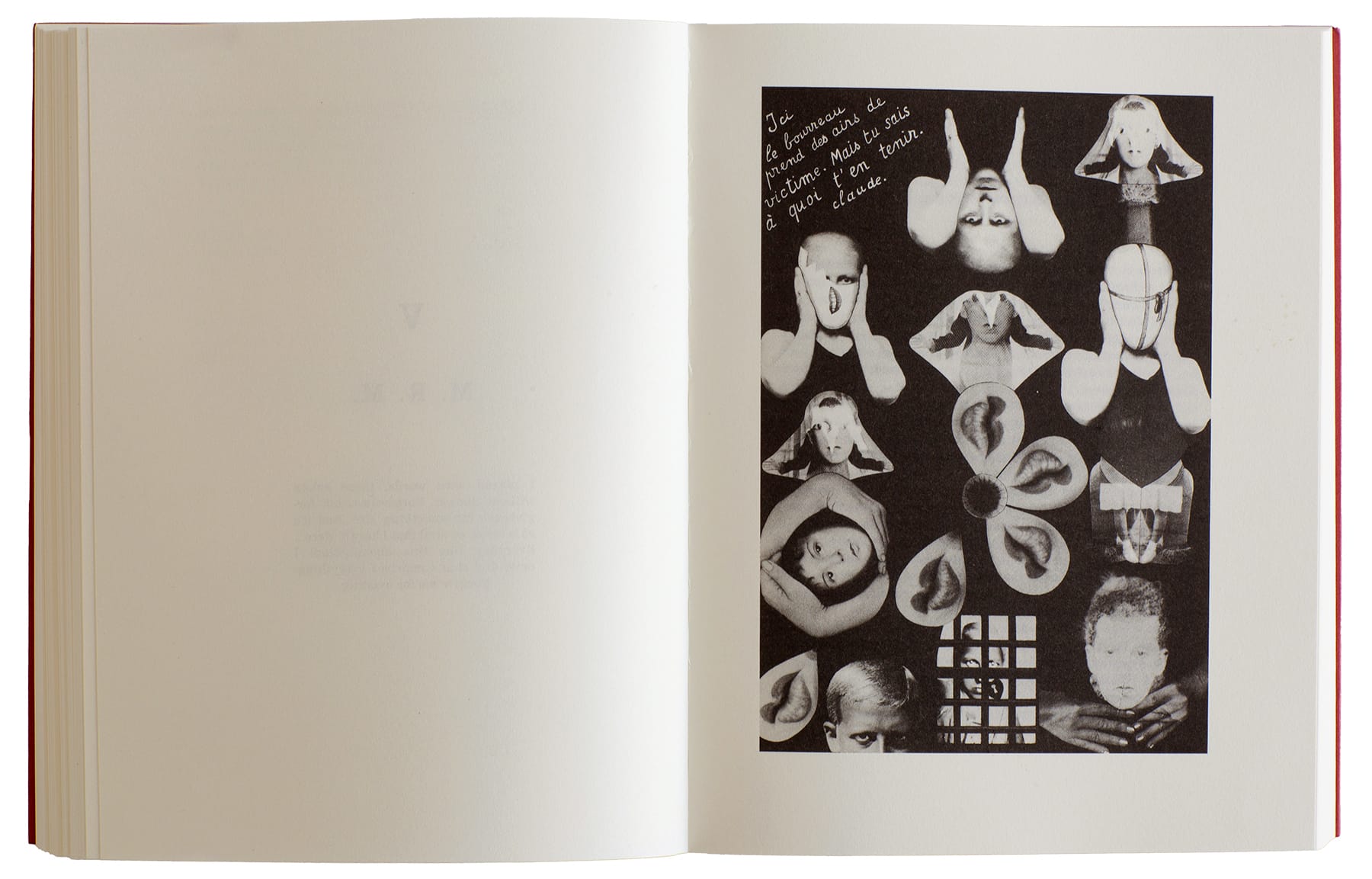
Cancelled Confessions is itself a work of refusal — a refusal to produce the linear memoir Cahun was initially invited to write by publisher Adrienne Monnier, who ultimately turned down the manuscript and left it to be taken up by a more radical publisher in 1930. This refusal birthed a work of infinite invention. As scholar Amelia Groom attests in her new afterword, even Cahun's iconic "self-portraits" are not what they seem; Moore collaborated in photographing Cahun in various costumes, masks, and pantomimed poses, employing tricks of light, contrast, scale, cropping and angle. While the author credit for Cancelled Confessions goes to Cahun, Moore composed the dizzying photomontages that preface the book and each of its sections. These collages insert Cahun's already fictionalized image into a galaxy of doubles, miniatures, mirror-images, avatars, a giant eye which might be Cahun's own if we were operating in a world of singular possessives — which, thanks to both artists’ collaborative interventions, we are not.
Cahun's text itself is also ravishingly myriad, split into nine sections that are themselves split into tributaries of declaration ("I want to change skin: tear the old one from me"), dialogues, sketches, Wildean paradoxes ("Purity is composed of all the stains, just as white is of all the colors"), Cocteauian fables, Blakean proverbs. The work is self-described “verbal debauchery" and self-theorizing; "We are only ever shown the hero's point of view. But what if I take a minor player's side?" writes Cahun.
Much credit must go to de Muth for the nimbleness of this translation. Stylistically, the writing is rambunctious with puns and made singular by its instinct to drive all syntaxes toward the plural. It's also stylish, sexy, and funny, a kind of handbook of what Cahun called "angel slang." The figure of Narcissus provides Cahun with an emblem of the book's instinct for paradox, singular because he embraces his double, exemplary in his notoriety: "That beautiful child was able to extract the infinite from his reflection, while we remain vibrations away, always the same, incapable of going any further." Amid the book's continuous brainstorm, synaptic and replete, de Muth deploys a neat aim and a sustaining sense of fun.
Cancelled Confessions arrives in a deliciously designed oxblood-red codex; such attention to the book itself as the alchemical joining of writing and art is Siglio's hallmark. In my hands, this vital object opened almost of its own volition, so as to restore my own. To recognize that this book, like those of other newly republished modernists, exists thanks to the labor both of translators and editors at independent presses such as Siglio, World Poetry Book, Wave, New York Review Books, and City Lights, is to recognize that survival will be collaborative — or it shall not be at all.
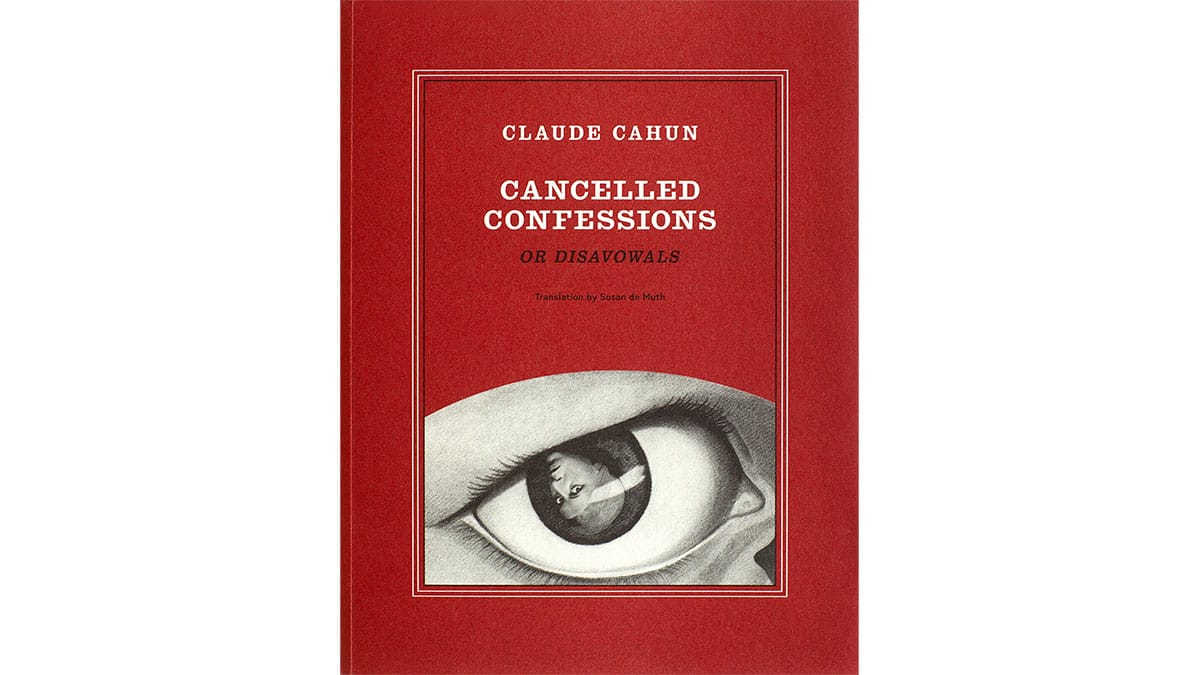
Cancelled Confessions (or Disavowals) (2025) by Claude Cahun, translated by Susan de Muth with a preface by Pierre Mac Orlan and essay by Amelia Groom, is published by Siglio Press and available online and through independent booksellers.