Debt Plagues Artists Regardless of Career Stage, Survey Finds
Data compiled by artist mentor Paddy Johnson from over 1,000 respondents indicates that “artists across all levels struggle with a lot of the same things.”

Findings from a new survey for artists report that 56% of participants are working through debt. That statistic climbed to 59% for those with gallery representation and museum shows under their belt. According to art critic and career advisor Paddy Johnson, who spearheaded the "New Visions" survey, data compiled from over 1,000 respondents indicates that “artists across all levels struggle with a lot of the same things.”
Johnson — who also pens Hyperallergic's advice column Art Problems — said in a phone interview that “the part of the industry that I surveyed tends to be underrepresented,” noting that a majority of market reports specifically focus on mainstream, commercially successful artists and artworks, as well as high-profile fairs and auctions. Per the “New Visions” survey findings, 75% of participants make less than $15,000 annually through their practices, with more than half making $5,000 or less per year. Those figures have done little to sully respondents' creative motivation, though, since 73% “remain optimistic about their careers.”
Johnson sent out two surveys — the first assessing broader industry priorities and concerns, and the second with updated questions about economic status — to over 18,000 people, including the members of her career development program Netvvrk, her newsletter subscribers, and her broader contact list of independent working artists. The survey did not gather artists' demographic or geographic information, though Johnson said that many participants “mentioned that they had been making work for over 20 years.”
Johnson said she was surprised by the number of optimistic respondents. “Artists come to me when they have problems (usually all over the map, at that),” she explained, adding that “you also have to have some belief in yourself in order to do this job.”
“We're always telling artists that they shouldn't think about their practice as a business or it'll soil the art in some way,” Johnson continued. “I created the survey because I felt like too many people didn't have enough clarity on where their problems were and where one should be paying attention to their practice as a business.”
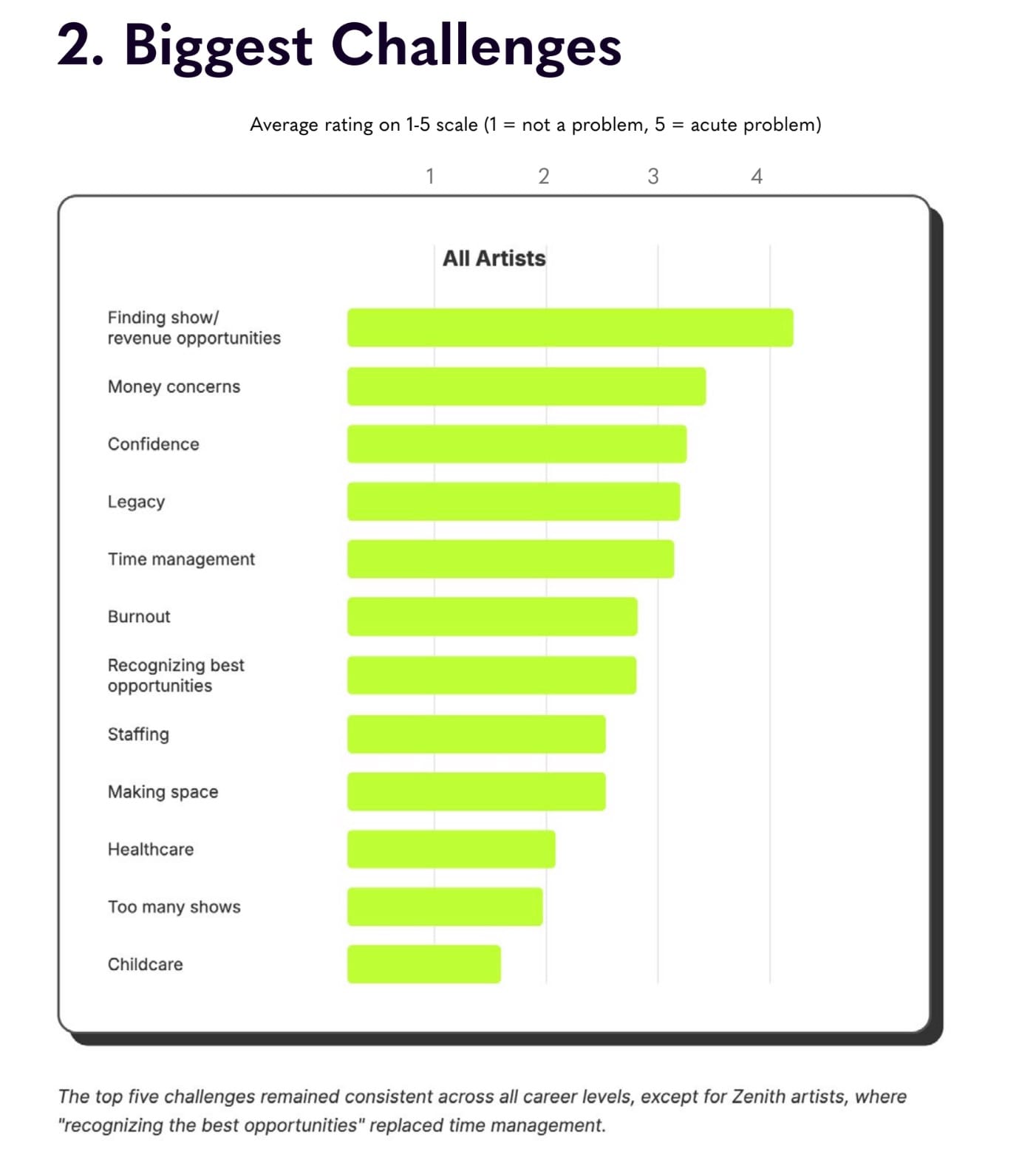
Respondents self-identified across four career phase categories: Emergence, Expansion, Elevation, and Zenith. Artists in the early- to mid-career categories emphasized that the primary challenge is finding opportunities to exhibit and earn revenue from their work. Those who identified with the Zenith category (full-time artists with gallery representation, robust sales figures, or museum shows) ranked “money” as their top concern, “suggesting financial security can stay elusive even amid other markers of artistic success,” per the report.
In another noteworthy statistics, 91.1% of artists said they did not have any formal estate plans, 94% managetheir own social media accounts, 71% of artists use “informal, inconsistent, or disorganized” systems for record-keeping, and 57% maintain full- or part-time work outside of their practice, while 45% reported that they earned less from their practice in 2025 than they did last year.
In addition, 79% of respondents reported that they're putting money away in some combination of savings accounts, and 78% said that they exhibit their work at least twice a year.
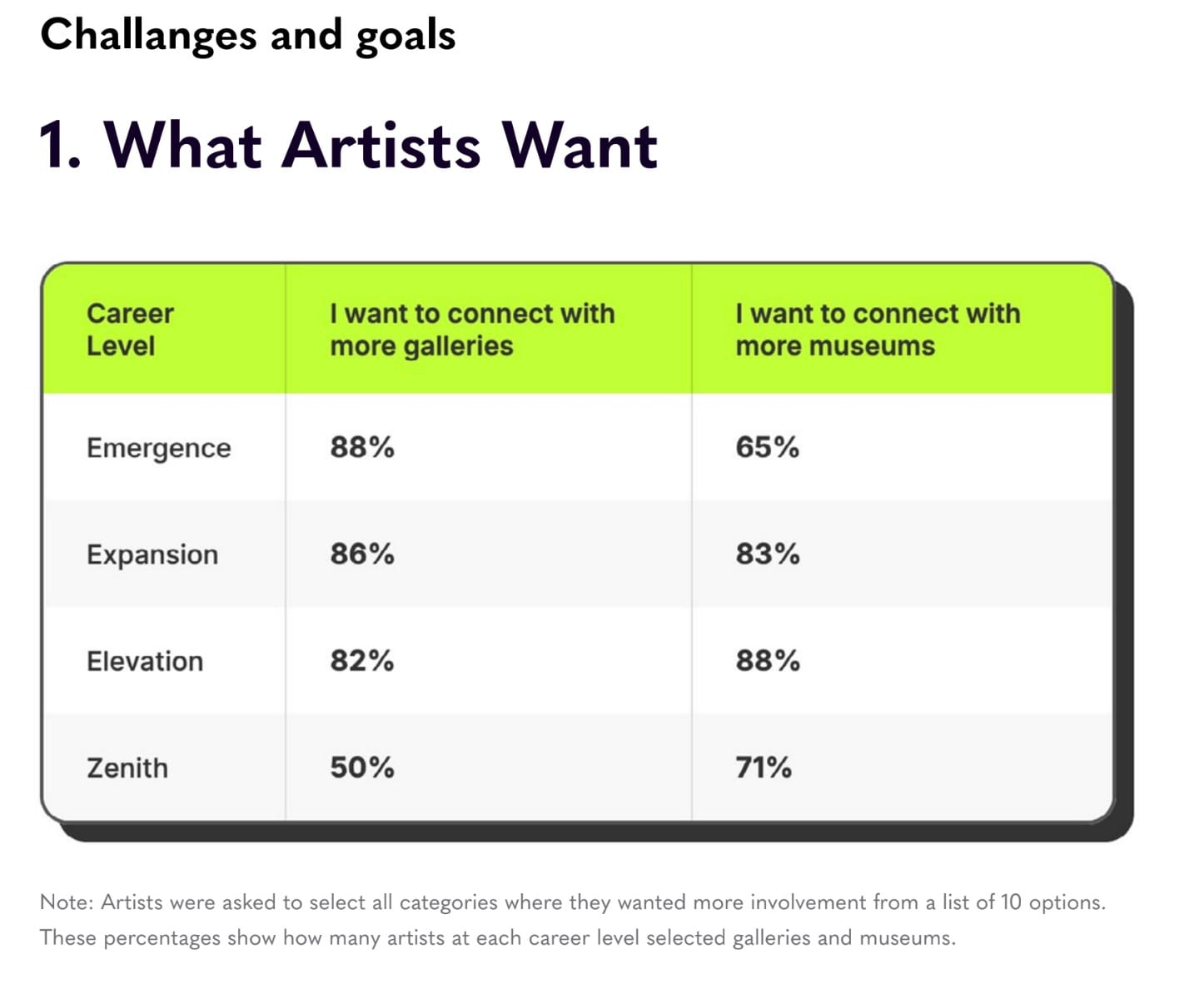
“In other industries, it's really clear that if you're at one income level, you have this set of problems, and so on,” Johnson explained. “In this industry, you have very similar problems, but your concerns shift a little bit. The results show that everyone is struggling with making valuable connections, but the Emergence people want to get into galleries while the people in Zenith want institutional recognition.”