Divers Stumble Upon 2,000-Year-Old Roman Shipwreck in Italy
The wreck off the coast of Italy, filled with clay vessels, is being hailed as “one of the most important underwater archaeological discoveries of recent years.”

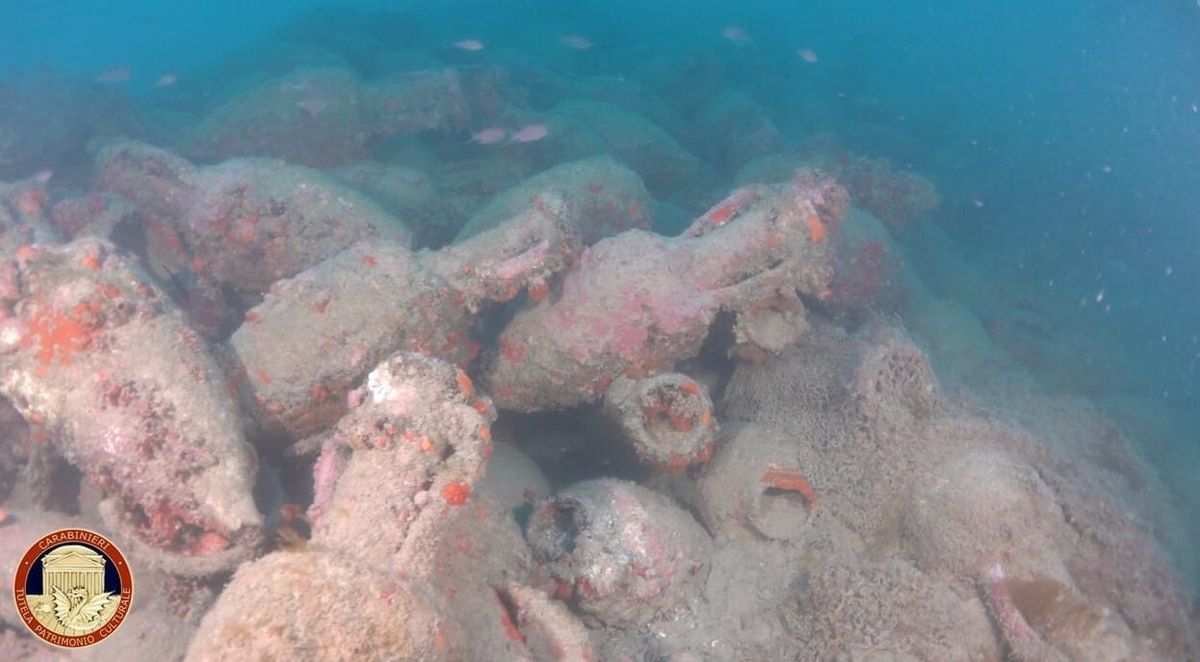
While exploring the warm waters of the Sicilian coast last week, two Italian divers discovered hundreds of clay vessels piled atop an approximately 2,000-year-old Roman shipwreck.
In an Instagram post chronicling the discovery, Giacomo De Mola recalled finding the site with his diving partner, Igor Bisulli, after mistaking the wreck for a "big rock."
Sicilian cultural authorities clarified in a statement that the ship resides at a depth of 46 meters (151 feet) and primarily carries Dressel 1A amphorae (named after the German archaeologist Heinrich Dressel), late Roman Republic ceramic wine jars characterized by their angularity, pointed base, and collared rim. The divers also unearthed two anchor stumps and an unidentifiable lead structure.
"The discovery is, to me, now very exciting," De Mola told Hyperallergic. "I did not expect it to be so important."
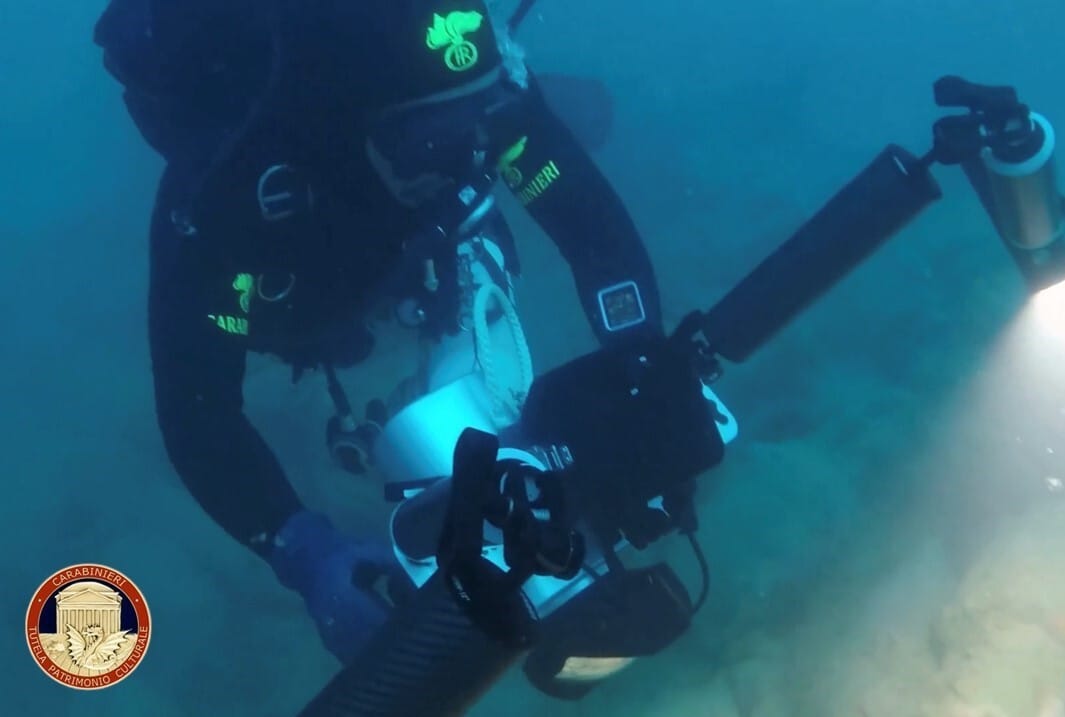
Italian Minister of Culture Alessandro Giuli described the site in a statement to Hyperallergic as "one of the most important underwater archaeological discoveries of recent years."
Underwater photos of the discovery, which De Mola shared with Hyperallergic, show piles of amphorae overgrown with sea life. In each image, the signature vessel shape remains prominent, with glimpses of the original red clay base peeking through thick crusts of barnacles and vegetation. Dated between the second and first centuries BCE, the wreck could provide further insights into Ancient Rome's war-torn expansion throughout the Mediterranean.
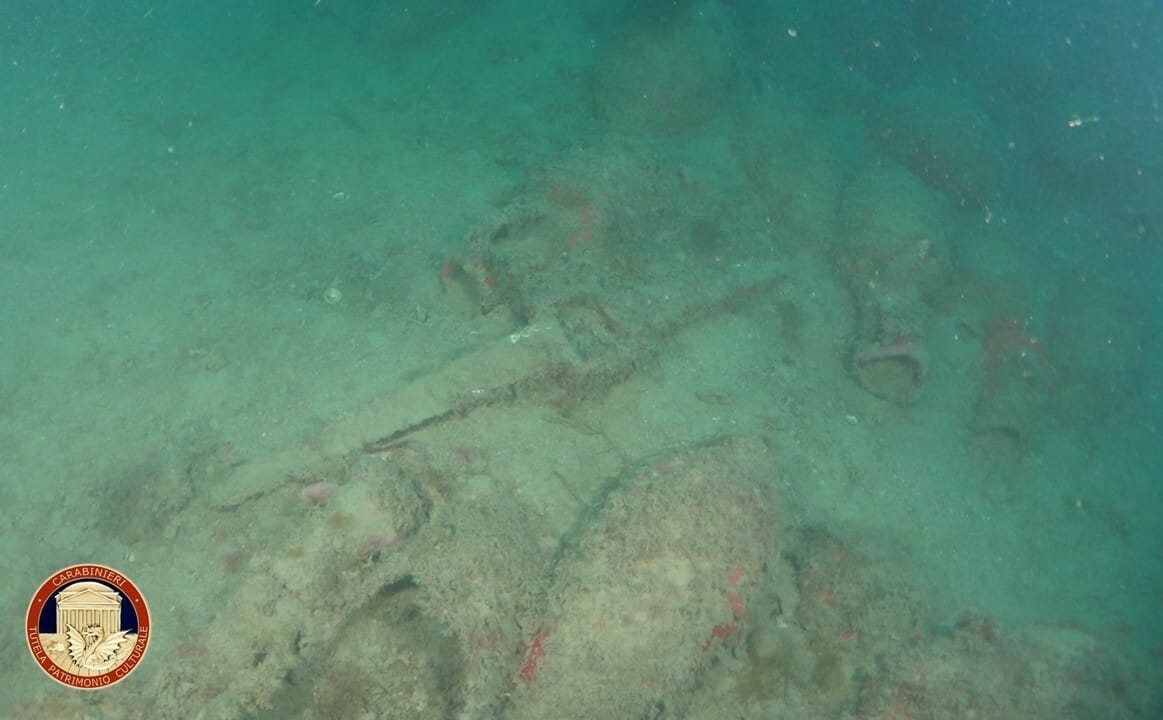
De Mola speculated that the wreck could also contain Lamboglia 2 amphorae, along with clay jars from Neo-Punic-era North Africa. Sicilian authorities have not yet disclosed the classifications of the amphorae and their contents.
The discovery recalls other ancient Roman shipwreck findings in recent years. In 2019, over 300 amphorae were found in the hull of a 1,700-year-old vessel in Mallorca. Two years later, another collection of amphorae was discovered off the coast of Palermo.
"The sea never ceases to amaze us," De Mola wrote on Instagram. "This time we didn’t find just a wreck. We found a piece of our history."