Édouard Manet and Berthe Morisot Meet as Equals
An exhibition sets out to rescue Morisot from the assumption that she was under Manet’s influence, but it's far from academic or revisionist.

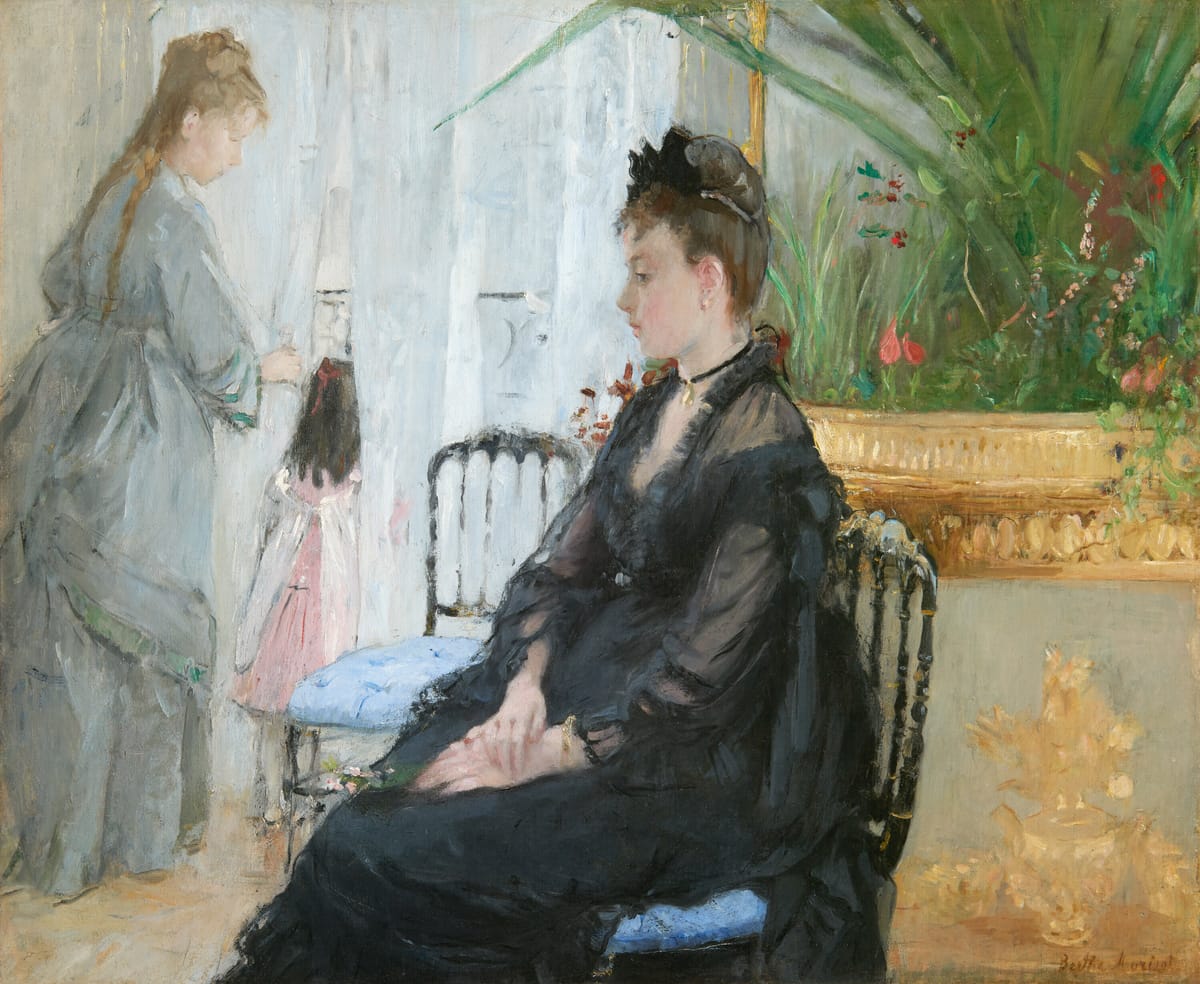
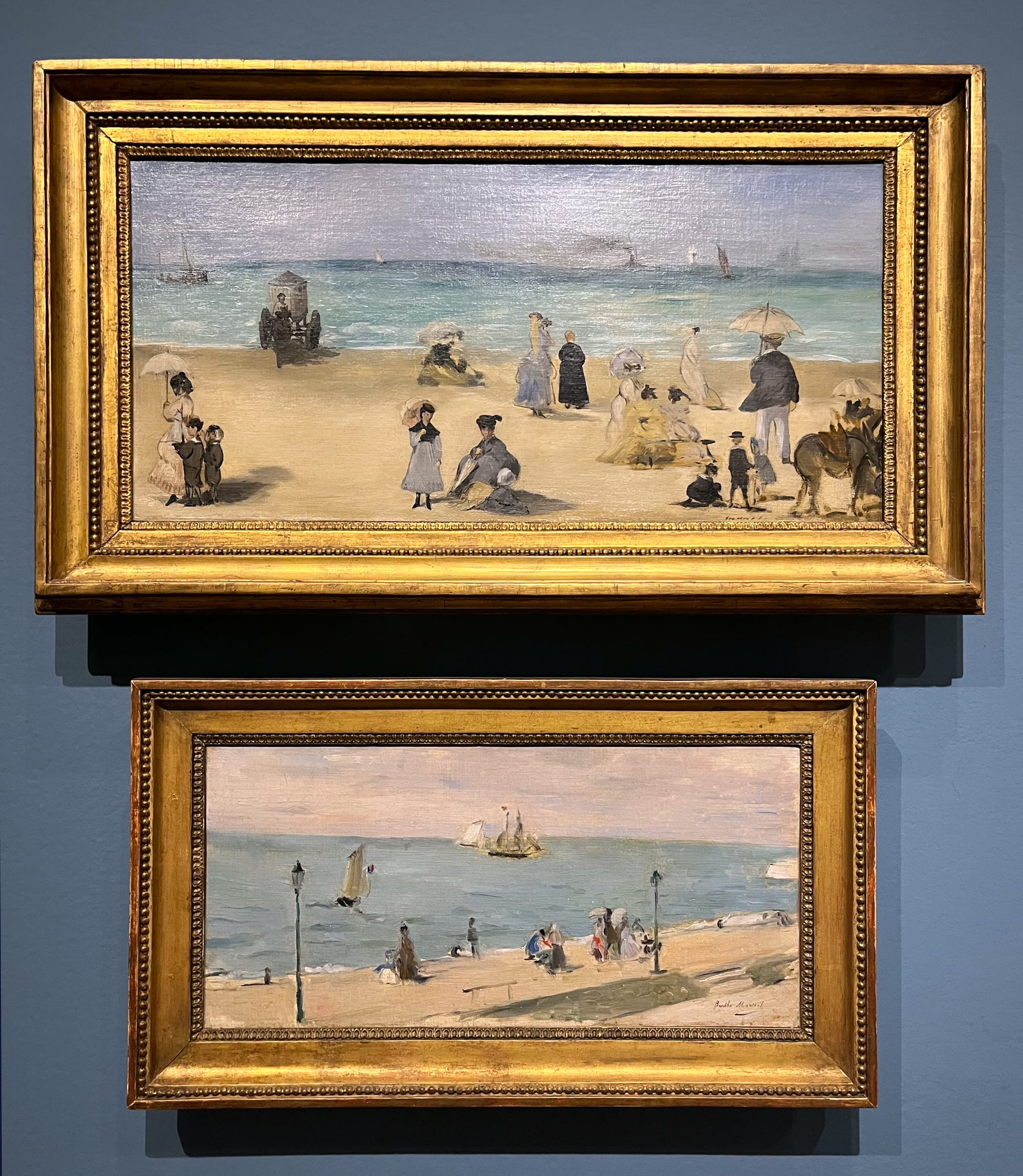
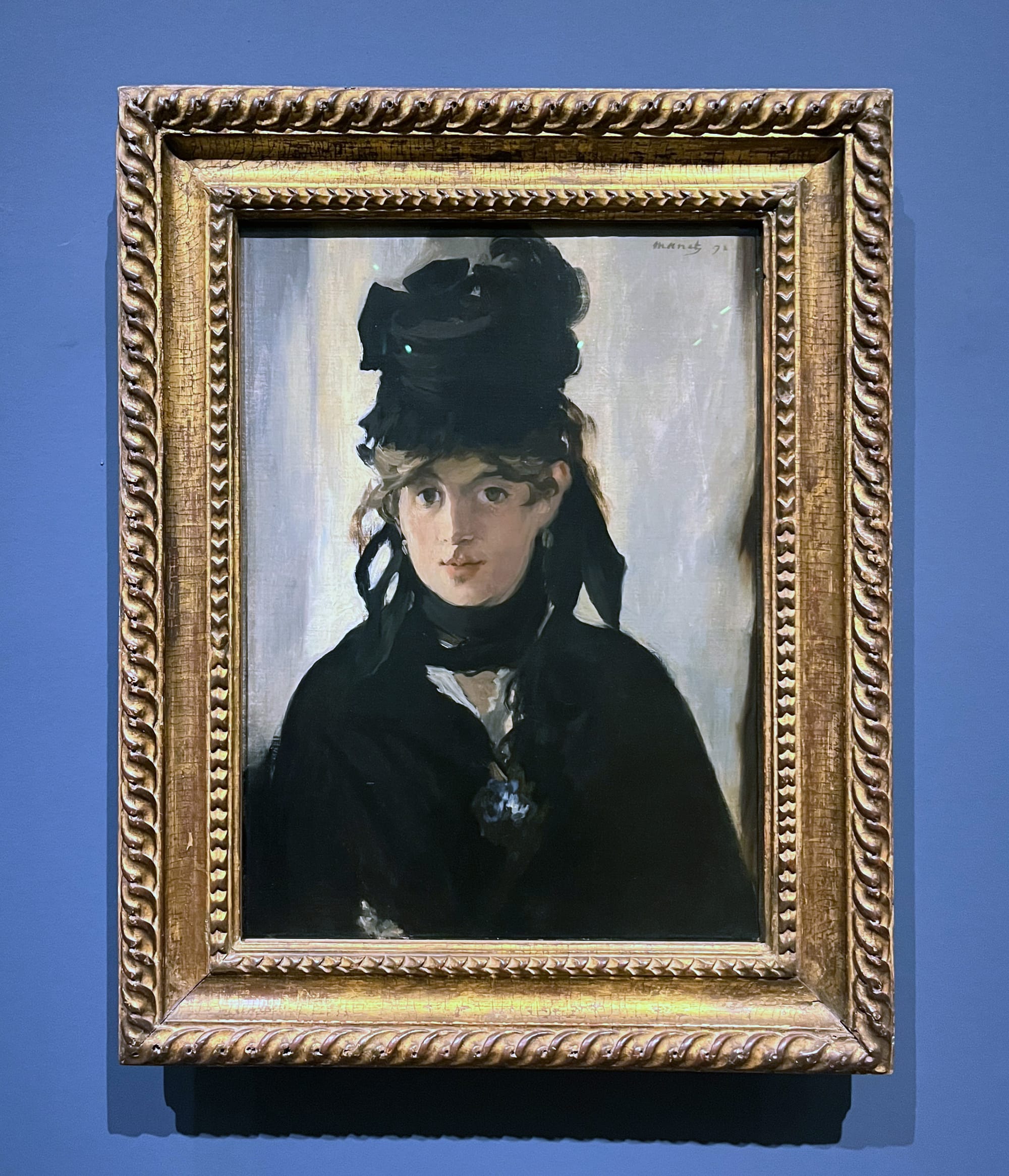
SAN FRANCISCO — Manet & Morisot at the Legion of Honor is a somewhat scholarly exhibition on the lives, work, and friendship of two eminent French 19th-century artists. While it sets out to rescue Berthe Morisot from a long-held assumption that she owed her art to the influence — even guidance — of Édouard Manet, the show is far from an academic or revisionist experience. Instead, after seeing their work compared and contrasted across a handful of galleries, the word that comes most immediately to mind is “pleasure.”
That Manet could really paint is no surprise. He’s sometimes called the “father of Modernism,” a figure at least as pivotal as Cézanne. The surprise here is how much Morisot’s work holds its own alongside his, and how much Manet understood that himself.
The two first met in the mid-1860s at the Louvre, where artists often made copies after works in the collection. Berthe was there with her older sister, Edma, also an artist, accompanied by their mother as their necessary chaperone. (As a man, Manet did not, of course, require a chaperone.) Though he was married, nearly a decade her senior, and already known for scandalous paintings — see “Le Déjeuner sur l'herbe" and “Olympia” (both 1863) — they struck up a friendship. By 1868, Morisot had posed as the brooding central figure in Manet’s large canvas, “The Balcony” (1868). It’s likely at this point that she gets cast as his student and his muse.
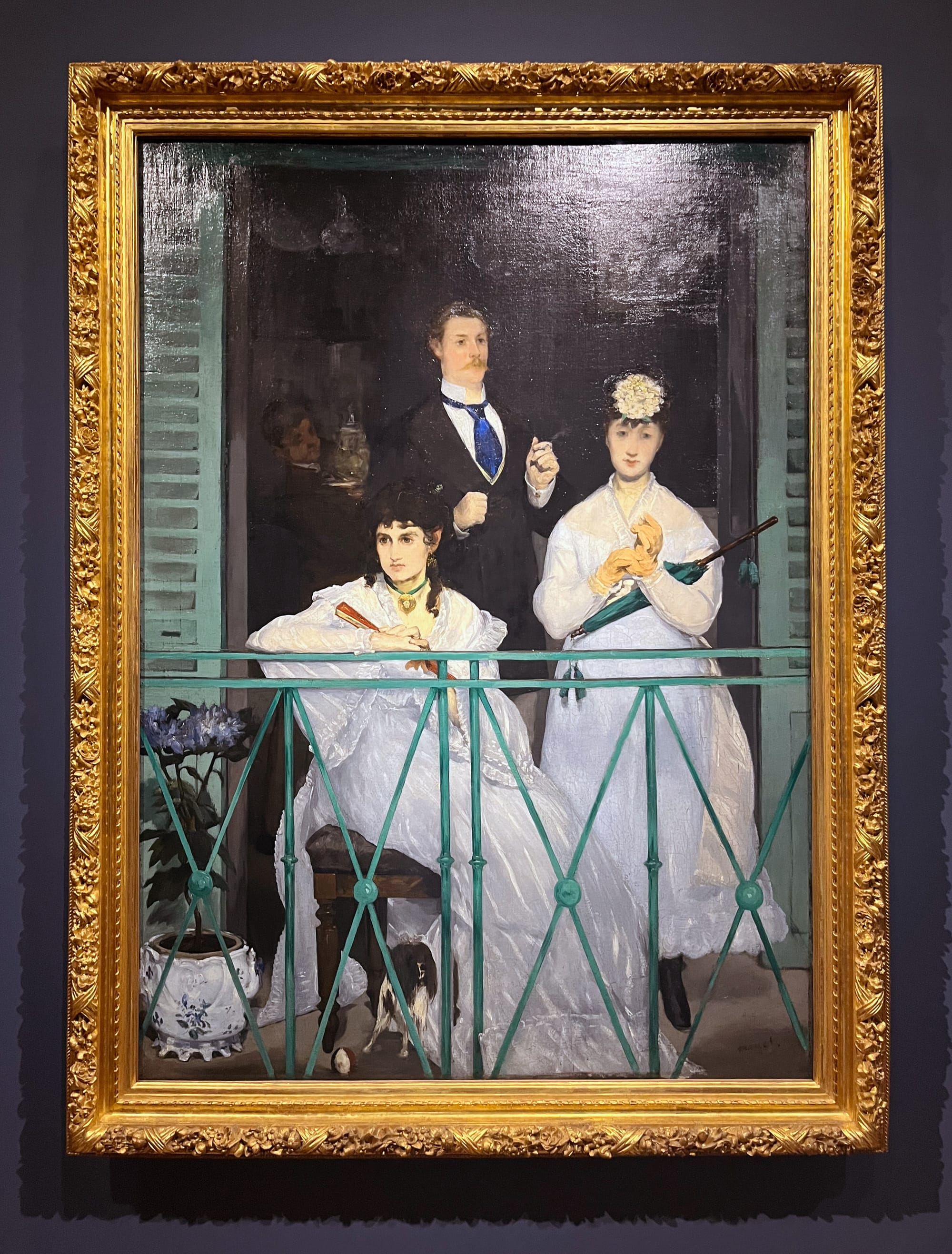
Morisot was a formidable, compelling figure, and Manet was clearly compelled by her. In “The Balcony,” Morisot’s dark hair, brows, and intensely focused gaze are a dramatic counterpoint to her feathery white dress, closed fan clasped in her pale hands, and the little dog at her feet. But though she may have been something of a muse early on, she was never Manet’s student, and in fact reacted with fury when he once “corrected” something in one of her paintings.
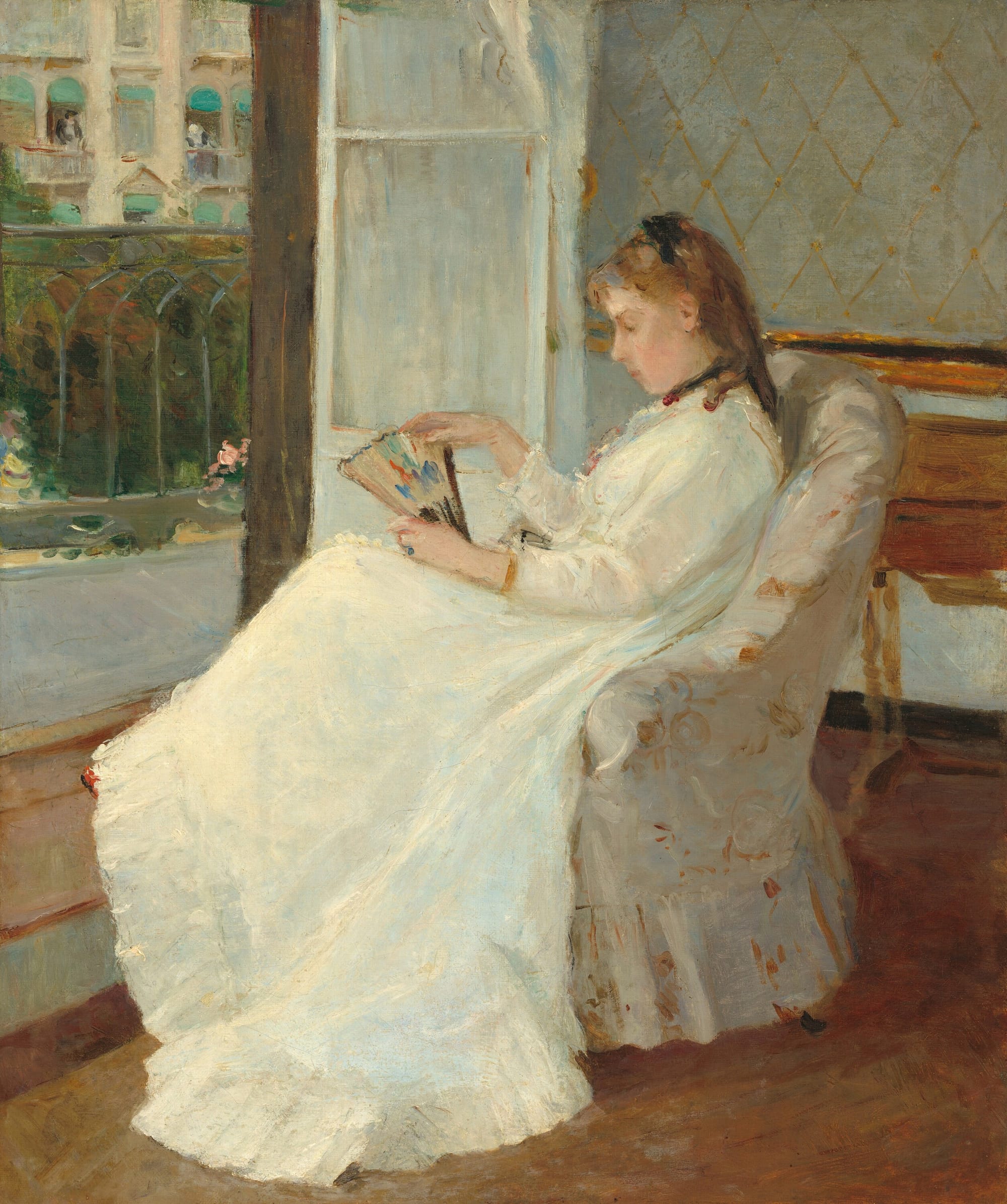
Morisot is, here, overshadowed by Manet, not just by numbers — the first gallery has seven paintings of her by him, with just two by Morisot — but by the sheer size of a canvas like “The Balcony,” around five feet seven inches high (~170 cm). Morisot’s “Young Woman at Her Window” (1869), hanging nearby and done soon after Manet’s painting, feels slight in comparison at less than two feet high (~61cm). In it, her sister Edma is depicted in a similar white dress, also holding a fan, but one she is examining open in her lap; the view is from inside the room rather than from the street. This might traditionally be considered a woman’s view, rather than a man’s. Indeed, while Manet's figures so often stare frankly outward, engaging the viewer, Morisot's nearly always look down, away, or into the painting itself — contemplating rather than confronting the world, with a touch of inward moodiness.
Morisot’s canvases are all mostly smaller than Manet’s — a result, no doubt, of both plein air portability and the proper sphere of women’s ambition, however conscious or unconscious. But they increasingly hold their own as the exhibition unfolds, a testament to her growth as an artist. She even proved an influence on Manet: His solid outlined figures become increasingly opened up into color and surrounding space, and his brushstrokes looser.
Manet also influenced Morisot in ways that extended beyond her art — it seems he encouraged the relationship between she and his younger brother Eugène. It is much to her historical advantage that she did not professionally adopt her husband’s family name when they married in December 1874. Eugène was also an artist, one who both supported her career and served as her model. According to a wall label, he was “the only grown man who appears in her pictures.”
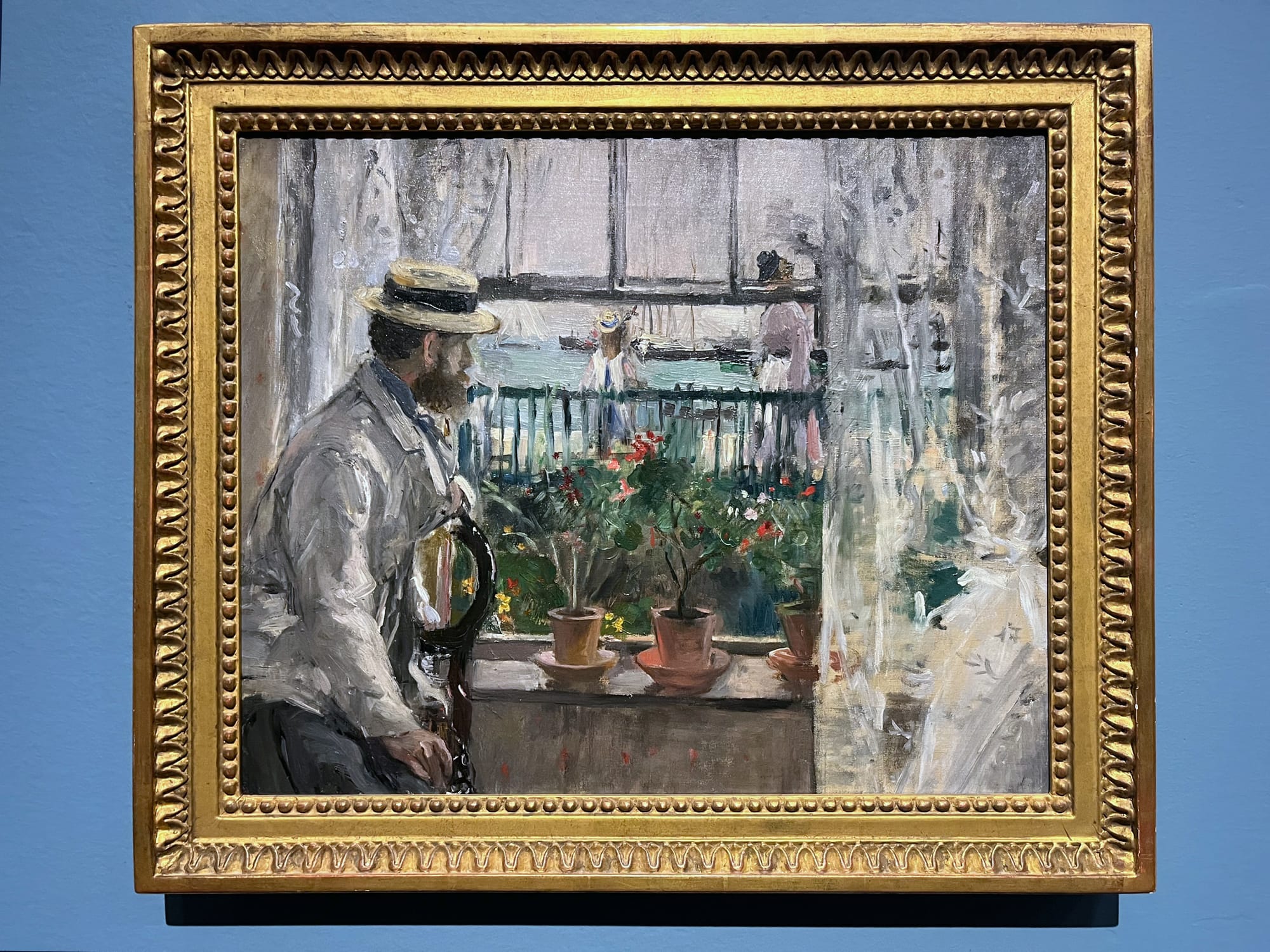
And what a man. Morisot’s “Eugène Manet on the Isle of Wight” (1875) depicts her new husband on their honeymoon, seated at a window in a white jacket, looking out at the sea. Morisot wrote her sister, “Poor Eugène, who takes your place but is a less obliging model.” Yet he was obliging enough to appear in other works by his wife, including “Eugène and Julie Manet in the Garden at Bougival” (1881), where he balances a toy across his legs for their daughter to play with. It’s pleasant to see a 19th-century father and child together this way, a rarity in an Impressionist world filled with children outdoors with their nurses. Morisot’s portraits of Eugène offer a quiet modern ideal of attentive masculinity.
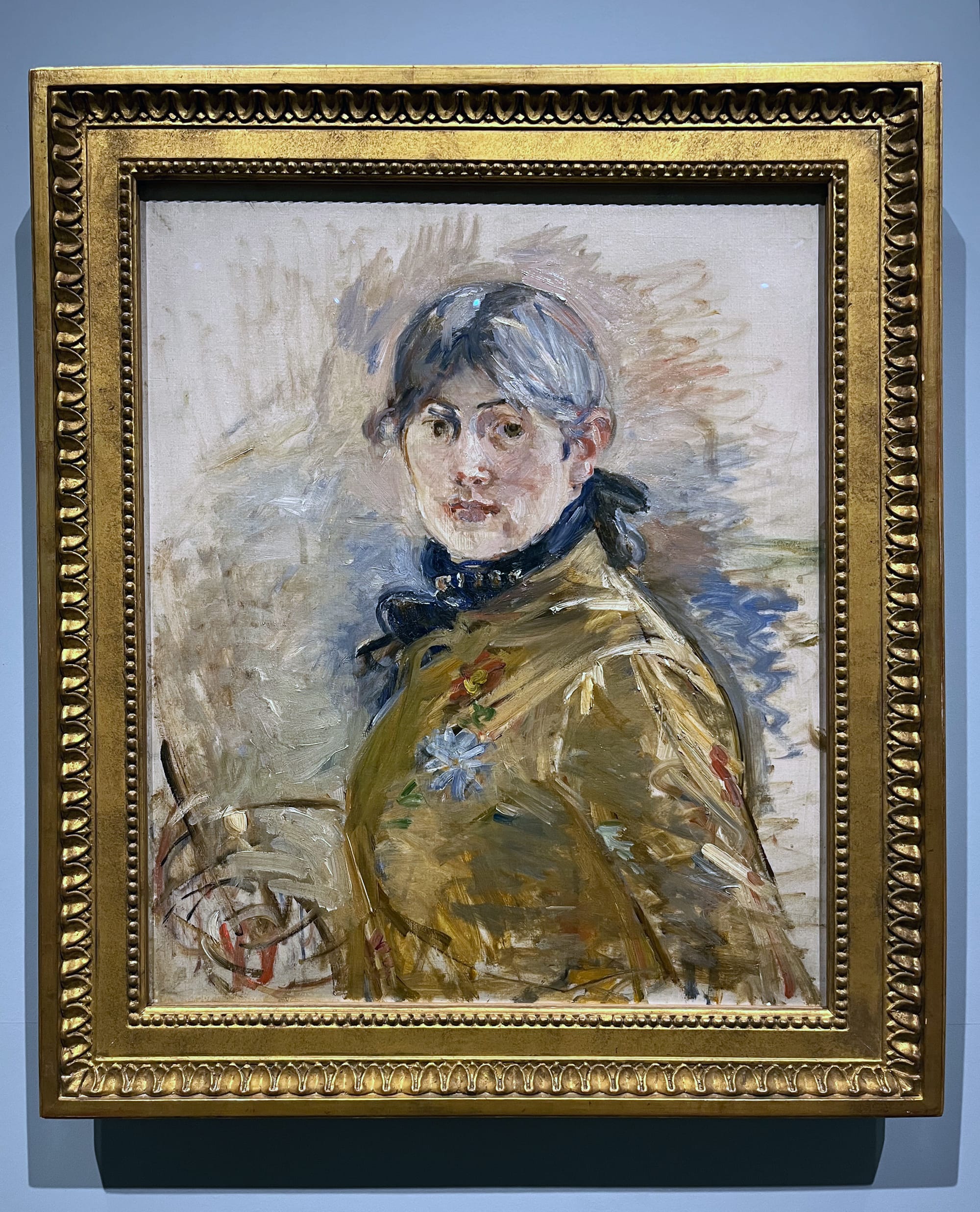
Morisot’s power grows as the exhibition goes on, until after the death of Manet in 1883, and culminates in the show’s final painting, her “Self-Portrait” (1885). Morisot depicts herself as an artist at work, staring directly out of the canvas, rendered with loose gestural brushstrokes that are unmistakably hers. It’s a fitting bookend to the introductory gallery filled with canvases of Manet’s gaze trained on her. But at this point, I’m over any concerns around who influenced whom — I’m simply enjoying the great pleasure of paint.
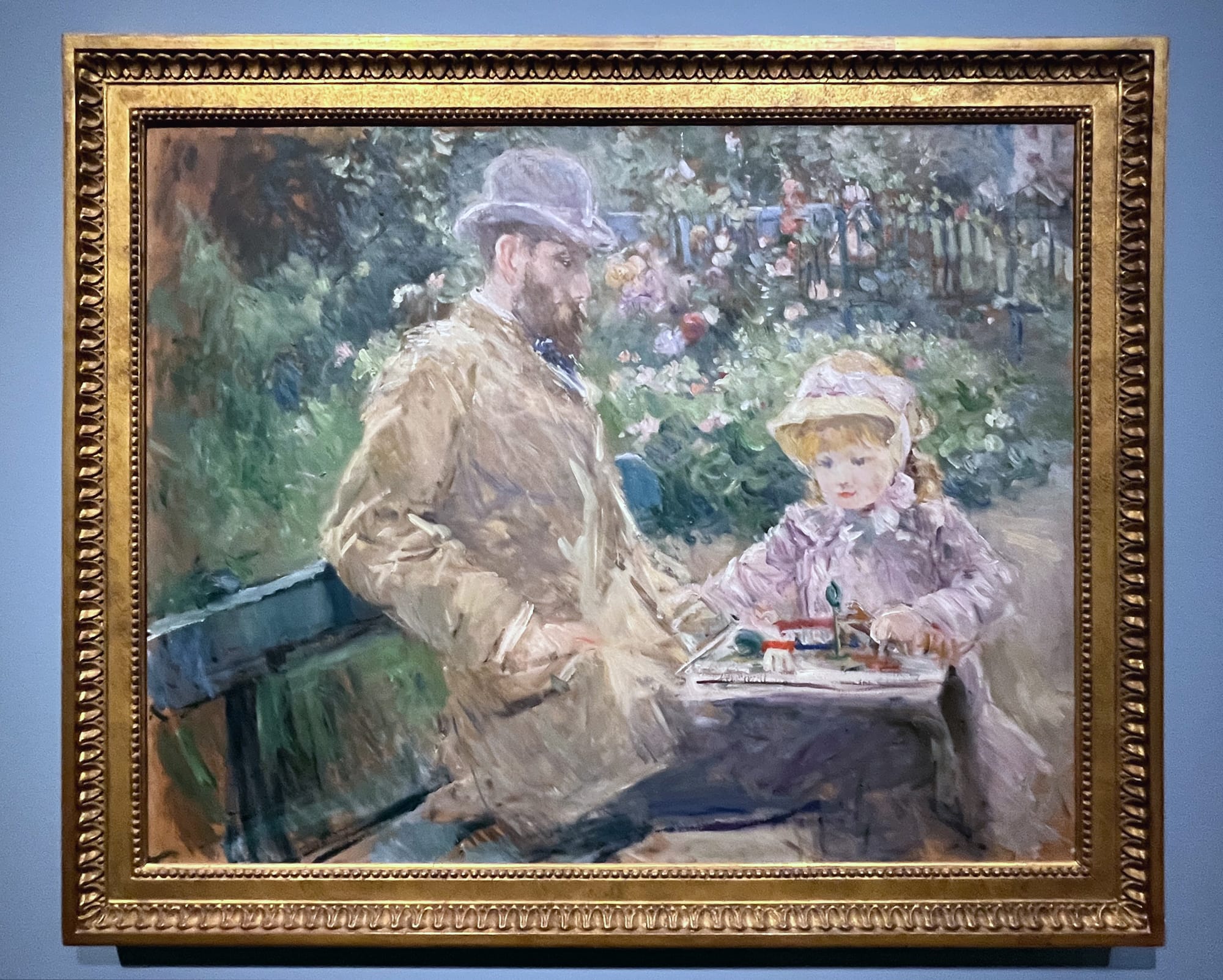
Berthe Morisot, “Eugène and Julie Manet in the Garden at Bougival” (1881), oil on canvas
Manet & Morisot continues at the Legion of Honor (100 34th Avenue, San Francisco, California) through March 1. The exhibition was curated by Emily Beeny.