Faith and Its Contradictions in “9 Temples to Heaven”
Director Sompot Chidgasornpongse, who has a knack for patient observation, follows a single family on a quest to find a miracle.
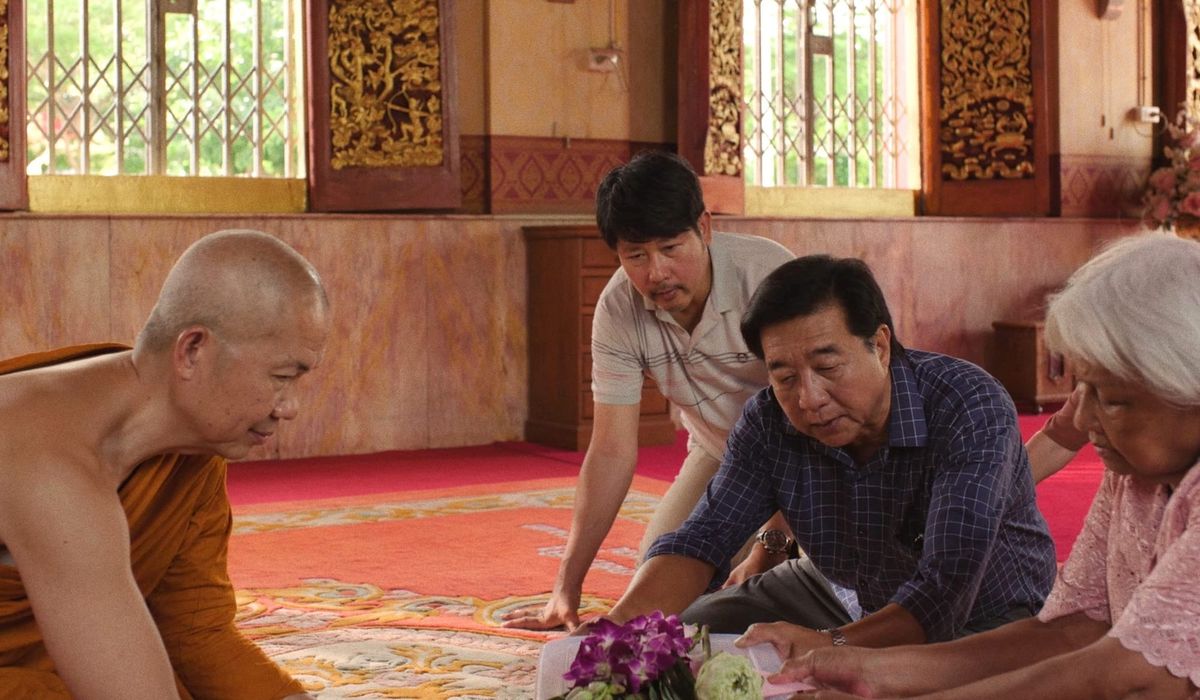
Whether scrolling past AI-generated “paintings” of Donald Trump as Jesus or videos of a mosque inside a shopping mall, the spiritual and holy coexist with the profane and commercial today. But decoding the meaning of our lives remains as alluring and difficult as it ever was. Sompot Chidgasornpongse’s 9 Temples to Heaven (2026), which recently screened at the New York Film Festival, takes a thoughtful approach to exploring the ways we choose to navigate these contradictions.
The film follows a family in Thailand, led by the middle-aged Sakol (Surachai Ningsanond), as they visit and build “merit” at nine Buddhist temples by making material offerings and prayers, in hopes of extending the life of his elderly mother, Sakuay, also referred to as “Grandma” (Amara Ramnarong). The trip is sparked by a premonition from Sakol’s employer — who has a history with prescient visions — that requires him to finish this auspicious number of visits within a single day in order to maximize blessings.
The film is Chidgasornpongse’s debut feature narrative but highlights a knack for patient observation: He previously directed the documentary Railway Sleepers and has assistant directed with Apichatpong Weerasethakul. With its long takes and wide angles that often linger on the dichotomous architecture in and around Bangkok, 9 Temples to Heaven appears to matter-of-factly catalog how Buddhism functions in Thailand amid capitalism, patriarchy, and other mundane aspects of daily life. This stillness does not necessarily imply neutrality, though.
The film opens with a small, golden altar illuminated by candles in a dark room. As more lights flicker on, we see that the altar is part of a larger golden structure with radiant statues inside a temple. Outside, workers set up chairs and a speaker practices pronouncing Sakuay’s name. They’re preparing for a funeral.