How to Extract the Story of Appalachia
Fia Backström's Queens Museum exhibition replaces beauty and complexity with a visual and narrative language that reduces the region to a site of suffering.

“I can’t help but think of the film Close Encounters of the Third Kind. Called by aliens, the main character sculpting the mountain over and over again.”
This is how Fia Backström describes her experience of West Virginia in The Great Society, on view at the Queens Museum. The comparison echoes a long history of Appalachia being framed as strange and backward.
For Backström, West Virginians might seem alien. For me, they are family and friends.
I am writing on behalf of GRIT, a collective of artists raised in economically disadvantaged rural communities, the majority from West Virginia. We offer a counternarrative to Lauren O’Neill-Butler’s “How to Tell the Story of Extraction in Appalachia,” which praises Backström’s work as a model for representing communities living in poverty. We disagree. The exhibition continues a long tradition of recklessly extracting trauma from Appalachia for cultural capital.
Both O’Neill-Butler and the Queens Museum position Backström as an authority on West Virginia, though her engagement with the state is limited. However, the issue is not simply about duration. Appalachians are rarely given space to tell our own stories. Instead, our narratives are shaped by people like Backström, a European artist operating within elite art institutions. That positionality matters, as time alone does not dissolve systemic power structures.
Power shapes what stories are seen, told, and believed.
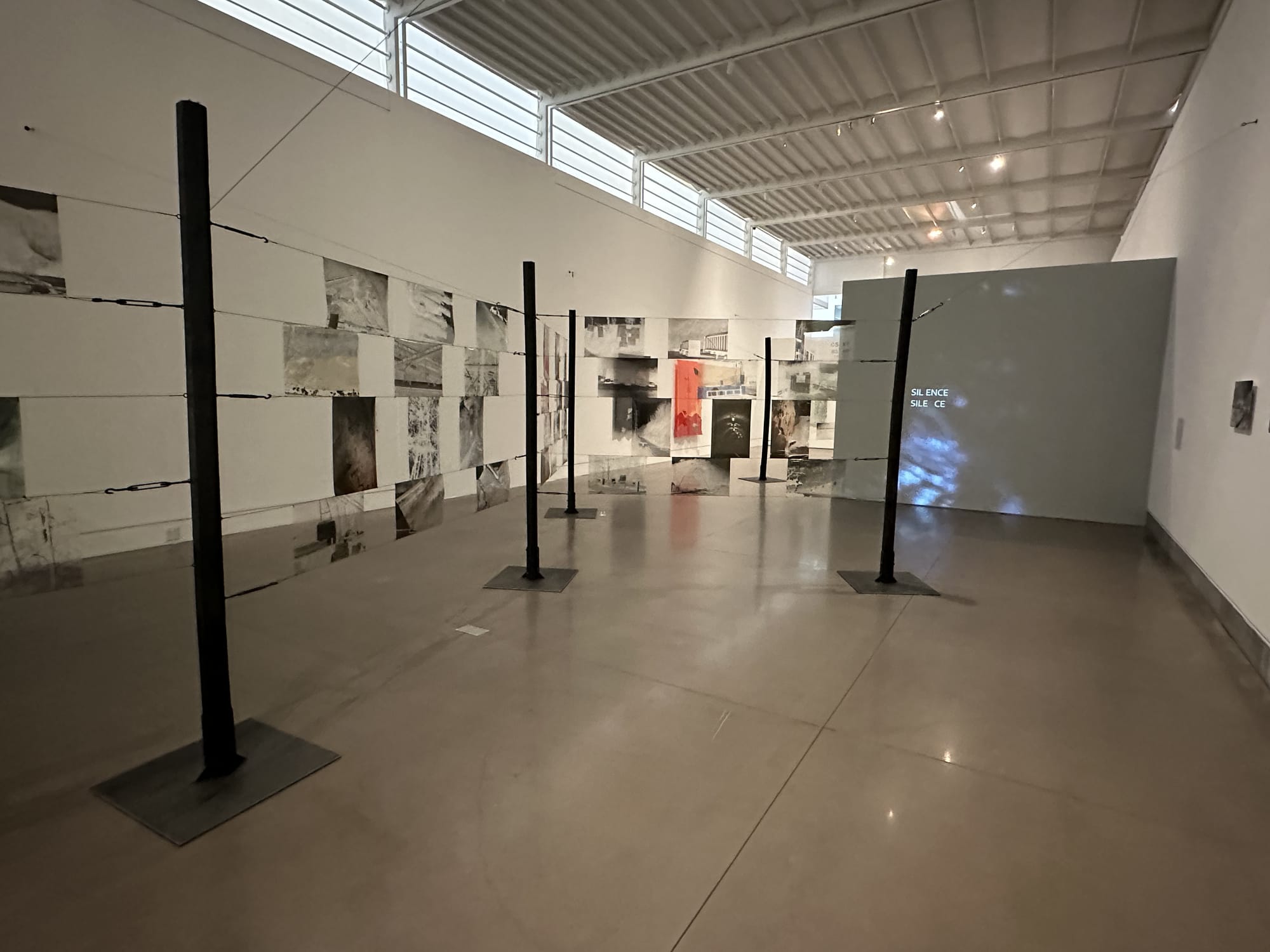
Both Backström and O’Neill-Butler flatten the complexity of West Virginia, casting the state in a singularly negative light. The exhibition focuses on Buffalo Creek, the site of a 1972 extractive disaster, but draws indiscriminately from other tragedies, creating a swirling montage of suffering. According to O’Neill-Butler, Backström learned from her visits that the region is a “nexus of environmental degradation, disaster capitalism, and intergenerational poverty.” This framing collapses the region into a narrow set of crises, reinforcing a reductive image.
Appalachia is a complicated place that embodies pride, humor, stubborn self-determination, deep community ties, and fierce attachment to place. These realities do not negate hardship, but they resist the idea that hardship is our only story.
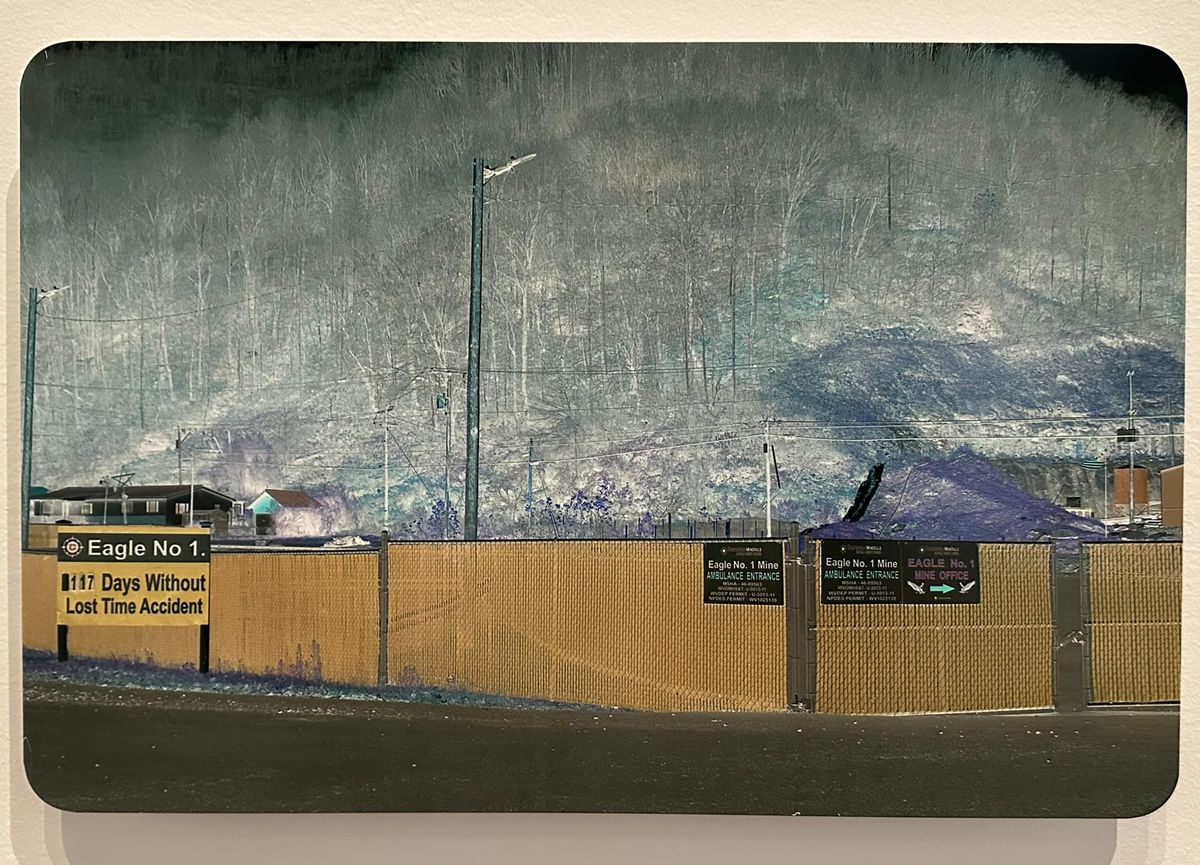
In The Great Society, complexity is stripped away, replaced by a visual and narrative language that reduces the region to a site of suffering. Though the exhibition is filled with photographs and videos, not a single image includes a person. This absence is framed as ethically corrective, a move away from exploitative War on Poverty imagery. But you can remove bodies and still construct a spectacle of devastation. When sludge, crumpled-up paper that looks like trash, aggressive security fencing, and ruin dominate the visual field, the viewer is left with a singular impression: There is nothing but misery here.
Backström intensifies this effect by inverting photographs, rendering the landscape ghostly and unfamiliar. Rolling hills, forests, and rivers look surreal and eerie, leaving a sense of decay and desolation. This framing filters the region through the artist’s discomfort rather than through the eyes of locals, who take great pride in the region’s natural beauty.
And it is not only through aesthetics that Backström reinforces a narrative of trauma. In wall text composed of fragmented interview excerpts, an unidentified individual provides insight into the artist's state of mind: “You spoke about the photos with the dirty kids. Yes, there were dirty kids. I was one too. We didn’t realize we lived in shacks, everyone did.”
My father grew up in similar conditions and he spoke of that time as the happiest of his life. But Backström codes these children as neglected and dirty, while positioning herself as clean and modern. If working with the same material, an artist from the region might recognize that experience as complex rather than deficient, and not introduce shame into it.
In the video Mud Wave, Backström describes being denied entry into a mine for lacking required safety certifications. Her mention of this exclusion is followed by what I can only describe as a tantrum: “mine mine mean mine… nine miners mine minds of mud.” Backström reduced their reasonable precautions into a demeaning play on words, taunting that they have minds of mud, reaffirming stereotypes that Appalachians are dumb.
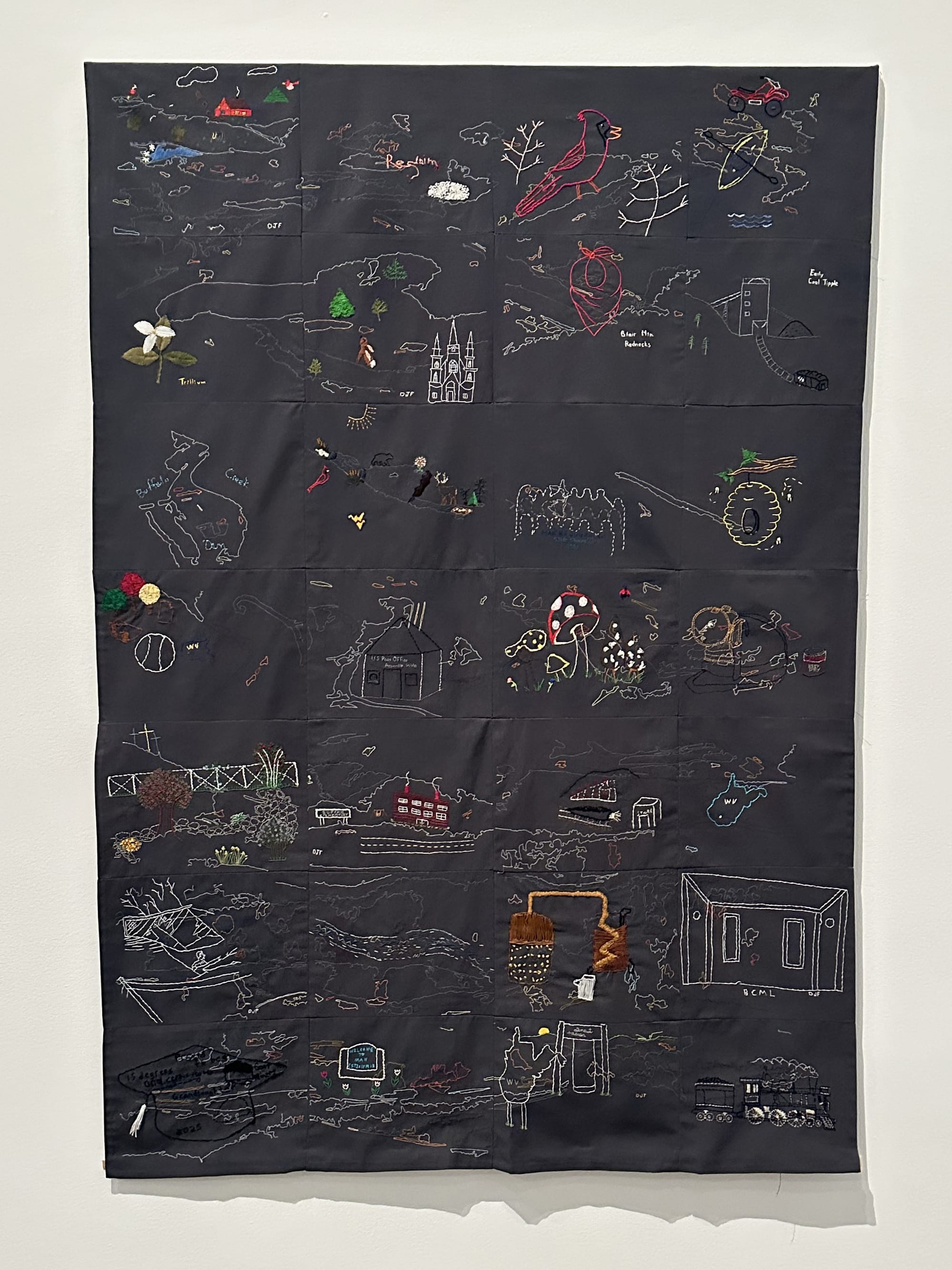
A community quilt illustrates the imbalance at the heart of Backström’s project. Appalachian quilting is a deeply rooted cultural tradition, yet here it is filtered through the lens of an outsider who assumed authority over the process. The community’s thoughtful, skilled work is mounted on black fabric with digitized stitching, producing a somber aesthetic aligned with the exhibition’s narrative. Participants were not compensated, and the final work primarily benefits the artist. Under these conditions, collaboration looks less like solidarity and more like extraction.
These are only a few examples of an exhibition rife with pain, and the GRIT collective is frustrated by the lack of a counter-narrative. We took our concerns directly to the Queens Museum and Backström, engaging in sustained dialogue over several months. This included an in-person meeting last December, covering the history of Appalachian extraction and the exhibition’s impact. Despite this, no public acknowledgment of harm or commitment to repair has been made, a silence that makes the uncritical framing of O’Neill-Butler’s article especially troubling.
Ultimately, I want those who have seen the exhibit to understand that the working class is not powerless. My father was a coal miner, and he took immense pride in his work. It was the one thing he could hold onto when the world offered him very little else. But Backström’s work wiped that away and recast him as a victim. He is no longer someone who chose hard work to care for his family, but an object to be pitied. That is profoundly disrespectful.
Moving forward, Appalachians must have space in cultural institutions to tell our own stories, and the art world must confront the barriers created by class and institutional power.
Paige Phillips, on behalf of the GRIT collective: Jenny Fine, Julie Rae Powers, Ali Printz, and Amy Ritter.