I'm a Chicana Curator. This Is Why I Removed Cesar Chavez From My Show
The decision to remove a portrait of the labor leader from “Chicano Camera Culture” at The Cheech was not one I took lightly.
On February 7, the Cheech Marin Center for Chicano Art and Culture in Riverside, California, inaugurated a show I curated: Chicano Camera Culture: A Photographic History, 1966 to 2026. The largest exhibition ever mounted by The Cheech, it includes some 150 works by 45 photographers based across the United States. The exhibition and accompanying publication also represent the first comprehensive survey of this history, one that spans six decades, beginning with a pioneering generation of photographers who chronicled the Chicano civil rights movement in the Southwest. These artists — including more recent figures like Laura Aguilar, Ken Gonzales-Day, and Christina Fernandez — have played significant roles in the evolution of the medium.
When I undertake a project like this, presenting what might be the first or among the first exhibitions or publications on a topic, I am deeply conscious of my responsibility to varied stakeholders — the artists, the institution, my cultural community, students, and so on — simply to get it right. The decisions I make during the curatorial process, and the ways I contextualize artists and their works, impact how Chicano photography will be understood, taught, and, hopefully, integrated into broader histories of art. Nearly every living photographer included in the show, active from the 1960s to the present day, attended the exhibition opening. Witnessing them together in one space to celebrate the event profoundly underscored for me the urgency of writing and presenting histories that have been dismissed, overlooked, or erased.
That is why the decision to remove a single work from the show was one I did not take lightly.
On March 17, news emerged that United Farm Workers of America (UFW) leader Cesar Chavez had assaulted multiple women and girls associated with the movement. He had become increasingly controversial later in his life, seen less as a charismatic leader than as an authoritarian figure. Chavez was also known for his hostility toward undocumented migrant workers. But for me, this news required a complete reassessment of the man who had been upheld as the great hero of the entire Chicano civil rights movement.
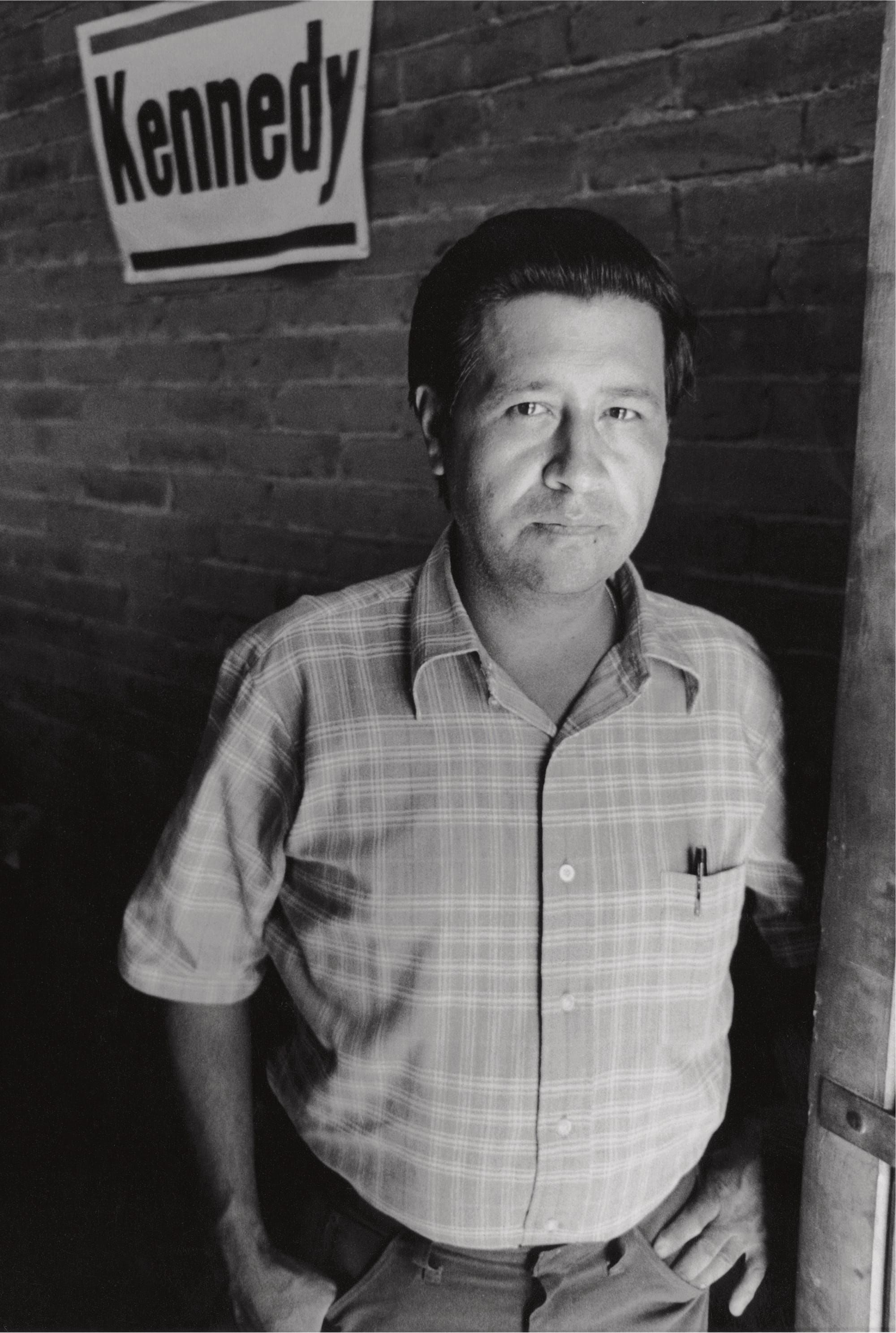
That day, The Cheech’s interim director, Valerie Found, called me to discuss an image in the exhibition: a 1969 portrait of Chavez by George Rodriguez. That photograph was meant not only to represent Chavez and his foundational role in unionizing California farmworkers, but also to manifest the underrecognized role Chicano photographers played in documenting the movement. The images of Chicano civil rights leaders that circulated widely in the 1960s and ’70s were, by and large, taken by non-Chicano photojournalists, many of whom worked for major newspapers or photo agencies. But when Chicanos took up the camera in the late ’60s, for the first time, they were representing other Chicanos in the movement, whether leaders or everyday people.
This photograph, in other words, illustrated Rodriguez’s crucial role in preserving this history, even if unsung at the time. And now, Found was asking me whether or not I wanted to remove it from the exhibition. The next morning, the New York Times published a report detailing accusations that Chavez had abused girls as young as age 12 and raped UFW Co-founder Dolores Huerta. My decision was immediate. This photograph no longer had a place in the exhibition and was removed later that day by museum staff.
In my 35 years of curation, I’ve never faced the need to remove a work from an exhibition. In the case of Chicano Camera Culture, I deliberated over the inclusion of each image, knowing that they would, in a way, become canonized as emblematic of a history that has never before been presented in its entirety. But in removing the photograph, I did not want to diminish Rodriguez’s presence in the exhibition. He is a highly respected documentarian, now nearing 90 years of age, and is responsible for photographs that memorialize key moments of the movement’s history.
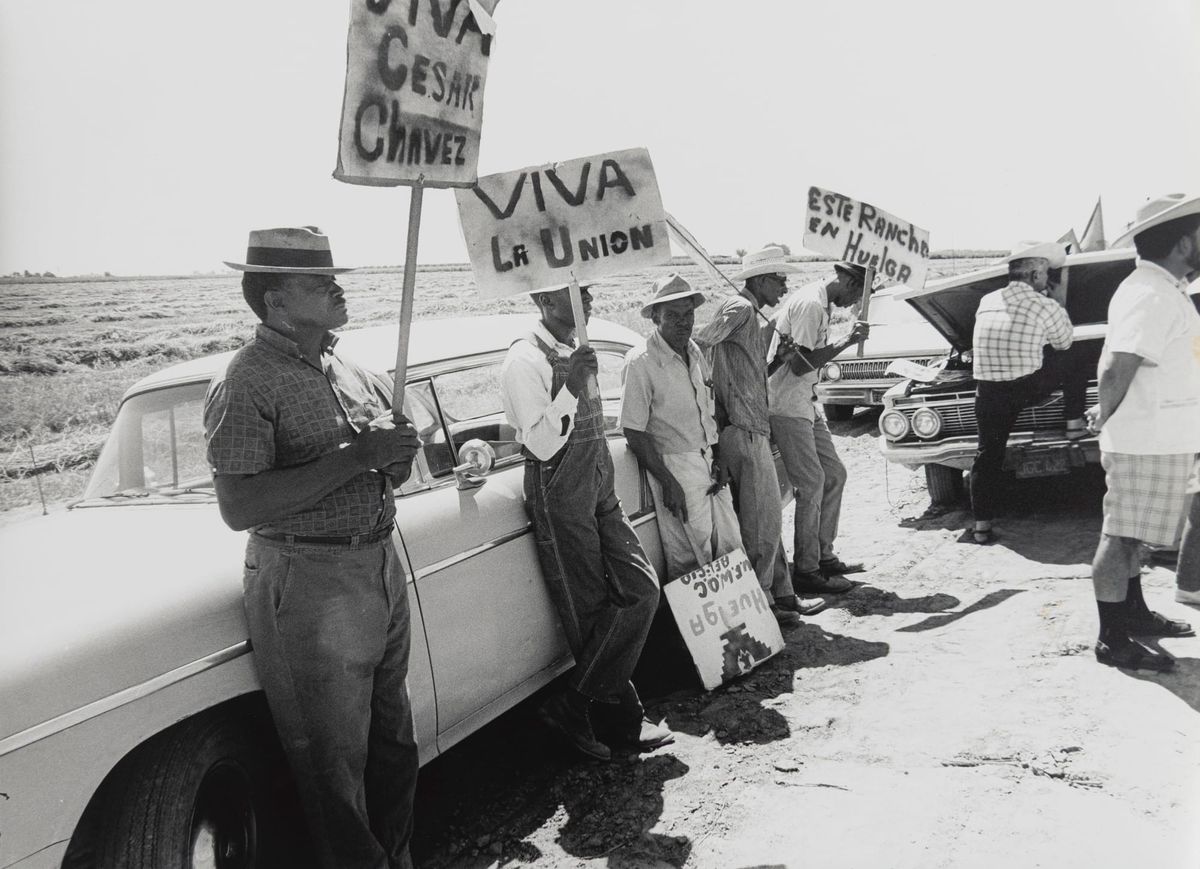
Amid conversations with Rodriguez himself about how we would respond to the controversy, he shared with me a photograph he took in Delano, California, in 1969, that would powerfully reframe the significance of Chavez’s role in the movement. It depicts a group of African-American men, all farmworkers, standing against a car and holding protest signs. One proclaims “Viva Cesar Chavez” and another, “Viva La Union.” Chavez is not the subject of the photograph; it is this group of workers, advocating for the union membership that might offer a path out of destitution.
The photo, now part of the exhibition, reflects a little-recognized aspect of the farmworkers' struggle: the vital participation of African Americans. One little-recognized figure, Mack Lyons, worked in cotton and grape fields before assuming a leadership position as the sole African-American member of the UFW executive board. UFW allies included Black activists and such groups as the Southern Christian Leadership Conference, the NAACP, and the Black Panther Party. The farmworkers themselves included Filipinos, African Americans, Puerto Ricans, and others.
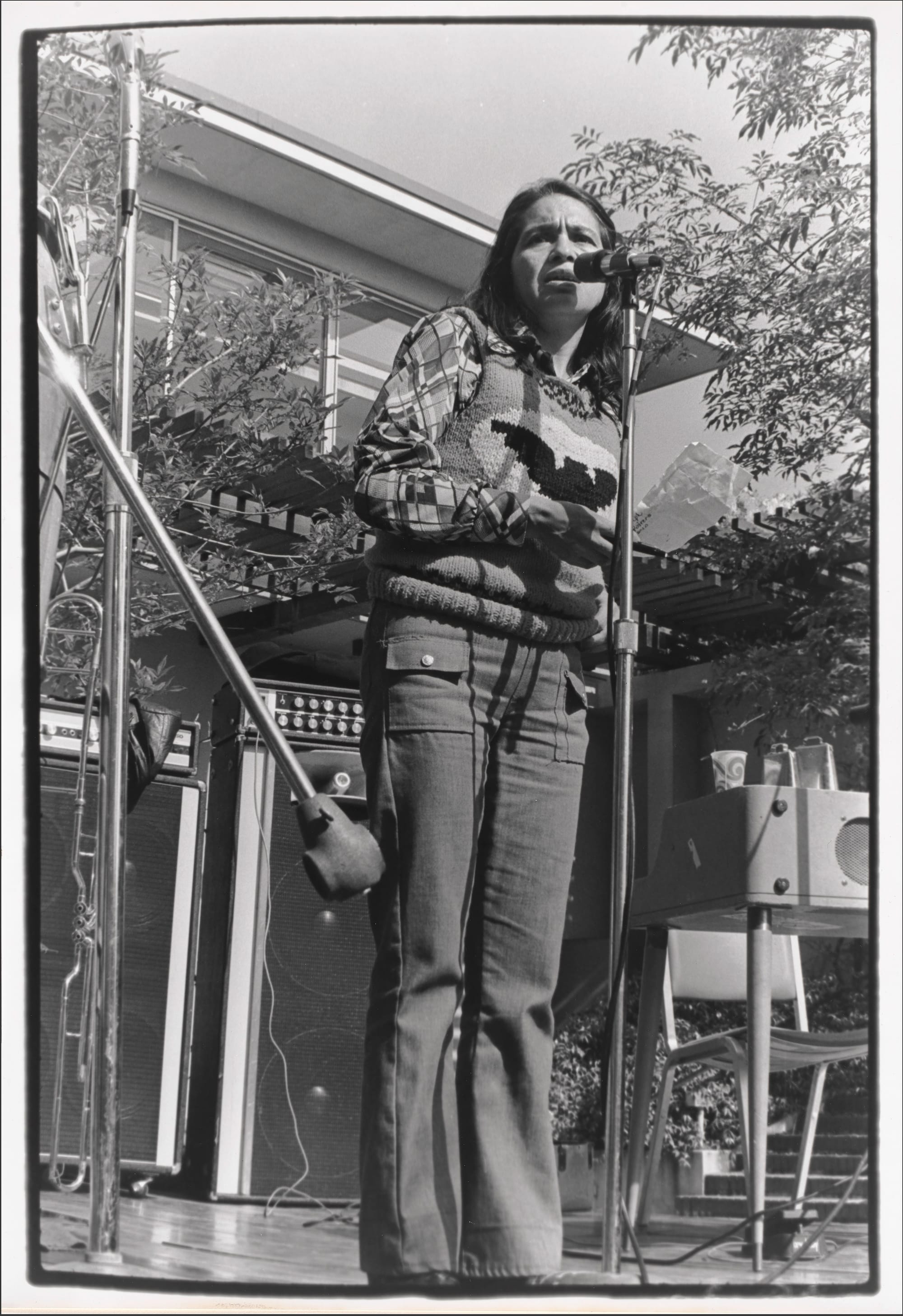
Chavez was the face of the movement, much better known than Huerta, who is also represented in the exhibition in a photograph by Rodriguez’s late brother, Rudy. Now 96 years old, Huerta became involved in Latino civil rights activism as early as the mid-1950s, and her advocacy continues to this day. The critical work she undertook with the UFW in the ’60s and ’70s, at the height of its struggle to unionize farmworkers, remains underrecognized. And the fact that she performed this work while raising 11 children (she gave up the two fathered by Chavez, in large part to protect the farmworkers movement) makes her achievements all the more remarkable. Her full story remains to be told.
I titled the exhibition Chicano Camera Culture because while “Chicano photography” is neither a style nor a movement, it can be understood as a cultural ethos, one elaborated by photographers bound by their embrace of the camera as a powerful tool for interpreting our shared legacy, whether personal, political, or spiritual. In curating the exhibition, I was repeatedly impressed by the ways that values rooted in El Movimiento — political solidarity, cultural pride, ideas around agency and empowerment, and above all, a commitment to human dignity — continued to be amplified in the work of subsequent generations of photographic artists.
As we know, a movement is always greater than one individual, and histories are always subject to revision and reassessment. And so was this exhibition. “Getting it right” may mean an imperfect decision; some might suggest that keeping the photo in the show would have allowed it to act as a springboard for discussion. But then again, Chavez was never meant to be the center of attention in this exhibition, presenting 60 years of artistic production. In striving to uphold values central to Chicano culture, this was the decision I could live with.