Ingrid Hernández Reveals Tijuana’s Hidden Beauty
Often seen as too American to be Mexican, too Mexican to be American, the city is presented by the artist as it is, not as anyone assumes it might be.

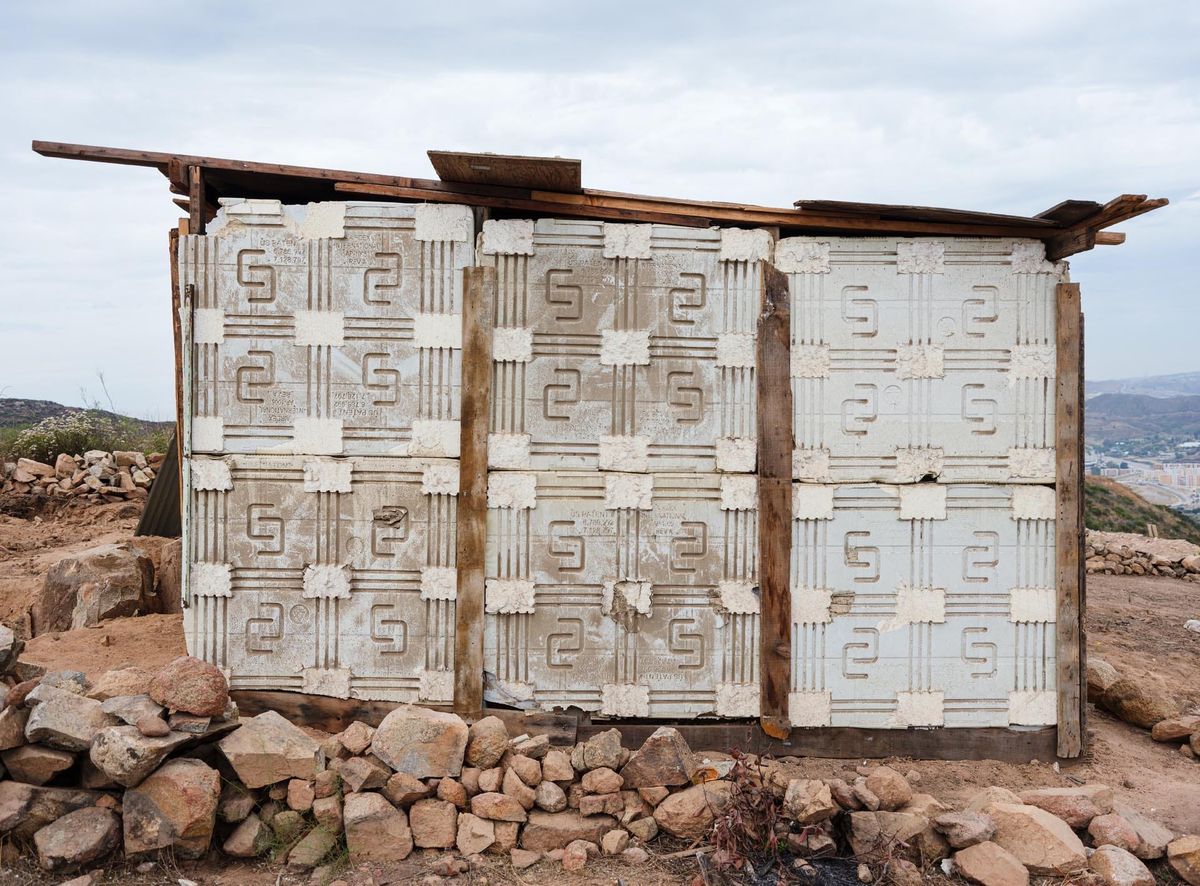
TIJUANA, Mexico — “Poor Mexico,” goes a popular Mexican saying, “so far from God, so close to the United States.” It’s an expression that goes double for Tijuana, the buzzing Mexican border city where English is as present as Spanish and curio shops sell ponchos with logos of US sports teams. A favorite pastime on both sides of the border is to dismiss Tijuana as too American to be Mexican, too Mexican to be the United States. Artist Ingrid Hernández, however, offers a counter to that, presenting the city as it is, not as anyone assumes it might be.
Hernández’s long-running investigations are currently the subject of Ingrid Hernández: 20 años de arte _Under Construction_, a smart survey at the Centro Cultural Tijuana (CECUT), curated by Daniela Lieja Quintanar and Rosela del Bosque. The exhibition gathers 13 photographic series — including her earliest, Outdoor (2003–4), as well as projects undertaken in the US and Colombia. For more than two decades, the photographer has trained her camera on Tijuana’s asentamientos (squatter settlements), finding within them the defining narratives of a place where great wealth collides with great poverty. And while you won’t find people in her images, you will encounter the vagaries of the human condition. A photograph from Outdoor, for example, reveals a small, self-built dwelling meticulously constructed out of old garage doors. The doors hail from the US — recycled construction materials that regularly arrive from well-to-do San Diego to the north. In Tijuana’s impoverished districts, US waste finds new life as somebody’s home.
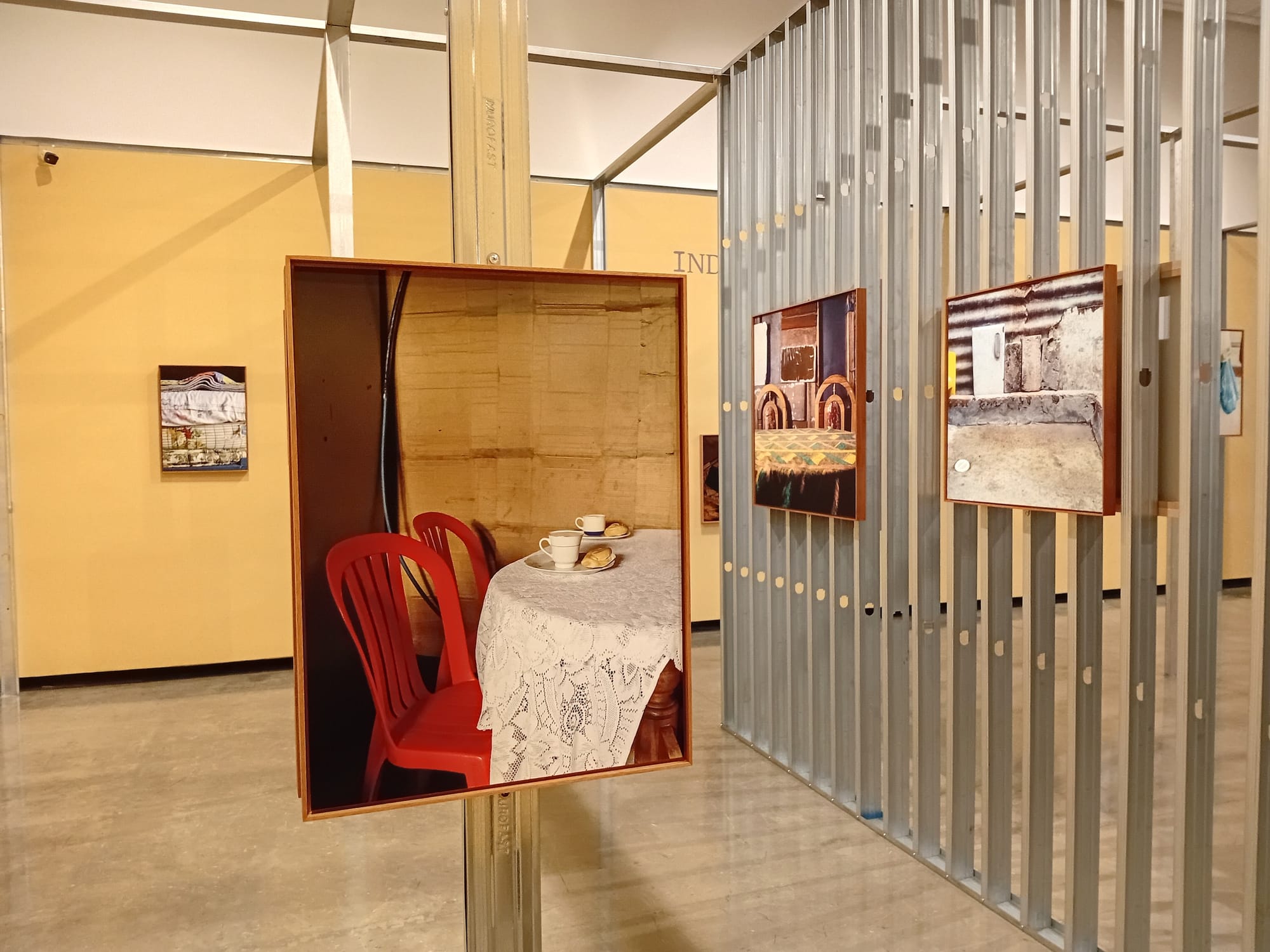
Altogether, it’s an empathetic portrait of the city, as well as a nuanced look at the symbiotic relationship between Mexico and the United States. Born and raised in Tijuana, the artist is the third generation of her family to live in a city that for many is simply a way station to the United States. In fact, she inhabits a home built by her mother, a structure typical of the city’s autoconstrucciones (self-constructions), in which houses are built piecemeal, over time, out of available materials — seemingly permanently under construction.
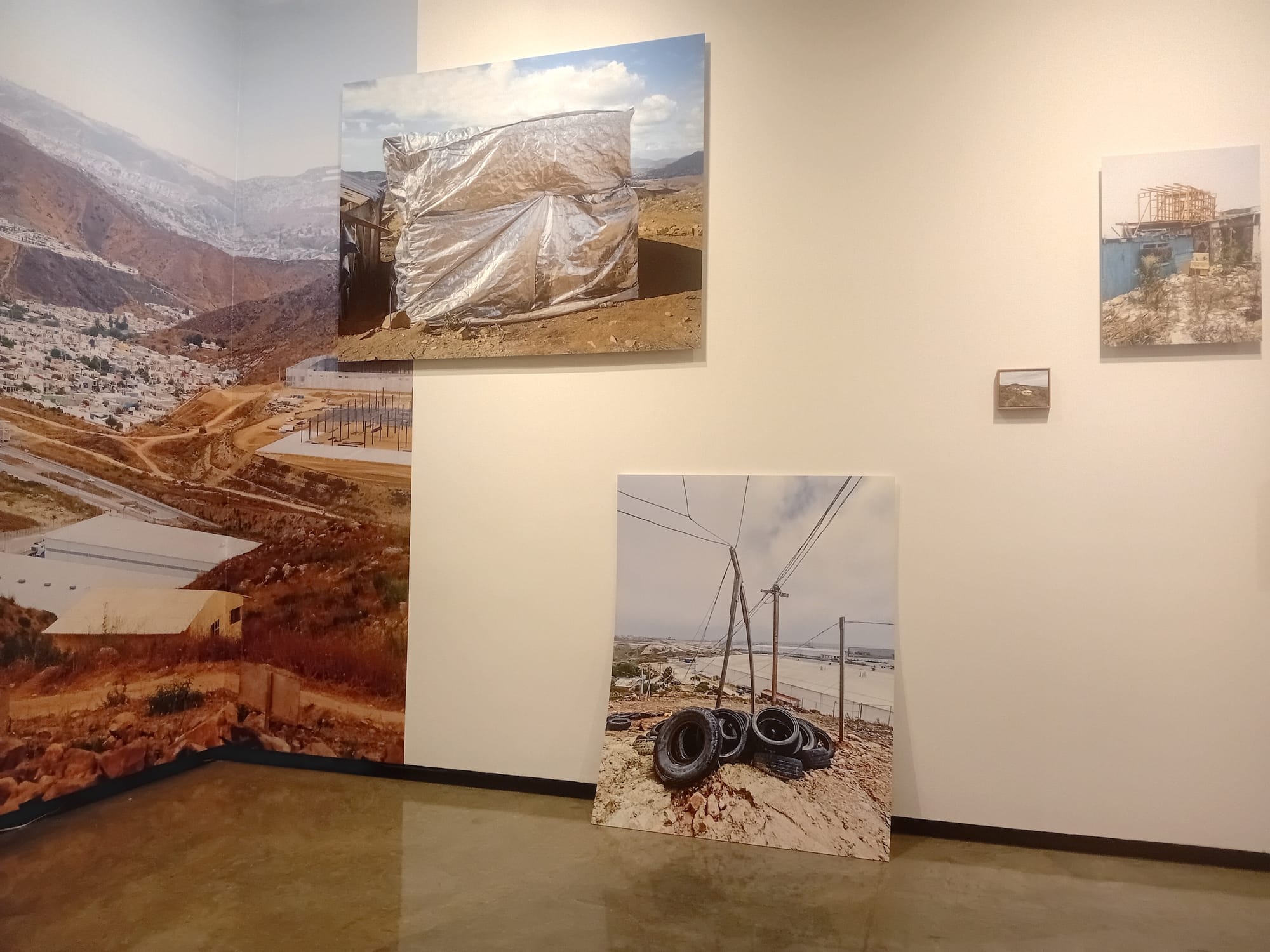
Hernández’s upbringing serves as inspiration to series such as Outdoor, which was motivated by her interest in how material is employed in autoconstrucción. Her photographs show homes crafted out of wooden signage and walls improvised from the wire skeletons of box springs. Displayed in an alcove in the first gallery is a striking photograph of a flight of stairs leading up a steep, dusty hillside. The steps are fabricated from old tires, with a few pieces of scavenged wood functioning as a door. Written neatly on the surface is the phrase, “Propiedad Privada” (private property). Human invention driven by intense need.
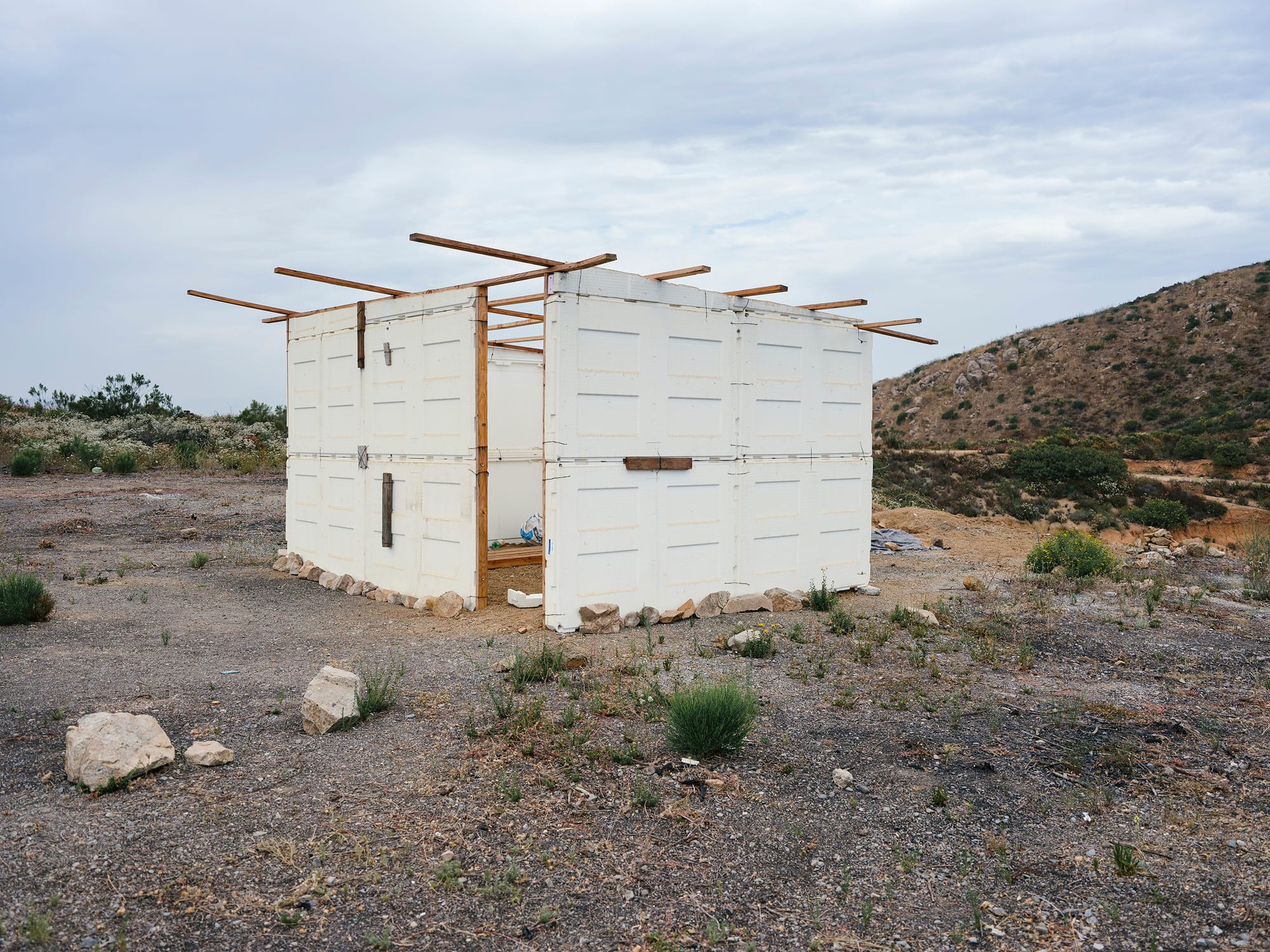
Subsequent series take these ideas further. Tijuana Compressed (2004–5) focuses on an asentamiento called Nueva Esperanza. These images likewise capture imaginative uses of material, but they also nod at Tijuana’s role as a manufacturing hub. Her photos capture shacks crafted from wooden pallets, industrial packing materials, and, in one extraordinary case, the pressed board once used to line the backs of television sets — byproducts of the city’s maquiladoras, which produce goods to be sold abroad (primarily in the US). A concurrent project, Irregular, reveals the homes’ interiors.
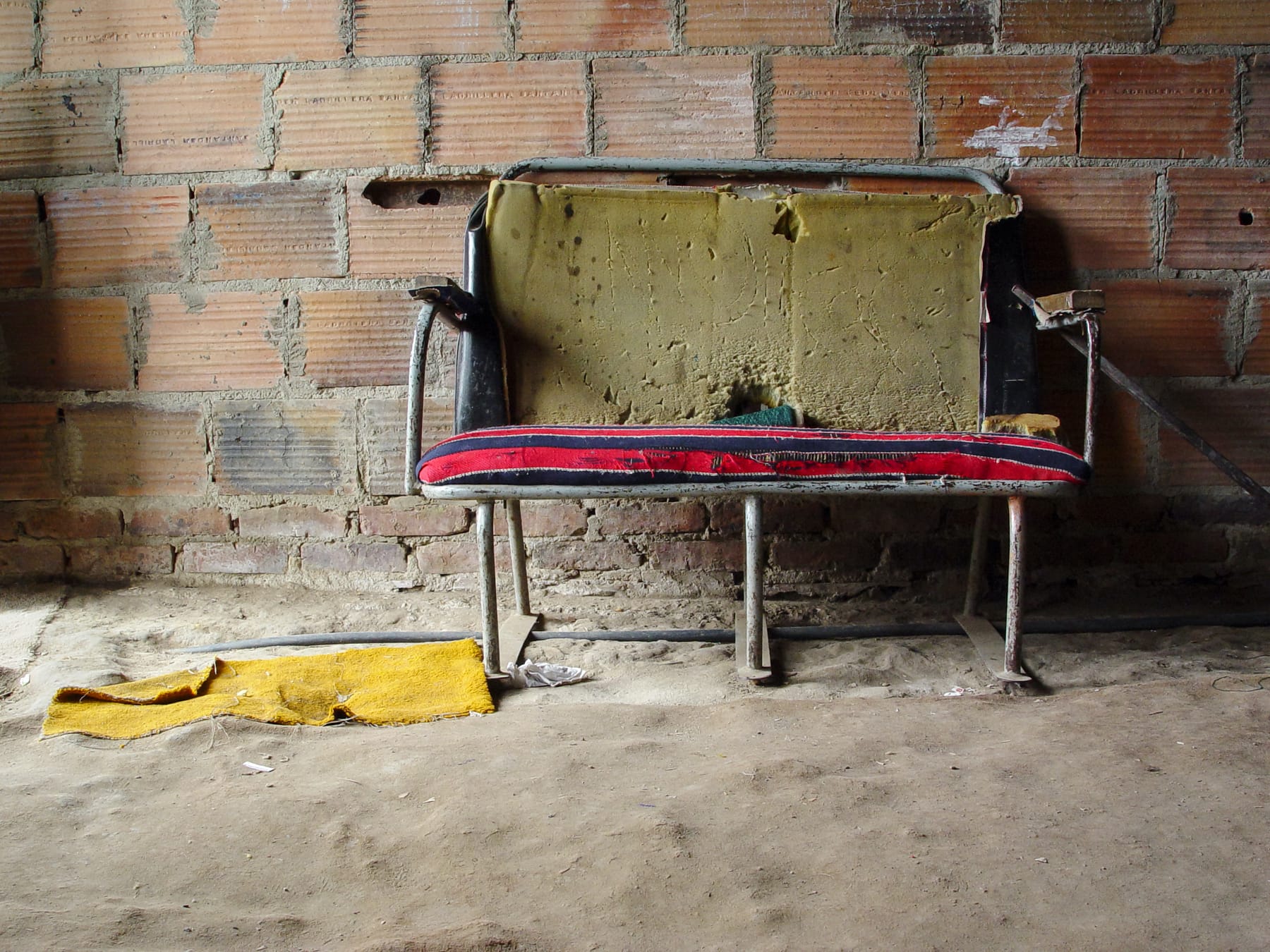
Hernández doesn’t shy away from showing the grim conditions of the asentamientos. Her images offer frank depictions of haphazard structures cluttered with dilapidated furniture — spaces inhabited by people who are trying to make it from one day to the next. But she approaches them with dignity, not sensationalism, finding gracious color and pattern in a wall covered in pots, a teetering table, or a Minnie Mouse doll installed over a carefully made bed. (When photographing a community, she will frequently stage an on-site exhibition for its subjects first.)
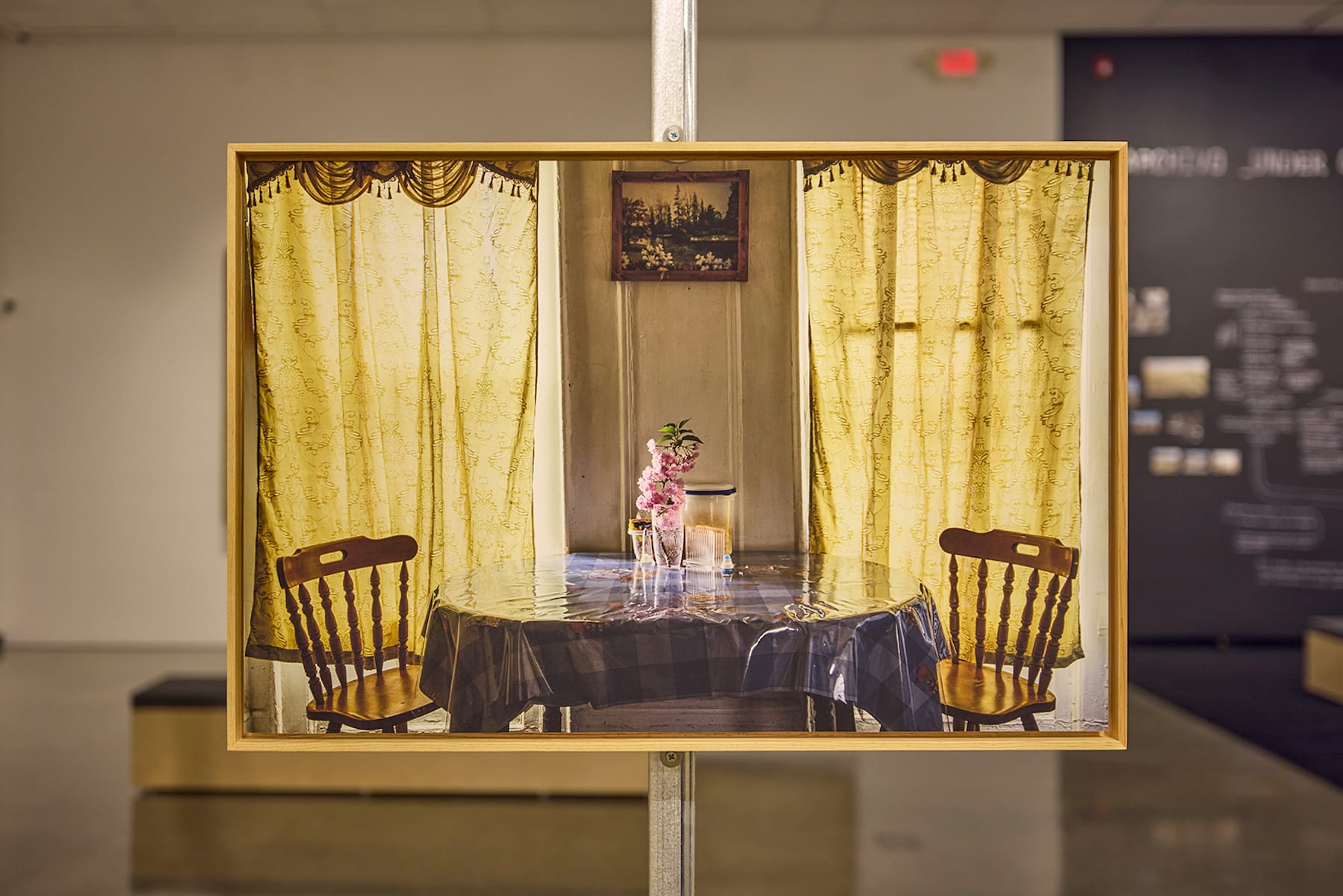
She has deployed this careful approach in other projects, too. In Inside (2011), she chronicled the homes of Mexican immigrants in New York, finding details in their interiors that can make a faraway place feel like home, be it icons of the Virgin of Guadalupe or DVDs of Mexican movies. (The latter photograph is creatively displayed in a deep wooden frame that resembles a box.) The images offer an affecting, if indirect, portrait of the Mexican labor that helps power the US economy.
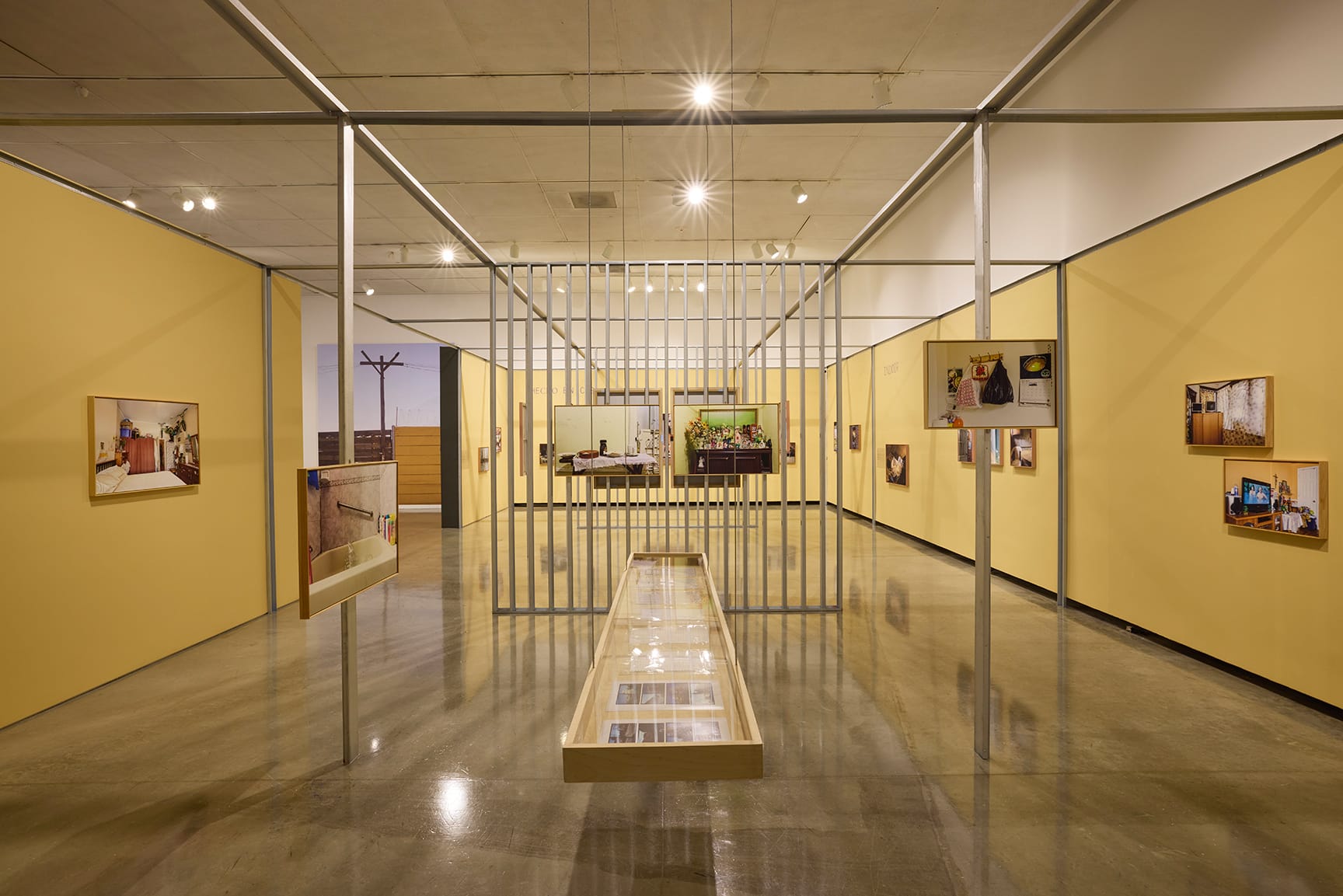
On their own, her photographs are an absolutely captivating study of the ways marginalized people make spaces for themselves. But the show’s brilliant installation design by Adalberto Charvel makes the work truly come alive. Rather than employ an array of temporary museum walls, Charvel has created entire display areas out of the lightweight steel framing typical of home building — making it appear as if CECUT itself were under construction. In one small gallery space, Hernández’s moody images of an abandoned factory are projected onto the walls, creating the sensation that you are actually entering the factory.
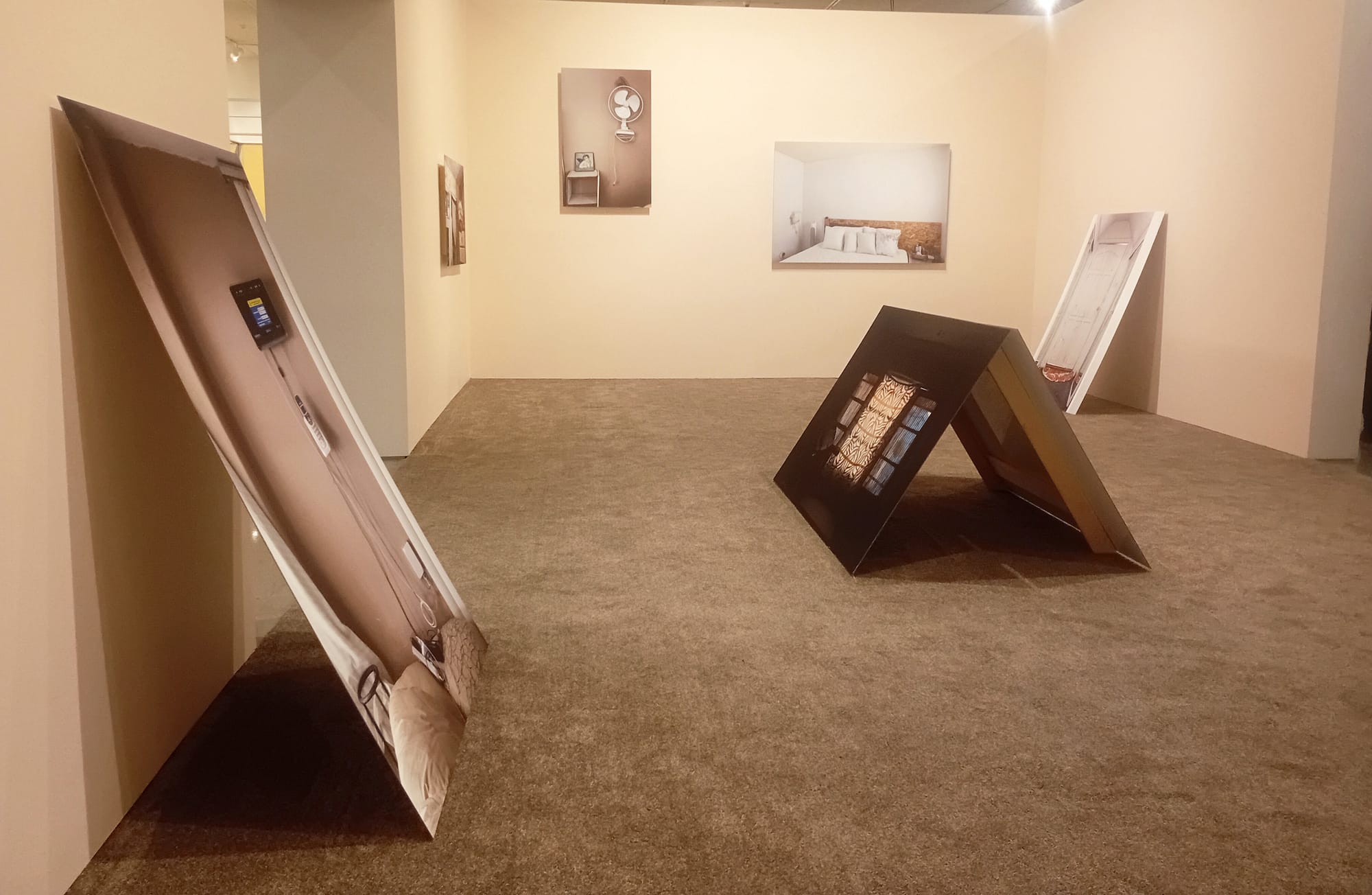
For the series Affective Landscapes (2018–19), Hernández turned her gaze on her own family members’ homes, and the gallery that displays them has been designed to evoke this type of domestic architecture, complete with wall-to-wall carpeting. Photographs mounted on boards lean casually against walls, evoking the precarious nature of the interiors she displays, with their thrown-together curtains and peeling paint. In other galleries, garage doors are on display, almost like large-scale minimalist paintings.
20 años de arte _Under Construction_ resists the tropes of Tijuana: Hernández doesn’t show you the border wall or the tourist party spots or the notorious red light district. Instead, what you will find is a humane look at the quotidian life of the city’s poorest workers and the spaces they call home.
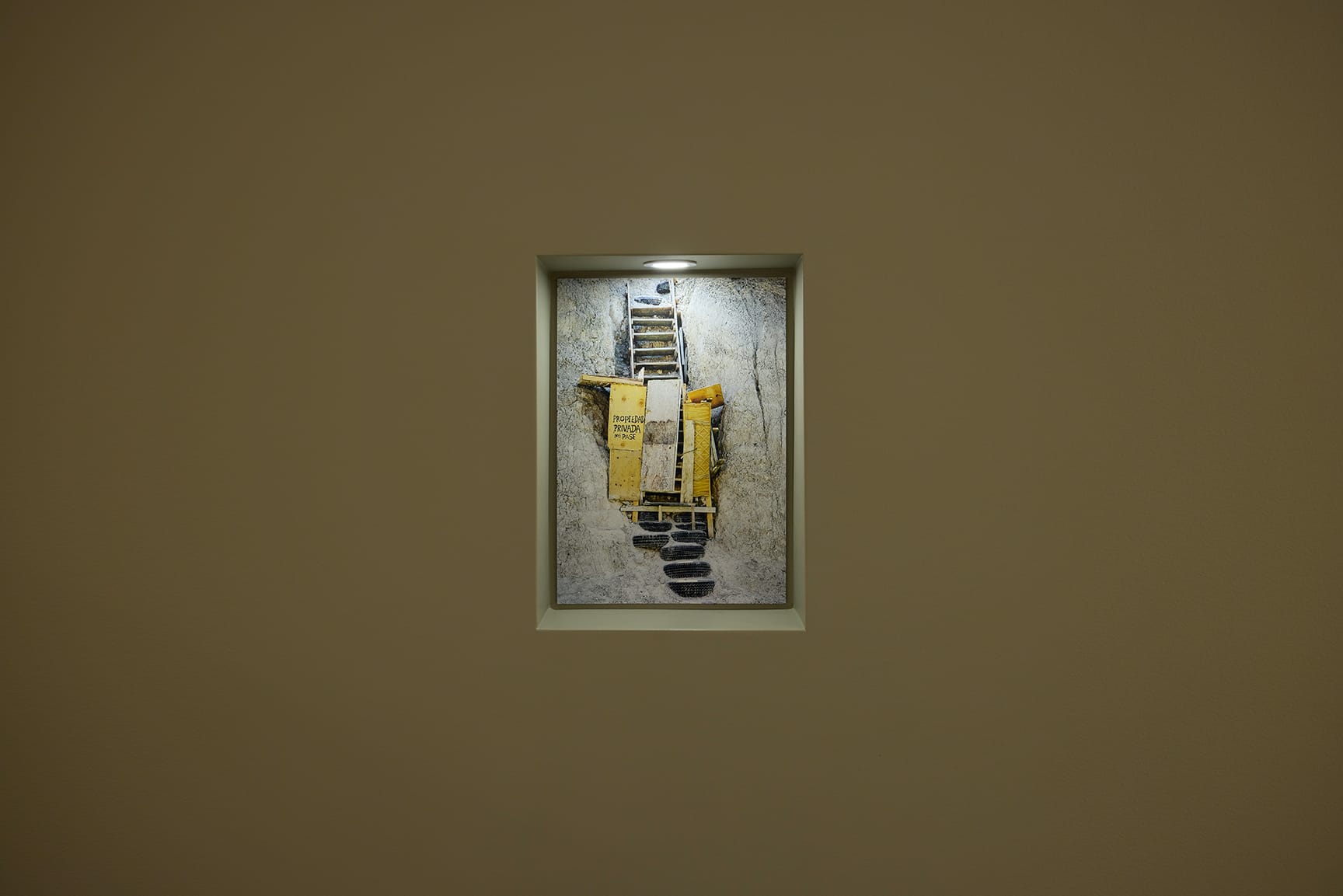
Ingrid Hernández: 20 años de arte _Under Construction_ continues at the Centro Cultural Tijuana (Paseo de los Heroes 9350, Zona Urbana Río, Tijuana, Mexico) through March 8. The exhibition was curated by Daniela Lieja Quintanar and Rosela del Bosque.