Ireland Makes Basic Income Program for Artists Permanent
After a successful pilot, artists will be paid hundreds of euros weekly over three years.
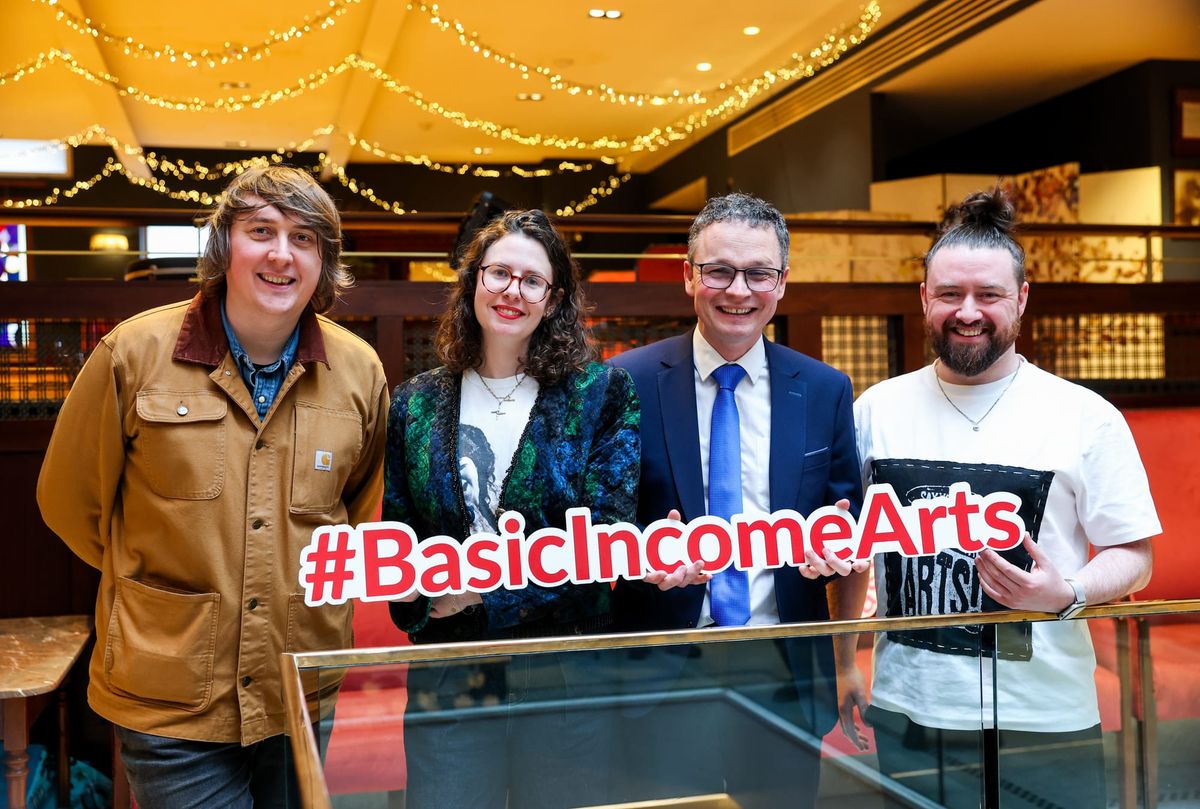
The Irish government will give 2,000 artists unrestricted weekly stipends, following a successful three-year basic income pilot program.
Last week, Ireland’s Department of Culture, Communications and Sport announced it would create a recurring basic income program for artists in three-year cycles.
The program, which will begin accepting applications this May, will provide practicing artists with unrestricted weekly installments of €325 (~$383) over three years. Over the course of one year, those payments would amount to roughly €16,900 (~$19,919).
The Irish government first launched the program as a pilot in 2022, framing it as a "recognition, at government level, of the important role of the arts in Irish society."
According to a statement by the culture ministry, preliminary data from the pilot suggested that the guaranteed basic income led to significant benefits, including increased productivity and reduced anxiety among participants. Following its success, the country’s 2026 budget included €18.27 million (~$21.52 million) to extend and fund the program.
In a statement to Hyperallergic, a committee for the Irish arts advocacy organization National Campaign for the Arts (NCFA) celebrated the government’s decision.
“Basic Income for Artists is a landmark commitment to invest in Ireland's arts industries, stabilising the precarious working conditions faced by artists,” the NCFA committee said.
According to the culture ministry's research, each euro (~$1.18) invested in the pilot program was worth a return of €1.39 (~$1.64) to Irish society.
“The results were stunningly clear,” the NCFA committee explained. “Artists on the scheme spent more time creating, produced more work, and spent less time trapped in unrelated jobs just to survive."
In a qualitative study carried out by the Irish culture ministry, artists in the pilot program reported that the payments “significantly reduced underlying financial stress” and facilitated “a reduced sense of anxiety” about affording basic necessities.
Most recipients didn’t solely subsist on their payments, according to the study, but used them to supplement other income to cover everyday expenses like rent and groceries.
Participants also said the pilot program affirmed their identities as artists, and that they felt that “being an artist is now a valid and valued profession.”
The action comes as nonprofit organizations across the United States implement basic income programs for artists, intended to provide increased financial support as they pursue their craft.
“Ireland can become a world leader through this unique scheme that ultimately benefits the whole of society through supporting our continued artistic excellence on the world stage,” the NCFA committee said.