Is My Art Funny to You?
A sprawling exhibition across two New York campus galleries explores humor in contemporary art, imploring us to take seriously the jokes artists made and preserved in time.

Genuine laughter — involuntary, unplanned — is rare. Called “Duchenne laughter” after a 19th-century neurologist, the gesture is bodily, sometimes to a repulsive degree. But most of the time, we laugh because we feel that we should — that it would behoove us socially. In a talk at the Aspen AIR Festival this year, poet and psychoanalyst Nuar Alsadir described eliciting Duchenne laughter as an attempt “to strip away the layers of socialization and the false self.” While laughter “flies under the radar because of our associations to it as being joyful,” when you dig deeper, it’s “usually coming from some kind of conflict in the unconscious.”
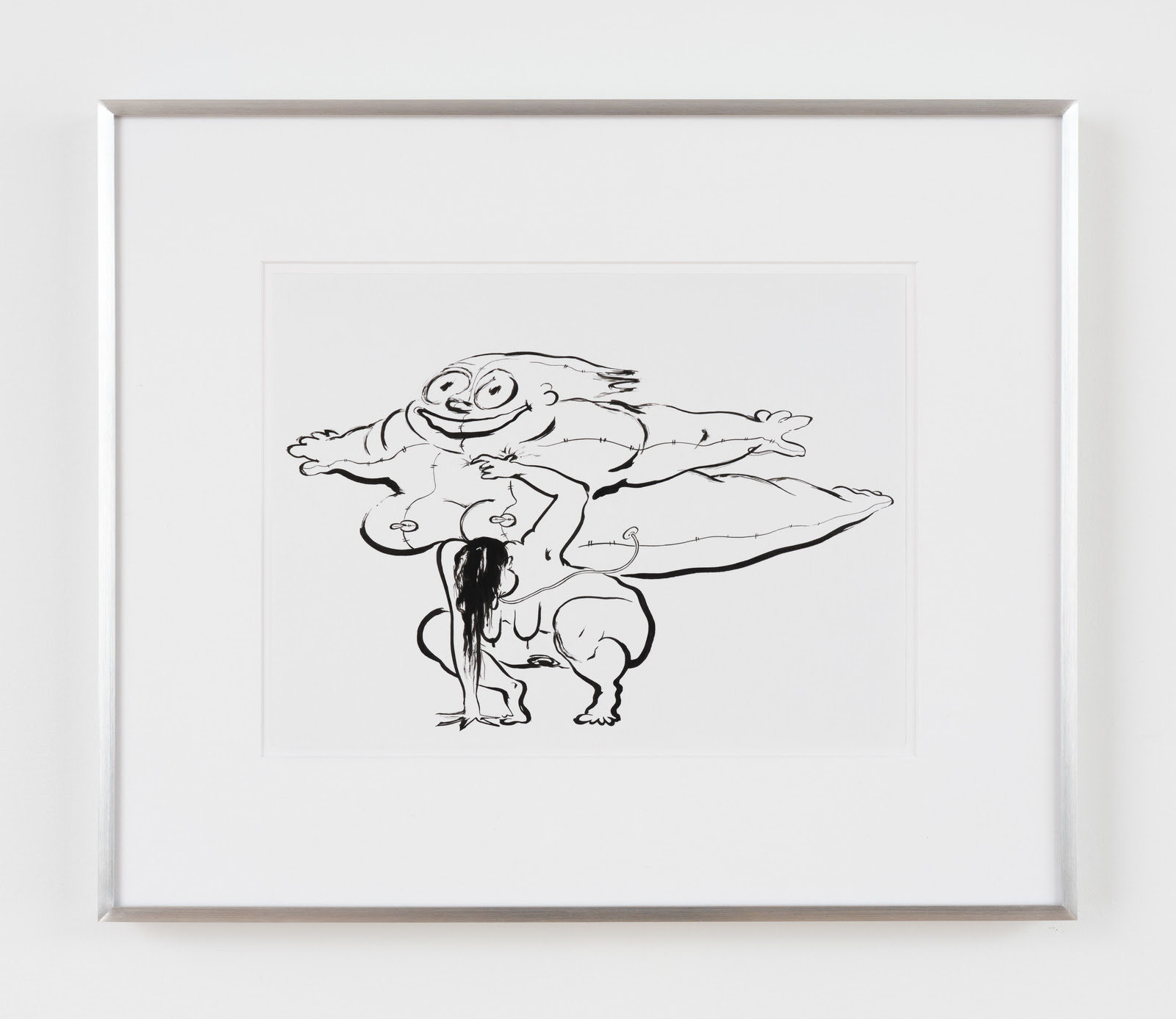
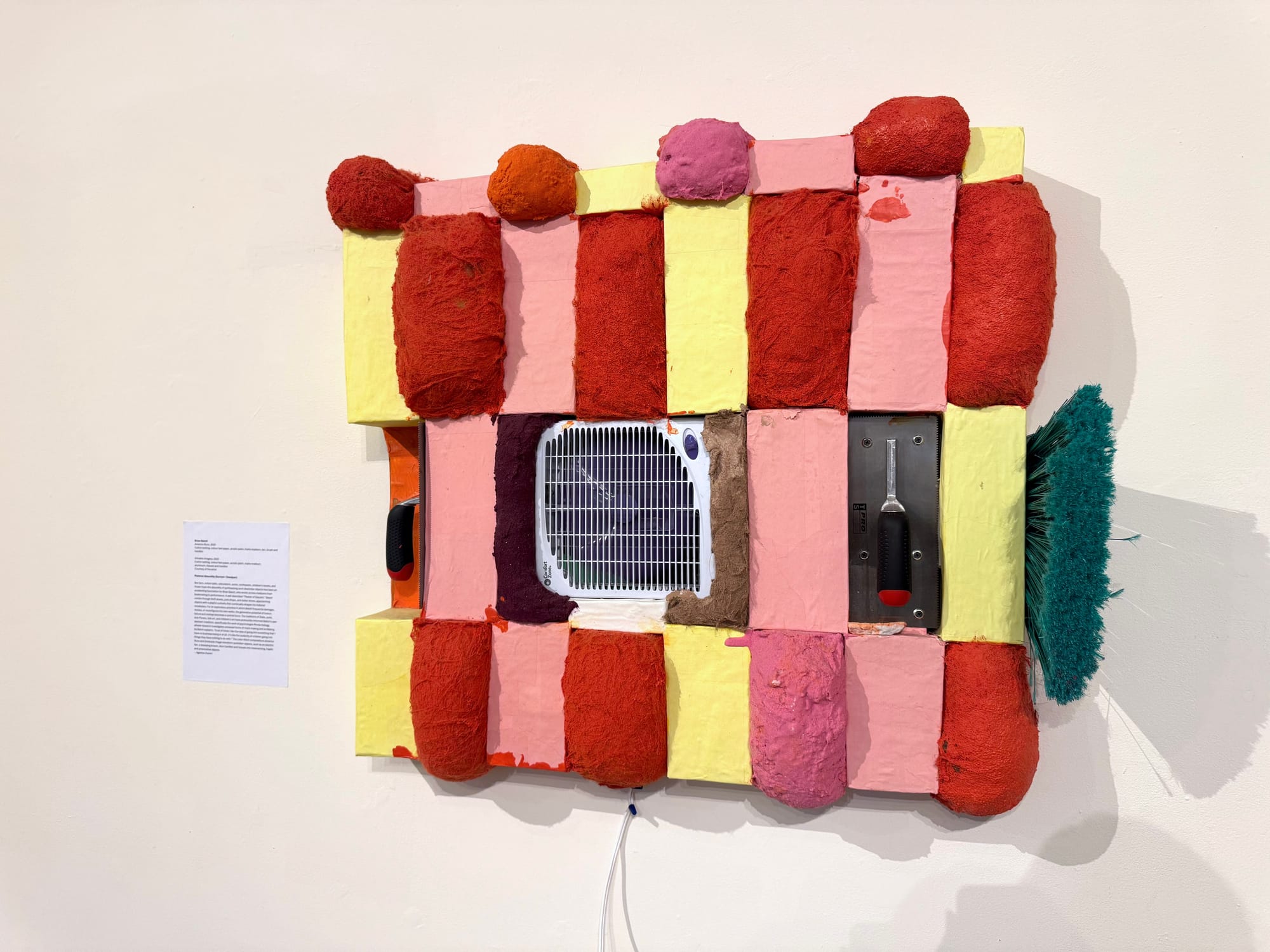
What to make of art that makes us laugh? (Or at least desperately wants to?) Does This Taste Funny?: Humor in Contemporary Art, a sprawling exhibition across at Lehman College Art Gallery in the Bronx and The Gallery at Heimbold Visual Arts Center at Sarah Lawrence in Bronxville, proposes comedy as a potent artistic device. Co-curators Melissa Brown, artist and professor of art at Lehman College, and John O’Connor, chair of the Visual and Studio Arts program at Sarah Lawrence, use humor’s various tones — absurd, cringe, slapstick, ironic — as organizing principles to present the work of 41 artists. From museum-collection heavy hitters like Ray Johnson and Cindy Sherman, to established cartoonists Roz Chast and Aline Kominsky-Crumb, to contemporary rising stars such as Ebecho Muslimova, Does This Taste Funny? implores us to take seriously the jokes artists made and preserved in time.
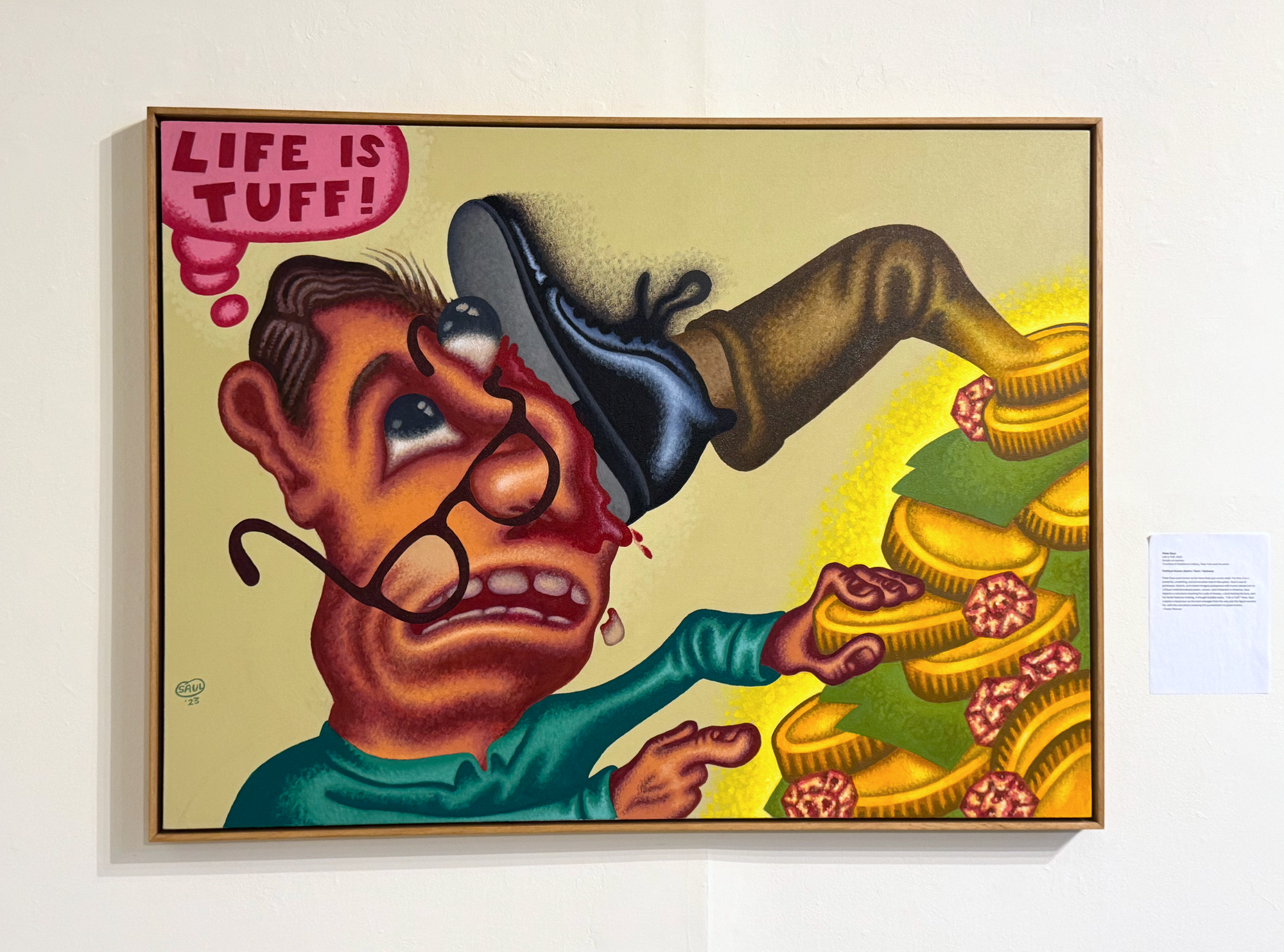
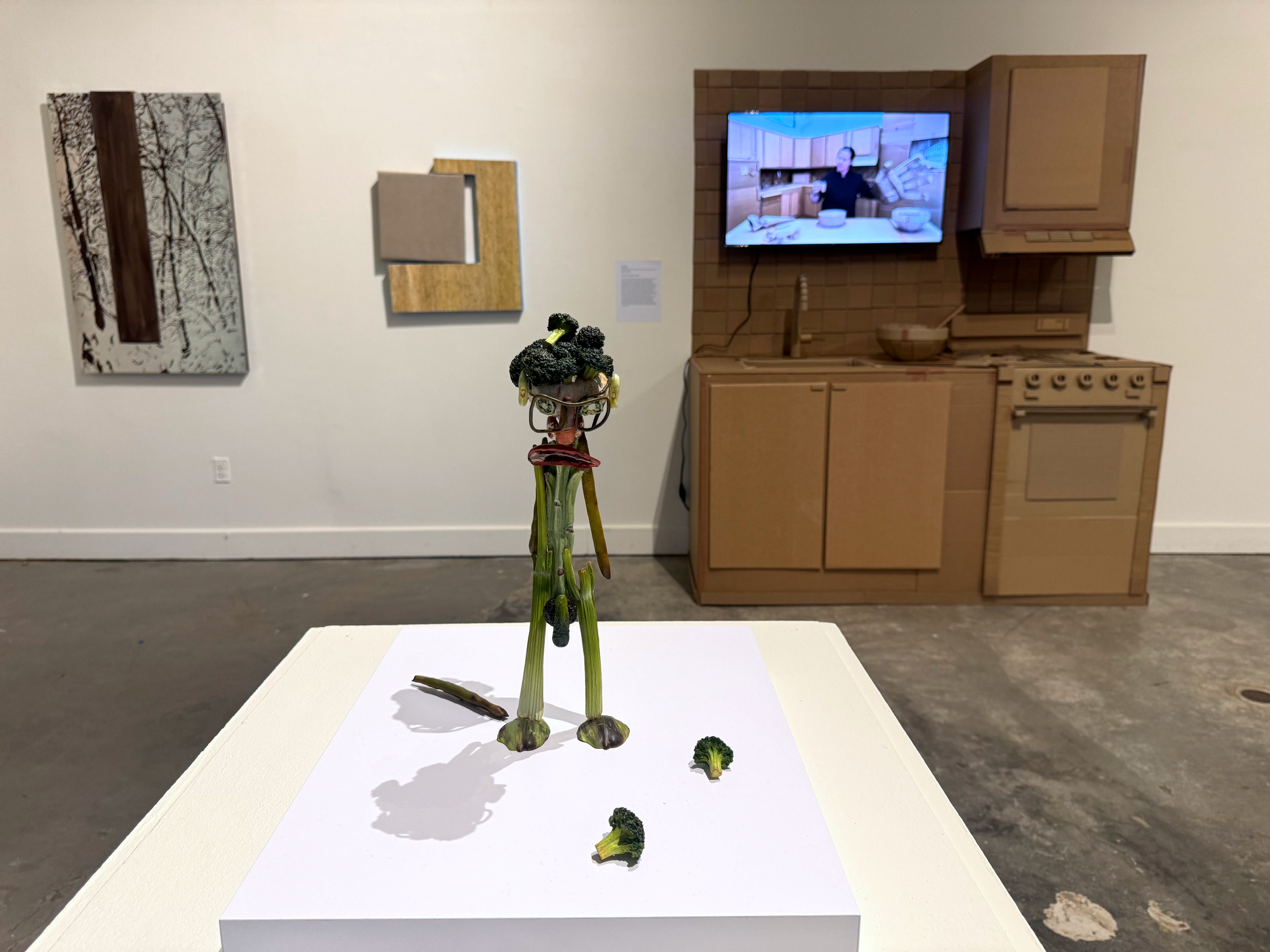
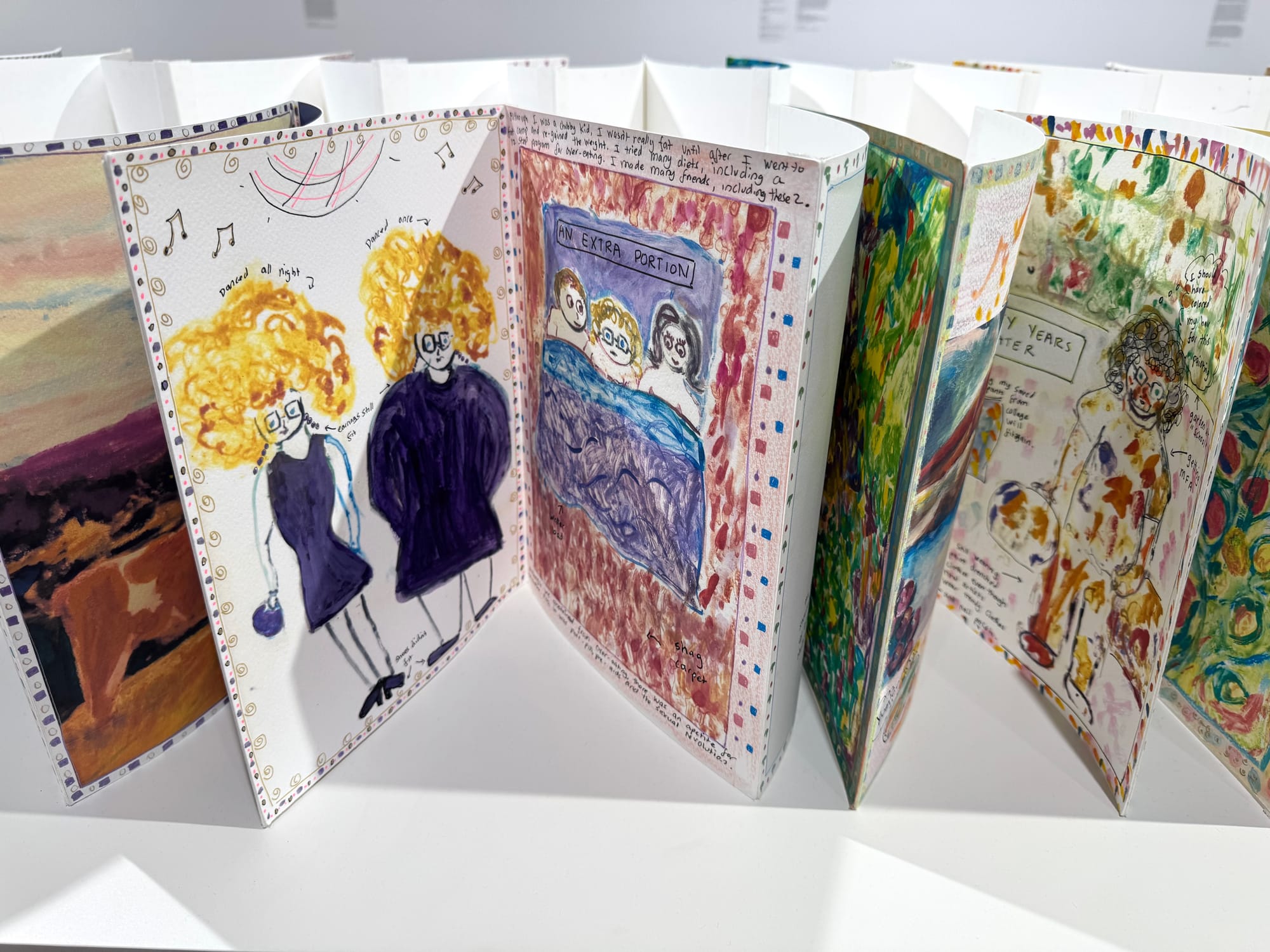
Humor is “an emotional response that’s a little bit like a sneak attack,” Brown said in an interview with Hyperallergic. “It causes you to think about things in a way that is not led by a press release, not predetermined by art history. There’s something that’s very, very personal about it.” Indeed, humor tends to be anti-didactic. You either guffaw or giggle, or you don’t. Alsadir would say that what you find funny or not provides information about your psychic state — what does it say about me that I chuckled sympathetically at Jill Danenberg’s 2024 accordion book Underground Comic, detailing trials and tribulations between veganism and feminism, while my mouth refused to curl for Tony Matelli’s “Veg Man” (2008), a droopily vegetal bronze figure?
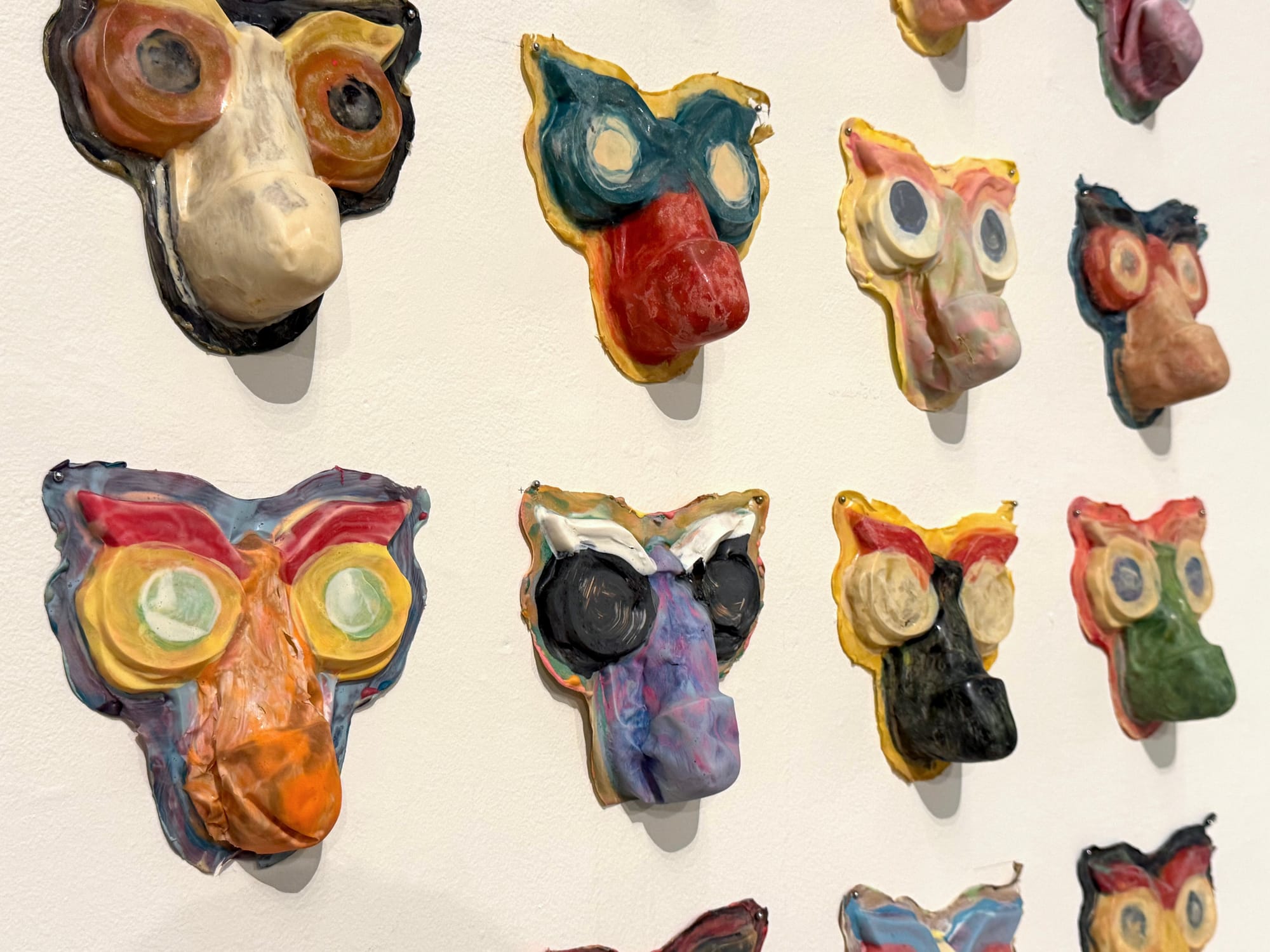
The participatory nature of humor means this show is uniquely invested in perception, and in provoking a certain response. As at an open mic, I felt the pressure of bearing witness, aware of my role as an audience member with the power to deem certain works successful or not by producing that ever-elusive involuntary laugh. This semester, O’Connor is teaching an undergraduate class on taking laughter seriously: He tasked his students with making small sculptures, their only instruction to try to be “the funniest in the class.” The winning piece, according to votes cast via smiley-face stickers on a table outside the gallery, is a realistic bust of Professor O’Connor with a No. 2 pencil stuck halfway up his nose. Second place was a reference to a meme O’Connor still doesn’t quite understand.
The oldest featured work in Does This Taste Funny? is Karl Wirsum’s drawing “Untitled (Study for Blue Tattoo)” (1964), featuring a classic Sailor Jerry star design on the tongue of a woman sporting a perfect mid-century housewife hairdo. Getting the reference is important to appreciating a good joke beyond the most base level of someone farting or slipping on a banana peel (which, to get psychoanalytic again, we laugh at to mask our own shame). Brown and O’Connor’s curation is never insidery or niche to the canon, but they are aware of the quality of funniness changing over time.
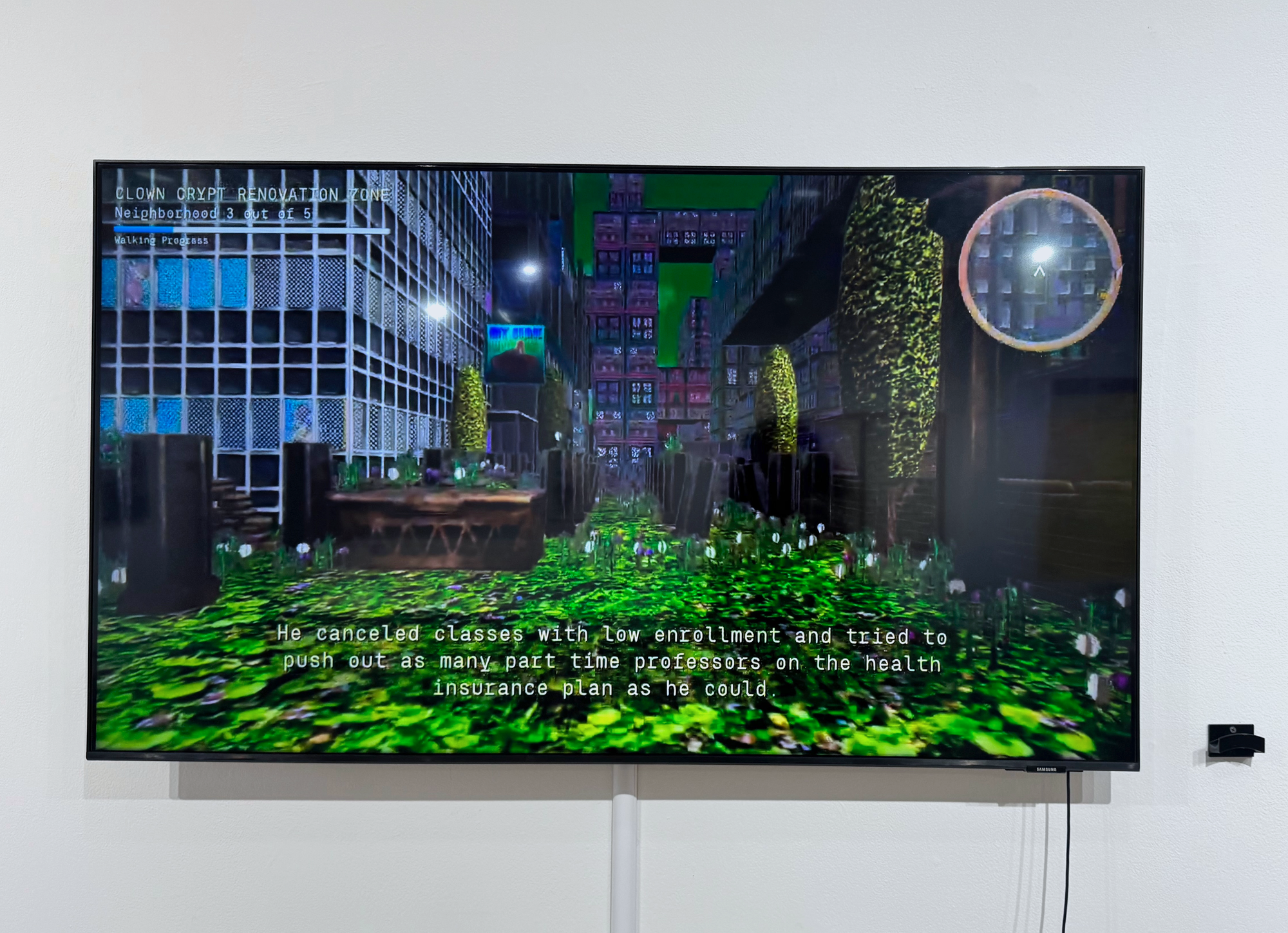
Some of O’Connor’s students recognized River Phoenix in Ray Johnson’s mail-art collage; more were taken by Jeremy Couillard’s “Escape from Lavender Island” (2023), an open-world video game simulation featuring deep-fried animation aesthetics and relatably tragic dialogue from the depths of neoliberal hell (“While he ate he would watch film classics on an overpriced streaming service and sometimes cry.”)
“Absurdism ends up being pretty timeless,” Brown said. “Using ridiculously absurd materials to make work that doesn’t connect necessarily to a political moment or a socioeconomic issue, it represents this irreverent attitude towards art-making.” And apparently that’s what appeals to Gen Z, who are inundated with visual content, yet perhaps still seeking a response to contemporary life that truly resonates.
Brown, who has been teaching at Lehman for 20 years, wants artists to find their idiosyncratic voice. If being funny comes naturally, maybe that’s the tack they should take.
“There’s such a tendency for imitation out there. You can easily become a version of something that exists, and that is no longer considered a bad thing,” she said. “I'm interested in trying to find, ‘What's your really weird way of approaching that?’”
Take Kristen Mills’s “It IS Cake” (2026), a filmic parody of the Netflix baking contest series Is It Cake? using entirely brown cardboard, displayed in the gallery on a screen within a faux kitchen made of the same plainly bland material. Installed nearby is puppet theater ephemera that does directly respond to a political moment: John Vasquez Mejias’s “The Puerto Rican War” (2026), which expands his novelette about revolutionaries fighting colonialism in 1950. The Puerto Ricans’ demands aren’t funny, but some of the depictions of American incompetence are.
Does This Taste Funny? reminds us of humor as a tool, as a way to frame whatever it is that we hope to communicate. Life is not always joyful, but it should at least be emotional. At Sarah Lawrence, I watched Robert DeJesus’s surreal video “Hello?” (2024), starring a talking Olmec head who speaks only when there are no corroborative witnesses. I didn’t laugh. Later in the day, turning a corner on the grounds of Lehman College, I was suddenly confronted with the stone statue, whose onscreen lips I’d just seen move. I audibly snorted.