Is There an Ethical Path for AI Art?
There is a destabilizing, dreamlike sense of awe in encountering something without knowing the answer to sanity’s most fundamental question: “Is this real?”

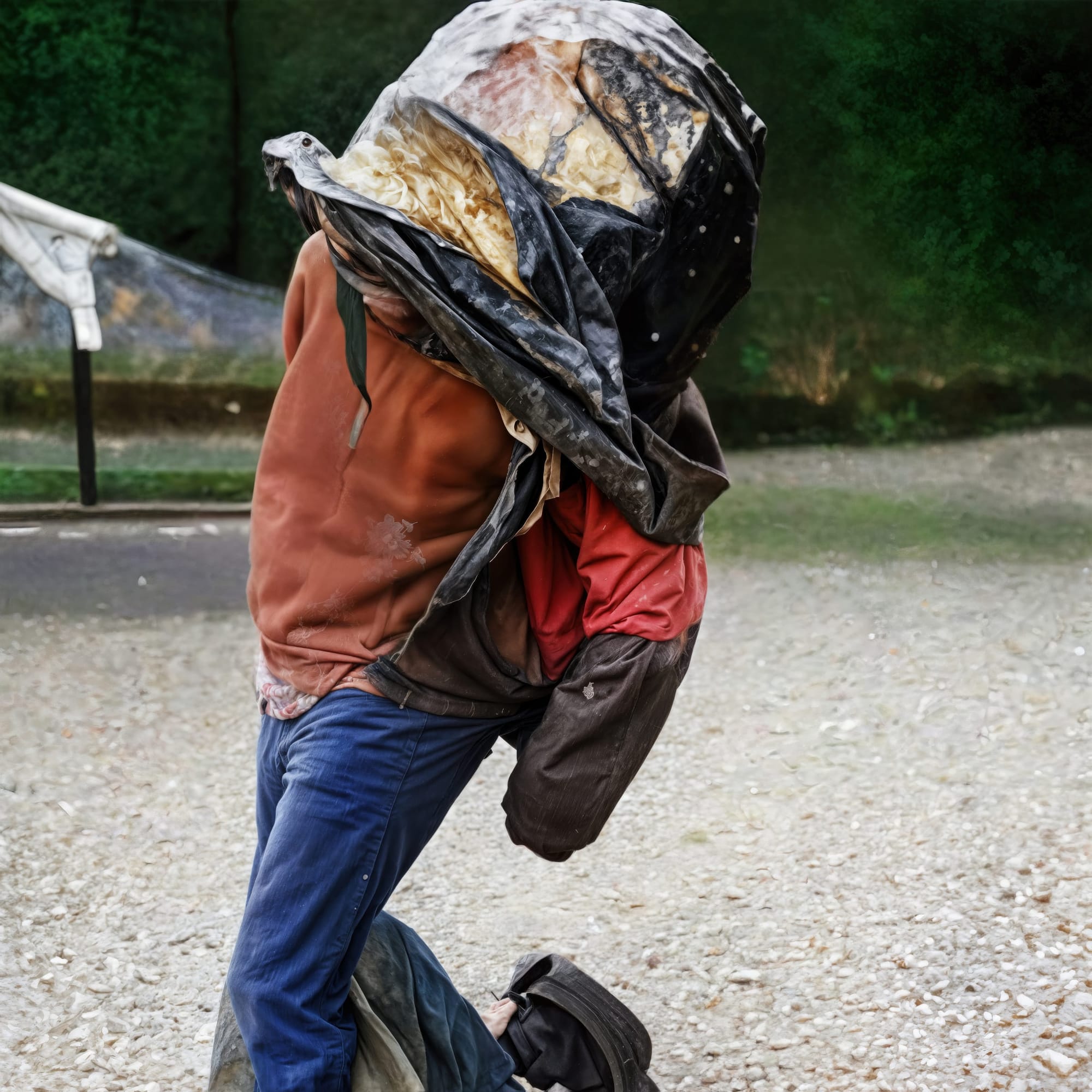
HOUSTON — It’s perfectly normal to fear the AI apocalypse: the loss of jobs, the destruction of natural resources, the bastardization of human creativity for corporate profit, whether or not it will kill us all, etc., etc. Given the way that certain tech billionaires are behaving — and how someone like Grimes, the tech-billionaire-adjacent artist and musician, has been talking lately — it seems like it's become increasingly difficult for that class to notice the difference between a cool sci-fi thought experiment and mass human suffering. There is understandable fear among artists that artificial intelligence will plunder their work and render already-difficult careers impossible. This sets up the question: Is there an ethical path forward for art and AI?
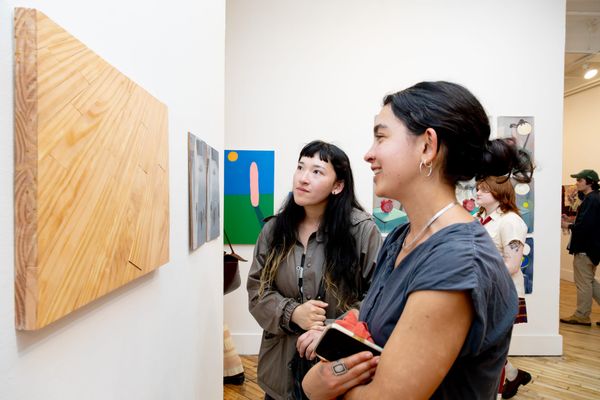
Perhaps my brain was addled by all the Texas sunshine, but a recent trip to the exhibition Imaging after Photography at Rice University in Houston has me convinced that the answer is yes — artificial intelligence can be a force for real, exciting innovation in art when it is wielded by artists who engage with it critically. Inside the gallery’s glowing interior, I spoke with Alison Weaver, the executive director of Rice’s Moody Center for the Arts and the show’s co-curator. “Technology is not neutral,” she argued, because it is developed by humans and reflects their biases. The problem with AI has been that “corporate interests have been out front, and more voices need to be centered in the conversation” — namely, artists’ voices. (This was refreshing to hear, since invoking the generosity of one’s corporate donors has become something of a museum ritual.)
The exhibition is not a survey of art and artificial intelligence, but rather a snapshot of how seven contemporary artists have been working through AI’s implications for photography since 2020. As the title implies, Imaging after Photography argues that we are in a post-photographic moment, as artificial intelligence upends the everyday assumption that just because an image is photorealistic, it is also real. On the question of ethics, the artists in the show are careful to train the algorithms they use to generate their work on visual data sets of either their own images or works largely in the public domain. (Good for universities to set the standard here: no plagiarism!) Much of the art features images morphing or developing onscreen before your eyes, or grids that map a concept through repetition. The work — perhaps owing to the moment or the medium, or both — is iterative by nature.
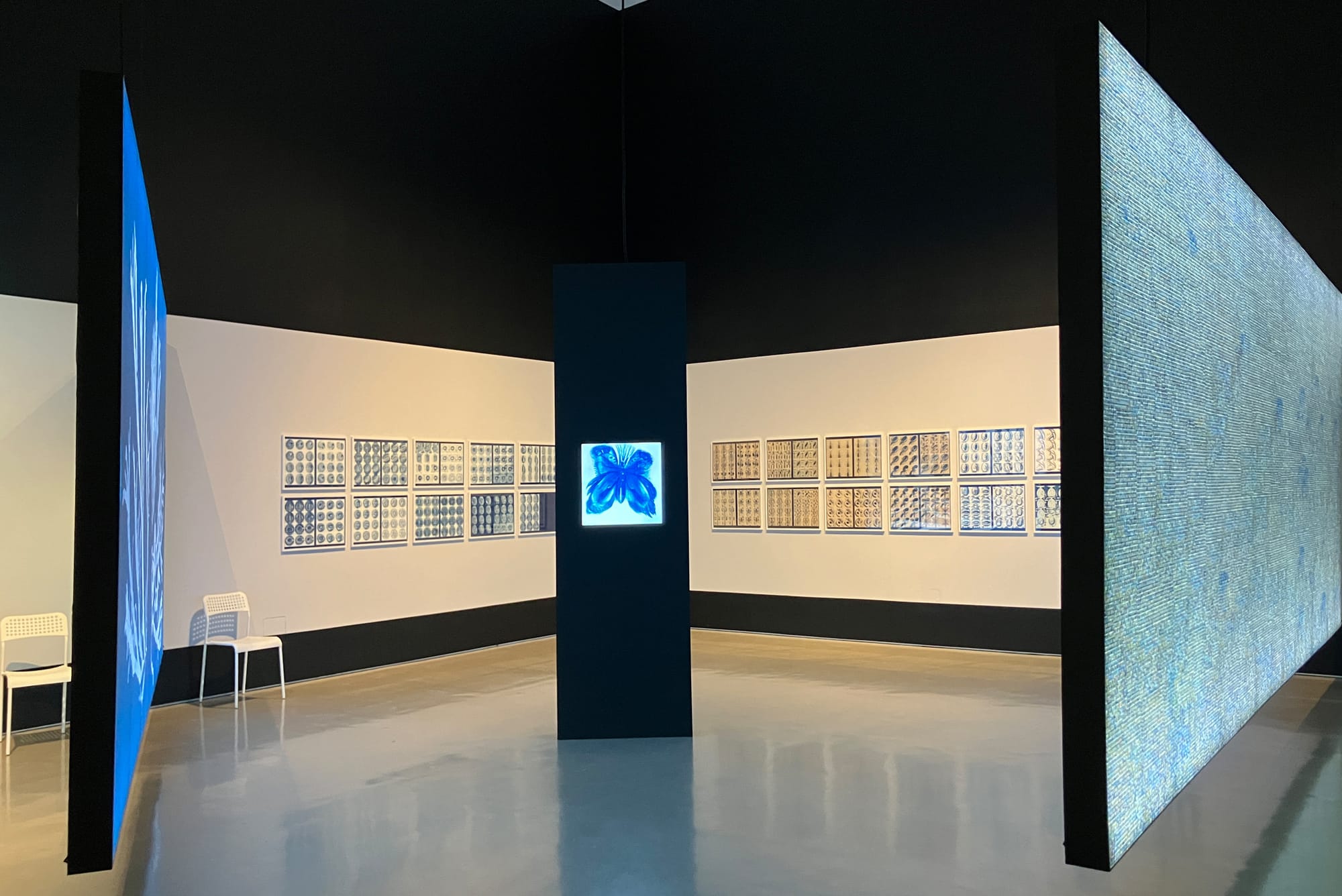
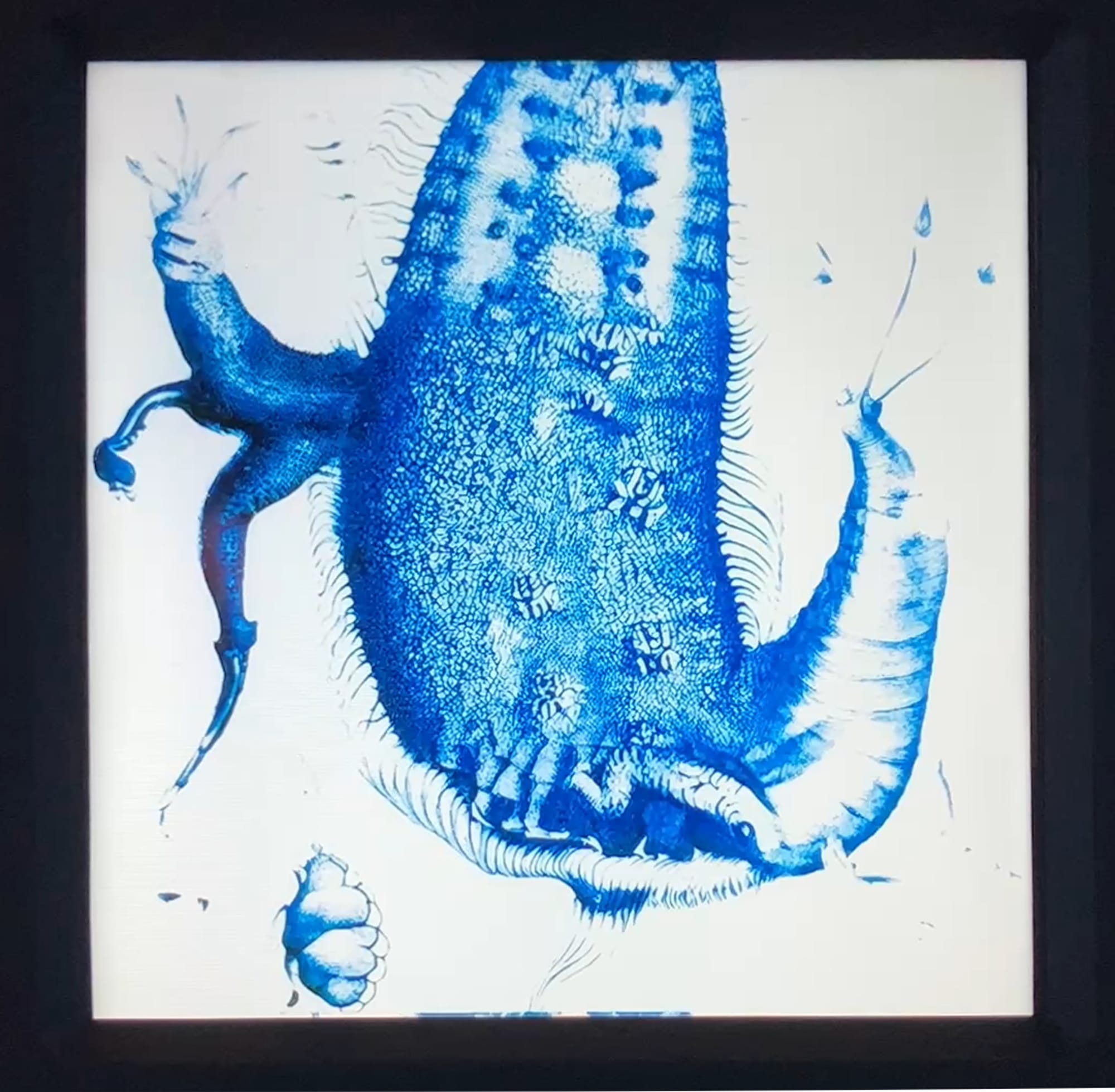
Interestingly, the exhibition’s most compelling pieces were by its lesser-known artists. The show really gets going in the second of its two galleries, as you step into a revolving door of speculative fictions: The darkened space is organized like a massive centrifuge, divided by luminescent rectangular screens. At the room’s center is a circular bench, giving the space an aptly dizzying, panopticon-like effect. As a lover of analog photography, I was immediately pulled to Sofia Crespo’s slice of the room, where the screens displayed the botanist and photographer Anna Atkins’s famous 19th-century cyanotypes of British algae. Crespo, an Argentine artist based in Portugal, works at the intersection of AI and biological systems, and used Atkins’s work as a data set for imagining single- and multi-cellular organism development. The resulting images of fantastical specimens, reproduced in morphological grids, are wonderfully mystifying: exoskeletons, mandibles, cell walls, cilia, placentae, all printed by Crespo using Atkins’s old-school cyanotype process in exquisite blue detail.
A similarly sci-fi approach unfolds in the work of Joan Fontcuberta. His series What Darwin Missed (2024) likewise references a pivotal moment in the 19th-century history of science, using photographs of corals the artist took on diving trips to the Galapagos Islands — where Charles Darwin developed his theory of evolution — as the basis for AI images of imagined species. Fontcuberta then allegedly hangs these AI creatures alongside his actual photographs of coral in the exhibition; I use the word “allegedly” because it is genuinely impossible to tell what is real and what isn’t, which prompts one to distrust everything. I even began to eye with suspicion the ornate specimen of black coral standing in a glass case nearby, which was in fact on loan from the Houston Museum of Natural Science. There is a destabilizing, dreamlike sense of awe in encountering something without knowing the answer to sanity’s most fundamental question: “Is this real?”
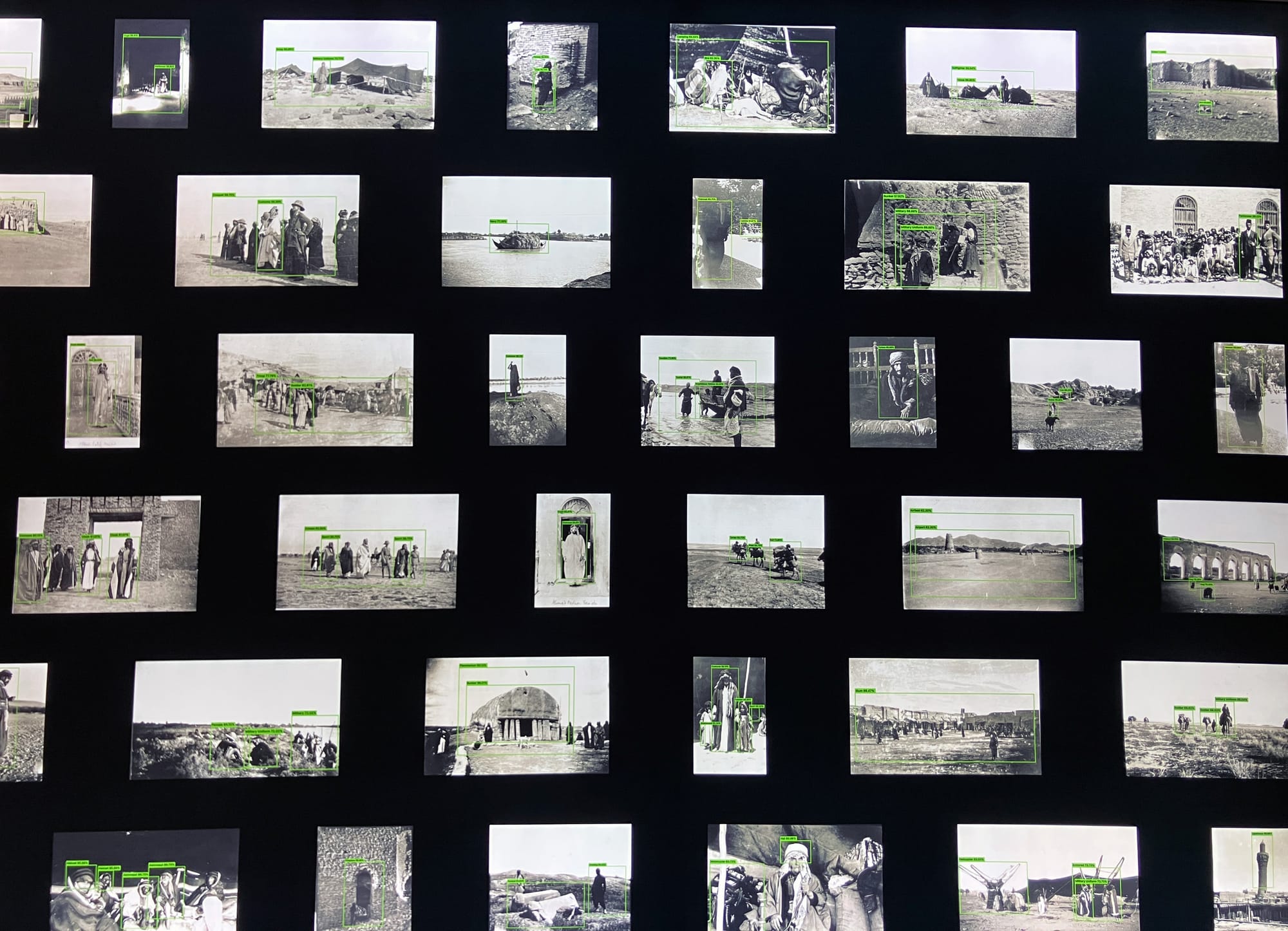
The denial of such speculative fantasies is equally thought-provoking, as we see in the work of Nouf Aljowaysir, a Saudi Arabian-born artist living in Brooklyn. Aljowaysir transforms 19th-century orientalist photographs of West Asia— images laden with imperialist violence, as Europeans forcibly documented the peoples they encountered on colonial missions — using artificial intelligence, creating empty voids where the figures once stood, perhaps a nod to Édouard Glissant’s call for a decolonial “right to opacity.” On the opposite wall, she simultaneously shows AI’s failure to comprehend Arab subjects: the algorithm labels a Bedouin home a bunker and civilians as military combatants, camels are classified as horses (an obvious regional bias), and empty land becomes an airport. As the US military seeks to use similar technology to rain firepower down on Iran, killing schoolchildren, the ongoing implications of these systems are clear.
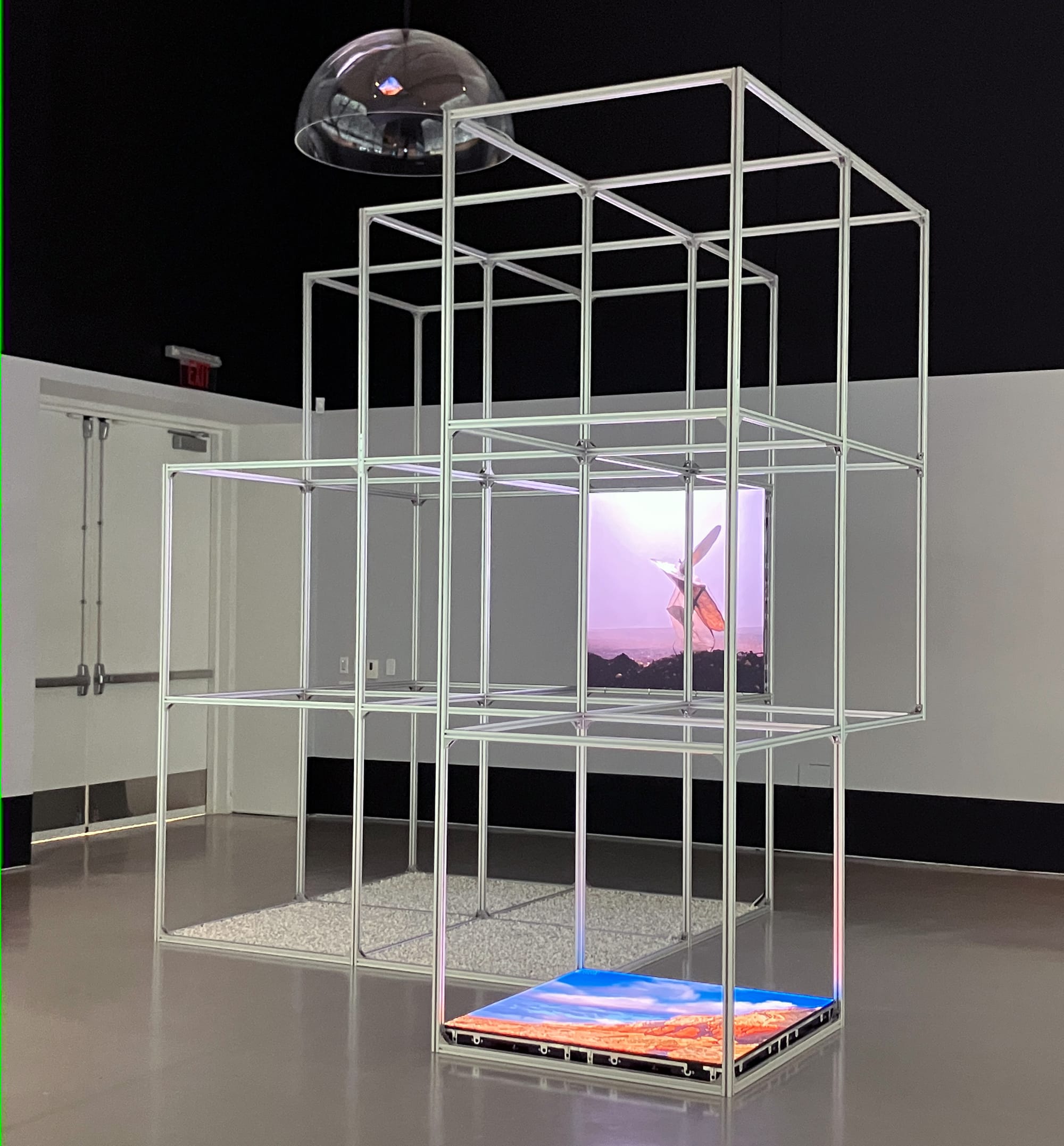
That so much of the exhibition looks back at the mid-19th century is worth probing. As the first Industrial Revolution came to a close and the second one ramped up, much of the world had been mapped, photographed, or catalogued in some form. Pockets of the unknown remained — the Amazon, the ocean’s depths, the Arctic and Antarctic poles — and artistic and literary imaginations ran wild speculating about (and perhaps yearning for) their undiscovered wonders. The Western world abounded in speculative fictions about cannibalistic plants, monstrous sea creatures, and the poles as portals to a hollow earth. At the same time, the documentary voyages to these places were colonial, extractive missions, capturing peoples and places that Western empires sought to control. Now, as climate change decimates the environment and life is increasingly subject to 24/7 digital surveillance, perhaps art’s first forays into artificial intelligence evoke a parallel desire for that which we have lost today: the fearsome agency of an unknowable world.
Editor's note: Travel and accommodations for the author were paid for by the Moody Center for the Arts at Rice University.