John Dilg’s Down-to-Earth Reverence
The tranquility of his views, the closeness of his tones, and the evenness of his light bespeak his continual wonderment at existence.

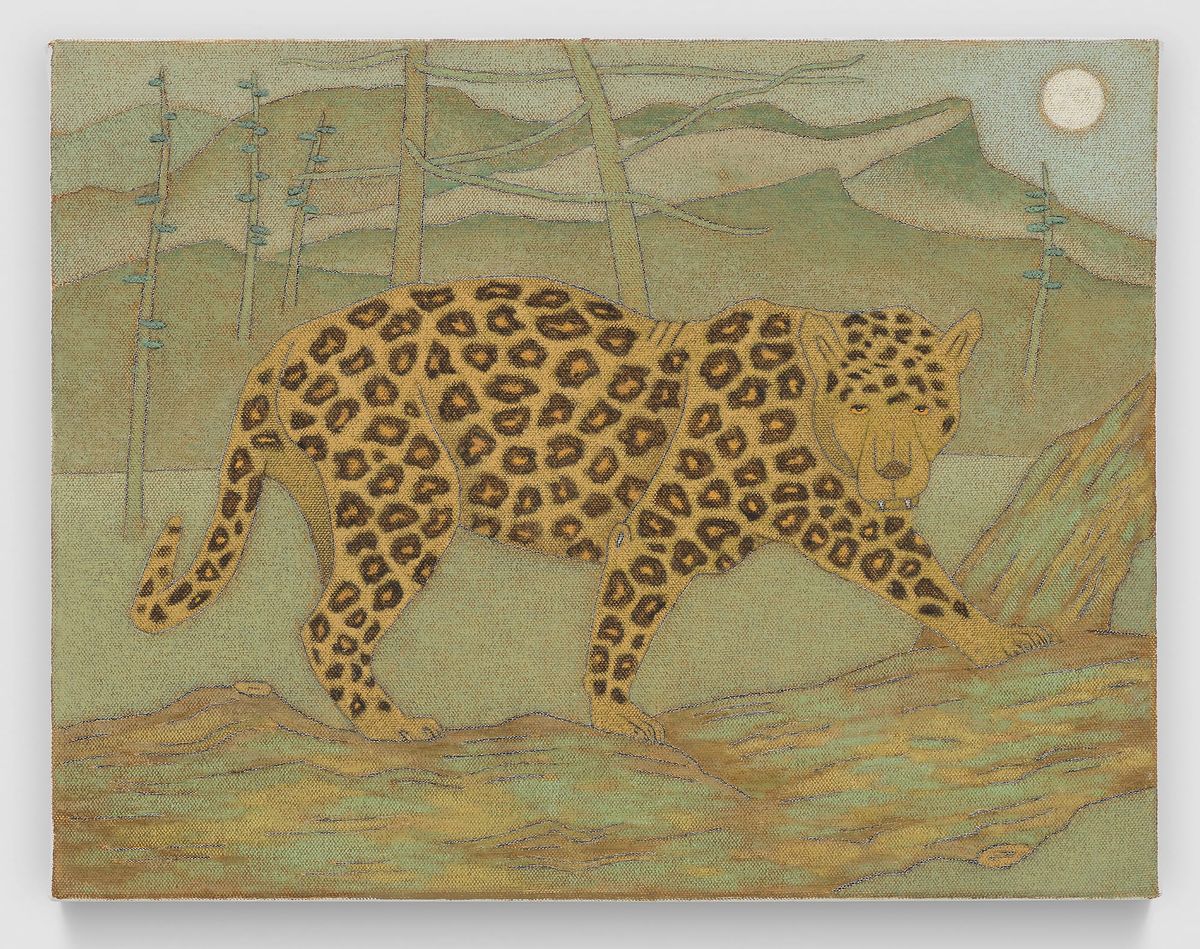
John Dilg’s paintings don’t seem to have undergone any seismic changes during the decade I’ve been following his work, so I wasn’t sure there was anything else I could say about it. But after visiting a recent exhibition at Peter Freeman Gallery and reflecting on my experience, I realized I was wrong.
The show included 13 paintings, 10 of which were made this year. Twelve measured 14 x 18 1/8 inches (~35.6 x 46 cm) and were oriented horizontally or vertically. The circumscribed palette of pale blues, celadon greens, browns, and off-white was present in every work, and the application was unvaried; the nub of the canvas was visible through the thin layer of paint. In addition to oil paint, Dilg used charcoal and graphite to draw the contour of his unmistakable natural forms. Except for “Wild Life” (2024), the subject of each painting is a spare, serene landscape with almost no signs of human life, often under a full moon blanketing the world in perpetual twilight. For the sameness in size, palette, and application, Dilg did not repeat himself.
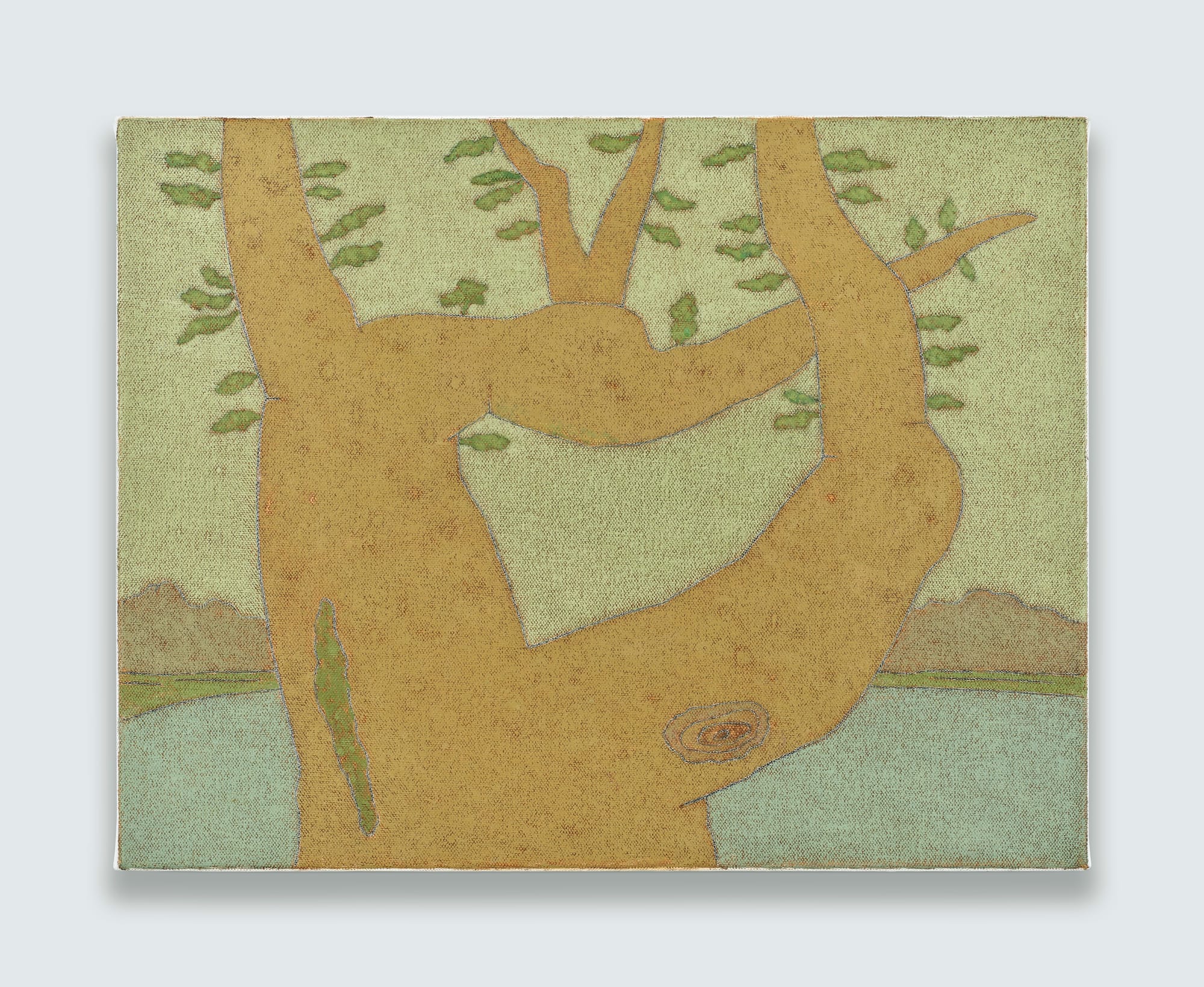
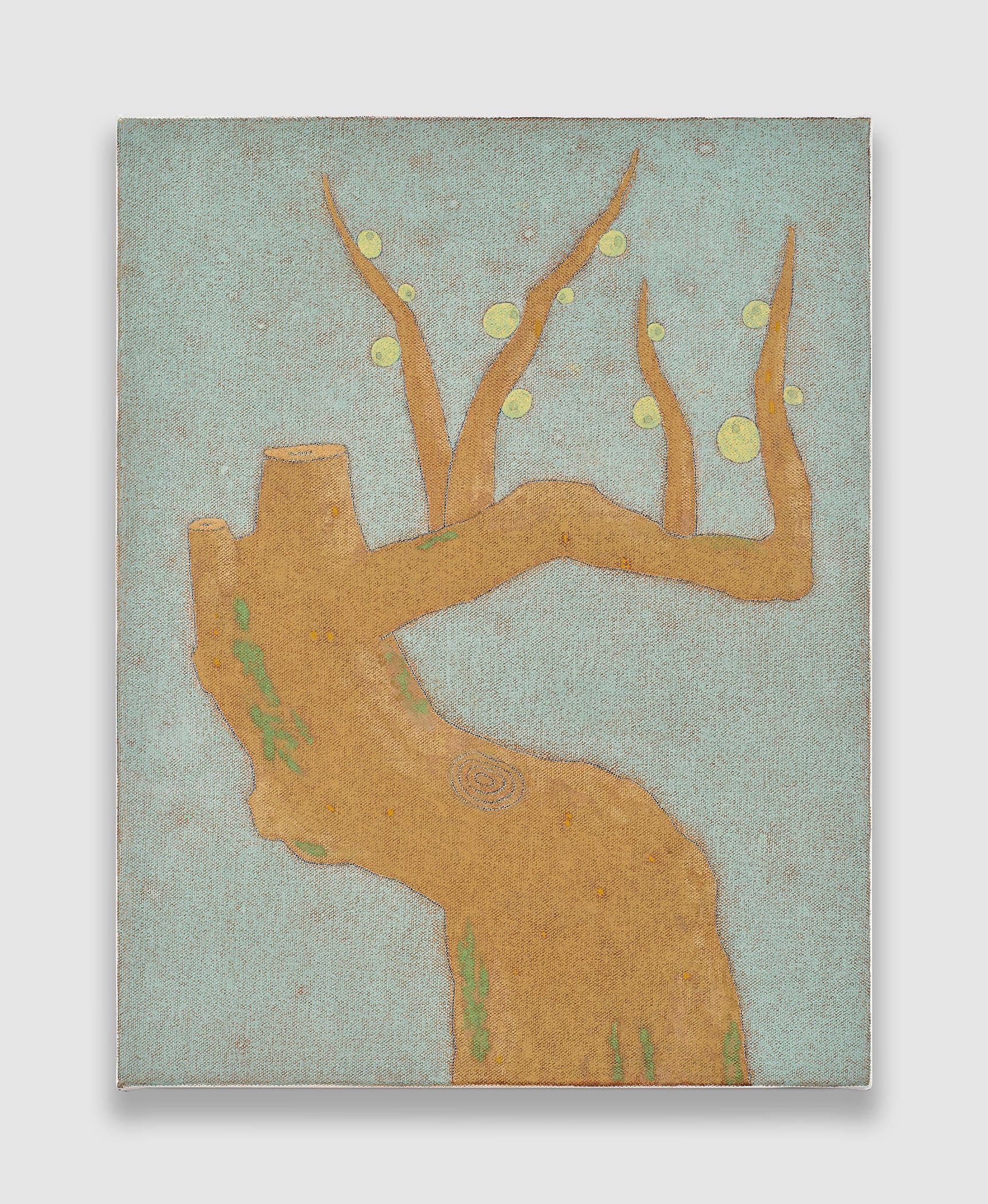
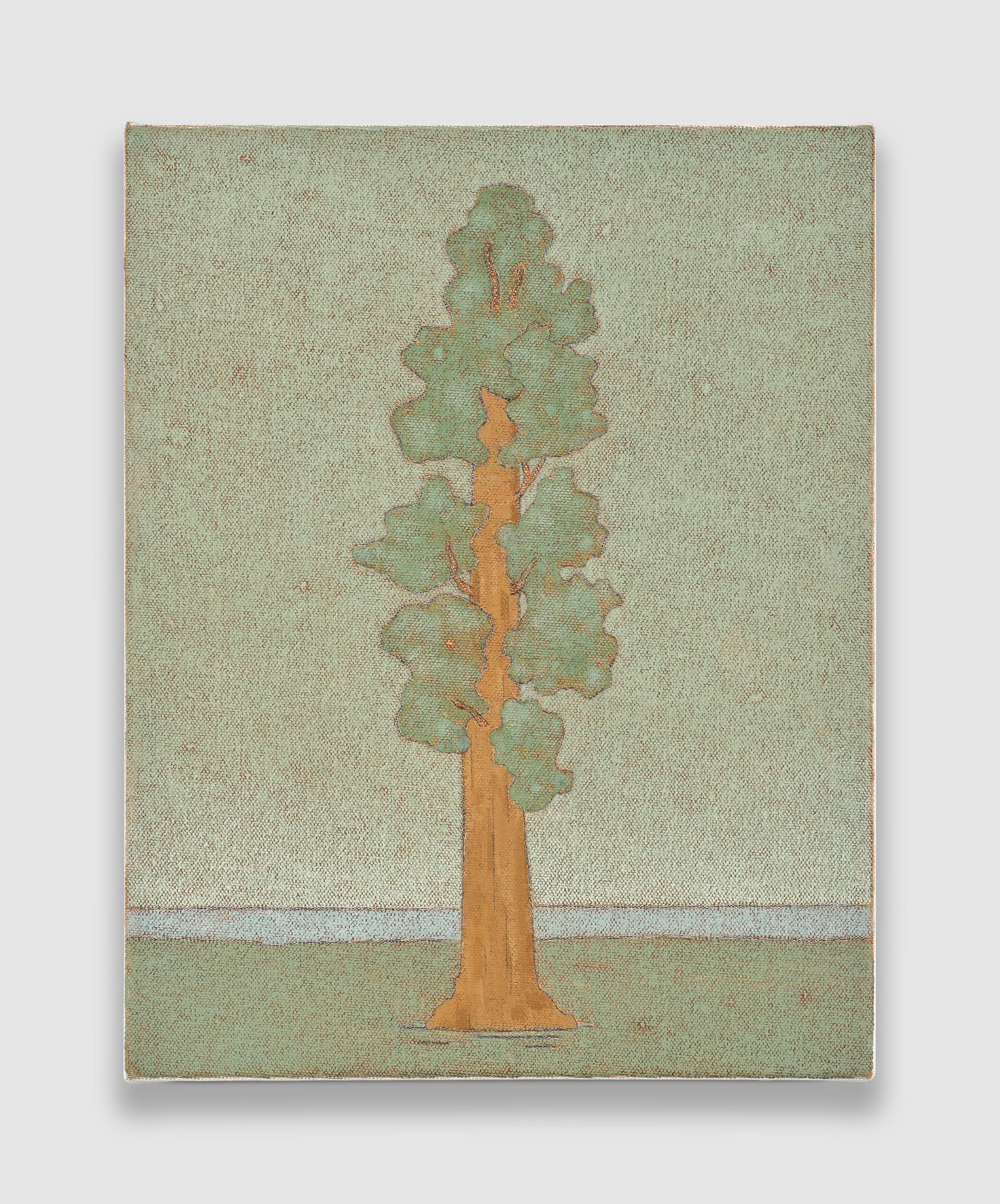
Left: John Dilg, "Bloom Watch" (2026), oil, charcoal, and graphite on canvas; right: John Dilg, "Sequoia" (2026), oil, charcoal, and graphite on canvas