Judy Pfaff Is Light Years Ahead of the Curve
After more than 50 years, she has never settled into a signature style and continues to remain open to different, unexpected possibilities

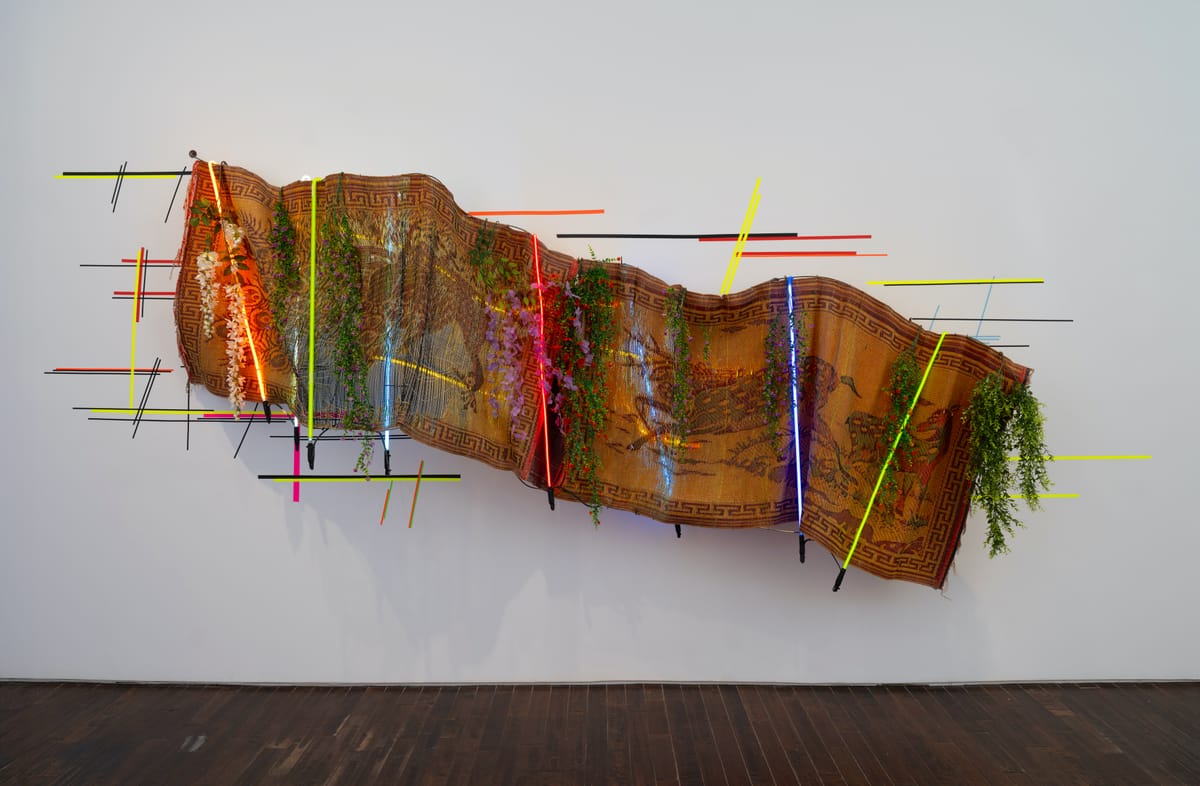
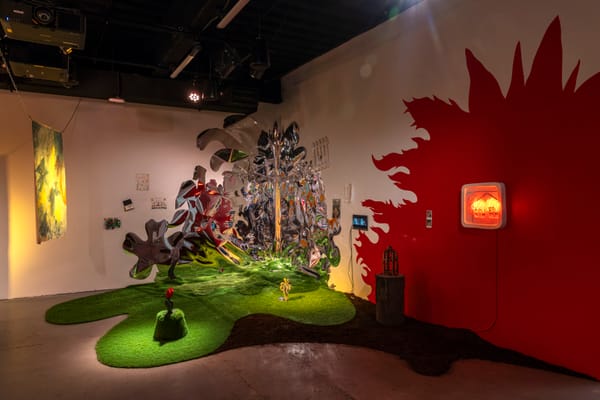
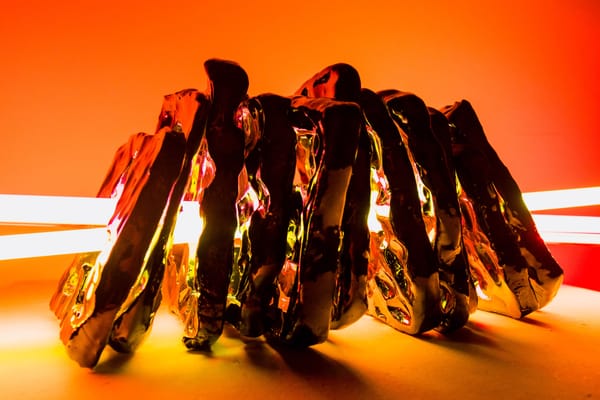
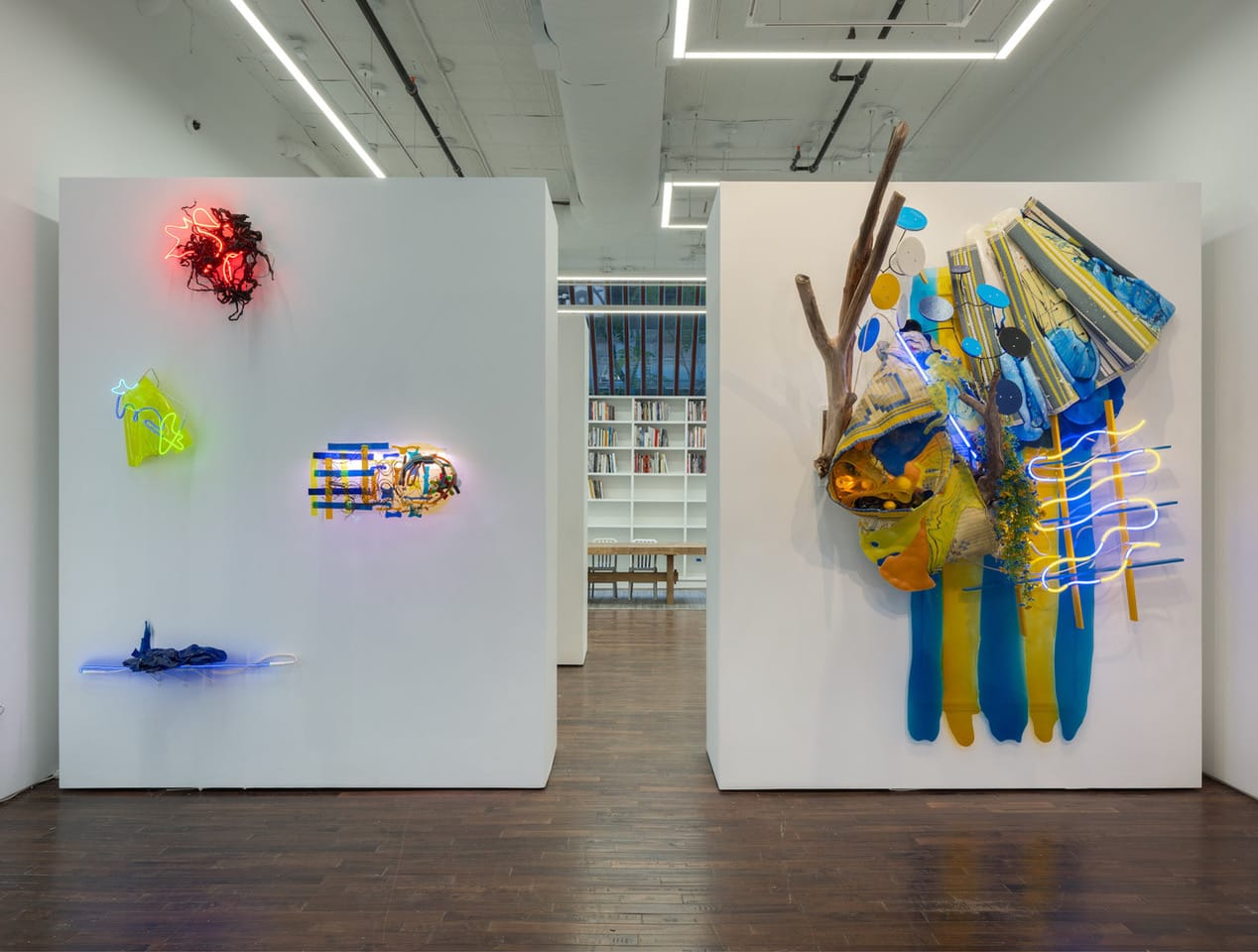
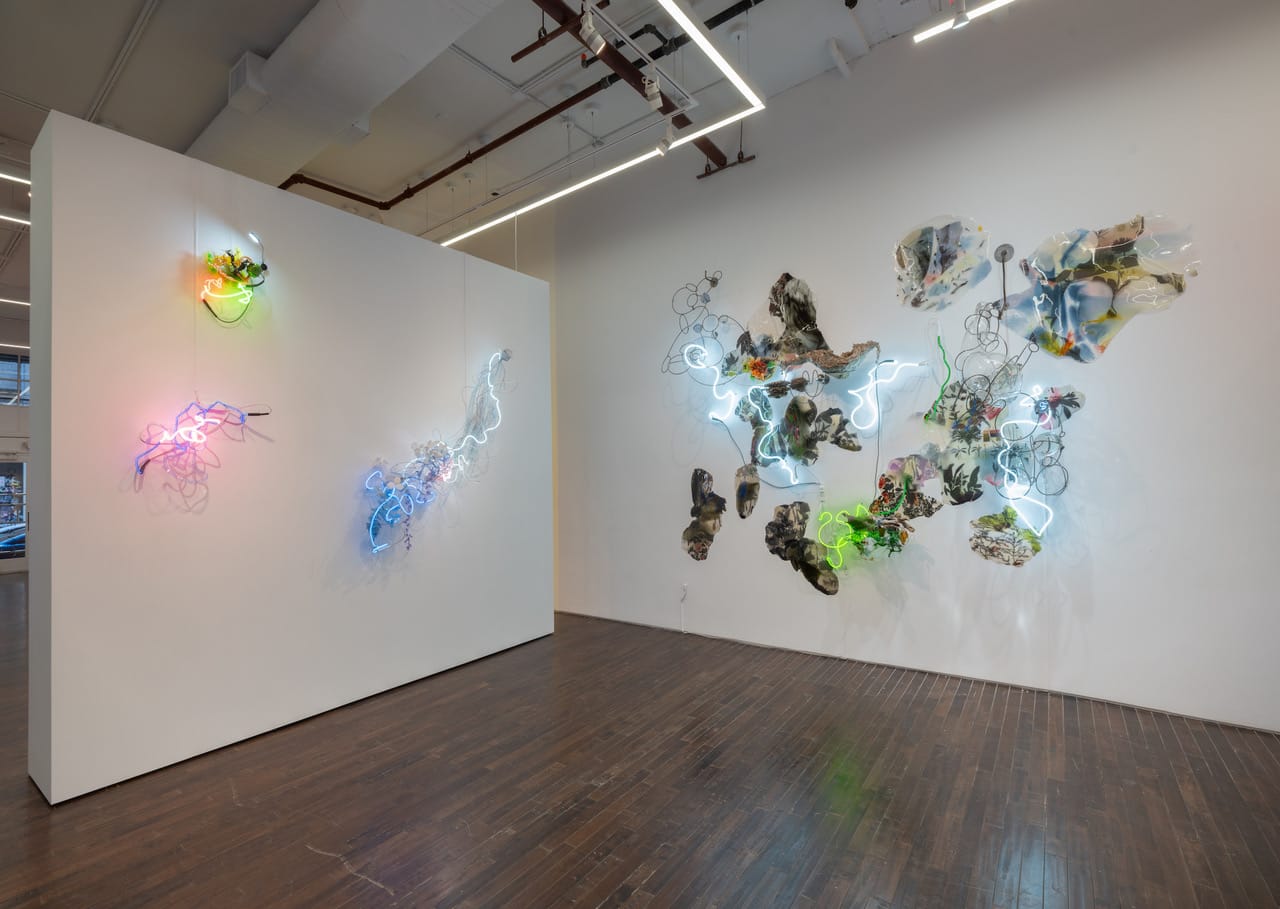
When I learned about Light Years, Judy Pfaff’s debut exhibition at Cristin Tierney Gallery, I thought about what makes her work stand out to me. Pfaff, whose last solo show at a New York gallery was in 2019, has always assembled her sculptures out of diverse materials, from the store-bought and found to the fabricated. In Light Years, we encounter plastic flowers and fruit, a birds’ and a wasps’ nest, recycled plastic carpets, polyurethane foam, steel tubing, and LED and neon light.
Pfaff’s bricolage approach combines surgical precision with Surrealist chance, as exemplified by Comte de Lautréamont’s famous statement, “As beautiful as the chance encounter of a sewing machine and an umbrella on an operating table.” The difference is that no matter what Pfaff juxtaposes, none of it seems arbitrary. It is as if her materials magically dictate how they should come together.
Pfaff’s mastery of radically different scales and diverse materials is a rare achievement. Of the 13 works in Light Years, the largest, “finite sequence of mathematically rigorous instructions” (2025), is more than 8 feet high, 40 feet in length, and 14 inches deep, while “Purple” (2025), one of a group of small works, measures 19 by 26 by 11 inches. Pfaff’s attunement to heterogeneous objects and materials suggests that she has no agenda; after exhibiting for more than 50 years, she has never settled into a signature style and continues to remain open to different, unexpected possibilities.
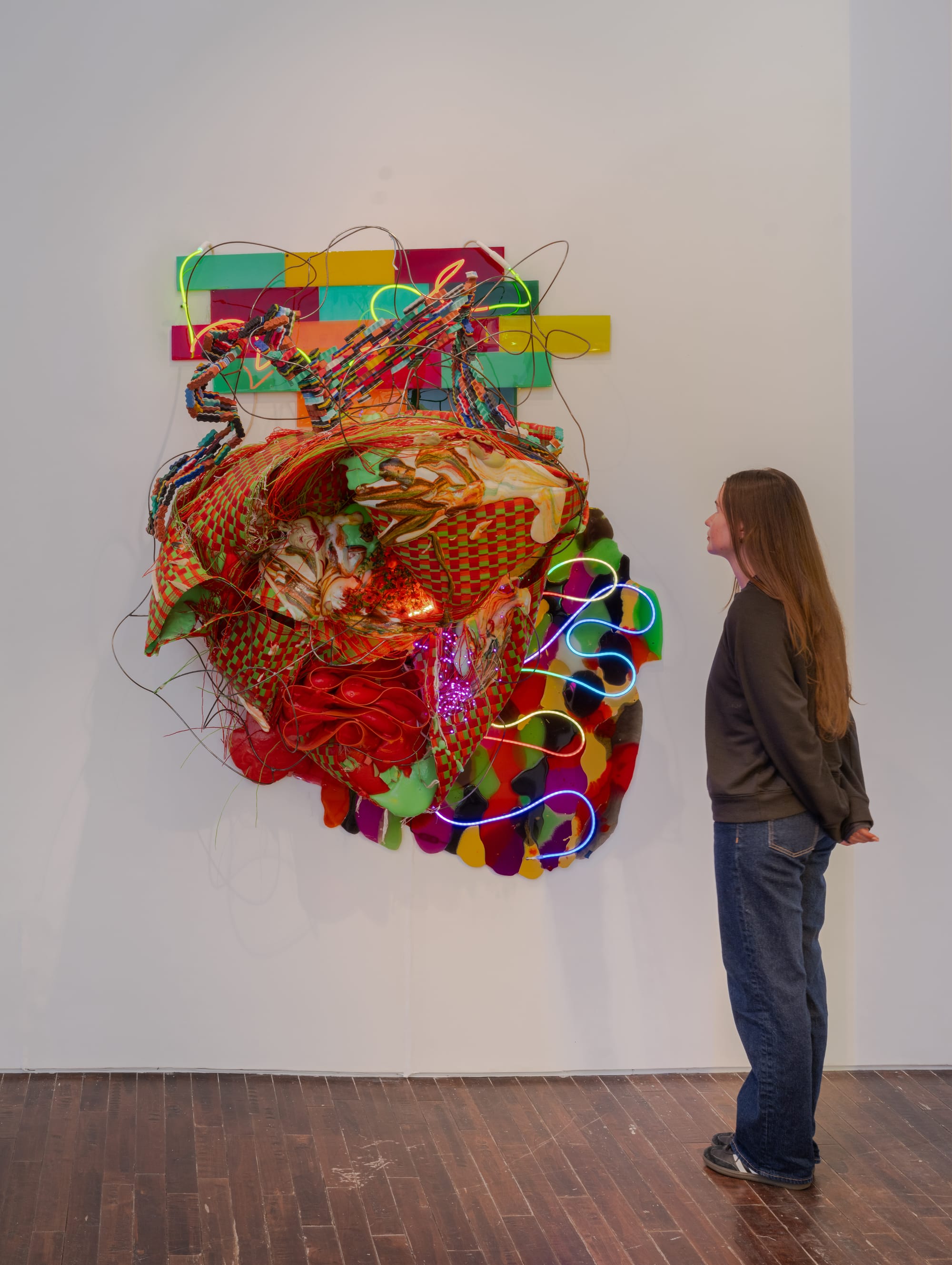
Three works on view incorporate a recycled woven plastic carpet: “Travels to Bisnegar,” “Rood en Groen (voor Sjorsje),” and “CARPETRIGHT” (all 2025). Yet each work differs from the others based on the way Pfaff has arranged the carpet — from a surface undulating across the wall to a coiled plane folding in on itself. “Travels to Bisnegar” evokes mythological flying carpets and the sprawling network of the Silk Road that connected Asia with the Mediterranean and Europe. The red and green carpet in “Rood en Groen (voor Sjorsje)” establishes the overall palette that guides her toward the sculpture’s other elements, which include plastic flowers, epoxy resin, and LED lights.
More than activating the inert matter of her sculptures, tubes of neon light act as a kind of drawing that is connected to the sculpture yet seems to express a desire to become independent. That tension suggests that Pfaff herself has a desire to break free of material bonds and use light to make squiggly lines in space. The neon plays an integral role in the compositions of the small wall works, while in the larger pieces it illuminates from without and within, pulling us closer to the junctures of various forms. It encourages us to go beyond just looking and to discover what she has placed in the works' nooks and crannies. Seeing and wonderment overlap in these sculptures.
Pfaff also recognizes that color isn’t a purely formal phenomenon — it is understood culturally as well. While the title “blue is for sky, yellow is for wheat” refers to the Ukrainian flag, the individual objects transform the flag’s symbolic colors into tangible facts. The thick tree branches, imitation flowers, and fruits brings to mind Ukraine’s importance as a major global supplier of sunflower oil and various grains. Pfaff’s sensitivity to both the identity and color of her materials allows her to address a wide range of subjects without becoming didactic. She doesn’t tell viewers how to think about Ukraine, but invites us to remember the connection between its flag and its rich, productive landscape. The work celebrates the nation’s fertility in the face of its devastation.
Pfaff is able to achieve a remarkable balance between the specific subjects she tackles and the open-ended response her art engenders. While she worked in the aftermath of Minimalism and conceptual art, she went her own way and never subscribed to the literal. It is time a New York City institution pays her — a longtime resident of Lower Manhattan, now living in the Hudson Valley — the attention she has long deserved. Serious, whimsical, tender, elegiacal, fantastical, and dreamy, she is a one-person movement — influential but always inimitable.
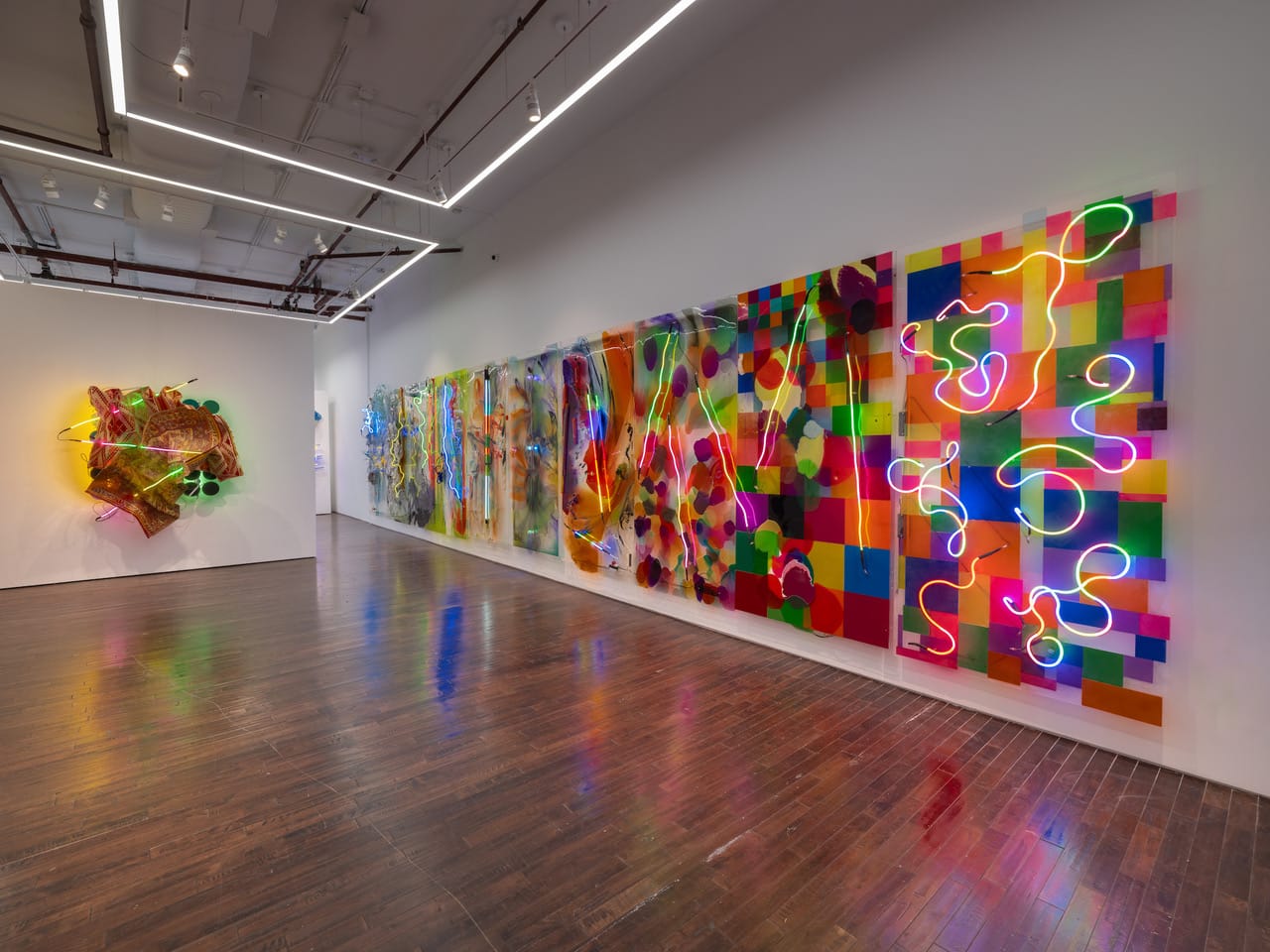
Judy Pfaff: Light Years continues at Cristin Tierney Gallery (49 Walker Street, Tribeca, Manhattan) through December 20. The exhibition was organized by the gallery.