Khaled Sabsabi’s Art of Collective Becoming
“I believe in the fact that the people hold the power,” the Lebanese-born representing artist of the Australian pavilion told Hyperallergic.
VENICE — Last year, Lebanese-born, Sydney-based artist Khaled Sabsabi was chosen to represent his country at the 2026 Venice Biennale by Creative Australia, the country’s chief arts funding organization. Within a week, the government intervened to override that decision, based on claims that by including a blurred image of a former Hezbollah leader in a video from 2007, Sabsabi was a supporter of terrorism and an antisemite. In response, Koyo Kouoh, the curator of the biennale’s main exhibition, In Minor Keys, stepped in, inviting Sabsabi to the show. Outcry within the arts community and an independent review led to Sabsabi’s reinstatement to Australia’s pavilion.
His two installations — “khalil” in In Minor Keys and “conference of one’s self” in the Australia pavilion — use painting, sound, and moving image to reflect on ideas of identity and collectivity, drawing upon his own life story and his interest in Tasawwuf (Sufi) teachings. Sabsabi migrated to Australia in 1976, at age 11, because of the civil war in Lebanon; living through that war left him with PTSD that he still deals with now, at age 60. In the 1980s, he became a hip-hop artist under the name “Peacefender,” backing up the Beastie Boys and Ice Cube on tours. He combined music with a sense of social justice, conducting workshops in community centers, prisons, and detention centers, only becoming a visual artist in 1998.
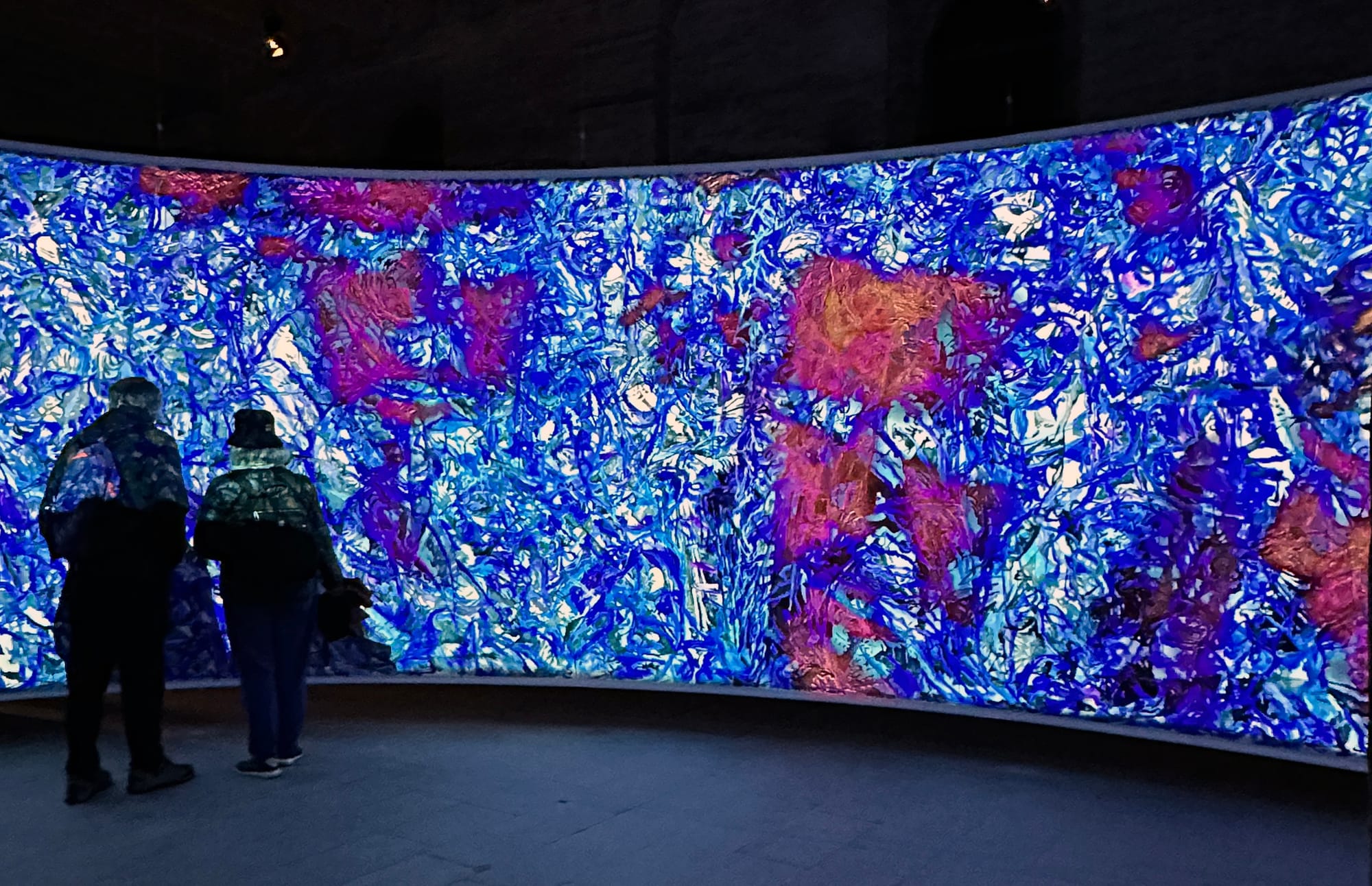
“khalil,” the first work you encounter at the Arsenale, is a 40-meter (~132-foot) canvas-cum-screen shaped in a spiral; the viewer enters the space to see a mesmeric, flickering, light- and color-filled projection that complicates our perception of the painting underneath. “a conference of one’s self” is its inverse: an octagon created by eight separate paintings, around which the viewer walks. Together, writes the curator, Michael Dagostino, they form “a proposition towards an idea of a shared humanity,” informed by “migrant experiences, journeys, and encounters.”
I spoke to Sabsabi about his work on May 10 in Venice. The interview has been edited and condensed.
Hyperallergic: I would love to start with your contributions to the Biennale.
Khaled Sabsabi: I see both works as one body, offered as a way to understand ideas around “inner” and “outer.” The installation in the Australia pavilion is titled “conference of oneself.” It’s informed by a 12th-century Sufi poet, Farid ud-Din Attar, and his work “The Conference of the Birds.” The poem looks at a multitude of birds of various species coming together in search of one common leader. There is disagreement until the hoopoe bird says, “You need to find the Simorgh [a mythical being], which means you will have to go on a quest, a treacherous journey, and not everyone will make it.”
Some of the birds decide that it’s not for them. But the others go on to this quest, and when they get to the final valley, there is no one there. The Simorgh doesn't exist. “Simorgh” is a Farsi word which means “30 birds.” And by this time there are 30 of them left. And they realize they are the Simorgh — that leadership is a collective endeavor.
Here, it’s a conference of oneself. It’s a contradiction — how can the self have multiple beings? The work is a space where you're able to understand the multitude of beings within yourself — the self as a kind of collective.
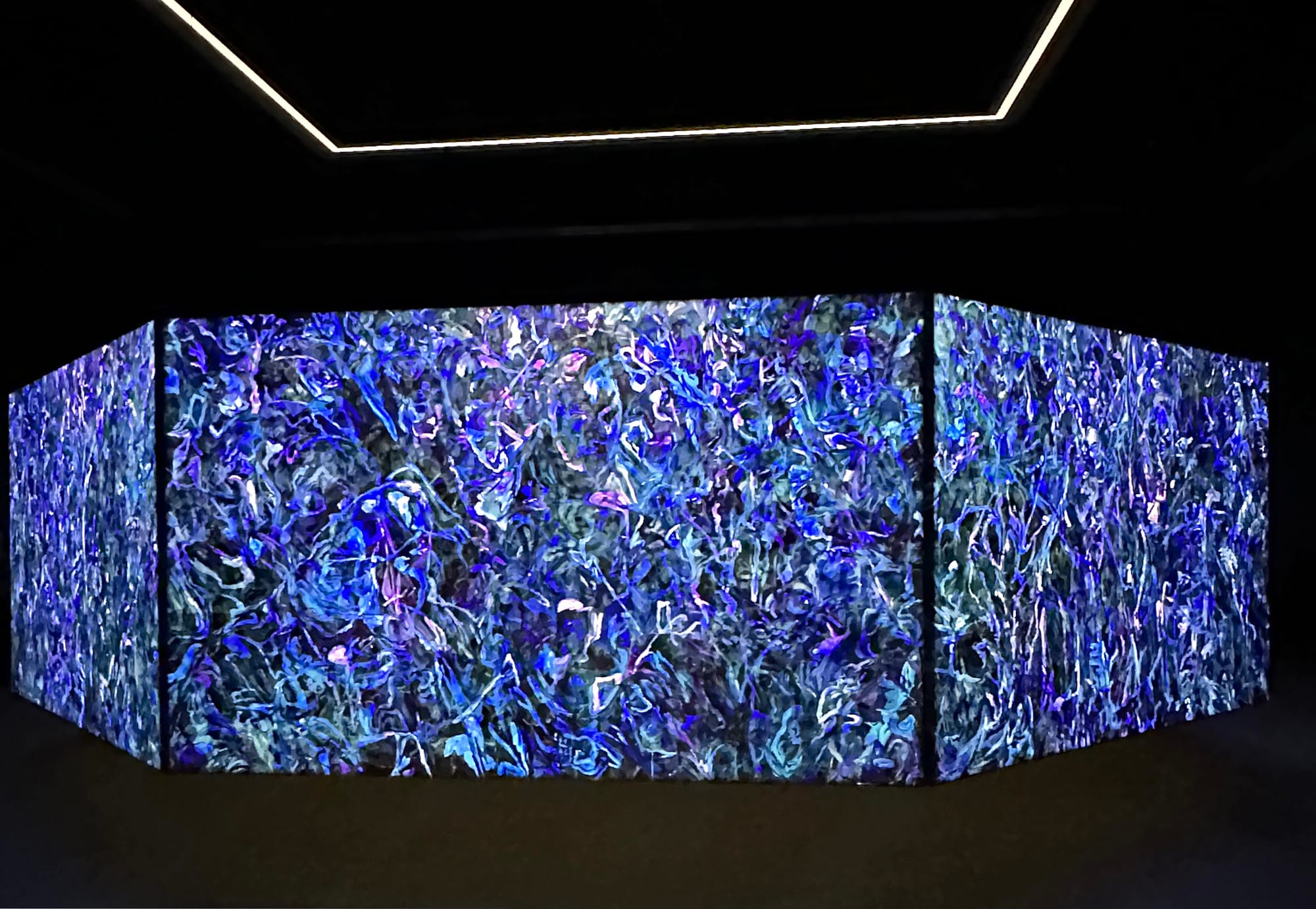
H: Tell me about the setup in the pavilion.
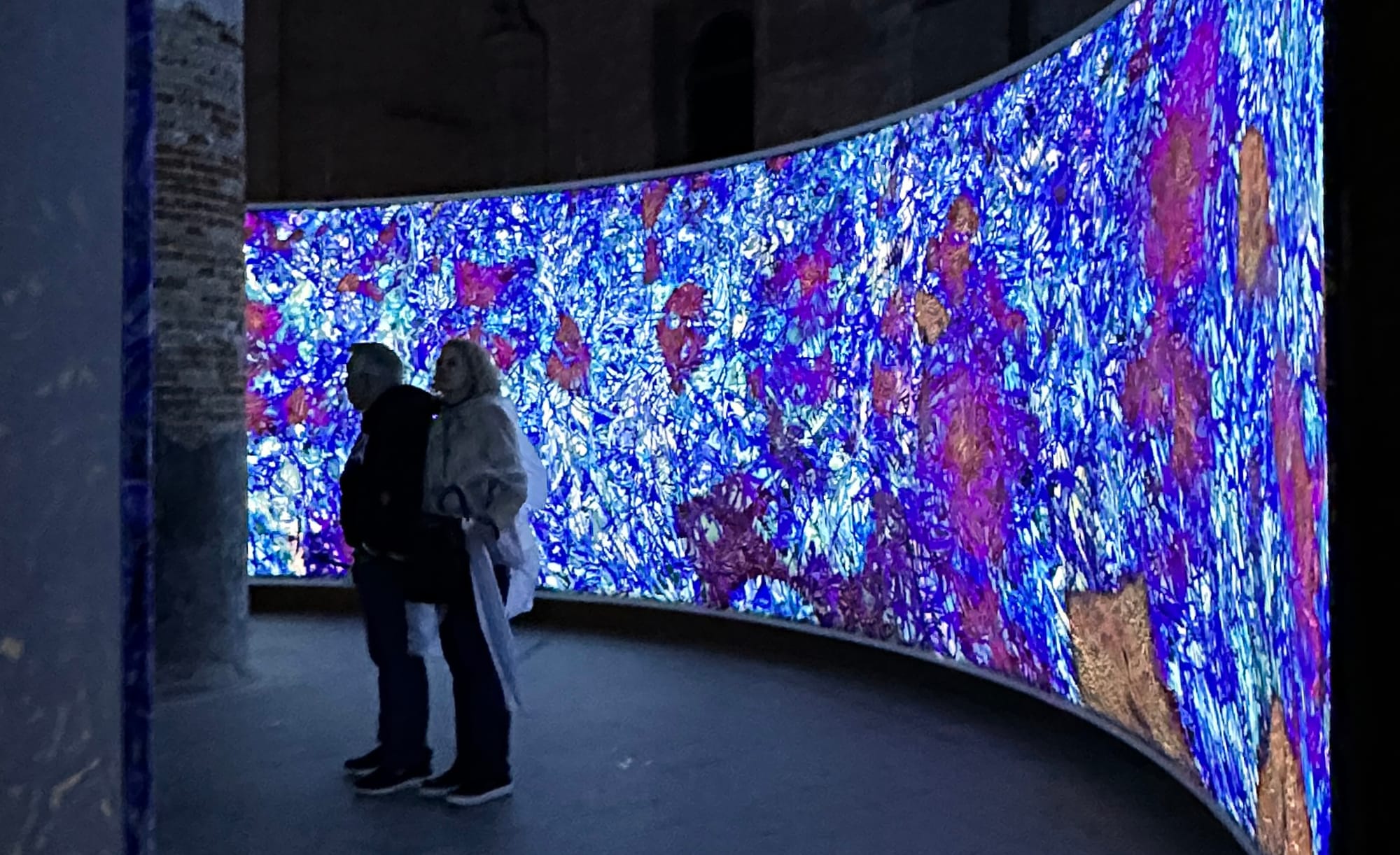
KS: The pavilion is essentially a square. I turned it into an octagonal space, an 8-pointed star — two overlapping squares. Both four and eight have symbolic and numerological meanings in relation to the story of the Simorgh. As you enter, there are four tapestry pieces that form either an entry or an exit — it’s up to you to decide which one to go through. And then again, there's a negotiation: How do I cross this threshold? What's behind it? Someone might be coming out at the same time — so there's a moment of interaction, a moment of recognition of the other.
You see the octagonal object, which is made of eight canvases. Do you walk around it in a clockwise or counterclockwise direction? Up to you. By the time you get to the end, you realize you're back at the beginning. It’s all about the idea of learning and unlearning.
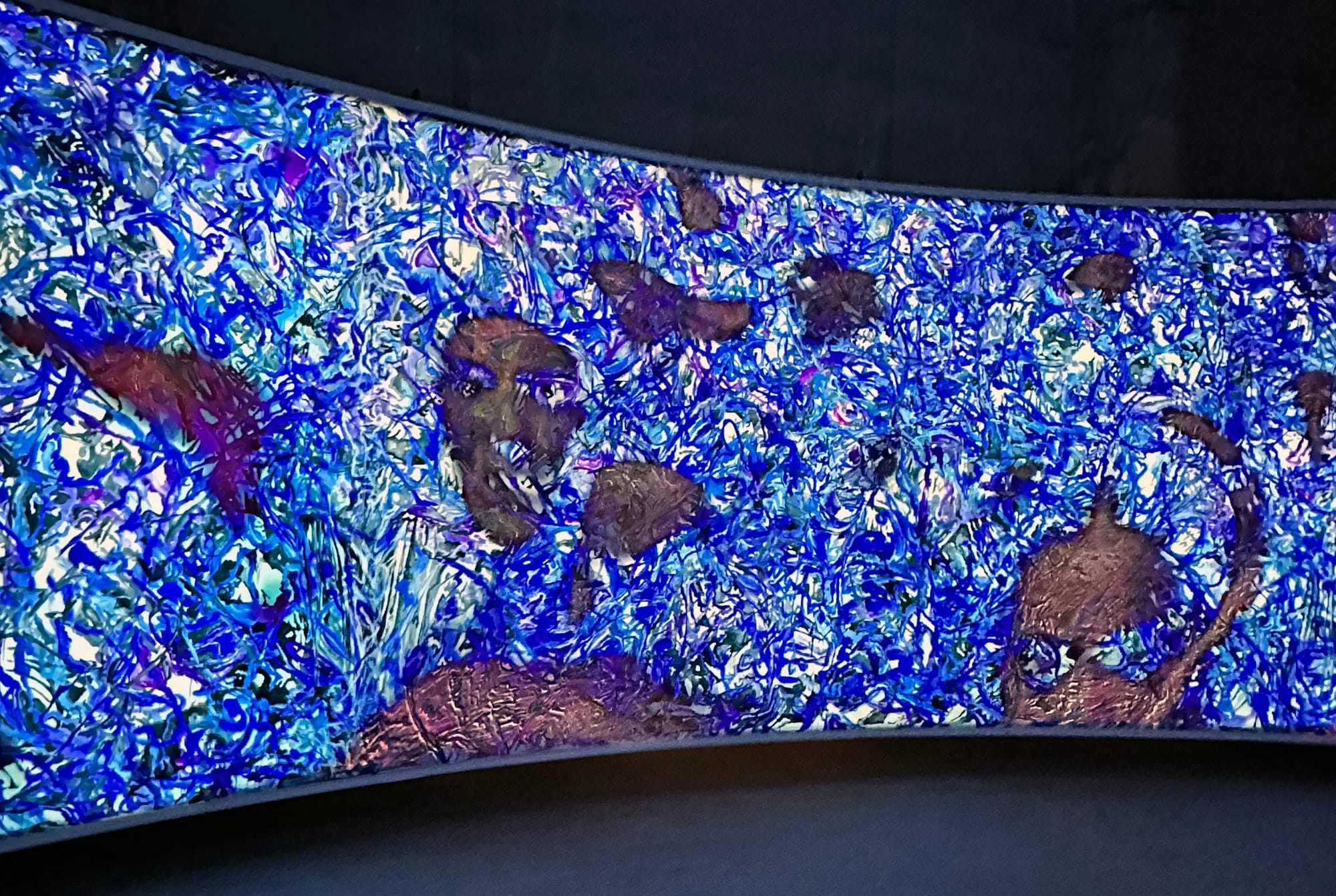
H: We see paintings, but not just paintings.
KS: Yes. I do a lot of public projects — community festivals and so on — that involve outdoor projection. With this work, I wanted to bring those technologies and possibilities within a gallery context.
So, there’s the canvas, obviously — the painting. And then the painting is photographed and projected onto itself. But then, while it's projected onto itself, I take the primary colors of the painting, and I vectorize each of them. And then I insert video images [a procession in Lebanon, a football match in Australia, and so on] into those layers. That’s what’s giving you this optical illusion: Is it real? What am I seeing? Am I seeing the canvas or something else?
The technologies for both “conference of one’s self” and “khalil” are similar. The soundscapes are similar with both works, too. They sprung out of the same time — they came out of the same world.
Video of Khaled Sabsabi, “conference of one’s self” at the Australian pavilion (2026)
H: How did you alight on this set of technical maneuvers?
KS: I’ve always been a maker. I've gone from an analog era to a digital era. I went from cutting tape and making samples during my career in hip hop to the digital era of workstations.
But I love the handmade, and even with the move to digital I find things I can connect with. [Art] has to have accessible moments for the viewer — it can't be just technology for technology's sake.
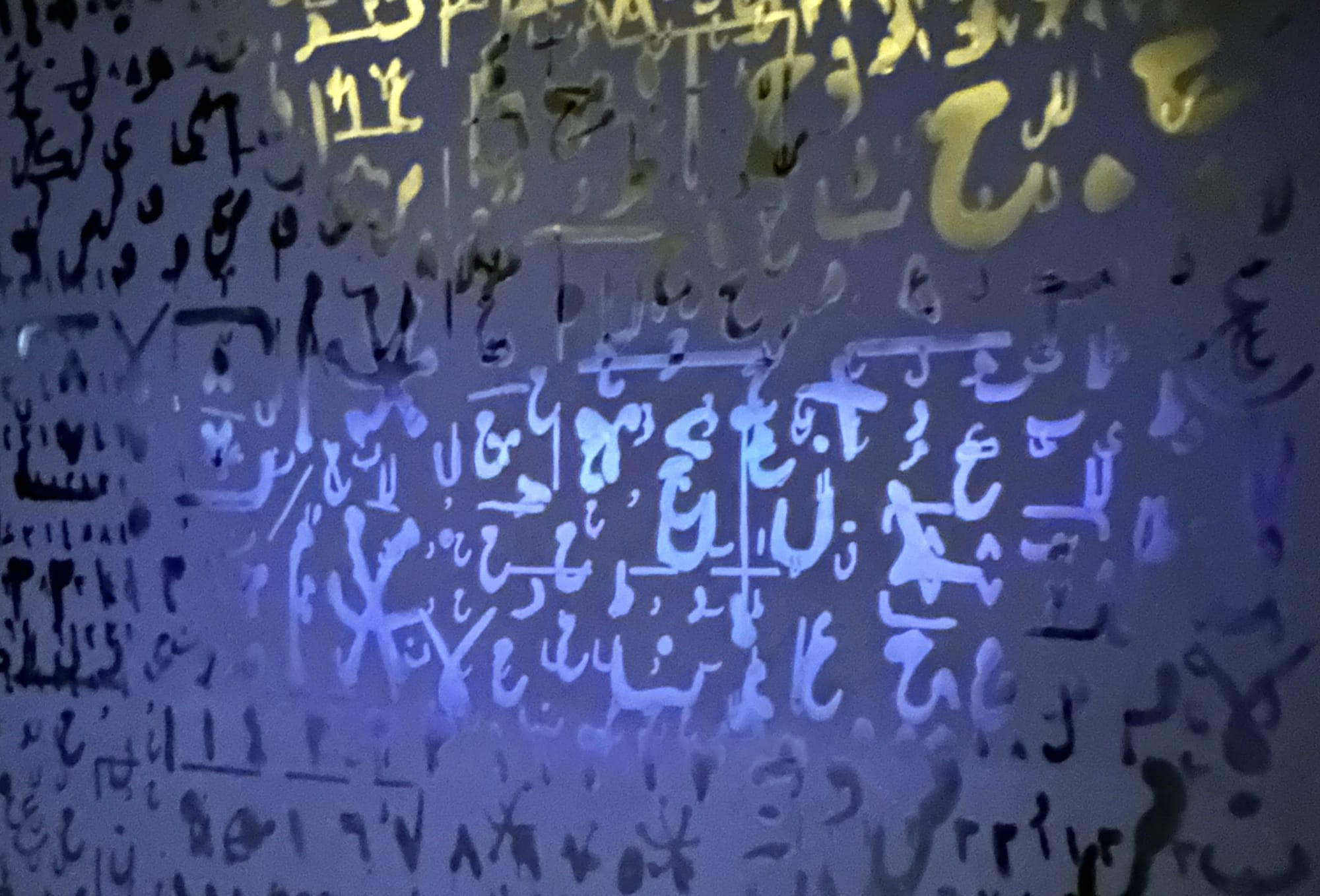
H: This piece, your whole project in fact, seems to really be about thinking about how we operate or exist as subjects.
KS: I am a Lebanese Muslim man whose parents migrated in the late ’70s due to civil war to Australia — a land that's been colonized and settled and hasn't reconciled with its history and its First Nations people. So, there is that lived experience.
But then, the world is in a really difficult moment — not just war and conflict, but also, what does it mean for a collective humanity? Where are we going? As art makers, it would be great if we could contribute to that conversation. I’ve always said that I believe in the fact that the people hold the power. Eventually, we're going to have to sit down and have conversations.
Video of Khaled Sabsabi, “khalil" (2026) in In Minor Keys
H: Your path to the Australia pavilion seemed to be determined by some people’s refusal to have conversations, or wanting to shut down certain discourses or your voice in particular. Did that affect how this all came together?
KS: Regardless of what was happening around the invitation, I've always believed in the work and what it stood for — coming into and reflecting upon our ideals of the self, but also walking away with some possibility and openness and recognition of the other.
“khalil” came to me in a dream. I was at the American Academy in Rome at the time. Maybe it was influenced by Rome's antiquities. Maybe I took that, and then it reignited and became a vision.
Michael [Dagostino, the curator of the Australia pavilion] and I — we've always believed in the power of the work. So, we decided that I needed to make it. I needed a bigger space than my western Sydney studio — large enough to paint a 40-meter [~44 yards] canvas. I reached out to friends and artists in our network, and a friend offered me their studio in Bangkok.
When I finished “khalil” I had another dream — to stay on in Bangkok and make eight more paintings that are an inverse of “khalil.”
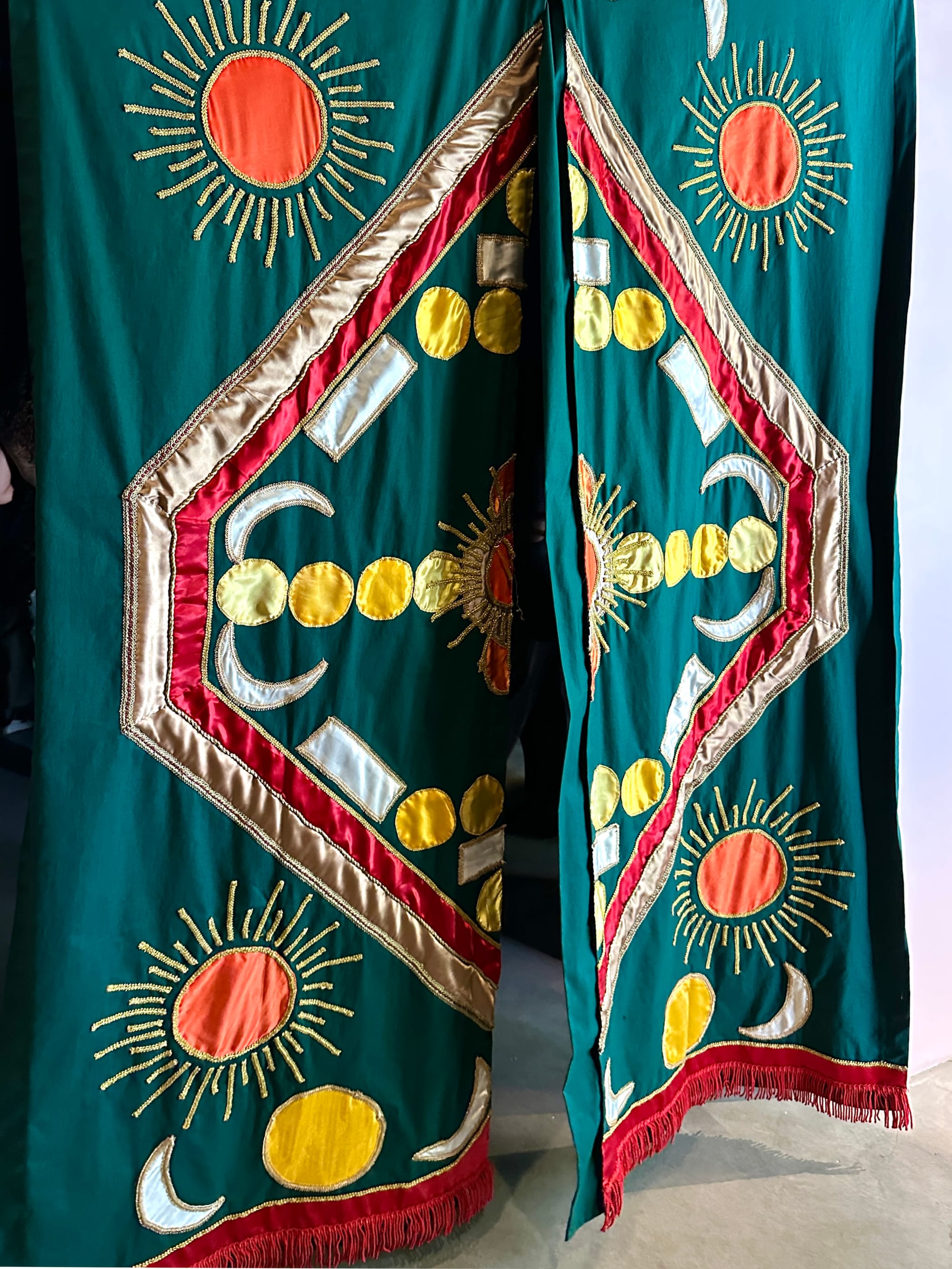
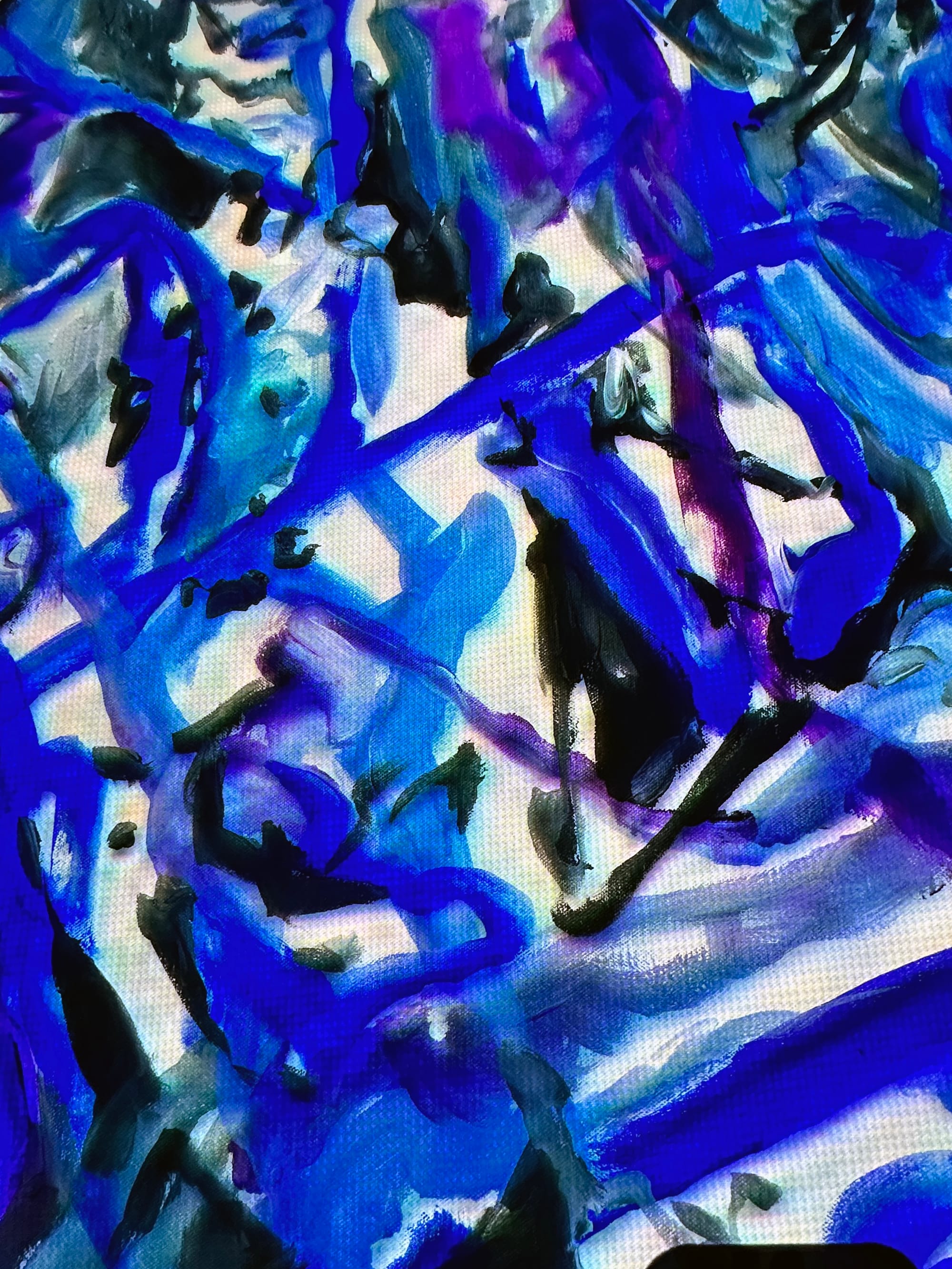
Left: Detail of Khaled Sabsabi, “conference of one’s self” at the Australian pavilion (2026); right: detail of Khaled Sabsabi, “khalil" (2026) in In Minor Keys
H: So, when the Australians came back to you with the reinstatement, you already had these eight paintings in your pocket.
KS: “khalil” was the work that I initially proposed for the pavilion, and now it was going to be in the main exhibition. So with the pavilion, it felt like there was a possibility to really extend the interrogation of outer and the inner, and extend the nuances of longing, geography, distance, living in and out of culture, and so on.
We speak about the duality of being. For a while now, I no longer think within a duality of existence. I think there's a third space, an undefined space. That’s what this work is looking for.
Editor's note 5/28/26 10:34am EDT: A previous version of this article stated that Khaled Sabsabi's “khalil" (2026) is 40 feet (~12m). It is actually 40 meters (~132 feet). The article has been updated.