Kim Gordon Was Never Just the “Girl in the Band”
Best known as co-founder of Sonic Youth, her visual art incorporates humor, intelligence, vulnerability — and, of course, music.

Before music was on her radar, Kim Gordon was a visual artist. The multitalented creator, best known as co-founder of the influential indie rock band Sonic Youth, moved to New York in 1980 to pursue an art career after earning her BFA at Otis College of Art and Design in Los Angeles. Then she started a band, became a rock star, and the rest is history — except Gordon never stopped making art.
Count Your Chickens at Amant surveys Gordon’s work dating back to 2007. Curated by Patricia Margarita Hernández, the exhibition is a glimpse into the concerns and creative processes of someone who has experienced the itinerant lifestyle of a musician, the scrutiny of a woman in the public eye, and the full spectrum of artistic production, ranging from visual art to music to fashion to writing, plus some acting and directing. It has humor, intelligence, and vulnerability — and, of course, guitars. The show’s centerpiece is the video “Jeanetta and Alex” (2026) featuring poet Jeanetta Rich and artist Alex Hubbard playing guitar together. In a walkthrough of the show, Gordon described the instrument as “phallic,” but she explained that the work is less about the cliched sexuality of rock and roll than a meditation on electricity. “We think of electricity as far away from being human,” she said. “So I’m trying to use a guitar to describe electricity in sexual terms.”
The dissonance between the guitar as a conduit for the players’ human chemistry and the stripped-down environment, a white room strewn with power cords and amplifiers, reflects a recurring theme in Gordon’s work: the discrepancy between the romance of stardom and the realities of life. In a sense, Gordon’s whole creative trajectory has subverted mythologies associated with music, art, and celebrity. For decades, she’s been a powerful force in male-dominated arenas — particularly guitar-based music — without abandoning her roots in conceptual and DIY practices and without being reduced to the trope of the “girl in the band.”
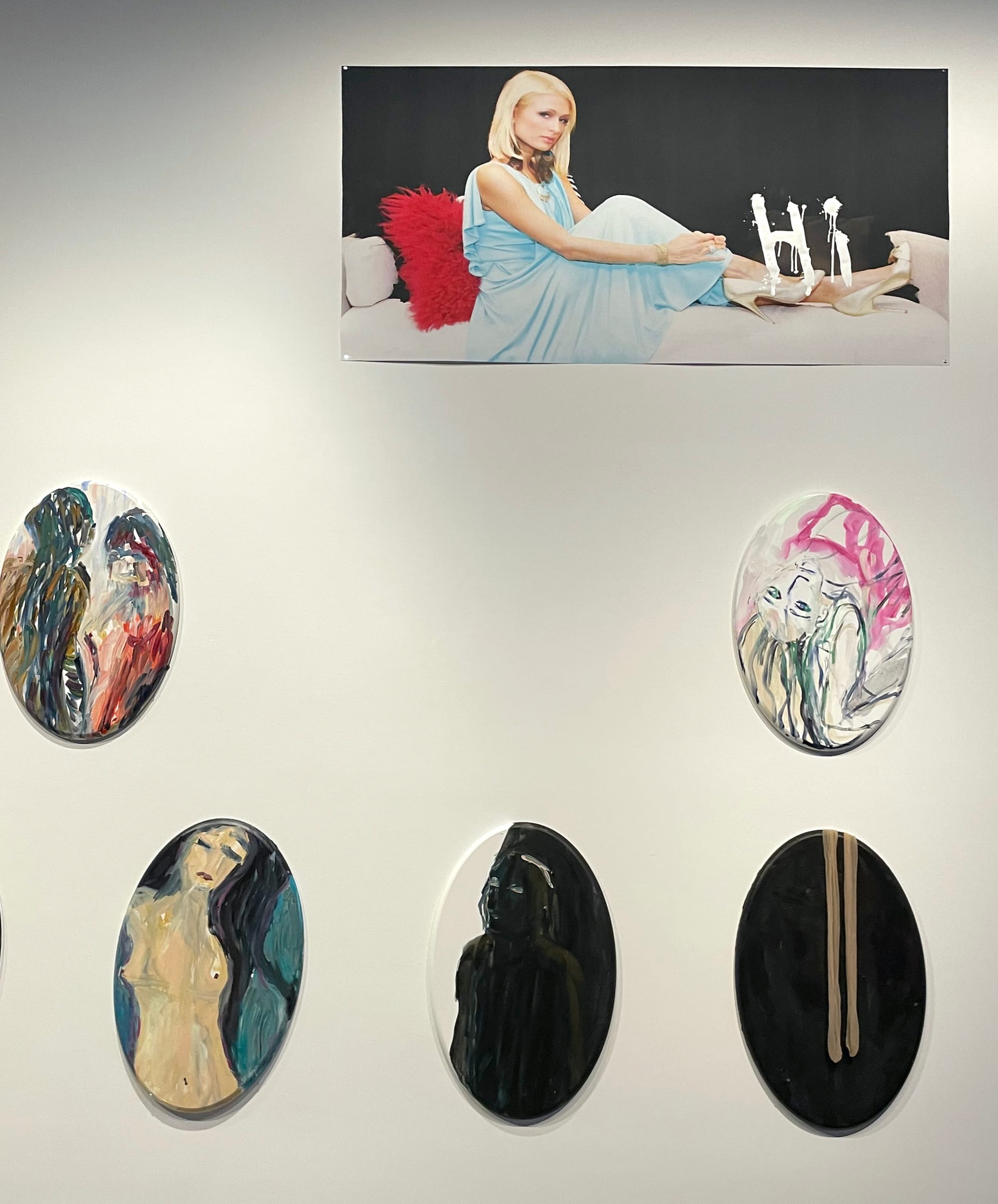
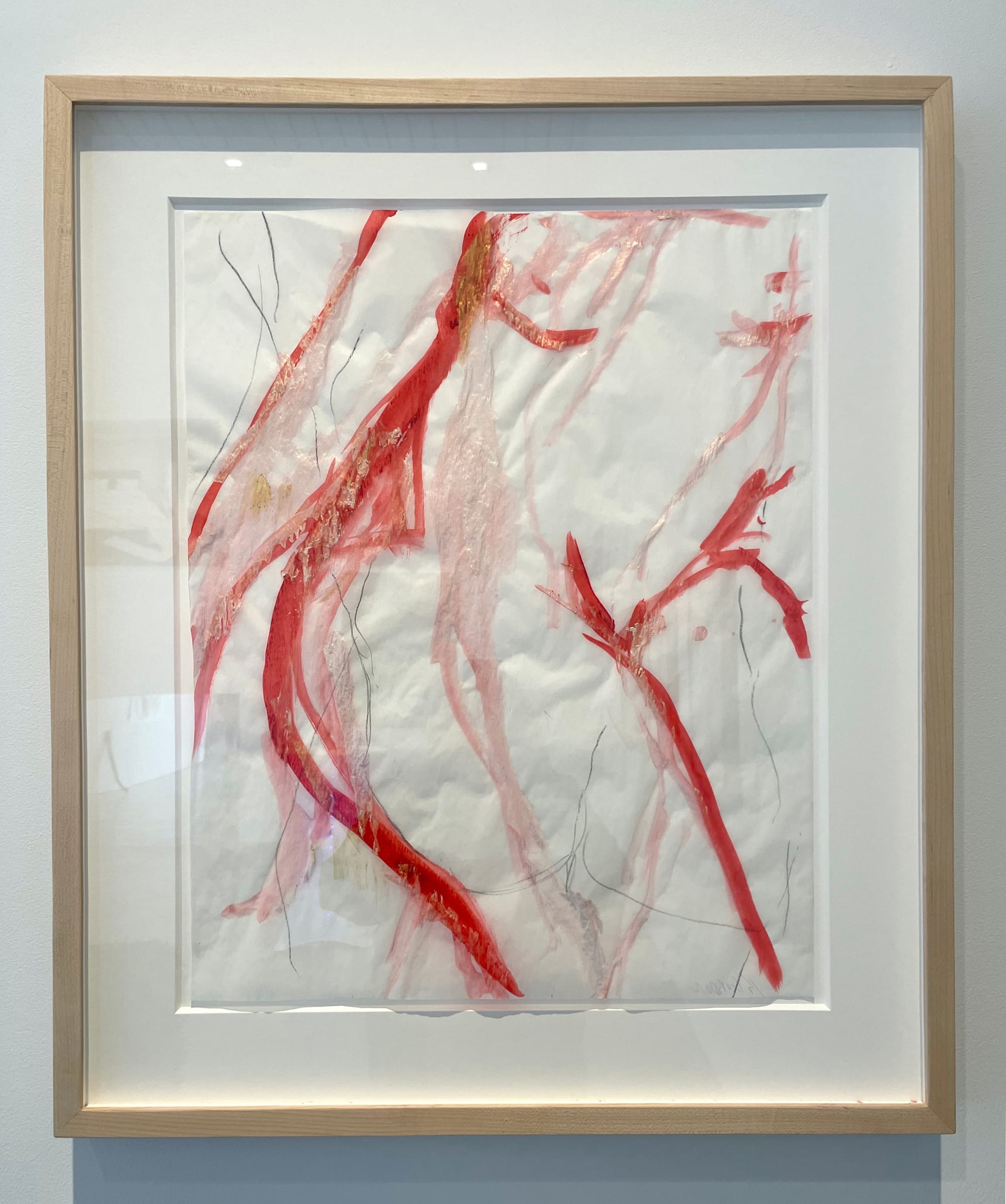
Left: Installation view of Kim Gordon: Count Your Chickens, featuring Kim Gordon's “Paris, Paris” (2025) at the top and paintings by her from 2025 at bottom; right: Kim Gordon, “Airbnb Series 1” (2019), drawing on tracing paper
“Paris, Paris” (2025), an enlarged print of a glamorous Paris Hilton with the word “hi” painted on it, underscores the disconnect between the image and the person. According to Hernández, who spoke to Hyperallergic by email, the word “hi” — which Gordon added during the show’s installation — is a small but meaningful gesture, one that “clarifies Kim’s interest in how images circulate as cultural currency, and how an artwork can reconfigure that circulation through a slight shift in framing and voice.” In the context of the show, the work also suggests a sense of identification and even empathy from one well-known woman to another.
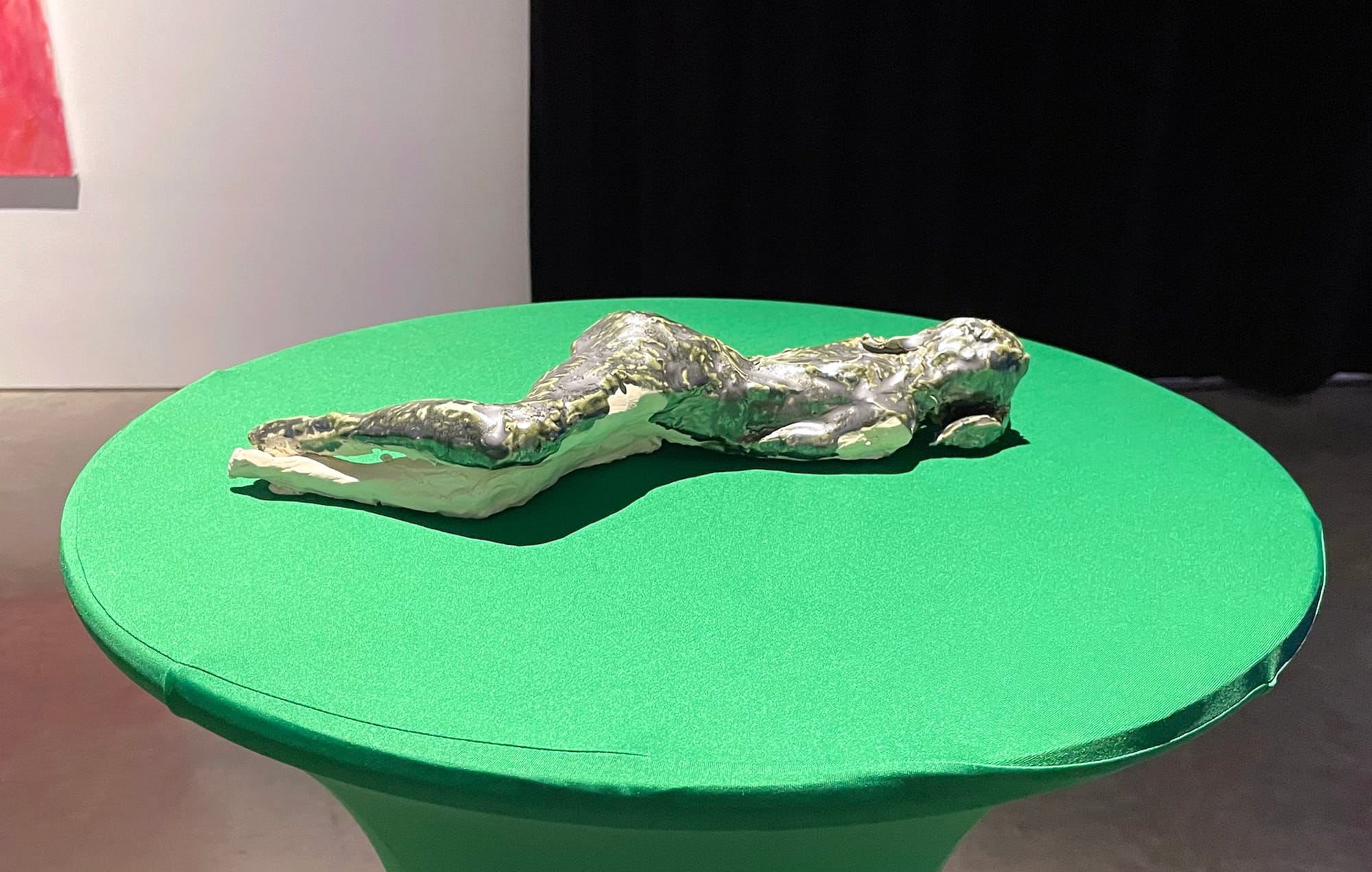
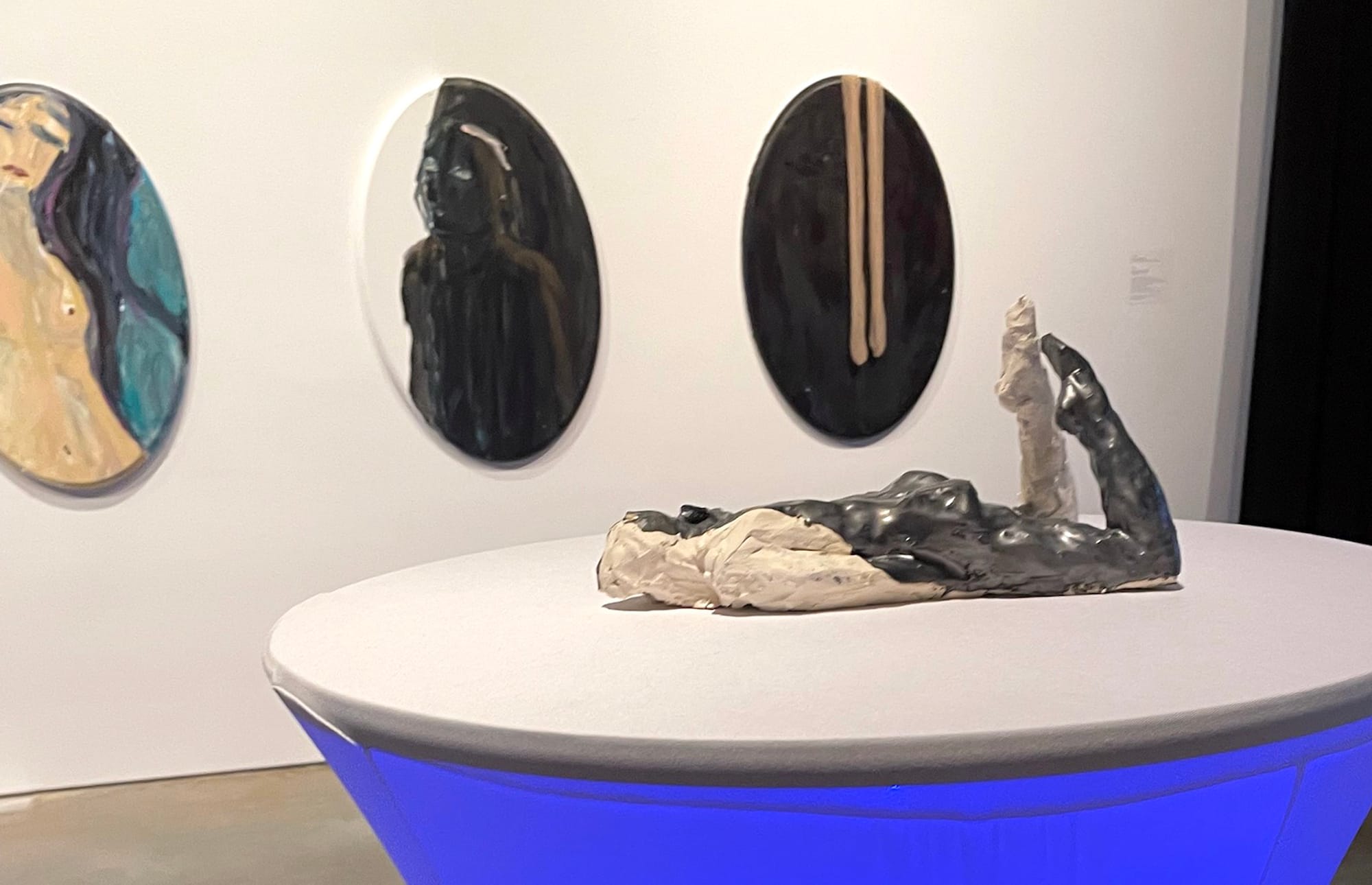
A subtle tension between women as images and individuals carries through much of Count Your Chickens. It’s evident in ceramic feminine figures atop small spandex-covered tables that Gordon likened to cocktail tables at events; portraits of women on oval canvases; and cropped, gestural drawings of nude women, collectively called the Airbnb Series (2019). In the latter, the images and title reiterate the broader public/private dichotomy that informs the survey, positioning the nude figure as a person in a provisional home. It’s a natural topic for an artist who’s traveled the world, occupying hotels, and who was raised in Southern California, ground zero for post-World War II planned communities, or what Gordon described in the walkthrough as “early suburbs designed to manufacture a middle class.” For her Early Suburbs (2023–24) and Track Development Community (2021) series, she painted the names of some such places in black, like graffiti, on decorative fabrics; nearby, fake plastic hedges literalize the plasticity of the sites.
Inkjet prints of hotel rooms in which Gordon has stayed, digitally marked up with the kinds of scribbles that you might make on a hotel notepad, comprise the Proposal for a painting (2022) works. In one (“Proposal for a painting 3,” 2022), Gordon’s hand, holding her phone, is reflected in the mirrored closet doors. Records of suspended time between the home and the stage, these pieces didn’t immediately catch my attention when I entered the gallery, but they lingered in my mind long after.
Accompanying Count Your Chickens is Folded Group, a group exhibition that Gordon co-curated with Bill Nace, her partner in the experimental music duo Body/Head. The show brings together artists whose work bridges imagery and sound, including Nace himself. Though some participants, such as Cameron Jamie and Jutta Koether, are best known for their visual art and others, like John Olson and Nate Young from the seminal Michigan noise band Wolf Eyes, are more familiar as musicians, all are connected through their communities — as Amant’s curatorial assistant Ariana Kalliga stated, “the more one researches these artists, the more connections begin to appear.”
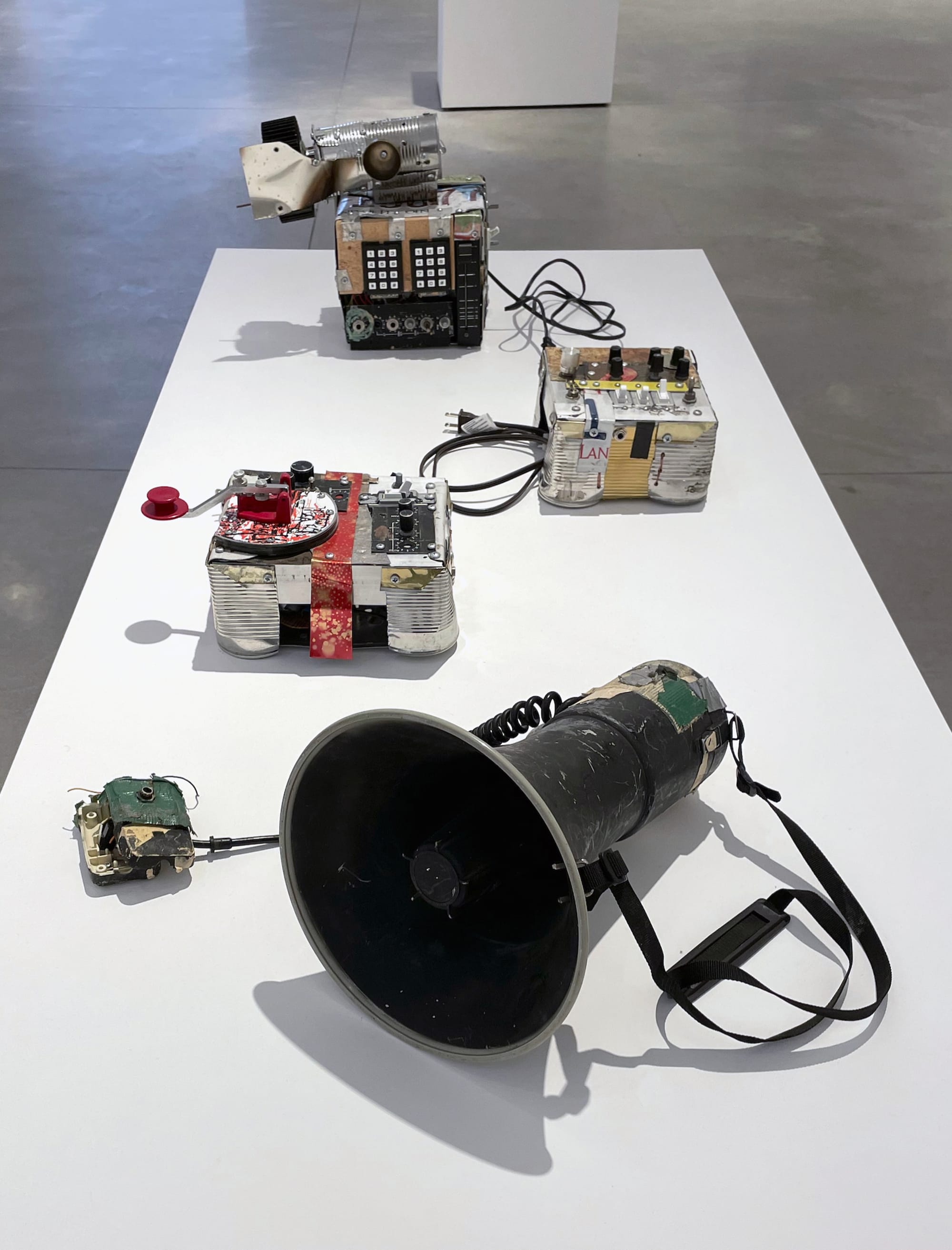
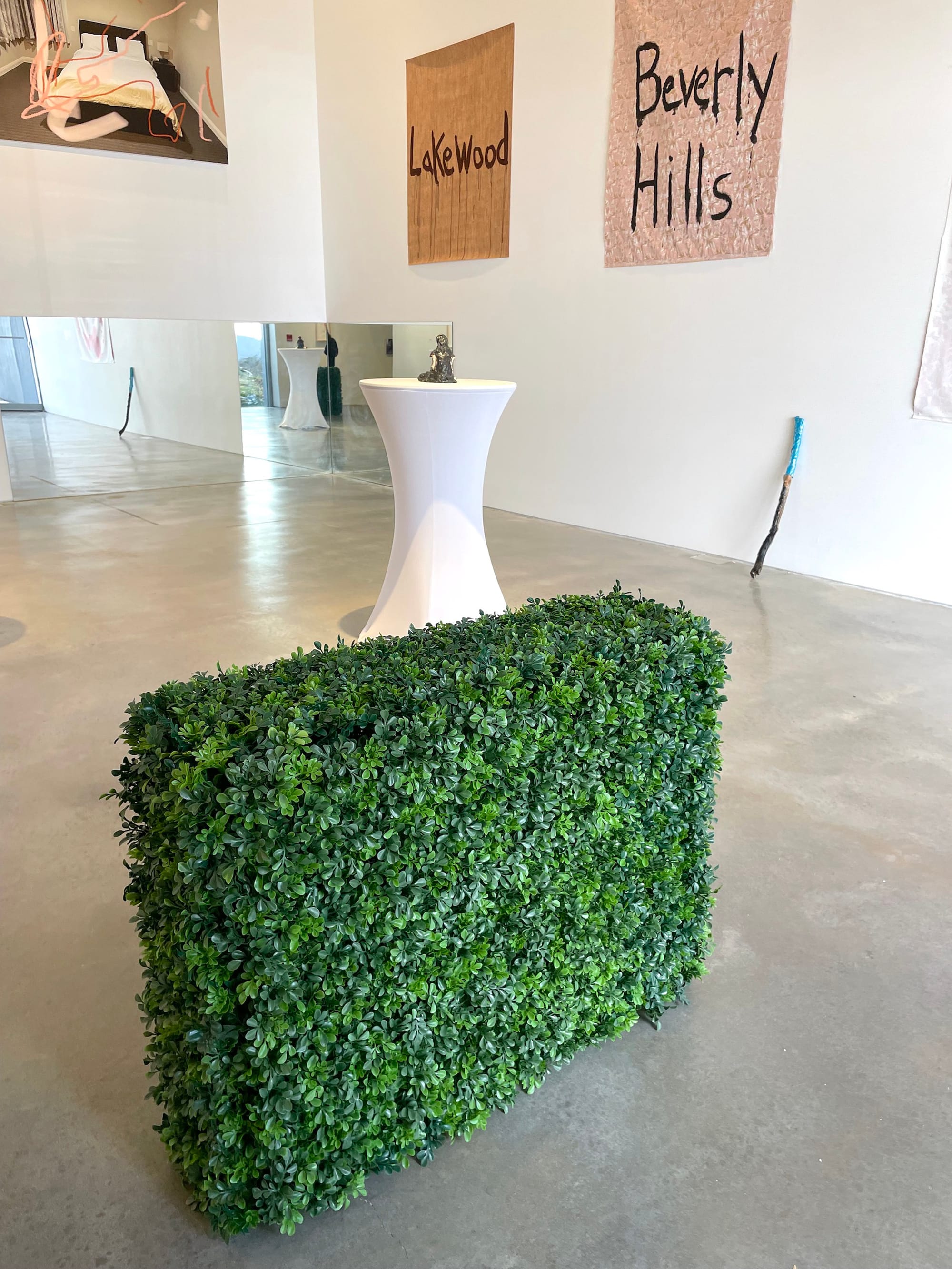
Left: Handmade sculptural instruments by Dan Greenwood in Folded Group; right: Installation view of Kim Gordon: Count Your Chickens
Another commonality, Nace noted by email, is that their “visual art [exists] in the context of the releases, the fliers, shirts that are part of a music practice.” He added, “Someone like John Olson, his fliers and album art are a very recognizable part of the ‘noise scene,’ but you can see in the paintings, without the size/text constrictions, they grow to become a bit of their own thing.”
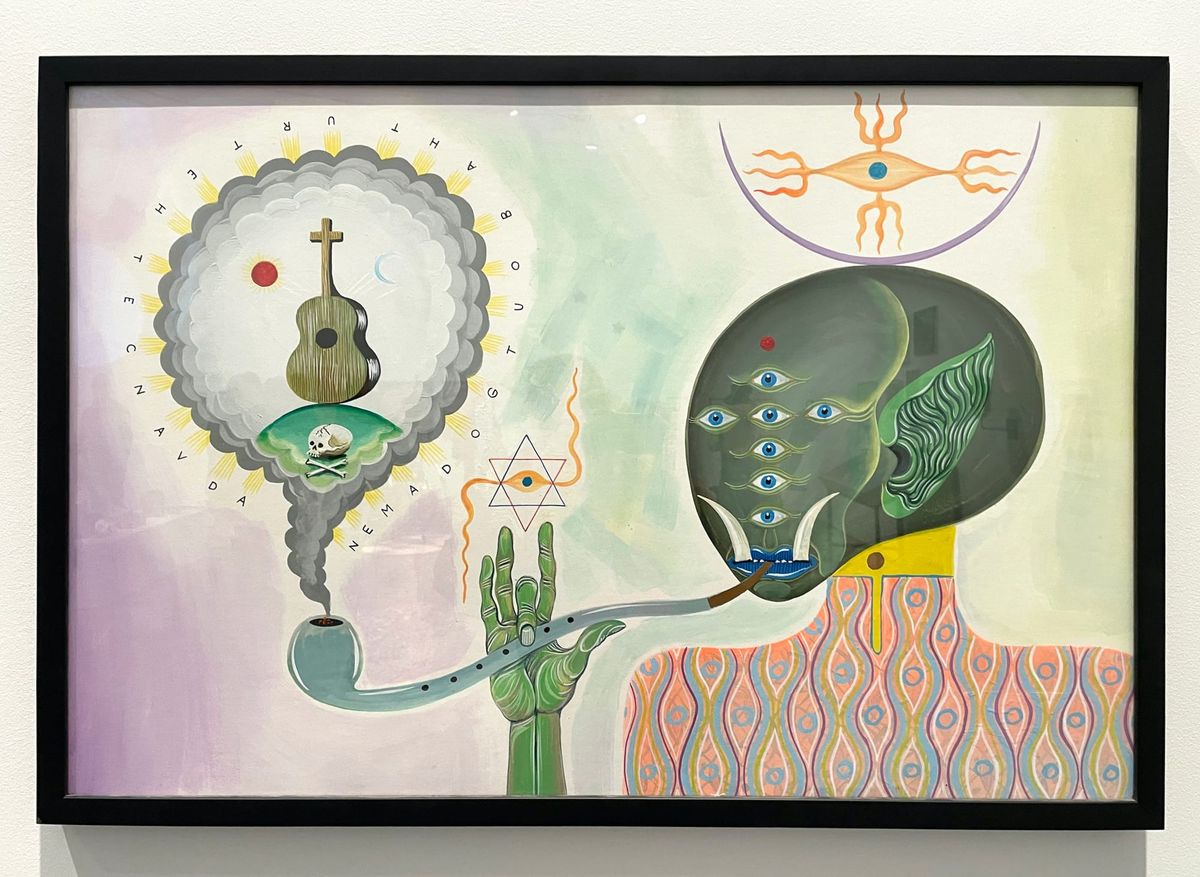
Young’s lathe-cut records are in a vitrine below psychedelic paintings by Olson. A biomorphic abstraction by Twig Harper, found-object sculptural instruments by Dan Greenwood, a chandelier crashed onto a wood pedestal by Lizzi Bougatsos, and other works that represent intersecting sound/art scenes are nearby. Drawings from Nace’s Beasts of Belmont series (2025) seem to dialogue with dreamlike images by Dennis Tyfus and a cryptic painting of an alien creature by Daniel Higgs (“Advance the Truth about God,” 2010). “I think the nature of the show is that it keeps branching off into different directions but also kind of loops back into all of these concentric circles,” Nace said. Gordon also has a piece in Folded Group (“Twitter Painting,” 2012/13). It places her among peers and collaborators who privilege creative exploration over fame, in a sonic and visual world that she can call home.
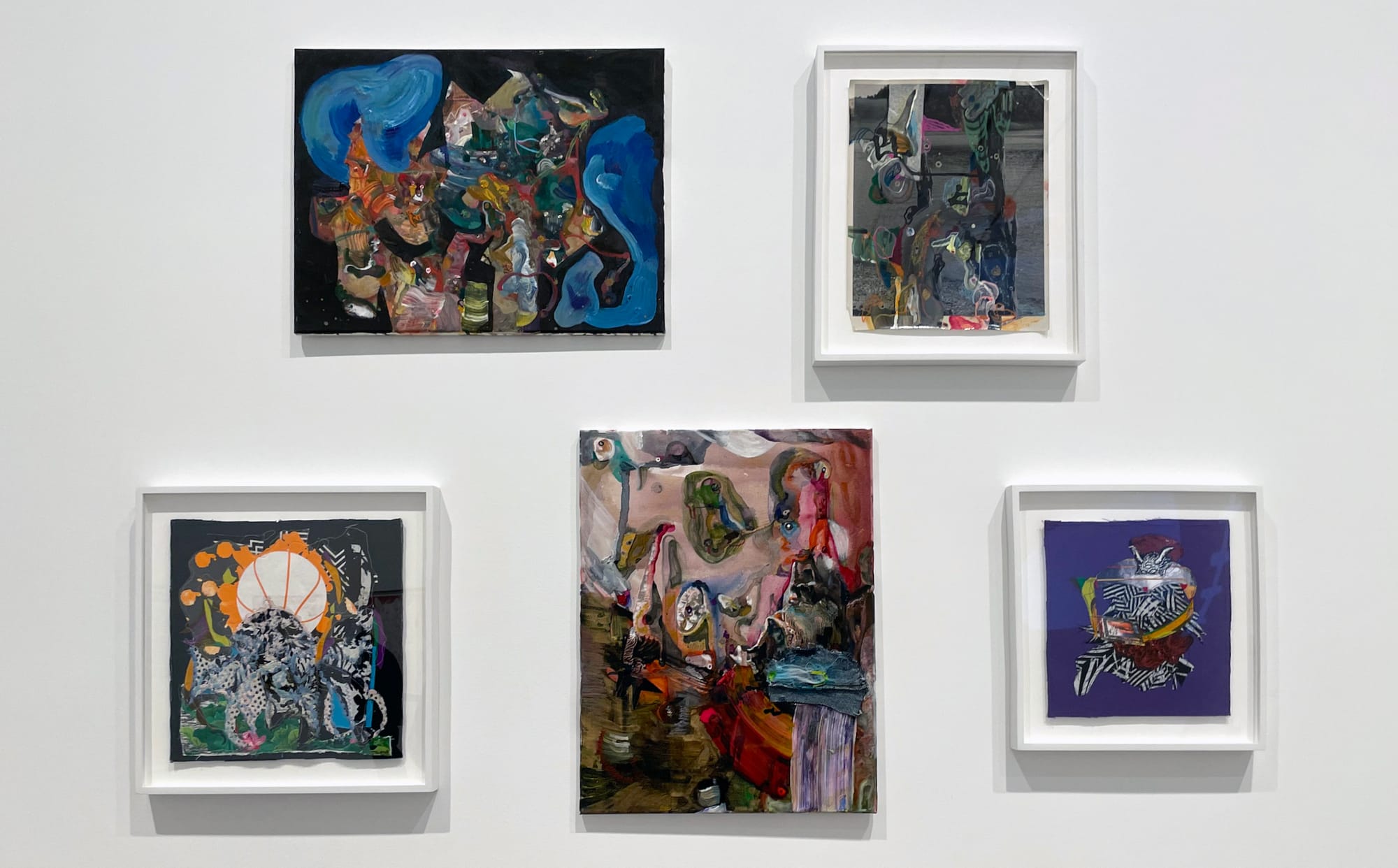
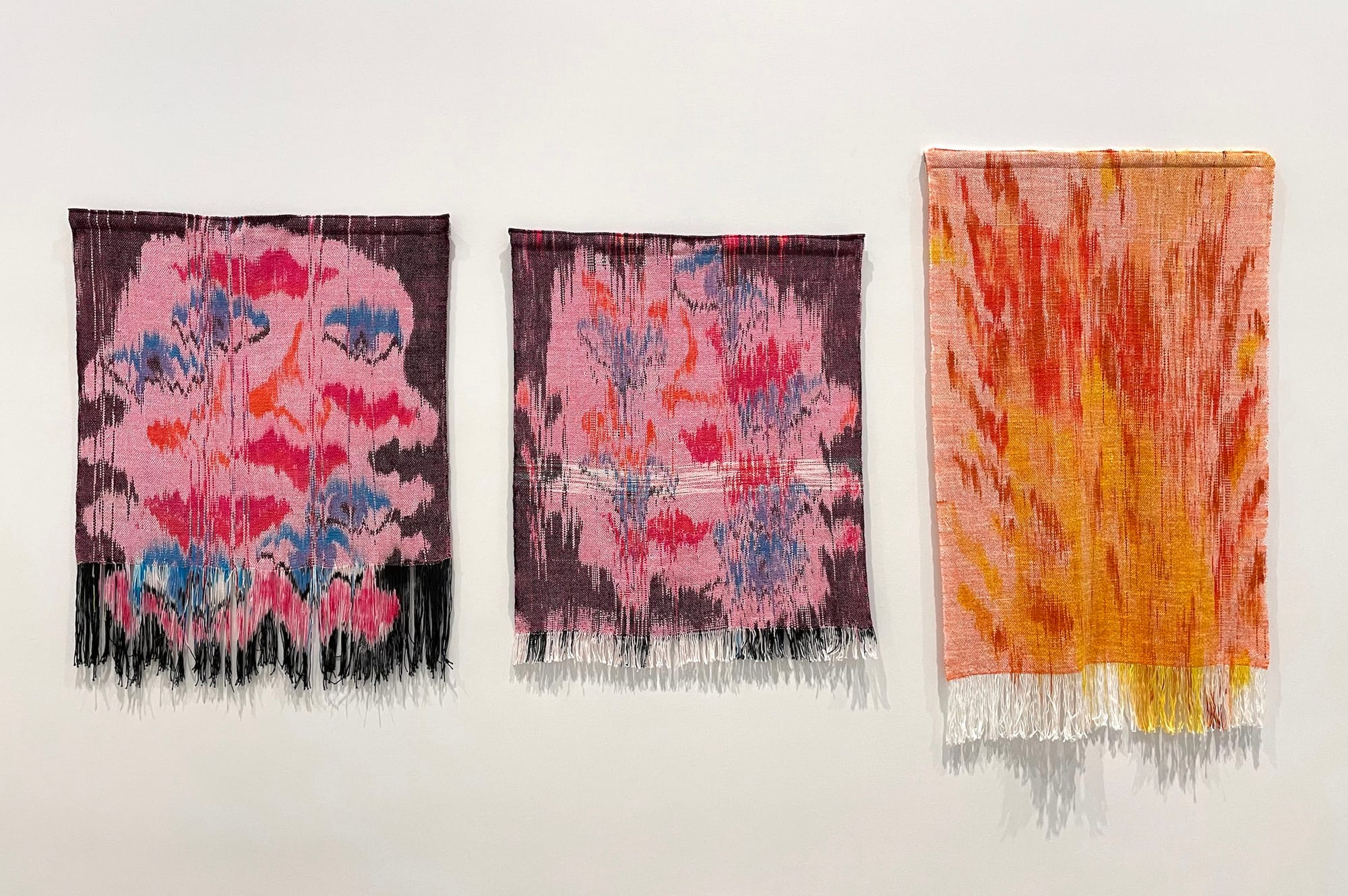
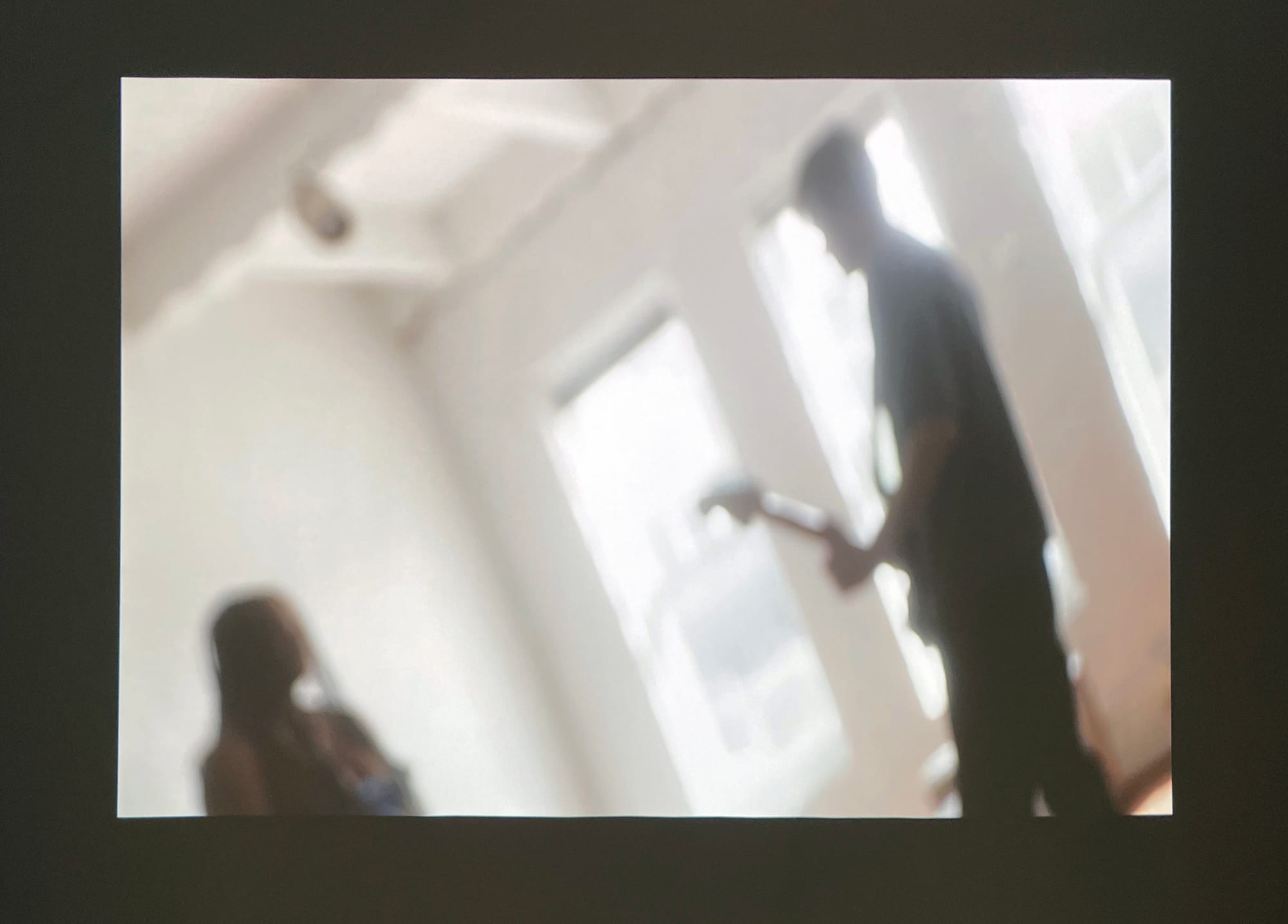
Kim Gordon: Count Your Chickens continues at Amant (315 Maujer Street, East Williamsburg, Brooklyn) through August 16. The exhibition was curated by Patricia Margarita Hernández.
Folded Group continues at Amant through May 17. The exhibition was curated by Kim Gordon and Bill Nace with Ariana Kalliga.