LA’s Art Scene Is Not a New York Outpost
Artist-run spaces represent the heart of Los Angeles’s art scene, yet most people still see the city’s identity as tied to the market — one that’s increasingly influenced by the East Coast.

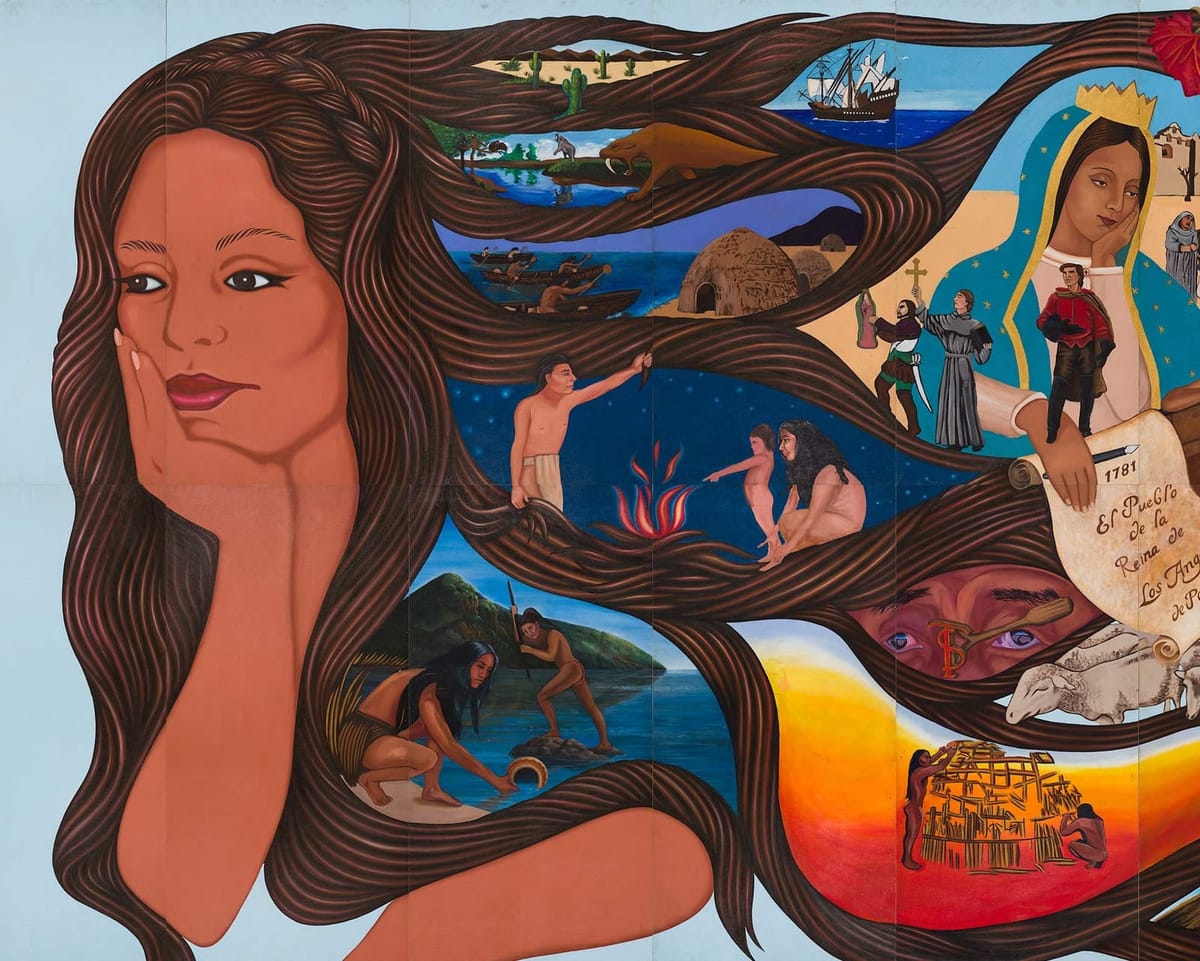
LOS ANGELES — To me, the Los Angeles art scene has always felt like a shapeshifter. Since I moved here nearly 15 years ago, the creative centers have hopped from one neighborhood to another, chased out of their dens by the developments, price gouging, and rezoning that come with gentrification. Artists have relocated their studios from Skid Row to Chinatown to West Adama, following the rental market. Galleries have moved from Culver City to the Arts District and then to the edge of Koreatown, which they’ve renamed “Melrose Hill.”
People who have lived in Los Angeles longer than I have scoff at the way I chart the scene’s migration. They say I should have been here in the ’60s, when studios flourished in dilapidated Venice warehouses and contemporary art was defined by the exhibitions mounted at Ferus Gallery on La Cienega Boulevard. In the ’70s and ’80s, artists left the beach for downtown, which led to the area being called the Arts District. The ’90s featured another swing back to the west side, with Bergamot Station, nestled in Santa Monica, turning into a hub for galleries and studios.
Despite all these geographical shifts, Los Angeles has always been a community driven by artists who prioritized an irreverent, scrappy, DIY ethos that countered the glitzy reputation of New York City. The game-changing curatorial vision at Ferus Gallery was influenced by co-founder Ed Kienholz, who, coming from the Beat Generation, insisted on bringing film, poetry, and performance to the venue during his short time there. The Woman’s Building, founded by Judy Chicago, Sheila Levrant de Bretteville, and Arlene Raven, brought feminist art to life in Downtown LA at a time when women’s rights were still dismissed. Near Pico-Robertson, MFA buddies Robert Miller and Martin Durazo founded Miller Durazo Contemporary Artists Projects to give young artists a chance to break into the opaque commercial market. In the present-day scene that I know, some of the most exciting work is brewing at artist-run venues like Leroy’s, Coaxial, and Monte Vista Projects, which would rather give artists an opportunity to test-run conceptual installations and workshop performances than dominate the market.
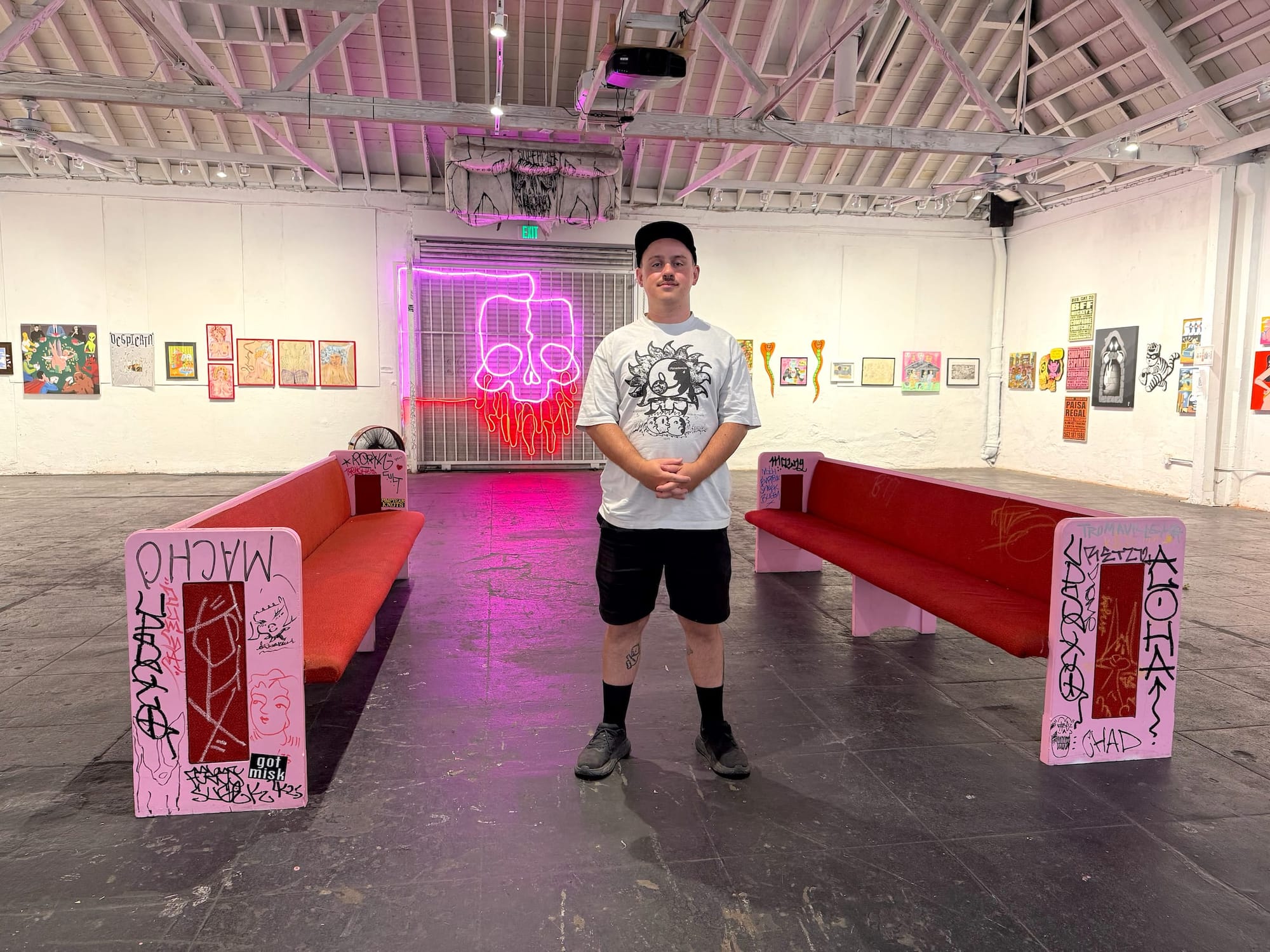
This attitude has long made the city’s art scene feel approachable, even to people who may not have a formal arts education. I first moved to Los Angeles to work in the entertainment industry, and after three miserable years being underpaid and exploited, I was welcomed into Mark Allen’s avant-garde project space, Machine Project, which ran from 2003 to 2018. After my 12-hour shifts at a visual effects studio, I’d head to the Machine Project storefront in Echo Park to coordinate volunteers for a haunted bodega, tell people to watch their step on a dizzying, ping pong table inspired by op art, and administer a takeover of Downtown’s Central Library. That experience showed me that art had possibilities beyond the white cube, and changed my career trajectory.
Machine Project’s success proved that an ecosystem of artists who thrived without gallery representation or a commercial audience was possible. Though nothing has quite filled its void, a new crop of artist-run spaces has attempted to emulate Machine’s gonzo approach to curation. Chinatown’s Plot; Altadena’s Trade School, where I run zine workshops about labor and pain; and the nomadic lecture series Place Settings have all offered artists low-risk opportunities to test out new concepts, like personal cartography, ecological schools, and performance lectures.
These types of spaces represent the heart of Los Angeles’s art scene, yet most people still see the city’s identity as tied to the commercial art market — one that’s increasingly influenced by the East Coast. In 2015, Hauser & Wirth made a splashy debut in the Arts District, which marked the beginning of a trend that saw New York’s galleries expand west. In 2019, Frieze art fair came to town, a seal of approval from the New York market that opened the floodgates for these moves. Blue-chip powerhouses like David Zwirner, Lisson, and Tanya Bonakdar came to the West Coast in recent years, though Bonakdar closed in August. These galleries indicated that there was real money to be made in Los Angeles, that the artists were growing up and getting serious. As New York moves in, Los Angeles stalwarts have packed up. Last year, L.A. Louvre ended a 50-year run when it closed its doors and shifted into a consultancy, and Blum (once Blum & Poe) abruptly shuttered its doors right after celebrating its 30th year.
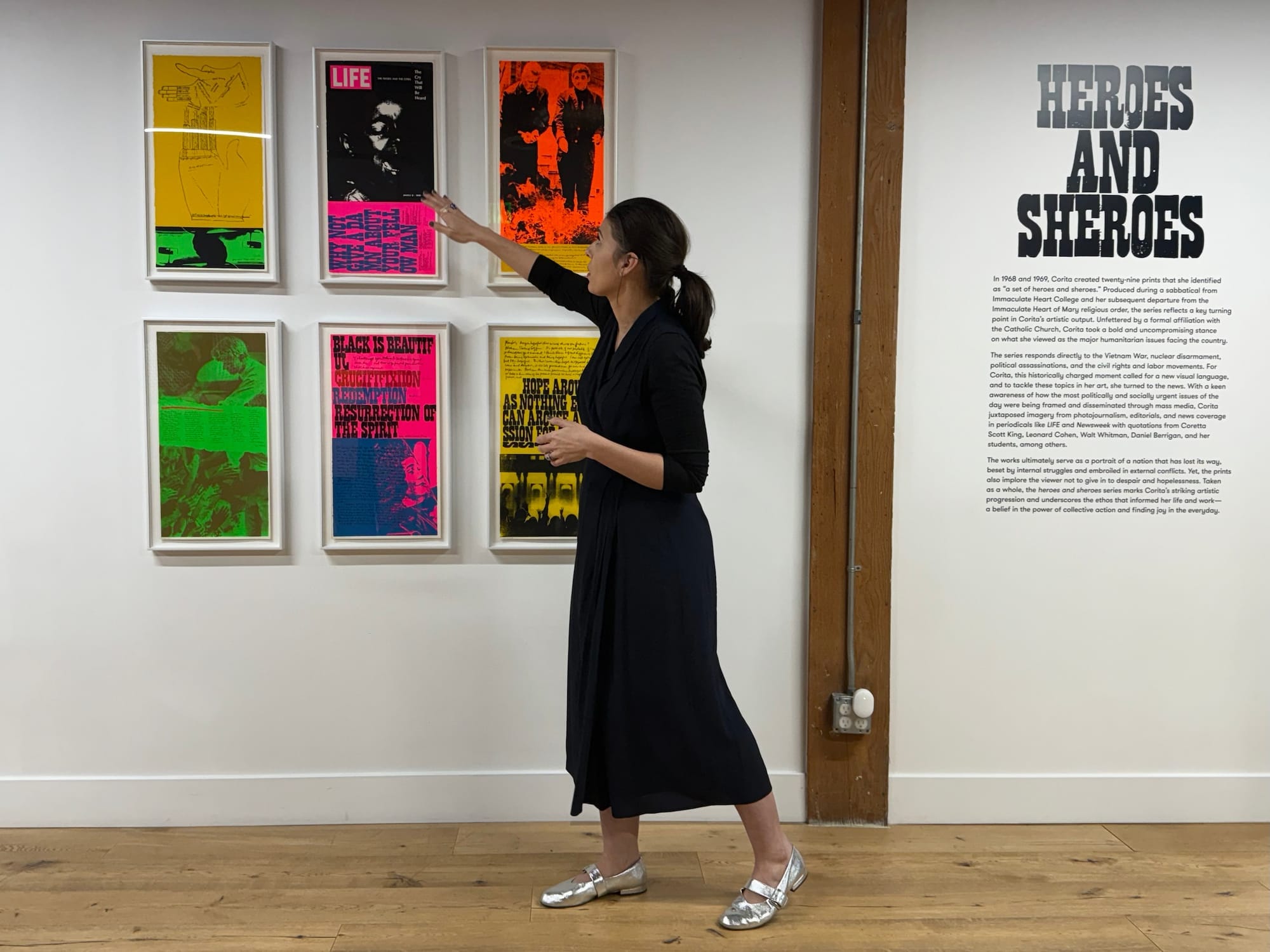
Now that the New Yorkers have been here for a number of years, conversations have shifted to their galleries’ exhibitions, openings, and closings. In news, criticism, and gossip, the impact of the artist-run spaces is almost entirely ignored. When I tap through the Instagram stories from anonymous art critic Diva Corp, I find myself peering through a bizarro lens whose myopic view of the city bears little resemblance to the local art scene I’ve been writing about for years.
One thing we agree upon, however, was that this year’s iteration of Made in L.A. at the Hammer Museum was underwhelming and felt ideologically empty due to its themelessness. What also bothered me, however, is that for a show that supposedly represents the strongest voices in the city, it felt coldly institutional, buttoned up, and devoid of artist-driven, anti-market attitudes. This may be because most of the selected artists are market darlings. Of the Made in L.A. artists who have representation, their dealers’ footprints are larger in New York City than in Los Angeles. Just because a gallery goes bicoastal doesn’t automatically mean it has a deep connection to its adopted city. This edition proved to me that Los Angeles’s identity has been transformed by the New York galleries that have moved here and made it their second home.
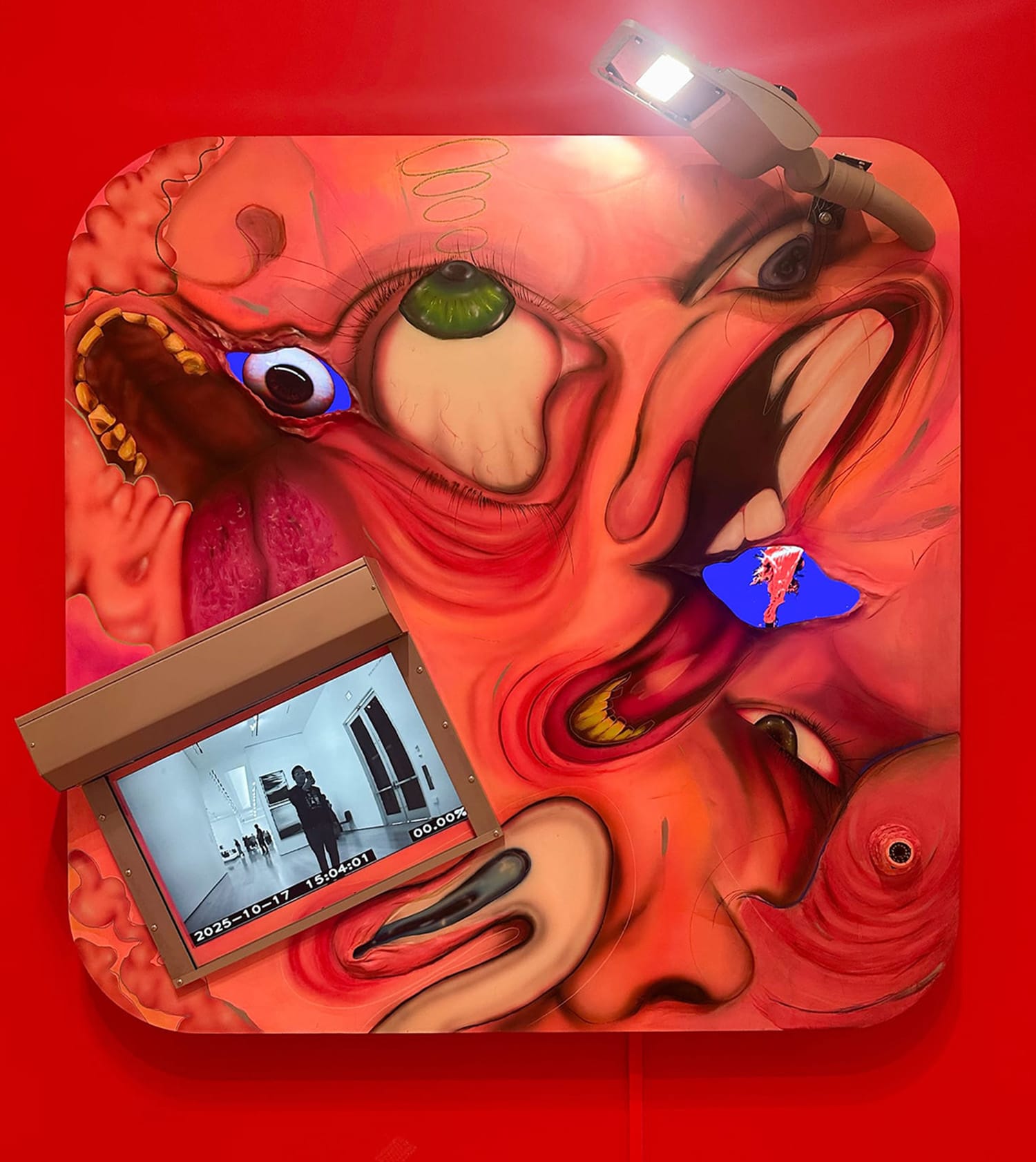
There are a few on the Made in L.A. roster who are rooted in artist-run spaces, but the sanitized presentation of their work obscures those associations. Peter Tomka’s fuzzy, home-brewed, black-and-white photographs, for example, look quiet and reserved, spaced out against the Hammer’s stark white wall. They don’t carry the rugged charm of the pieces shown in Tomka’s curatorial project, No Moon LA, which showcases experimental photographers on dark, starless nights at various venues with patchy concrete floors and drop-tile ceilings.
While some East Coast dealers, withering under slow sales, have already fled — Harper’s and Sean Kelly closed their West Coast operations within five years — it’s the artists who commit to this city’s longevity and build the reputation that others seek to profit from. Founded in 2021, No Moon LA changed venues four times in four years. For the last two years, rather than mounting exhibitions, the space has gathered actors to perform sets of soliloquies at O-Town House in the charming Granada Buildings complex, which houses a slew of other arts nonprofits and small galleries. That determination to exist, to transmute in form and function rather than fold, is the hallmark of Los Angeles’s creative class.