Lebanese Artist Accuses Israel of War Crime for Strike That Killed His Parents
“We have to break this cycle of impunity," Ali Cherri, who filed a complaint against Israel in France’s War Crimes Unit, told Hyperallergic.

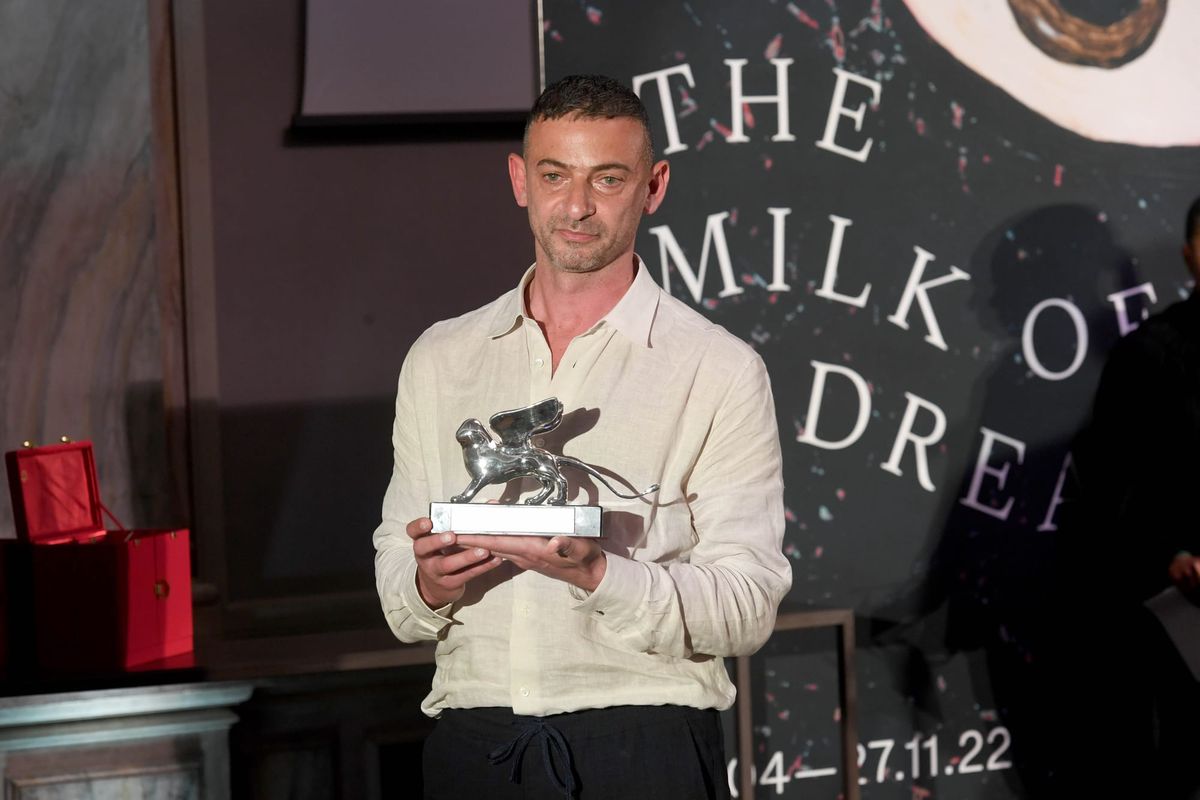
Paris-based Lebanese filmmaker and artist Ali Cherri has formally accused the Israeli military of committing a war crime for a bombing that killed his parents inside their Beirut apartment in 2024.
In the hours before a ceasefire between Hezbollah and Israel was set to take effect on November 26, 2024, Cherri’s parents, Mahmoud Naim Cherri and Nadira Hayek, were killed by an Israeli bomb that struck their 12-story residential building. The strike also killed the couple’s employee, Birki Negesa, and at least four others.
Cherri, represented by the International Federation for Human Rights (FIDH), filed a war crimes complaint against the attack’s perpetrators in France’s War Crimes Unit yesterday, April 2.
In his complaint, which the FIDH declined to share with Hyperallergic for confidentiality reasons, Cherri and FIDH accused unnamed individuals of the “war crime of intentionally directing an attack against a civilian object.” Under French law, this accusation carries a 15-year prison sentence.
France has the authority to investigate the bombing of the apartment because Cherri is a dual citizen of France and Lebanon and owns the apartment building, FIDH said. The court does not have authority to directly prosecute the killing of Cherri’s parents, however.
“What I hope from this procedure is that the truth is established, that this crime is named for what it is, and that those responsible are held accountable,” Cherri told Hyperallergic in an email. “We have to break this cycle of impunity.”
In an analysis produced for the complaint, the London research agency Forensic Architecture found that two GBU-39 munitions, weapons engineered for precise targeting, were responsible for the strike. The weapon is manufactured in the United States and frequently used by Israel and other allies, Forensic Architecture noted in its 36-page report.
Amnesty International also published an investigation in February. It found no evidence of a legitimate military target near the site of the bombing, and noted that no evacuation orders were issued in the area at that time.
According to Amnesty International, Mahmoud Naim Cherri’s brother represented Hezbollah in parliament, but did not live in the building. Cherri, a mini-market owner, and his brother Emad, who was also injured in the attack, had no noted affiliations with the organization.
Asked which avenues of justice he considered after the killing of his parents, Ali said legal action in France, as opposed to Lebanon, where the government has refused to join the International Criminal Court (ICC), made the most sense.
“I don’t really see what other avenues for justice there are beyond filing a complaint in a country where I live, France, and whose nationality I hold,” Cherri told Hyperallergic. “It seems like the most logical and legitimate step any victim would take.”
Maxime Illuzzi Duriez, a spokesperson for FIDH, said in an email that the organization hopes the complaint will prompt a judicial investigation that would identify the military and political perpetrators of the strike, so that the court could eventually issue arrest warrants.
“These procedures are particularly lengthy and complex and take several years,” Duriez said. “We will be accompanying Ali Cherri throughout this whole process.”
France’s War Crimes Unit, established in 2012, has previously issued arrest warrants for former Syrian dictator Bashar al-Assad and his associates for crimes perpetrated against French citizens. The court has also reviewed crimes tied to the Liberian civil war and the Rwandan genocide.
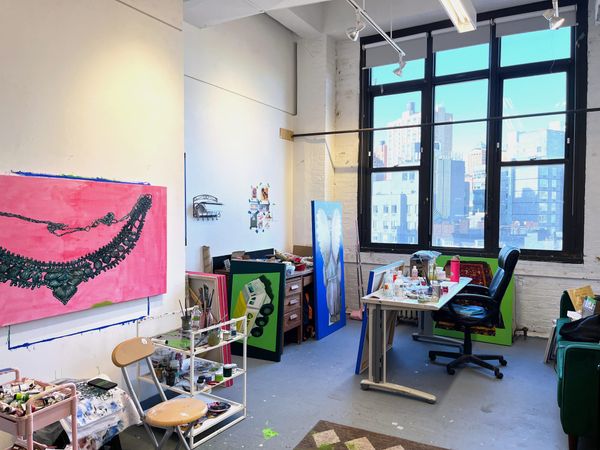
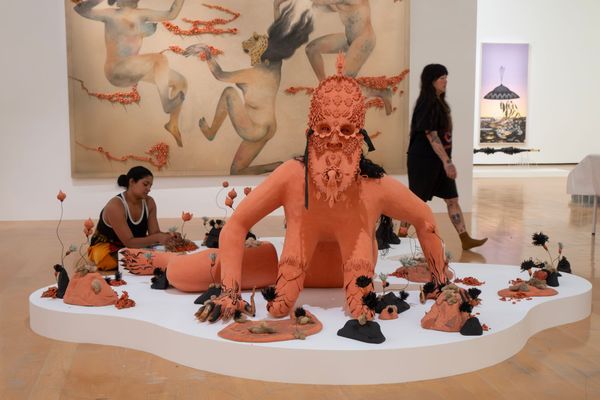
Cherri’s films, sculpture, and two-dimensional artworks frequently examine the visceral impacts of political violence on the body. His works are held in the collections of major institutions around the world, including the Guggenheim Museum, the Museum of Modern Art, and the Centre Pompidou.
“We are calling for an investigation to be opened, to establish the facts and understand what happened, not only for me and my family, but for all the other victims,” Cherri told Hyperallergic.
“If this process can help prevent other families from going through the same loss, then it must be pursued,” he said.