Lisa Sanditz’s Seismic Sublime
Her environmental paintings ask: What can we do to change our destiny? What effect can we have on the place we inhabit?


Place has always been central to Lisa Sanditz’s paintings and drawings. In the winter of 2006–7, she went to China specifically to paint the rapid growth of single-industry cities, which sustained themselves by producing and exporting items such as Christmas ornaments to Western consumers. A longtime resident of the Hudson Valley, she was aware that this part of New York State, once populated by single-industry cities, such as Tannersville and Gloversville, had become post-industrial outposts for those seeking to live within hailing distance of the expensive bustle of New York City’s five boroughs. The production of inexpensive consumer goods had left America for Asia, with its cheap labor and willingness to invest in new factories.
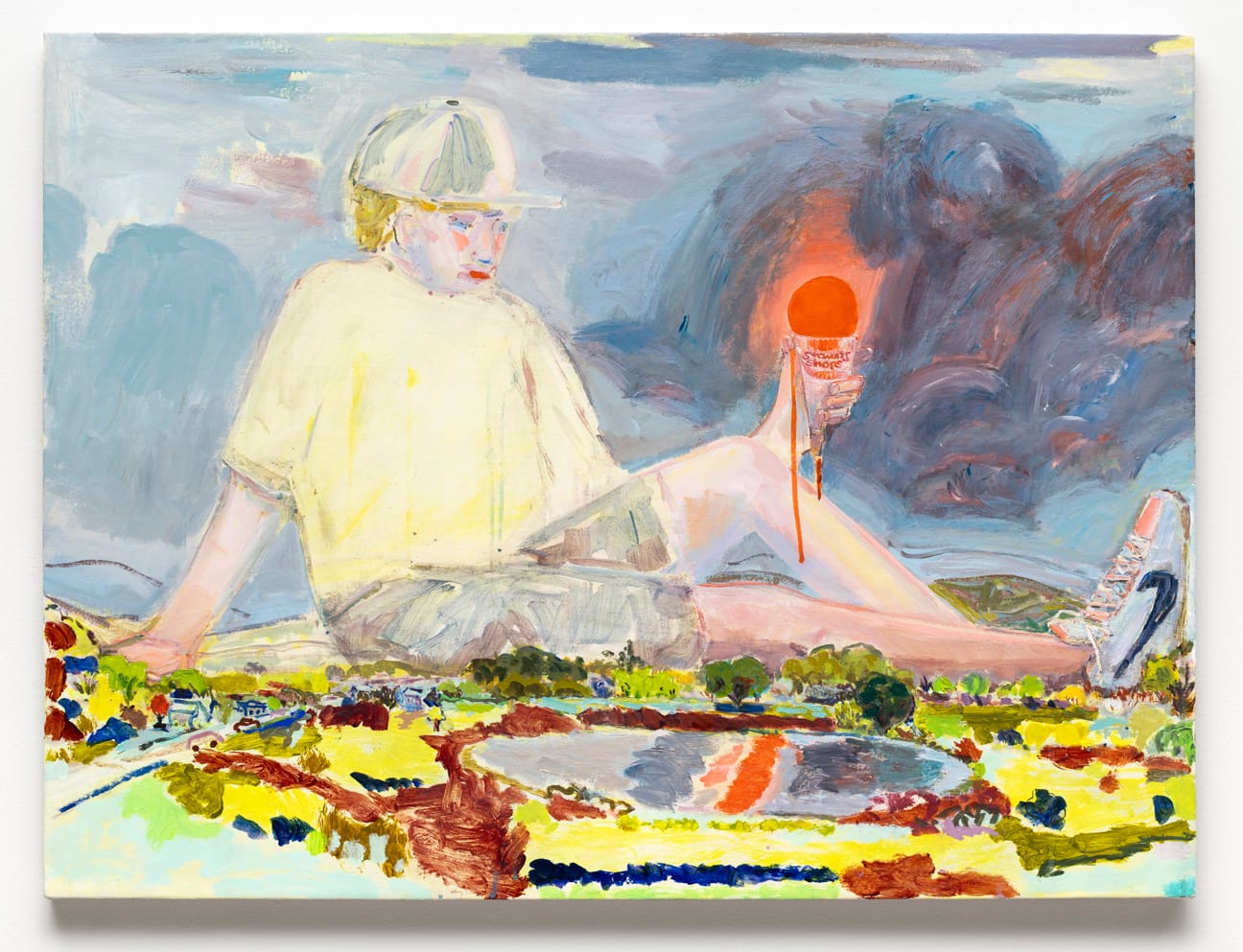
In her current exhibition, Missing Mountain, at Alexandre Gallery — her first in New York in more than a decade — Sanditz continues to pursue her understanding of the relationship between human intervention and the landscape, paying particular attention to fitting together different pictorial languages. This postmodern approach to landscape sets her apart from her modernist forebears, from Marsden Hartley to Alex Katz, as well as implicitly acknowledges the destructive effects of climate change and greedy, unthinking human intervention. And yet, despite this awareness, Sanditz never devolves into proselytizing. Despite the gravitas of her subject matter (the degraded landscape), her pursuit is inspired by her painterly desire to celebrate beauty and what acrylic paint, and its expansive range of artificial colors, can do. Observation, memory, and imagination are inseparable components of her thinking and doing.