Making a Mess With CFGNY
We spoke to the fashion collective, who will be in the Whitney Biennial and shows at Pioneer Works and Amant, about collectivity and taking chances.
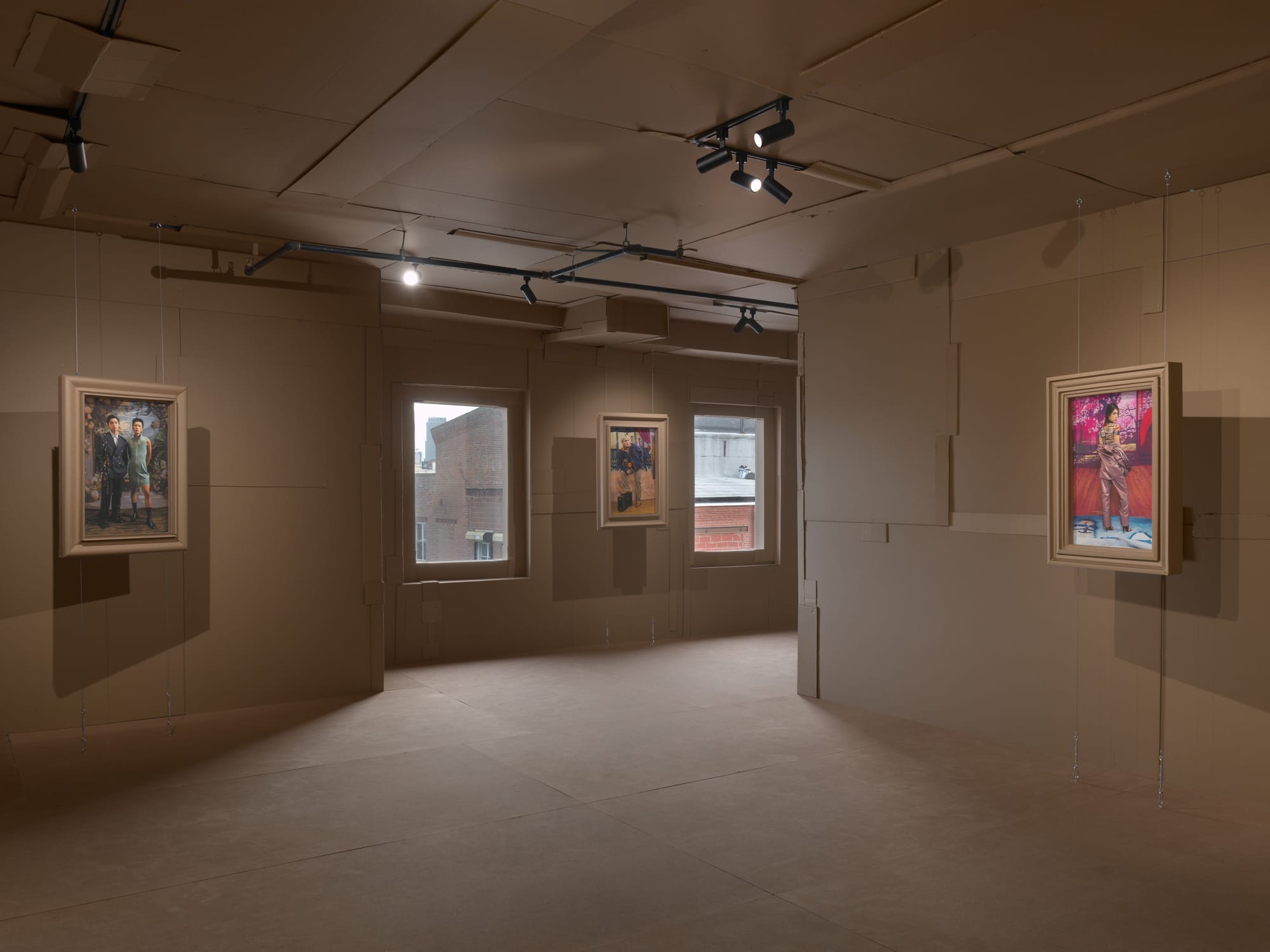
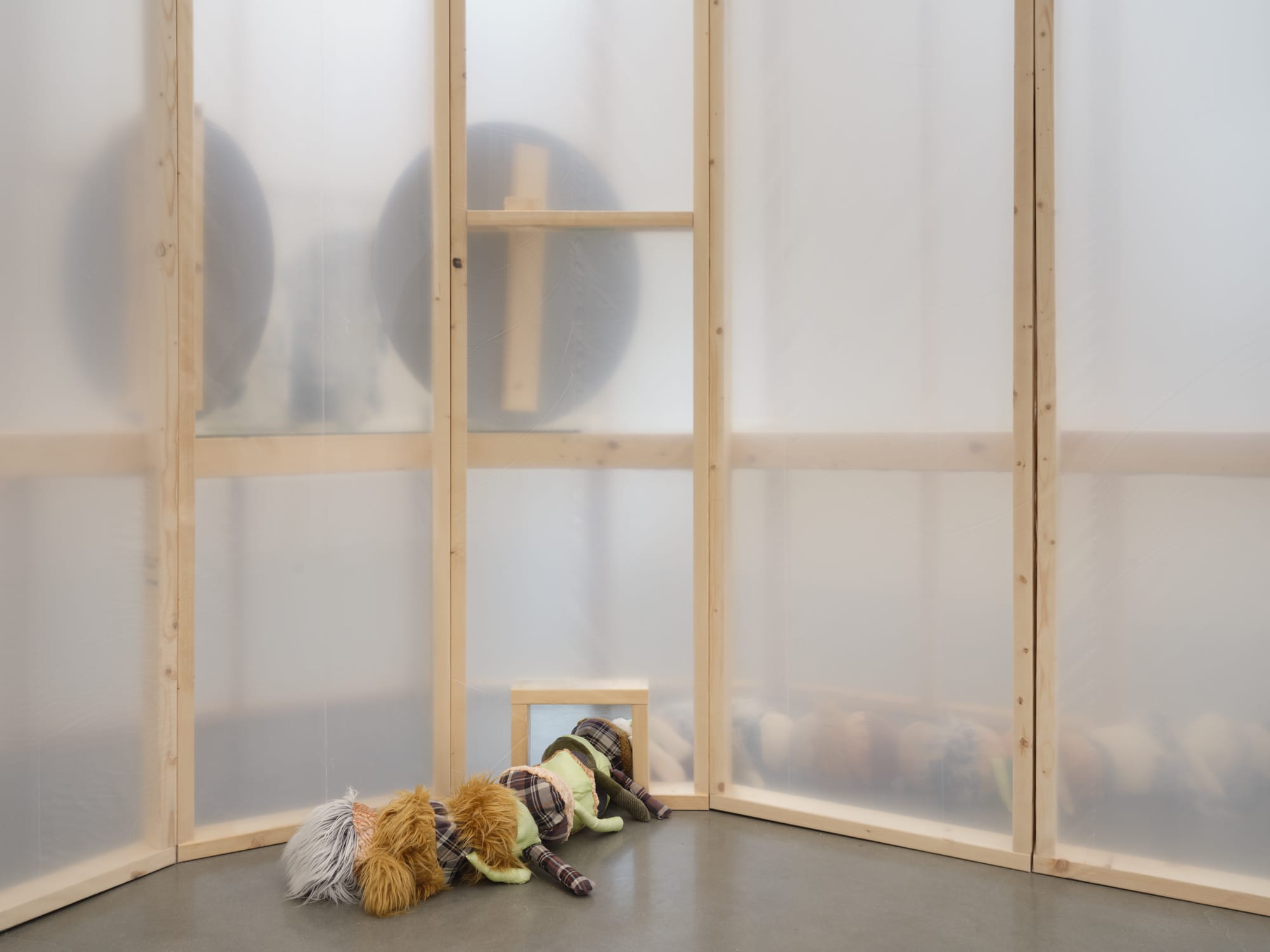
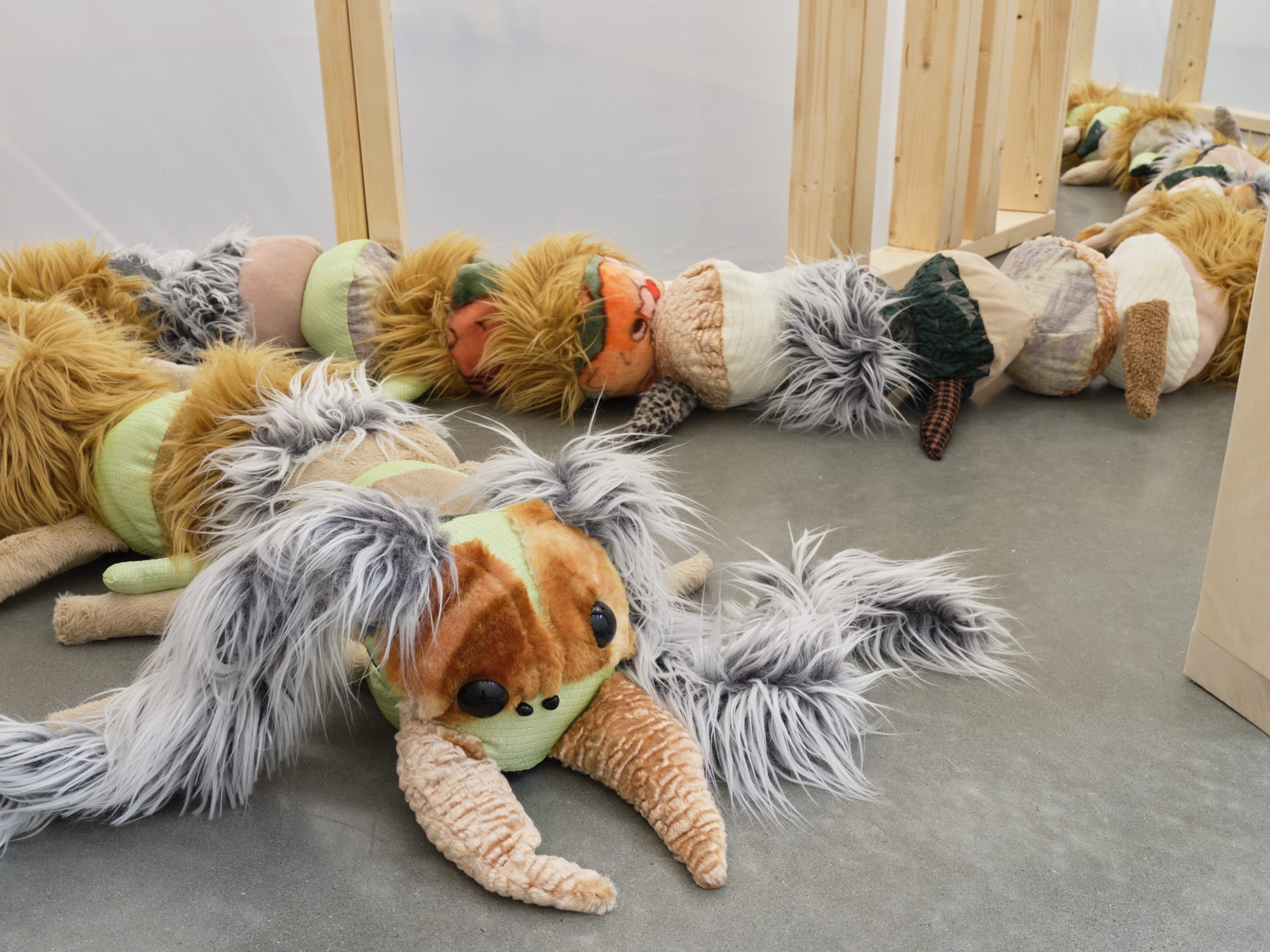
CFGNY is having a big spring. The self-proclaimed “vaguely Asian” art and fashion collective is in a group exhibition about the production and representation of Asian fashion at Pioneer Works, transforming the third floor into a cardboard-lined shipping container filled with studio portraits shot in Ho Chi Minh City, Vietnam, a growing fashion hub. Later this month, Amant is opening a show of collaboratively made ceramics and water clocks inspired by No Name Painting Association, an informal collective working against the grain of Socialist Realism during the Cultural Revolution in China. And for the Whitney Biennial, which opens to the public on Sunday, they created an architectural installation with translucent walls and stretched plastic, forging fragmented sightlines through which visitors can peer at ceramics, each other, and a giant soft caterpillar at the center.
But what does CFGNY stand for? Officially, “Concept Foreign Garments New York”; sometimes, “Cute Fucking Gay New York.” Or, if the scrolling banner on their website is to be believed, “Cancelled Forever Gone New York,” “Crabbing Fishing Golfing New York,” “Cult Freaks Galore New York,” ad infinitum. That litany of names gets at the spirit of their project — funny, playful, slippery work, which includes video, performance, sculpture, architectural installation, and more.
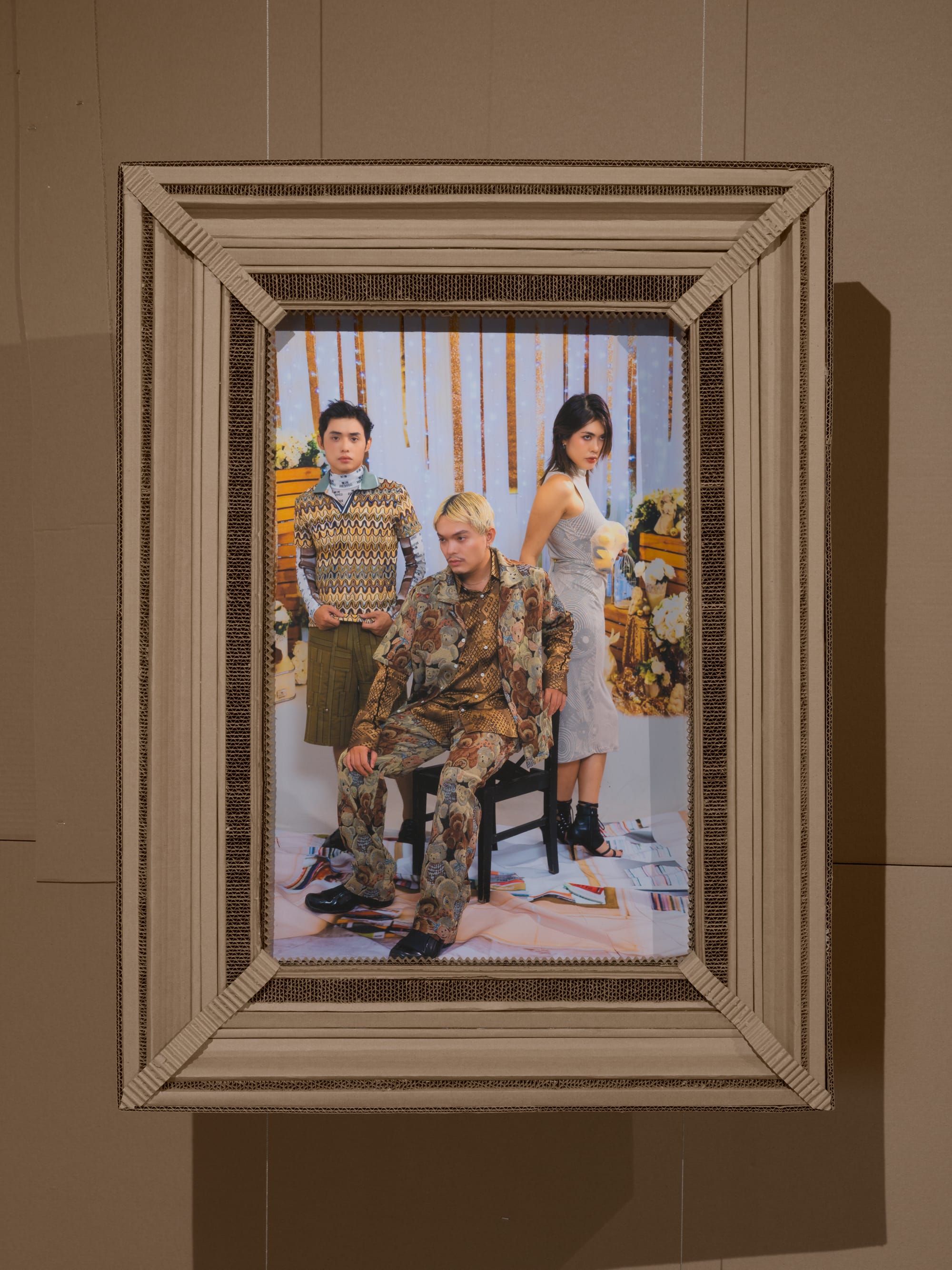
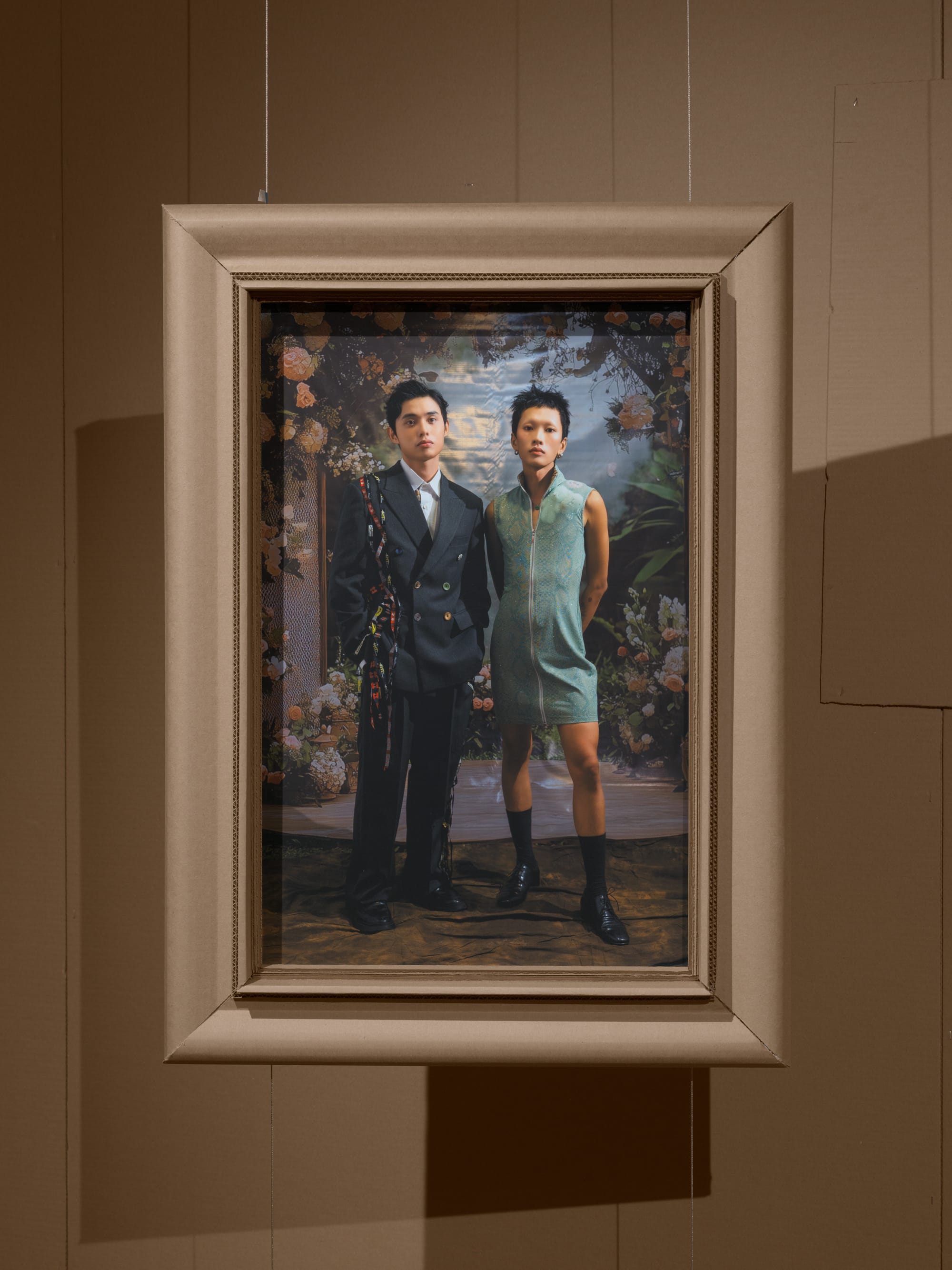
Installation view of works by CFGNY in The Endless Garment: Atlantic Basin (photos Dan Bradica, courtesy Pioneer Works)
In an era when Asian-American discourse has largely festered into conversation about Wasians, China-maxxing, and WMAF relationships (if you have no idea what I’m talking about, count yourself lucky), the collective’s approach is a genuinely refreshing way into identity that expands rather than constrains it, that isn’t corny but doesn’t take itself too seriously. As Ten Izu, one of CFGNY’s members, explained: “I think our project has always been a critique of those reductive signifiers of authenticity that distill the truth of a person, but in a playful way.”
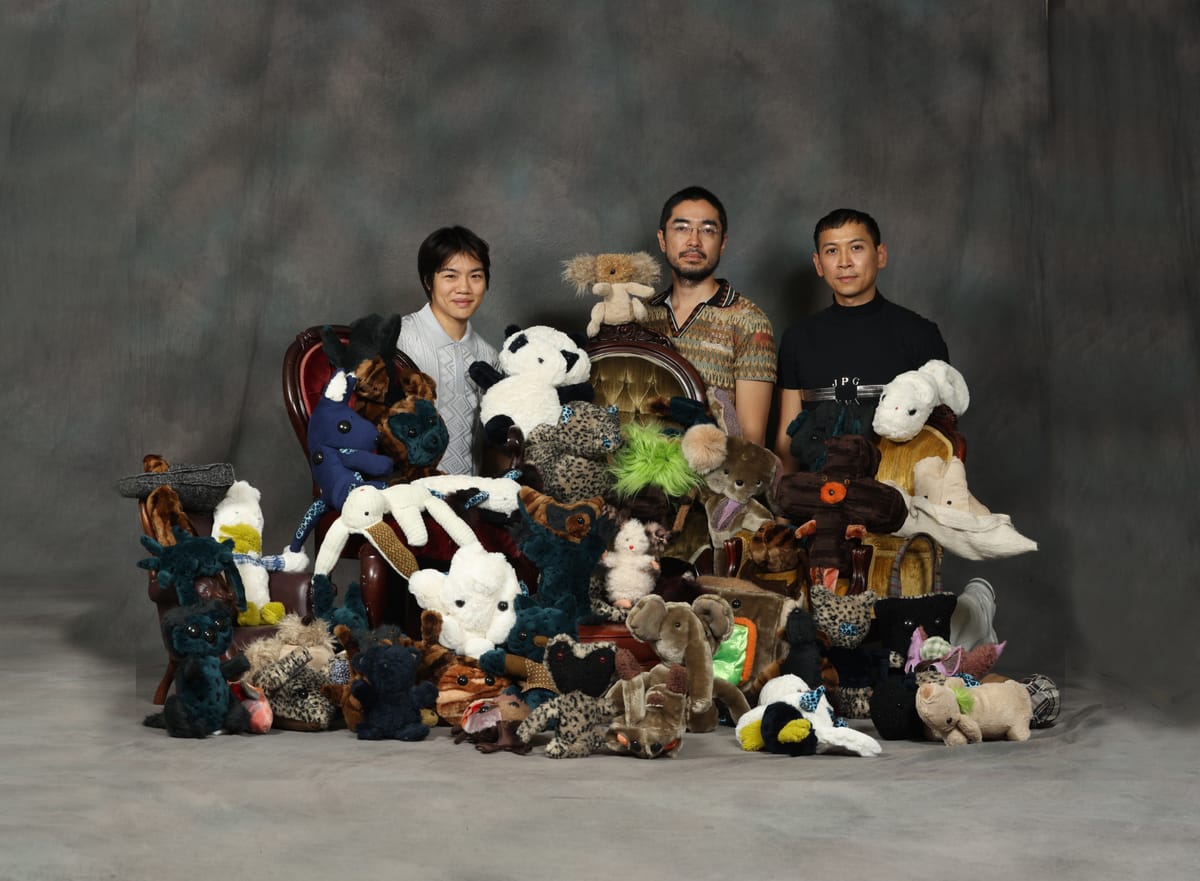
The most accurate epithet for the trio might be “Cute Friend Group New York,” which also shows up in the aforementioned scrolling banner. When I spoke with them over Zoom last week, the three peered out at me, backlit by a window in their Bushwick studio: Izu, slight, long-haired, wry; Daniel Chew, smiley with wire-rimmed glasses, talks in complete paragraphs; and Tin Nguyen, thoughtful, funny, perhaps the primary tinkerer of the group. A fourth member, Kirsten Kilponen, recently left the collective to pursue a medical degree.
CFGNY’s work centers collectivity, which is reflected even in the way they formed. Chew and Nguyen met in New York in the early 2010s, becoming CFGNY in 2016, and Izu and Kilponen joined after modeling for one of their runway shows. In the ensuing decades, they staged a fashion show at Japan Society, operated a bar in the basement of SculptureCenter (where Izu made me an excellent cocktail), and transformed Cooper Hewitt into a nightmarish showroom critiquing anonymizing “Asian” design. They’ve explored the idea of digital exhaustion with Chinese artist Tao Hui, China as a specter of mass production in a changing Western imaginary, and themes of “bootlegging” in museums and in collaboration with other artists.
“I had my own practice,” Izu said, “and I was interested in … not doing my own practice? And collaborating with other people.” Izu’s background is in studio art and comparative ethnic studies, Chew’s is in filmmaking, and Nguyen’s is in painting, “so every project and new medium that we take on is a learning experience for at least some of us,” Chew explained. Even the way they speak mirrors their collaboration, flowing through, adding on, or questioning each other.
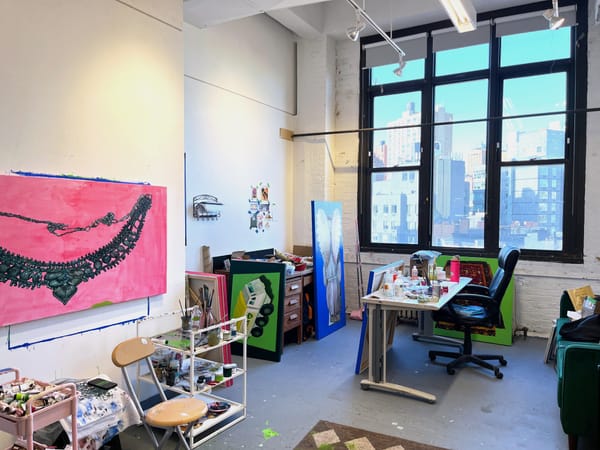
The trio ultimately refused to show me their studio — “there are too many things happening,” Izu said (Nguyen, for the record, was in favor of showing me). But they did tell me how it worked: Different production stations are arranged across two rooms totaling 600 square feet (~55.7 square meters), through which the artists rotate.
“Our studio isn’t so big,” Chew said, “so it has to be organized in a very particular way for us to all work in it at the same time ….”
“... and to juggle all the different projects,” Izu added.
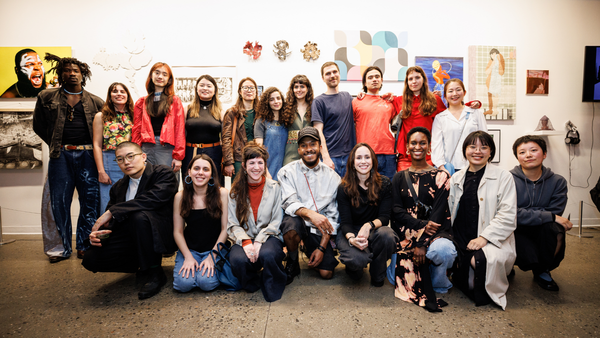
They were calling me from the desk — “the admin table,” Chew dubs it — where they also edit, send emails, and hold meetings, even when it’s just the three of them. The layout of the other room changes depending on the project. Right now, it’s a ceramics and sculpture-making studio, in preparation for their Amant show, for which they invited 13 other artists to create tiles mounted together on an armature; those artists typically come in one or a couple at a time, given the 600-square-foot size. None of those collaborating artists identify as ceramicists, Nguyen said.
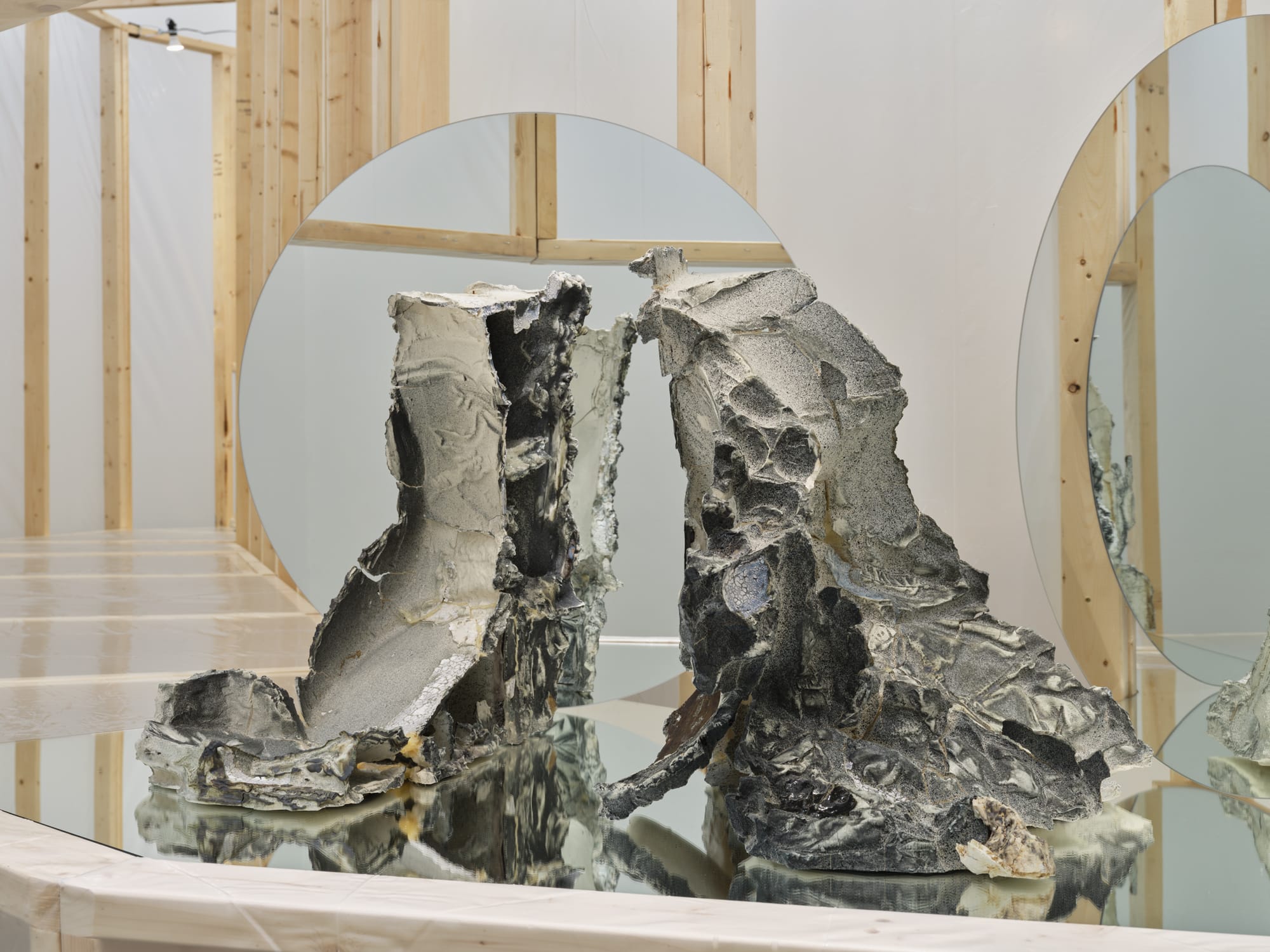
Then again, the members of CFGNY aren’t really ceramicists, either — this is the first time they’ve made ceramics that aren’t slip-cast porcelain. “The whole time, everything was breaking, so it was kind of stressful,” Nguyen continued. “But it’s kind of finished now, and they look good.”
“It follows in our aesthetic,” Chew added. “Very messy, kind of falling apart in some way. But that is part of what they are — that’s what beauty is. This sort of chance.”
“They’re not exactly falling apart,” Nguyen cut in. “It’s more that they’re fractured. They use an aesthetic of being …”
“Mended together,” Chew finished.
That practice of tinkering, assembling, and repairing shapes their body of work as a whole. Case in point: “What is that behind you? Is it a mannequin?” I asked, pointing at a vaguely humanoid shape looming over them in the window. Chew turned around and immediately started laughing.
“It’s a clock,” Izu said.
“And a mannequin,” Chew added.
It’s another work for the Amant show, part of a series of kinetic sculptures that tell time through an intricate system of water, gears, buoys, flow valves, and more. “My dad was an electrician,” Nguyen said, “and when I was young, in the ’90s, he would bring home random electronics to fix from his job. So I sort of know how to tinker? Part of the clock-making comes from that background of production.”
“That aesthetic really runs through a lot of CFGNY, this resourcefulness,” Chew said. "I think we think of that as being ‘vaguely Asian,’ in some sense: using things in ways that are unexpected or ‘wrong’ in some way.”
“It’s about spending time with each other, getting to know each other through art-making,” Nguyen added. “By inviting artists to the studio, you really get to understand each other’s sensibilities. So it’s about furthering the relationship we have with our friends, collaborators, community. Each project tries to dig deeper, and expand on those relationships.”