Maori Karmael Holmes Looks Back on 15 Years of BlackStar
The Philadelphia film festival’s founder reflects on its evolution into a hub for experimental, polyphonic storytelling amid a rapidly changing country and world.

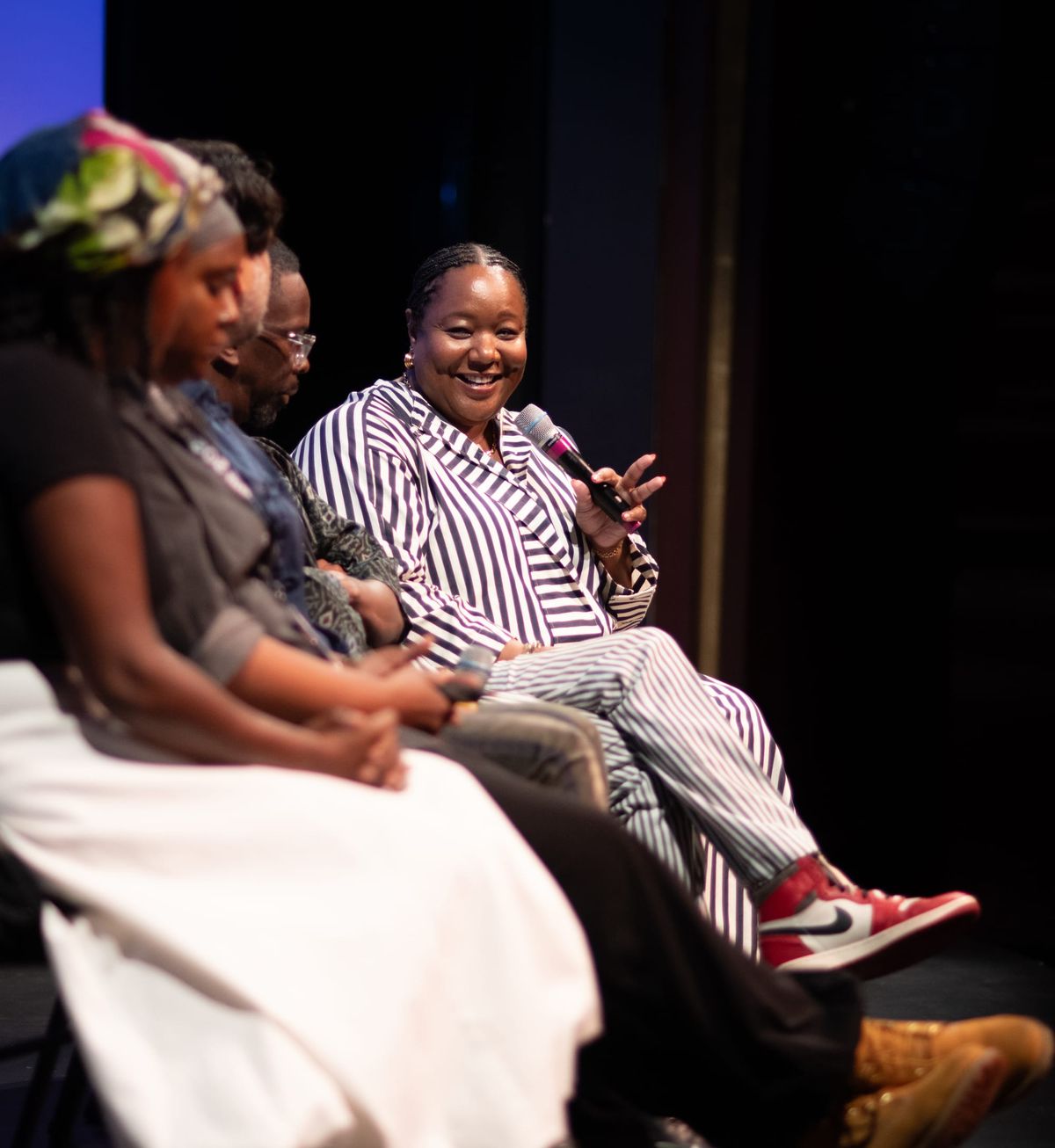
This year, the United States semiquincentennial converges with BlackStar Film Festival’s 15th edition. At a moment when the nation contends with competing ideas of truth, BlackStar marked this milestone by doing what it does best: serving as a leading platform for experimental nonfiction and polyphonic storytelling. Held in Philadelphia from August 6 to 9, this year’s festival included 91 films and foregrounded stories from Haiti, alongside Haile Gerima’s five-part epic on Ethiopian resistance against Italian colonialism, unraveling the constructs of historical, present, and future.
Founded in 2012 by filmmaker and curator Maori Karmael Holmes, BlackStar began as a film festival centered on the work and storytelling traditions of Black people and the African diaspora. What started as an annual gathering has grown into BlackStar Projects, a nonprofit organization supporting Black, Brown, and Indigenous filmmakers. Its programming now extends beyond the festival to exhibitions, a filmmaker seminar, a production lab, and Seen, a journal of film, art, and visual culture.
Holmes served as the festival’s programmer for its first nine years before moving into her current role as chief executive and artistic officer, shifting from programming individual works to building the institutional infrastructure that supports them. Her own path from making Scene Not Heard: Women in Philadelphia Hip Hop (2006) to founding and leading BlackStar reflects the festival’s evolution from a platform for films into a broader ecosystem for artists and audiences.
Hyperallergic spoke with Holmes about the labor of love behind BlackStar and what it means to preserve a festival’s original vision while allowing it to grow and adapt. Our conversation has been lightly edited for brevity and clarity.