Marcel Duchamp Was the Messenger of History
“The art world changed,” scholar Thierry de Duve told us on the occasion of MoMA’s new show. “Duchamp’s ‘Fountain’ is the message that brings us the news.”

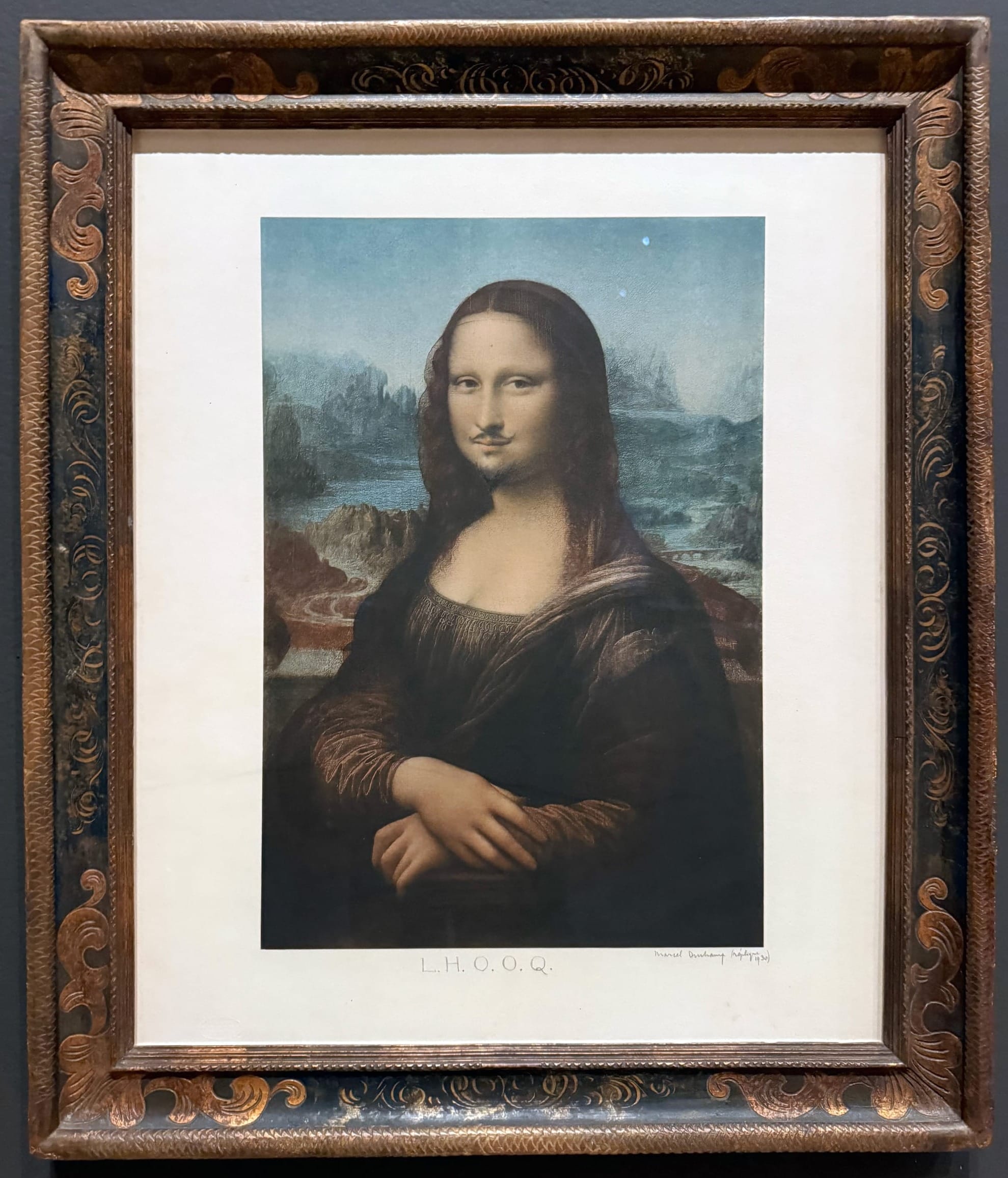
Anyone who has taken an introductory art history class knows about Marcel Duchamp. Let me restate that, actually: Anyone who’s encountered contemporary art in any form knows about Duchamp, whether they realize it or not.
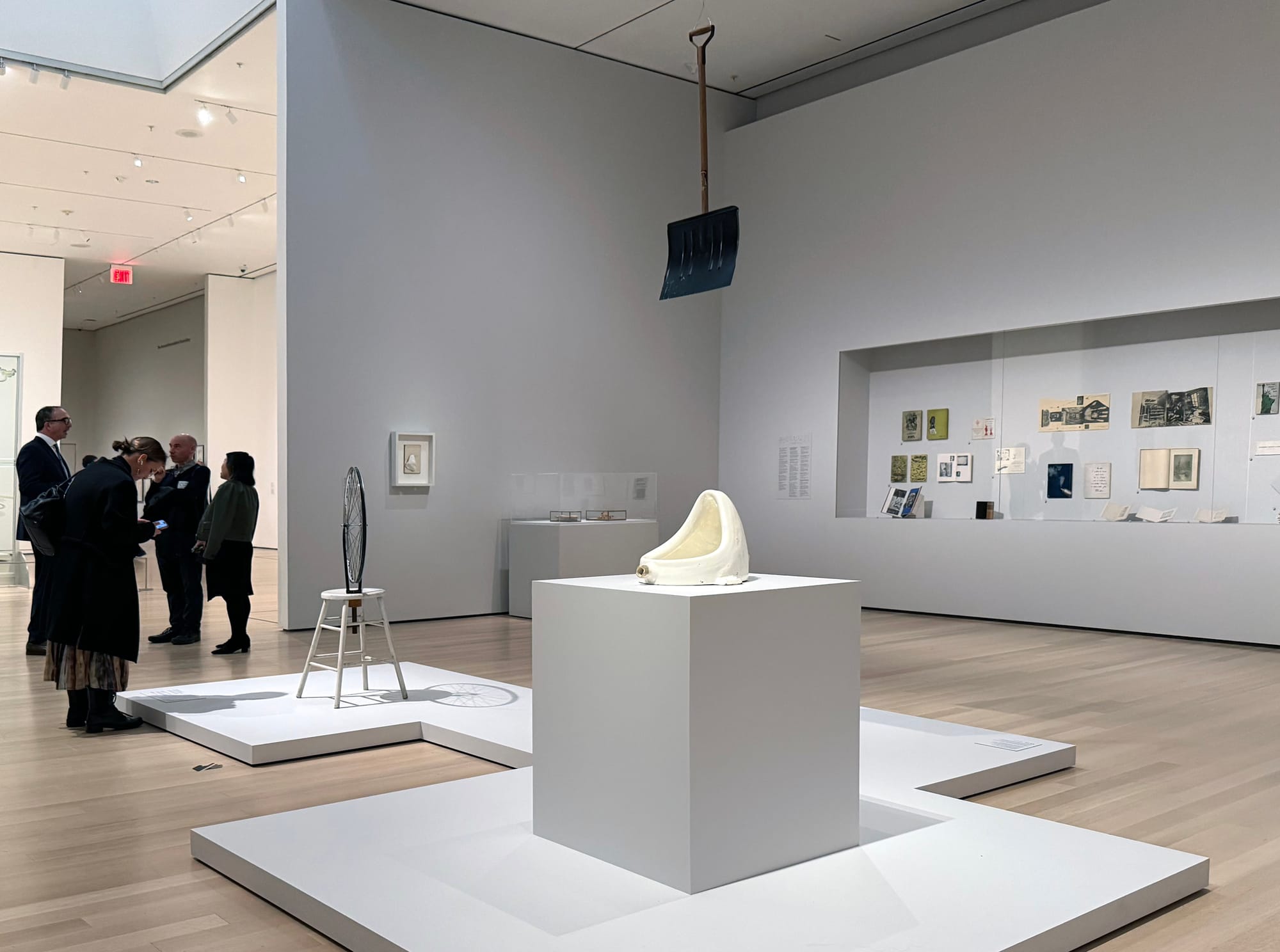
In 1917, the French-born artist infamously flipped a urinal upside down, signed it, and called it art. As it’s often told, that single gesture forever changed the trajectory of aesthetic history. No longer was art judged by skill, craftsmanship, even beauty — it could be anything an artist called art. That opened the door to conceptual art, process art, and so much more yet to come. He’s the reason art today can be gloriously inventive, wonderfully permissive, mystifyingly experimental, beautifully opaque.
This Sunday, April 12, the Museum of Modern Art (MoMA) in New York is opening the first comprehensive United States exhibition in more than 50 years on this fascinating artist — a craftsman, appropriator, trickster, perhaps even, in modern parlance, troll.
Yesterday, I spoke over Zoom with Belgian critic and scholar Thierry de Duve, who’s been mulling over these vexing contradictions in the artist’s work for a half-century now, from his light-filled Manhattan apartment. De Duve edited The Definitively Unfinished Marcel Duchamp (1993) and wrote Kant after Duchamp (1998), Pictorial Nominalism: On Marcel Duchamp’s Passage from Painting to the Readymade (2005), and many, many more books and articles, and yet sometimes claims not to be a Duchamp expert. Read our conversation, lightly edited for clarity, below.
Hyperallergic: As a Duchamp expert, can you tell us why he fascinates you?
Thierry de Duve: I guess, by regular standards, yes, I am a Duchamp expert. But the interesting thing is, I thought I was not a Duchamp fan. I thought I was done with Duchamp. I thought I was bored with Duchamp. And I must say that the show at MoMA rekindled my love.
I have always, since the 1970s when I discovered Duchamp for real, had mixed feelings about him. There is something esoteric, deliberately mystifying about Duchamp that I don’t like. And a lot of his objects are, to me, stranded in a sort of 19th-century Symbolist aesthetics.
But I have been fascinated by the extraordinary intellect of this man, and also his contradictions. For example, Duchamp, the inventor of readymades — who has been the Duchamp I’ve investigated most in my writings — and Duchamp the craftsman.
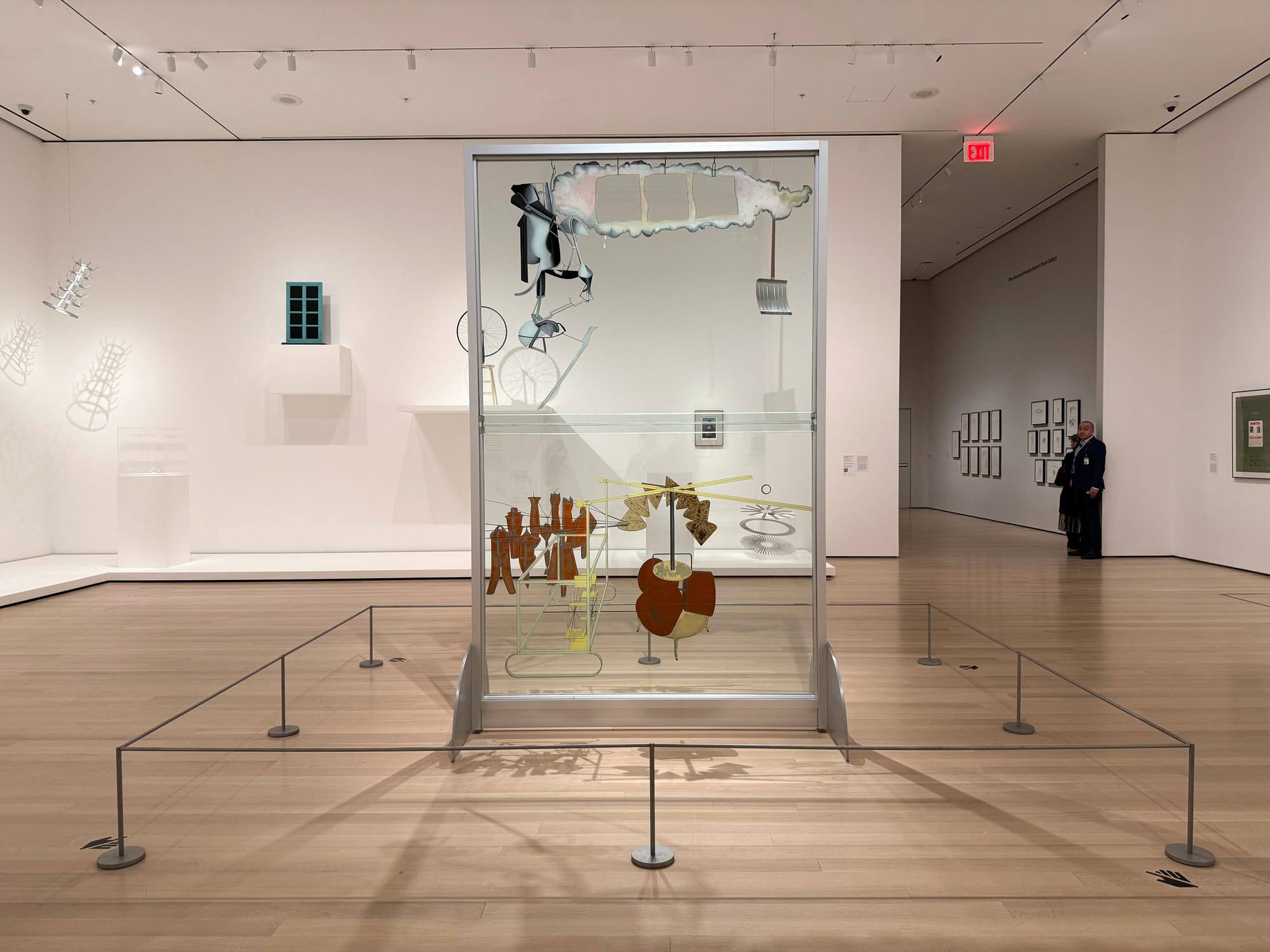
The “Large Glass” is an incredibly well-crafted object. That contradiction I have always found interesting, pulling me in opposite directions — “like” and “dislike,” in a way, but definitely triggering my intellectual curiosity.
H: So you must have liked the painting part of the show, then?
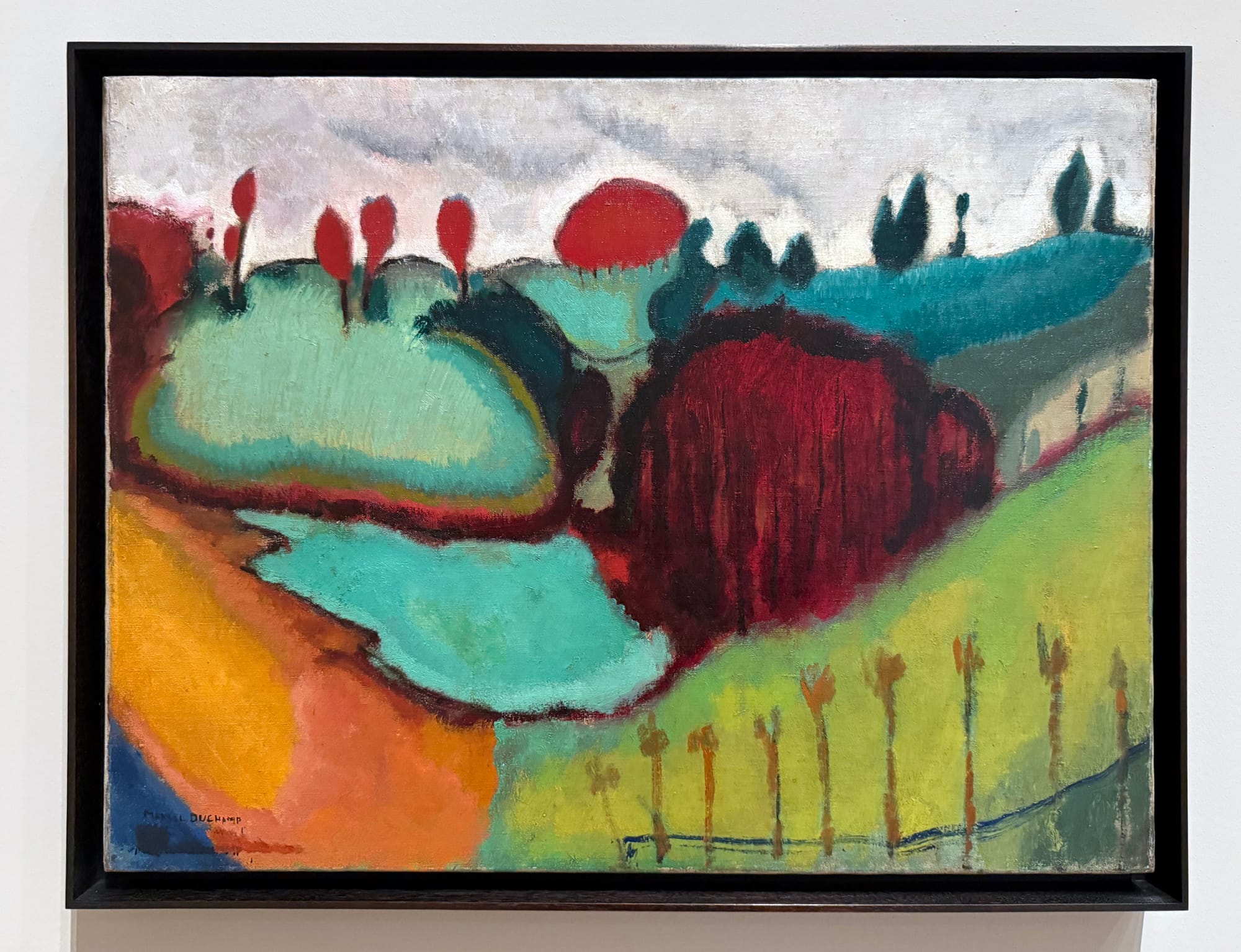
TD: Oh, no. The painting part of the show is the weakest part of the show. But it’s very interesting. That is why I am saying that Duchamp is not the greatest artist of the century, but he may be the most intelligent artist of the century.
One of the things the paintings at the beginning of the show demonstrate is that he was not a very good painter. Matisse and Picasso, to take two of his contemporaries, are definitely much greater painters than Duchamp. But Duchamp, early on, had the intelligence to understand that he was not. He turned into something else and became a great artist, in spite of not being a great painter. Which is part of the thing that makes him so fascinating today, as we live in a supposedly post-medium era.
H: Do you feel, in this so-called “post-medium era,” his work is more interesting? Or do you feel like he simply sowed the seeds for this era?
TD: That would be too long an answer. That’s the subject of my whole book, Duchamp’s Telegram. “Post-medium art” is not my expression. My expression is the “art-in-general” system. And my thesis is that he is not the creator, is not the author — is not the agent, even — of the passage from the old system to the new art-in-general system, the “old” system being the fine arts system. He is merely the messenger of a passage that happens even before his birth.
The art world changed — not in the 1960s, but in the 1880s. And Duchamp’s “Fountain” is the message that brings us the news. The news that we no longer live in an art world where, in order to be an artist, you have to be a painter or a sculptor, or a poet, or a composer, or a playwright, or a novelist, you name it.
That is what the term “post-medium art” refers to. Which is where I disagree with the name, because it suggests that you cannot be an artist if you are in a medium. And as we know from today’s art world, there is still painting around, and a lot of it, there’s still sculpture. And there are new categories, like readymades. Without Duchamp, we probably wouldn’t have that category.
Installation art, performance art — these are new categories, new media. But we can also make things that have no name yet. It’s going to be hard after Duchamp, but it’s still possible.
H: How did “Fountain” deliver the news that you didn’t have to work in a specific medium to become an artist?
TD: “Fountain” was supposed to be exhibited at the first exhibition of the Society of Independent Artists in New York in 1917. That society was modeled after the Société des Artistes Indépendants in France, which was created in 1884, and the statutes of the French Society and the American Society are identical.
The novelty of the Société des Artistes Indépendants in France was that there was no jury. Why is that important? Because in France, in the 19th century, you could not live as an artist if you had not exhibited at the salon. The gallery system, the dealer system — it was minimal. The rare galleries that were in existence would not select you unless you had success at the salon, you see?
So creating a non-juried exhibition and society of artists basically amounts to creating a society of self-proclaimed artists. That was the novelty.
To cut a long story short, the Beaux Arts system, the French version of the fine arts system, collapsed at the end of the 19th century — in 1880, actually. And Duchamp brings us that news — that you can be an artist without being a painter or a poet or musician, etc. That is my interpretation of what “Fountain” encapsulates.
He puts that message in the mail in 1917, but the message only arrives in 1960. I mean, Rauschenberg, Merce Cunningham, John Cage — they got the message around 1950, but they were fast. The bulk of the artists who received it arrived in the next generation. The generations of Pop artists, Conceptual artists, Minimalist artists, Fluxus artists, Arte Povera artists, etc., etc., who emerged in the 1960s.
And that is why, since the 1960s, we speak of a “post-Duchamp” art world. We don’t speak of a “post-Picasso world.”
H: At the press preview, one of the curators mentioned that Duchamp had a very good view of museums and curators. What was his relationship with museums?
TD: Museums are an invention of the 18th century. The idea of the museum goes hand-in-hand with the idea that art belongs to the people. Not physically, economically, financially, but ideologically, culturally. The idea that museums ought to be public repositories for art.
Since the 19th century, at least, ambitious artists knew that if they were going to be successful, their art would land in the museum. And from then on, “What kind of museum do you want to be in?” becomes an interesting question for every artist.
I’m not going to go into a long explanation of the critique of the institutionality of museums. But suffice to say, Duchamp knew that if he was going to be successful, his art would be in a museum.
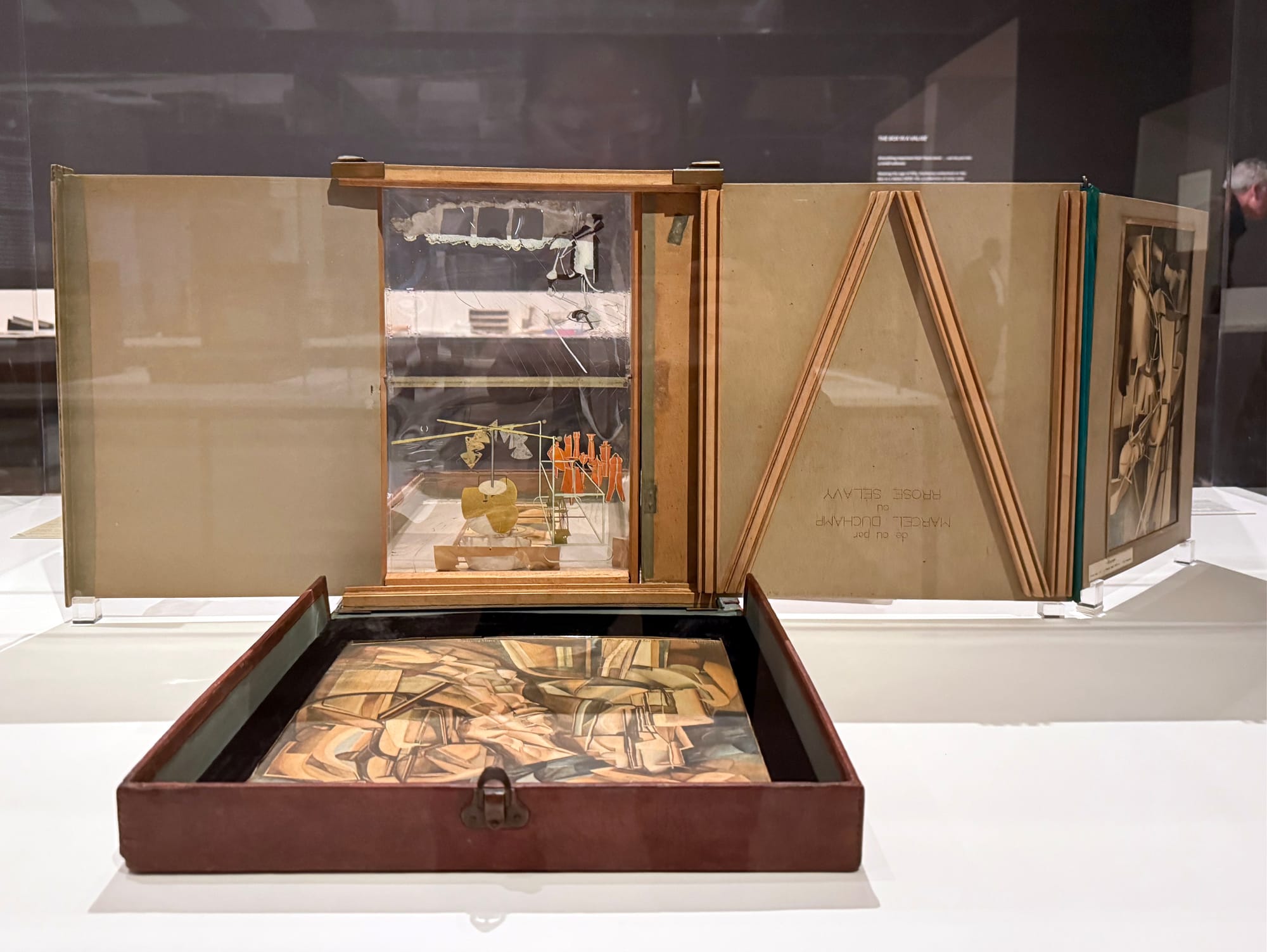
Now, interestingly enough, he had to wait until he was 75 to get a museum retrospective. His first was in 1963, at the Pasadena Art Museum. But then this is Duchamp’s typical genius. He anticipated the museum by making his own museum — a portable museum in the 1940s. That’s “La Boîte-en-valise” ["Box-in-a-suitcase" (1931–71)].
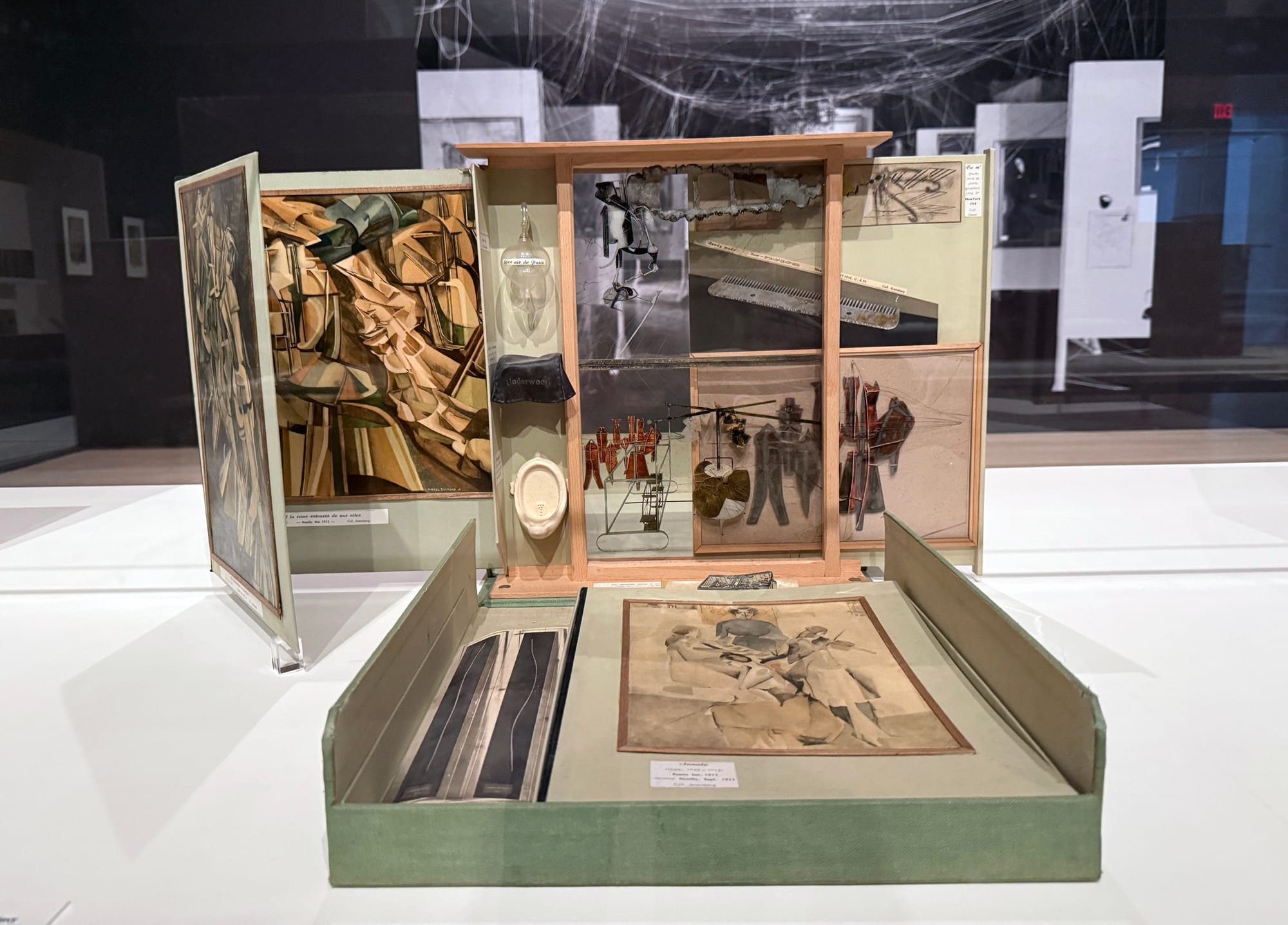
I think one of the great things about this exhibition at MoMA is the fact that they have, I think, seven boîtes-en-valise, not just one. They show that — how should I say this — the fetishization of art that’s an inevitable byproduct of the existence of museums was anticipated by and played with in advance by Duchamp. I think he anticipated the logic of the museum. He played with the logic of the museum and produced a miniature version of how his collection would be seen in a museum. So it’s only natural, in a way, that honoring that gesture, the curators of this show would show not one, but several.
I think Duchamp plays with that fetishization, and if we were to pursue that conversation, we would have to rethink what we mean by “fetishization.” And whether a fetish can, at the same time, be an antidote to a fetish, in the same way that a vaccine is the antidote to the malady. By injecting the malady, you provoke a reaction in the body. I think Duchamp — and not only Duchamp, but a lot of modern artists — practice the vaccine strategy.
The variations [in the same artwork] enhance the connection between aesthetics and fetishization. Whether it’s in a critical way or not, I would rather leave open. And whether we should think it’s in a critical way or not, I would also rather leave open.
H: If you could ask Duchamp one thing, what would it be?
TD: I would ask him whether he was conscious of what he did with the urinal, or not.