Melvin Edwards, Who Sculpted a New Vocabulary for Political Art, Dies at 88
His innovative abstractions evoked both the art historical canon and the haunting afterlives of Atlantic slavery.

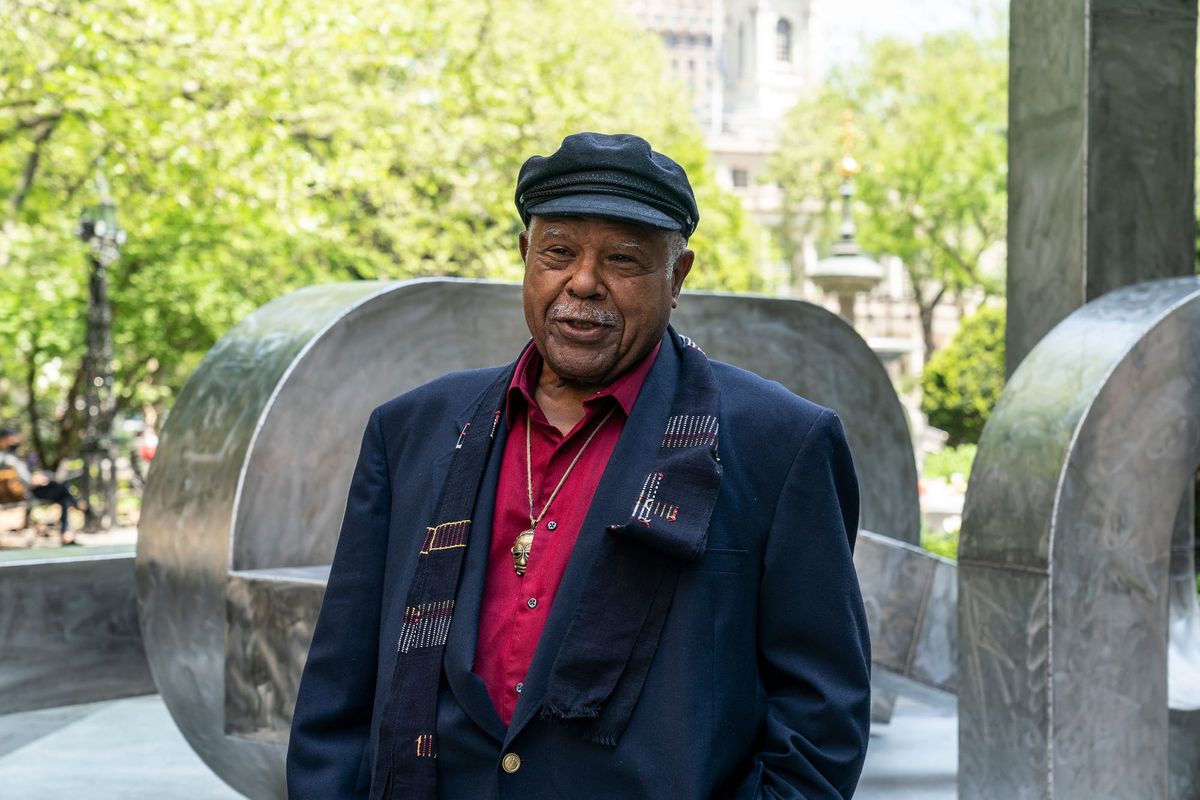
Sculptor Melvin Edwards, whose innovative abstraction evoked both the sculptural canon and the haunting afterlives of Atlantic slavery, died on Monday, March 30, at the age of 88. The news of his death was confirmed by his gallery, Alexander Gray Associates.
Edwards was born in 1937 and raised in segregated Houston, Texas, and integrated Dayton, Ohio. The family was not especially religious — “you could say God is important, but you had to be rational about it,” Edwards said. But they were political — his father was the first senior Black official of the Boy Scouts of America and co-founded a Black political organization — and believed in the transformational power of education.
At an integrated school in Dayton, Edwards was profoundly influenced by his art teacher, Mrs. Bang, who taught him figure drawing, and visited his first museum, the Dayton Art Institute. Later, Edwards was one of six students from local Black high schools selected to visit local museums on Mondays, when they were closed to the public. An honor roll and All-State football player, Edwards passed up scholarships in Texas to study art in Los Angeles, where he absorbed Picasso, Klee, Rembrandt, Goya, Michelangelo, and Donatello as important early influences, and graduated from the University of Southern California.
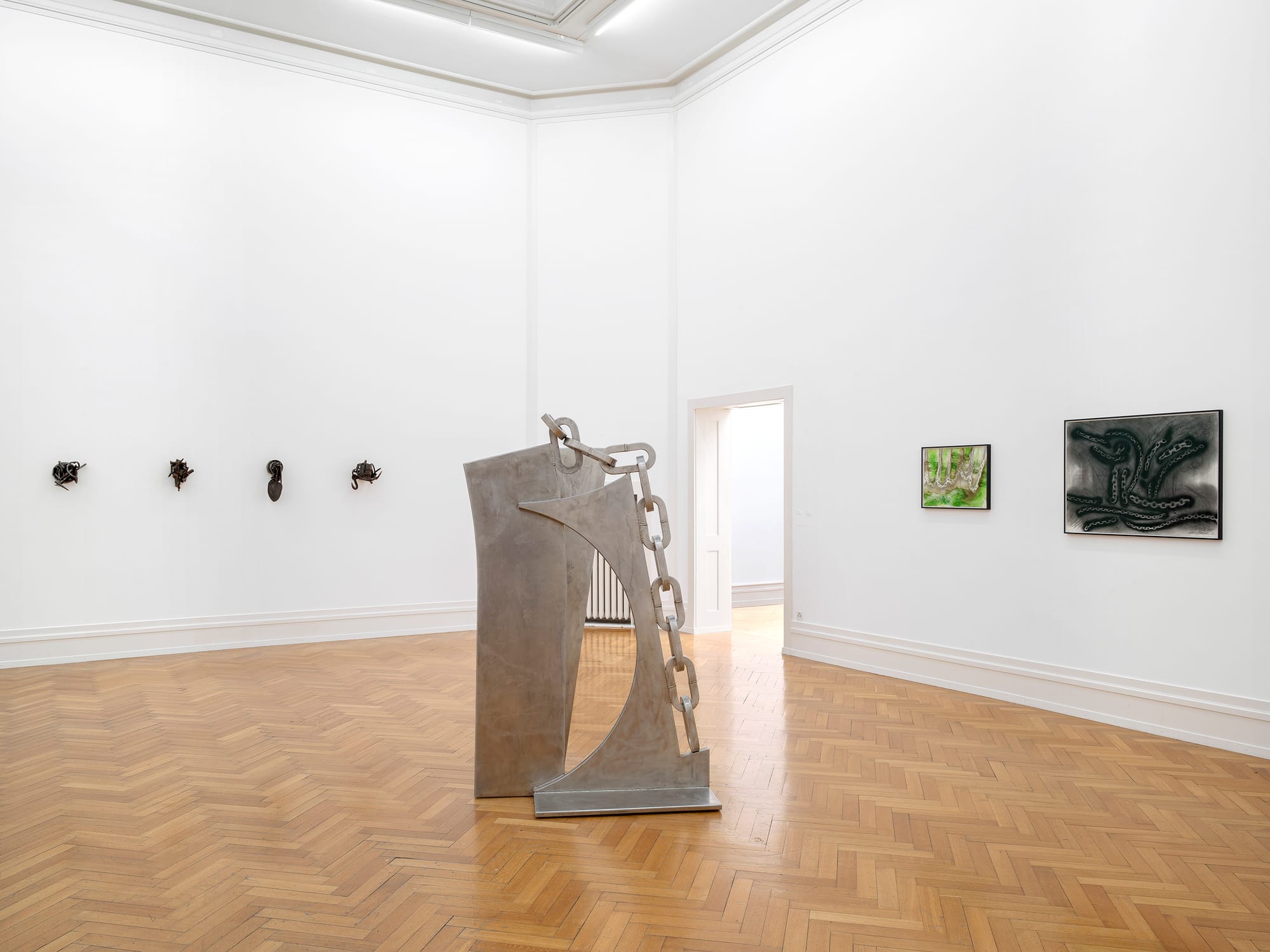
Edwards took up welding in his final semester of college, finding the medium ideal for interrogating both the formalist impulse to shelter aesthetics from the social and the activist imperative that political art be representational. Edwards’s great-grandfather had worked as a blacksmith in West Africa before being enslaved and sent to the United States, a transoceanic echo reverberating across generations impacted by slavery.
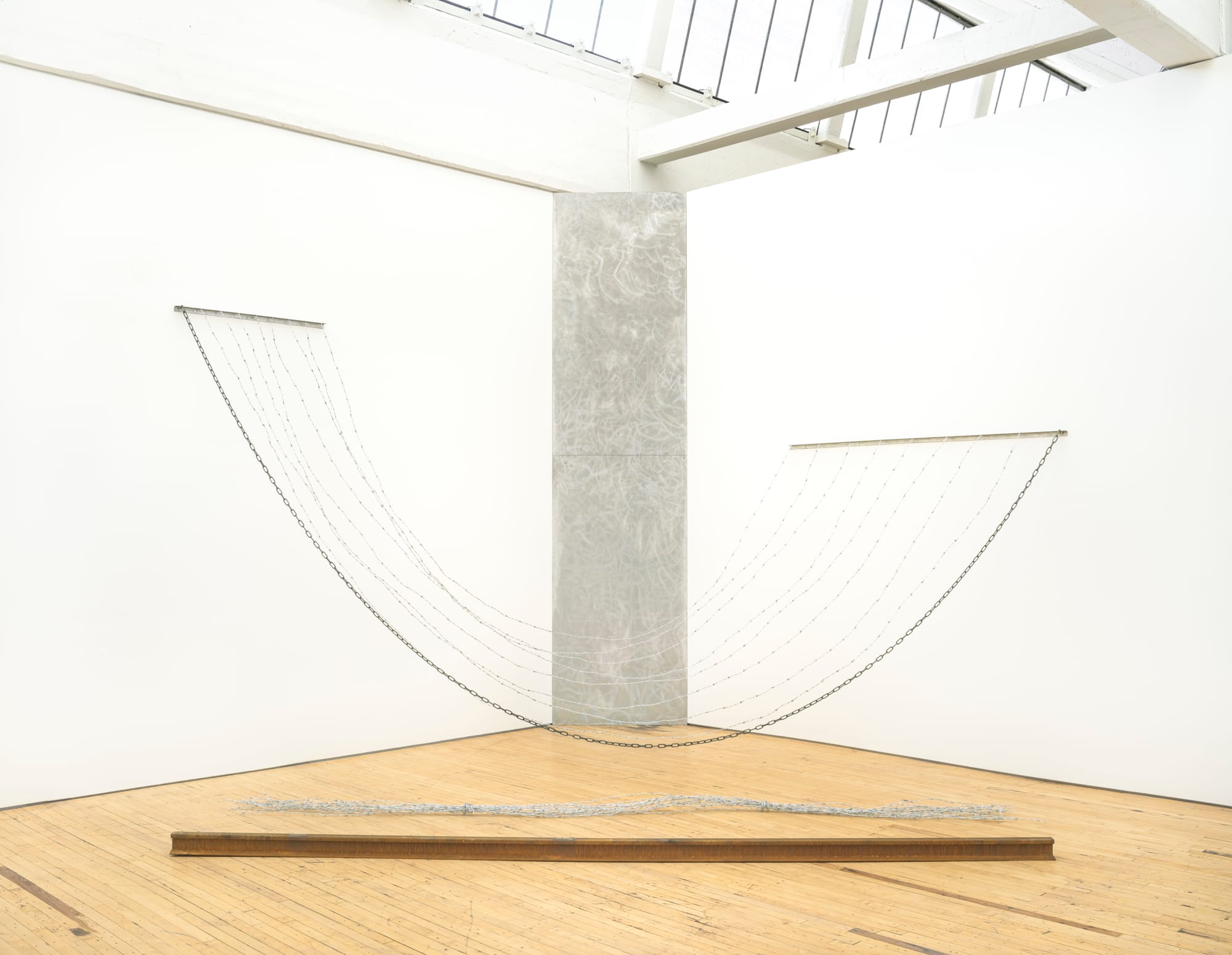
Edwards also took up materials like chain and barbed wire, which were “already loaded with poetic and political and other realities,” Harmon Siegel argued in a 2020 article in American Art. “His work was in reaction to developments in American art, especially Minimalism, but in material that evoked violent racism, raising significant and still potent questions about how abstract art can meaningfully address the politics of race,” Siegel wrote.
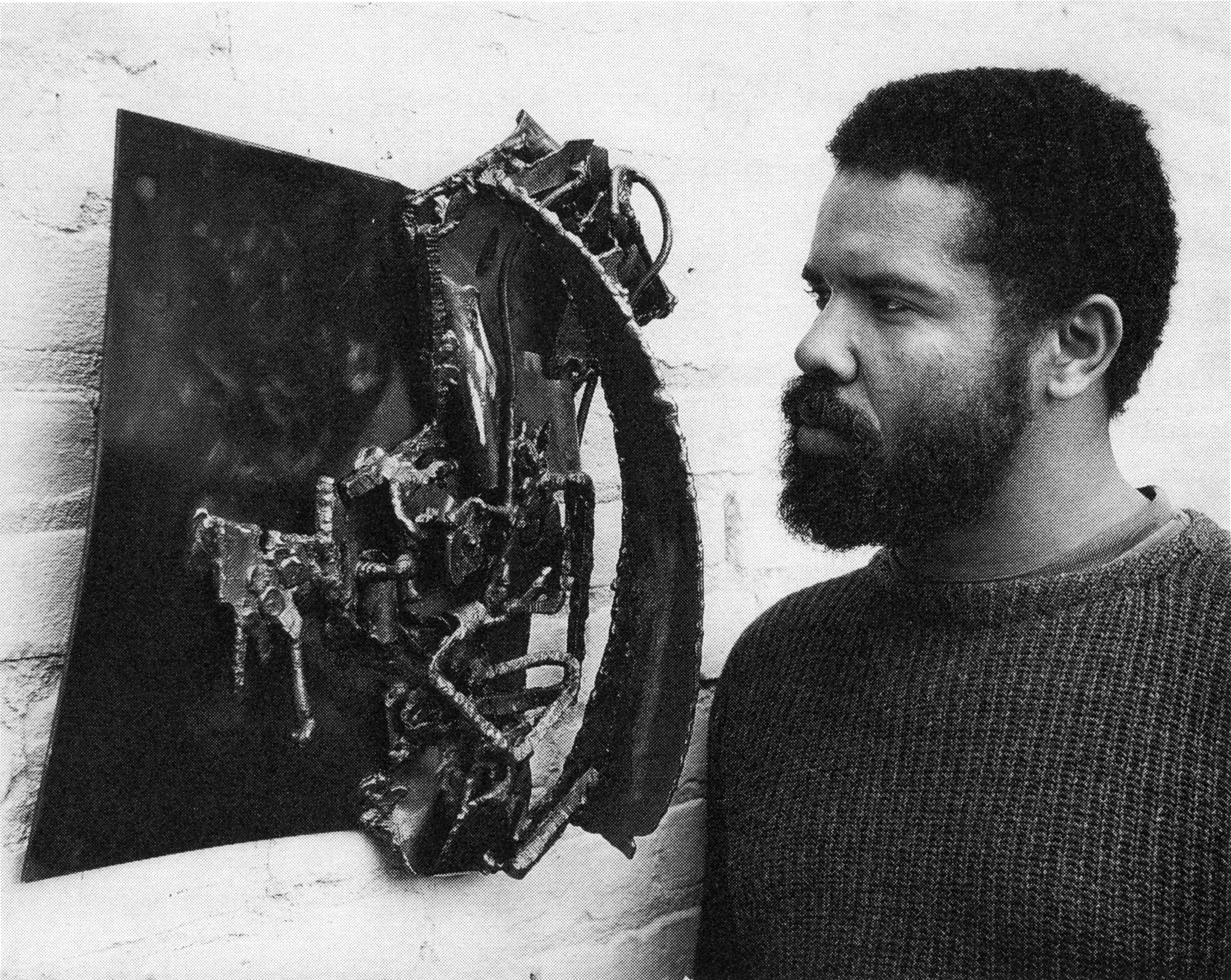
In 1963, Edwards produced “Some Bright Morning,” titled to reference histories of racial violence. The work was the first in what would become Lynch Fragments, a series of small sculptures that studied the materiality of violence and which earned Edwards early attention. Bill Agee at the Whitney Museum of American Art and Campbell Wyly at the Museum of Modern Art borrowed works from the series for shows in 1965–66, and Tom Leavitt, the director of the Santa Barbara Museum of Art, gave Edwards a show in spring 1965, just months before the Watts Rebellion.
“More than half-century later, the early ‘Lynch Fragments’ have lost none of their power,” critic John Yau wrote in Hyperallergic in 2015. “In fact, they have gained in resonance over time because they point to the physical pain and constraints that humans have had to endure throughout history. The power of Edwards’ sculpture is consummately sensual, not in the erotic sense, but one that suggests deep, wrenching pain.”
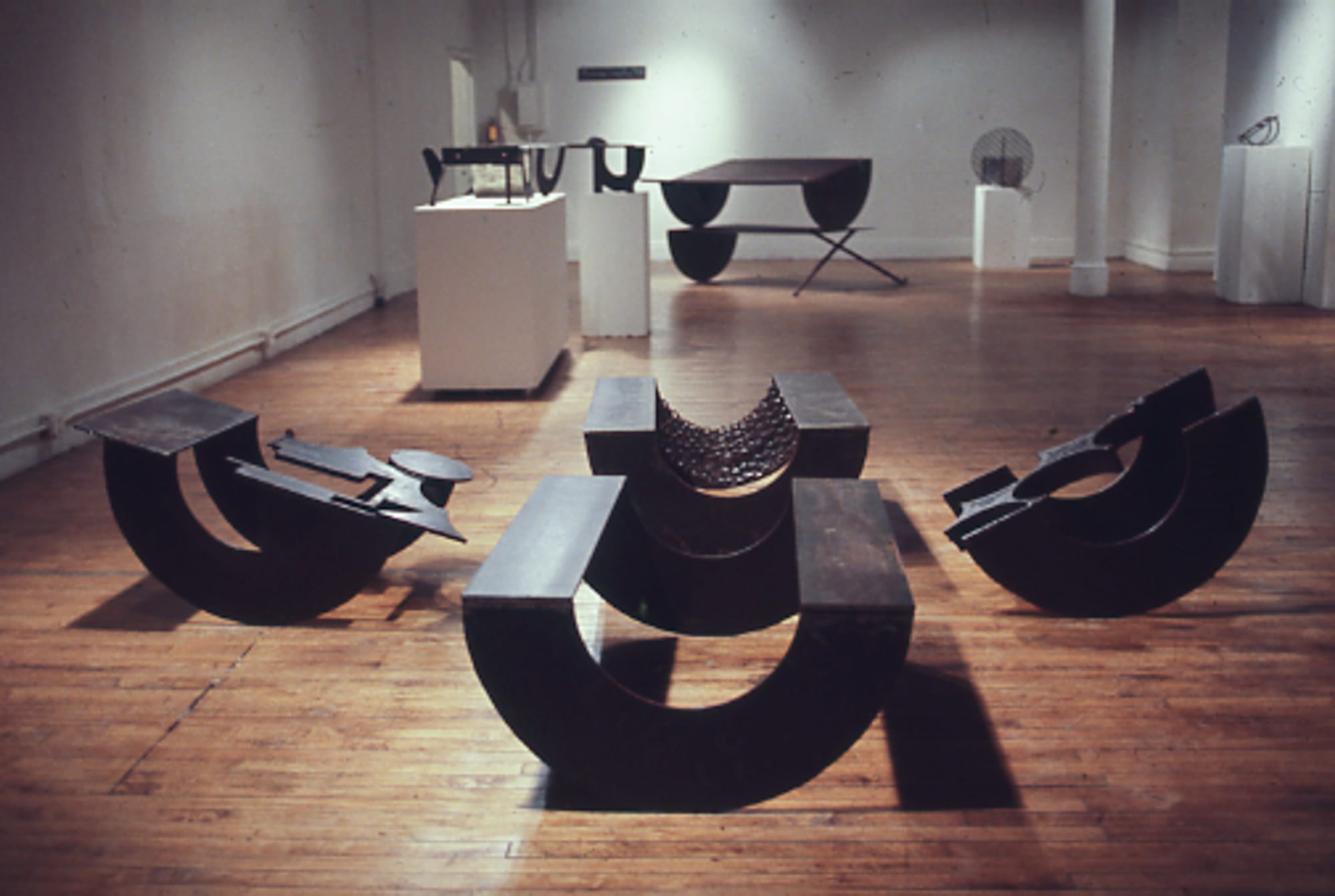
Edwards moved to New York in 1967, as the Black Emergency Cultural Coalition and others were advocating for more diverse exhibition slates at museums. The Whitney’s response included a series of solo shows by Black artists. Edwards received the second commission, installing a room of works made of barbed wire and chains that confronted the formalist insistence that minimalism appear to avoid politics, which showed up in negative critical responses to the show. A year later, Edwards was among the artists who withdrew in protest from the Whitney’s Contemporary Black Artists in America.
The failings Edwards saw in the institutional art world contrasted sharply with the deep relationships he built in West Africa, beginning with a transformative 1970 trip during which he devoured the region’s history and culture and witnessed the day-long enstoolment of the first new Ashanti king in four decades. Later, he would establish a studio in Dakar, Senegal. He also developed a strong connection to Cuba, grounded in part in political sympathies, and visited repeatedly over several decades following an initial 1981 trip led by Lucy Lippard and Ana Mendieta.
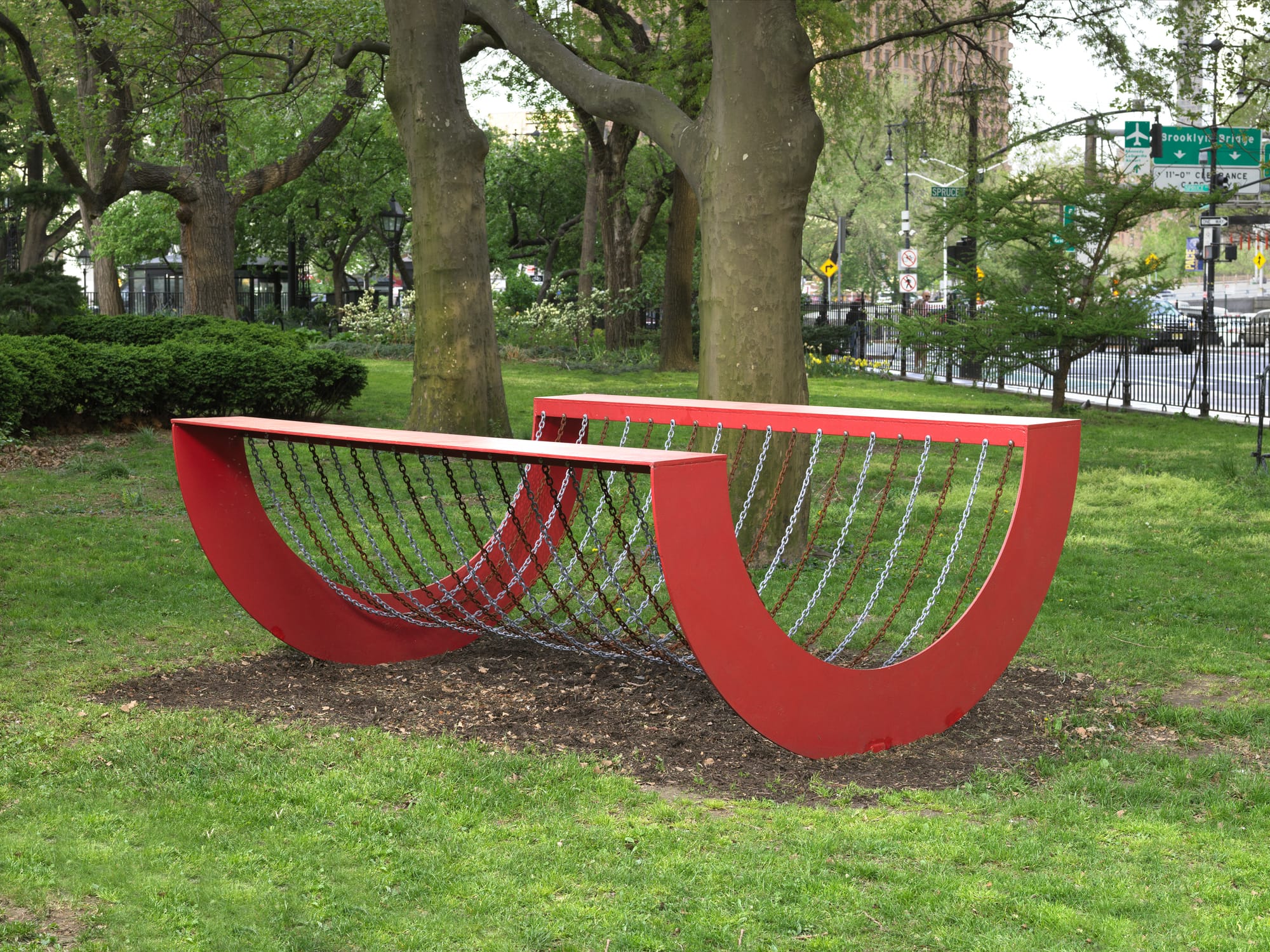
The significance of Edwards’s practice, and his influence on younger generations of artists such as David Hammons, garnered institutional attention later in his life. In 1990, he began to work with dealer Clara Sujo, and then with Alexander Gray Associates gallery in 2006. In 2011, Kellie Jones included his work in Now Dig This! Art and Black Los Angeles, 1960–1980, providing broader historical and geographic context for Edwards and his contemporaries. The artist’s lasting impact can be seen in the work of Glenn Ligon, Tiona Nekkia McClodden, and many others, recently installed alongside a major retrospective of his work at Palais de Tokyo in Paris.
There is something in the ebb and flow of his recognition, the line he walked between abstraction and figuration, and his distaste for hard and fast distinctions that echoes the politics of his aesthetics. “Sometimes going home is alright,” he said in 2014, “It’s sentimental; I am sentimental. It’s not a word I dismiss.” For Edwards, who created homes for himself in New York, Baltimore, and Dakar, going home seemed to mean moving both forward and backward in time, creating vocabularies that offer new pathways for considering art’s political possibilities.