Mexican Cultural Workers Denounce Pedro Reyes Sculpture at LACMA
A letter signed by 80 people, including Carmen Argote and Cuauhtémoc Medina, says the museum ignored the contentious history of a similar artwork rejected by Mexico City in 2021.

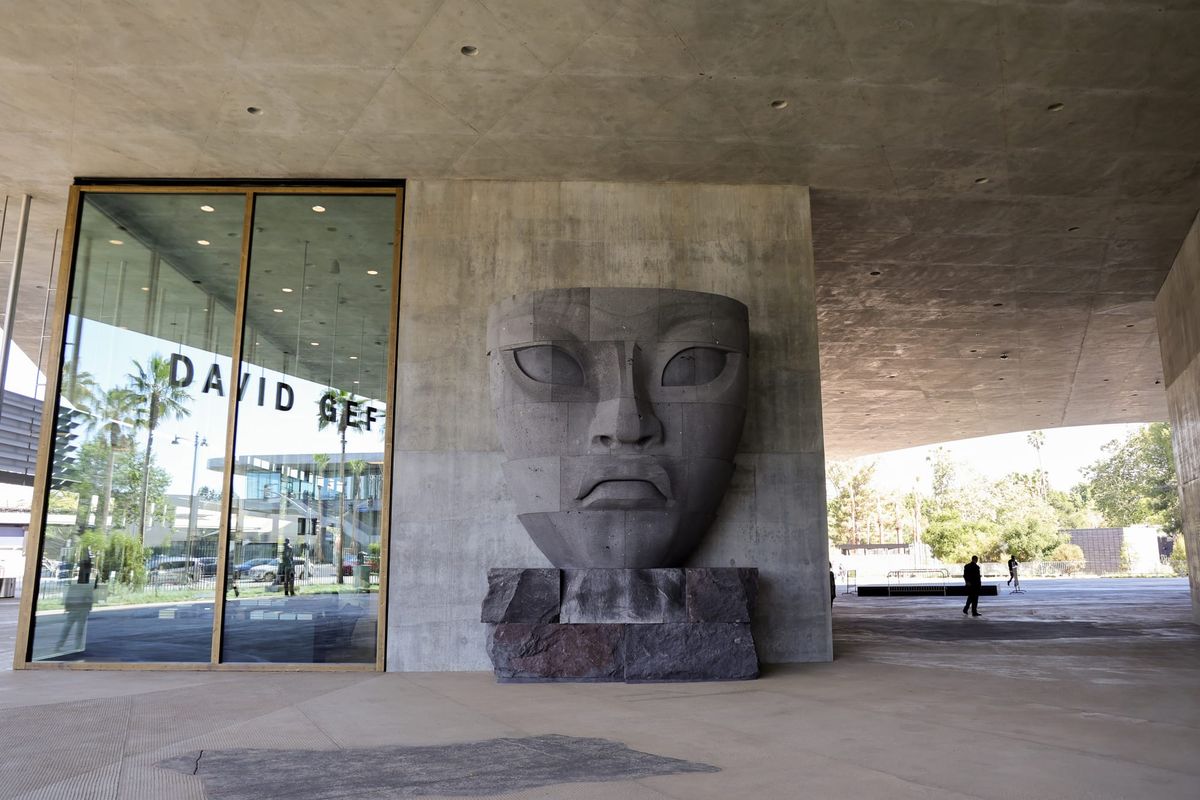
As the Los Angeles County Museum of Art (LACMA) officially welcomes visitors to its brand-new building, a group of Mexican cultural workers is opposing the display of a new sculpture by Pedro Reyes inspired by monumental Olmec busts. The work echoes a contentious 2021 public commission by Reyes that was ultimately scrapped by Mexico City’s government after protests from feminist and Indigenous advocates.
In a new open letter endorsed by nearly 80 Mexican critics, artists, and academics — including writers Maria Minera and Gardi Emmelhainz; artists Carmen Argote, Laureana Toledo, and Lorena Wolffer; and curator Cuauhtémoc Medina — the signatories accused the museum of ignoring previous activism against the artist’s work in Mexico.
“We are deeply concerned about the fact that there was seemingly no one in the museum sensitive enough or well-informed about the controversy the sculpture generated in Mexico,” reads an English version of the letter shared with Hyperallergic. The missive was first published in Spanish on April 23 on the art site Cubo Blanco.
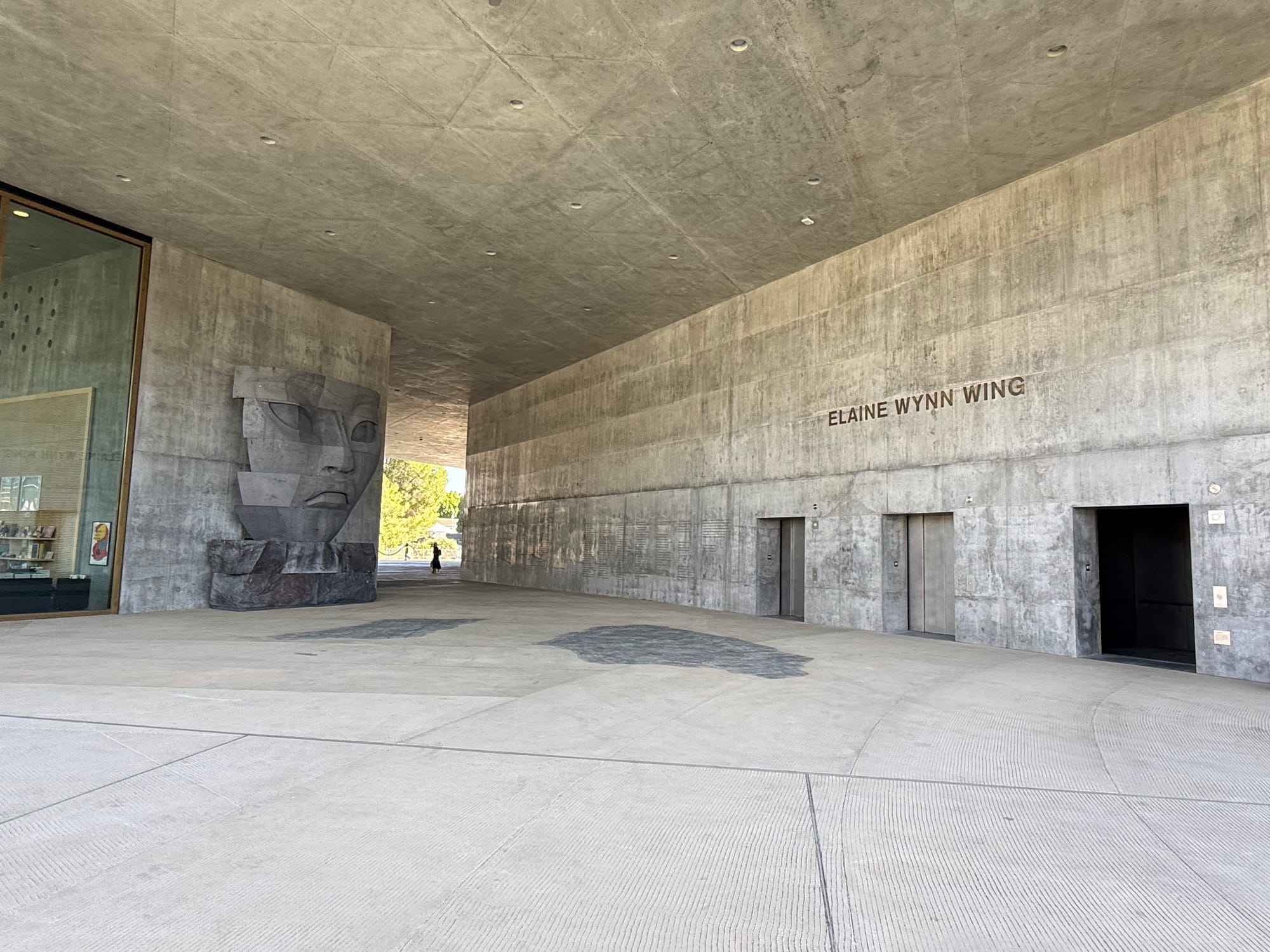
“Tlali,” a colossal lava stone head, was unveiled earlier this month at LACMA and quickly dubbed an “outdoor selfie site.” Though the new work is similar to the artist’s controversial axed proposal, the museum told Hyperallergic that it is a new design. In addition to excluding the facial jewelry featured in renderings of Reyes’s previous proposal, the artist also removed one “L” from the sculpture's original title, “Tlalli,” the Nahuatl word for earth.
Reyes has not responded to multiple requests for comment via his galleries and social media.
In 2021, Reyes received a commission from Mexico City’s government to create a bust of an Indigenous woman that would replace a statue of Christopher Columbus removed from the capital’s Paseo de la Reforma the previous year. The project, billed as a progressive, anti-colonial move, quickly unraveled after 400 local cultural workers denounced the city’s decision to award the commission to “a male artist who does not identify as Indigenous.” Critics also took issue with what they perceived as a “monolithic” representation of a Mexican Indigenous person.
“The result is a figure likely to have been taken out of Disney’s imaginary, reminiscent of Pocahontas and of the 1920s,” reads an English version of the letter shared by organizers with Hyperallergic. “It reveals the artist’s absolute lack of interest in minimally problematizing the generic concepts of ‘woman’ and ‘indigenous.’”
Following public pressure to include the country's Indigenous artists in the Columbus monument replacement, Claudia Sheinbaum, then the city’s mayor and currently Mexico’s president, backtracked on Reyes’s commission, referring artist selection for the monument to an independent committee. Reyes told Hyperallergic at the time that he supported the government’s decision.
Feminist organizers later erected a guerrilla monument to victims of femicide on the plinth.
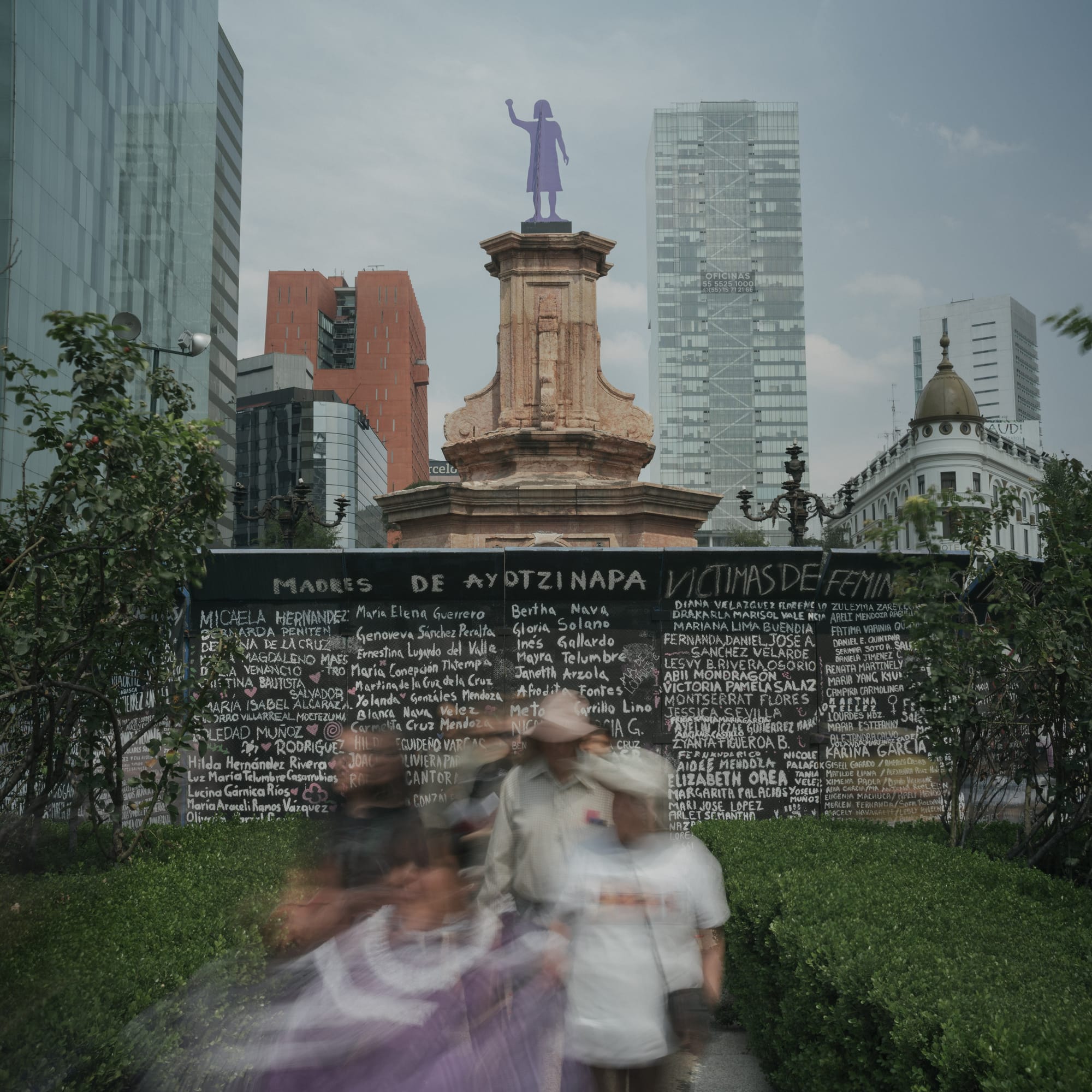
Seeing photos of Reyes’s “Tlali” on view at the $720 million LACMA last week struck a nerve for the signatories of the letter, many of whom had organized against Reyes’s 2021 proposal.
“Under the light of ‘Tlalli’’s story in Mexico, we believe that it is particularly deceiving that a museum such as LACMA has legitimized a new version of the polemic sculpture,” the letter reads.
In a promotional video posted on Instagram by Lisson, the gallery that represents Reyes in the United States, the artist is shown putting finishing touches on the sculpture, dwarfed by its magnified facial features. The caption celebrates the artist’s “large-scale projects that address current social and political issues.”
In a statement to Hyperallergic, LACMA said Reyes’s new sculpture was “entirely different in purpose and meaning from his previously proposed work planned for Mexico City.”
“After many years of conversation with the artist, LACMA offers the reimagined sculpture a new location, context, and opportunity for public discussion, positioning it among many global outdoor sculptures and works installed on the plaza,” the spokesperson continued. “For his new work at LACMA, Reyes specifically reshaped the features of the face, emphasizing the fragmentary qualities, not only of the face but also of the individual blocks of lava stone that comprise the sculpture."
Reyes’s shortening of “Tlalli” to “Tlali,” the spokesperson said, was meant to modernize its spelling according to Spanish phonetics (in which two Ls make a “y” sound).
LACMA did not answer Hyperallergic’s inquiry about whether it installed wall labels or other context about the 2021 controversy alongside the sculpture’s display. It is unclear when the museum first commissioned Reyes to create the work.
Reacting to the museum’s statement, art critic and signatory Maria Minera told Hyperallergic that it appeared to “sidestep” the missive’s core criticisms.
“It seems to me that while the sculpture has been modified from the original, it retains the name and the spirit of representing an Indigenous Mexican woman,” Minera said.
Minera was one of the initial opponents of Reyes’s 2021 proposal, who argued that the ultimately scrapped commission was “anachronistic and symbolically violent toward a minority group.”
“With this decision, the museum is saying: We don’t care about the complaints of hundreds of Mexican women; on this side of the border, we don’t hear those cries,” Minera told Hyperallergic.
Also among the work’s critics is curator Cuauhtémoc Medina, a professor in the department of contemporary Latin American art at the National Autonomous University of Mexico (UNAM), who signed last week’s missive.
“The work is artistically senseless,” Medina shared with Hyperallergic in an email. “It revives generalized representational stereotypes that were characteristic of official nationalist art 80 years ago.”
“Despite being a very important museum that I admire, they have fallen into a trap in the case of Reyes,” Medina continued. “They have adopted a colonial representation without even reviewing the history of the work, which is extremely public.”
Like Minera, translator and writer Gardi Emmelhainz was also among the group of activists who opposed Reyes’s 2021 commission. The new work, Emmelhainz said, appears to promote old “patronizing misunderstandings.”
“Pedro Reyes’s ‘Tlali’ sadly repeats the heteropatriarchal colonial view of Indigenous women and prehispanic cultures that prevailed throughout Mexican modernity: stylized folkloric abstractions,” Emmelhainz told Hyperallergic in a statement.