Nanotech Explains Ancient Roman Color-Changing Cup
OAKLAND, Calif. — Some of my favorite images from the classical world are archaeologist Vinzenz Brinkmann's recreations of the "true colors" of Greek and Roman statues. Stripped of their color over the millennia, the supposedly minimalist statues were instead imbued with bright yellows, red and blue

OAKLAND, Calif. — Some of my favorite images from the classical world are archaeologist Vinzenz Brinkmann’s recreations of the “true colors” of Greek and Roman statues. Stripped of their color over the millennia, the supposedly minimalist statues were instead imbued with bright yellows, red and blues. Brinkmann’s recreations read more like a pre-electricity equivalent of neon lights, rather than what we’ve come to expect of high art from the ancients.
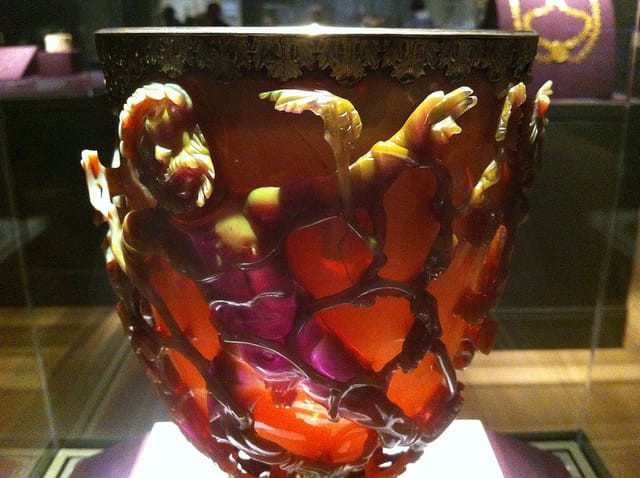
It turns out that Romans had their own version of lava lamps too, and according to a recent Smithsonian Magazine article, they tapped into nanotechnology. The famous Lycurgus Cup, a chalice in the British Museum’s collections, looks green from the front and red when backlit. Researchers created a replica of the cup and found that it changed color based on the liquids inside: “When water, oil, sugar solutions and salt solutions were poured into the wells, they displayed a range of easy-to-distinguish colors — light green for water and red for oil, for example.”
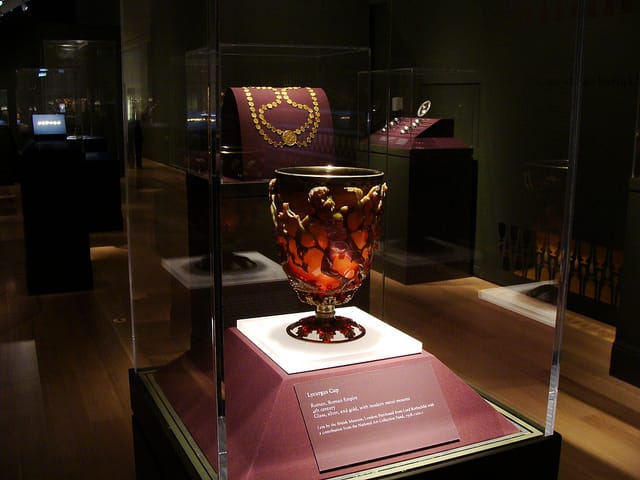
The article goes on to highlight some of the scientific value of this discovery — catching diseases in bodily fluids, for instance — but I’m more interested in the artistic applications. Did they deliberately fill the cup with different liquids to tell a story over time, as the cup features a story from the Iliad? Was it more of a neat parlor trick, albeit a very expensive one? The article doesn’t say, but it’s fun to speculate (Lucas Livingston’s Ancient Art Podcast does a great job at this), especially in light of our growing understanding of the value that the ancient Romans placed on colors in their daily lives.