New Ways of Seeing at the Outsider Art Fair
This year’s edition proves that the key to viewing work by so-called “autodidact” artists is recognizing its capacity and merit as equal to all other art forms.

The Outsider Art Fair has enriched New York City’s art world since its inception in 1993, presenting eclectic and idiosyncratic artists who challenge traditional fine art hierarchies. The fair serves as an egalitarian anchor during unstable times in the art market and the United States, marking an optimistic moment to watch art quickly sell off the walls and a range of visitors express genuine delight. The event, this year featuring 68 exhibitors at Chelsea’s bustling Metropolitan Pavilion through Sunday, March 22, has long been an antidote to the sterile, pretentious nature of a blue-chip gallery fair.
What exactly qualifies as “outsider art,” though? “Self-Taught,” “Folk,” “Visionary,” “Naive,” and “Autodidactic” are other terms historically used to describe artists from so-called unconventional backgrounds; however, the artists on view here at the fair are most importantly unified by their existence on the periphery of academic and institutional contexts. While research in these genres celebrates the exceptional creativity of outsider artists, it paradoxically limits our aesthetic appreciation of their work by undervaluing them as separate from formally trained artists.
Several must-see booths at the Outsider Art Fair displayed brilliant, rigorous practices that signal that the key to viewing outsider art is recognizing its capacity and merit as equal to all other art forms, regardless of superficial distinctions.
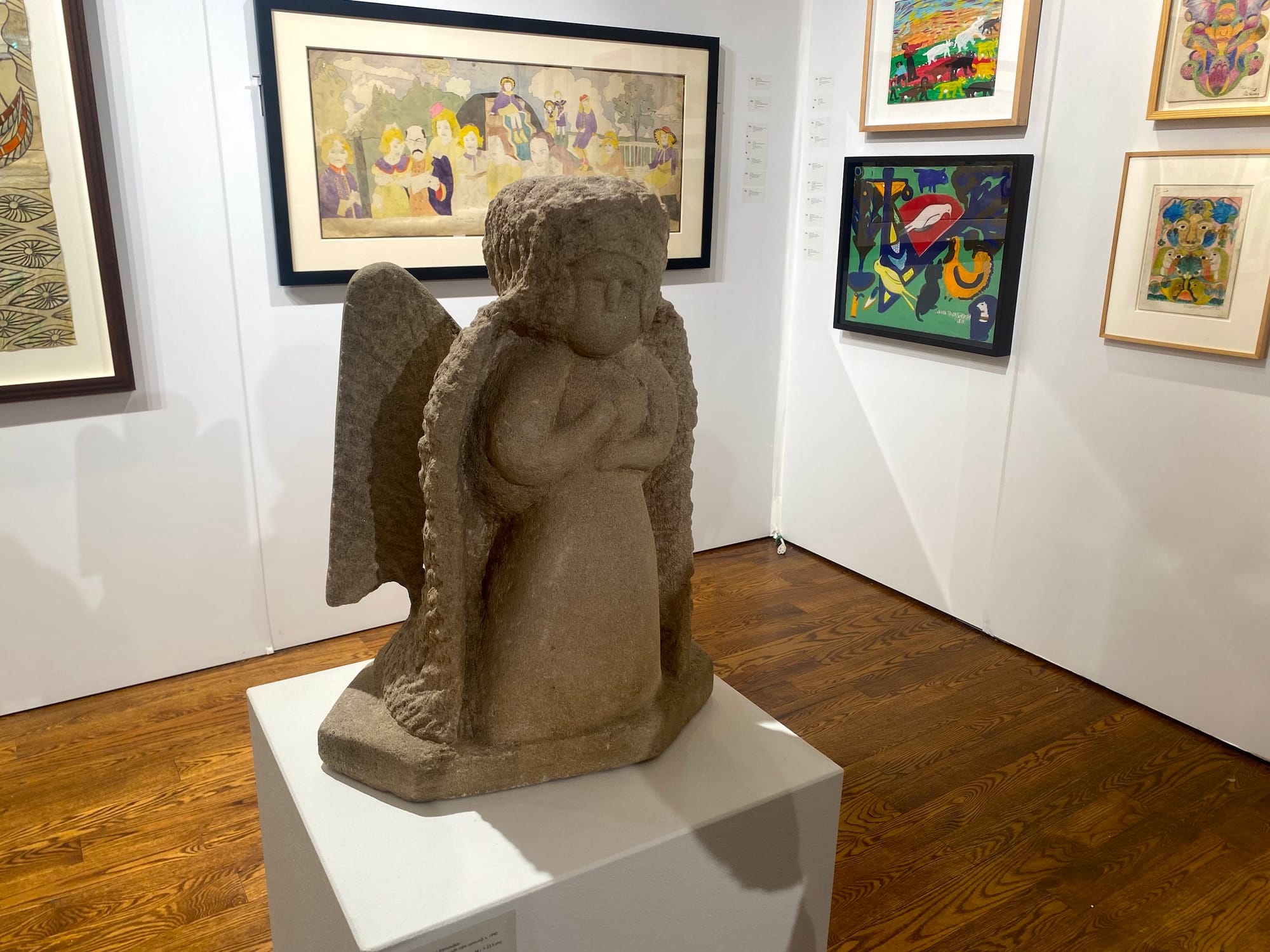
Near the entrance, where an array of exuberantly dressed collectors, artists, and everyday visitors filed into the labyrinth of booths, Philadelphia’s Fleisher/Ollman Gallery is a mandatory stop, with a plethora of canonical self-taught masters on display. This includes inimitable artists such as William Edmondson, a Nashville stonecutter who carved figurative stone sculptures and became the first Black artist to have a solo show at the Museum of Modern Art in 1937.
“It’s a fair that’s gained so much traction in the last 10 years. It’s brought in people who have never really experienced this material before,” John Ollman, co-owner of the gallery, told me. “I like to represent these masterpieces.”
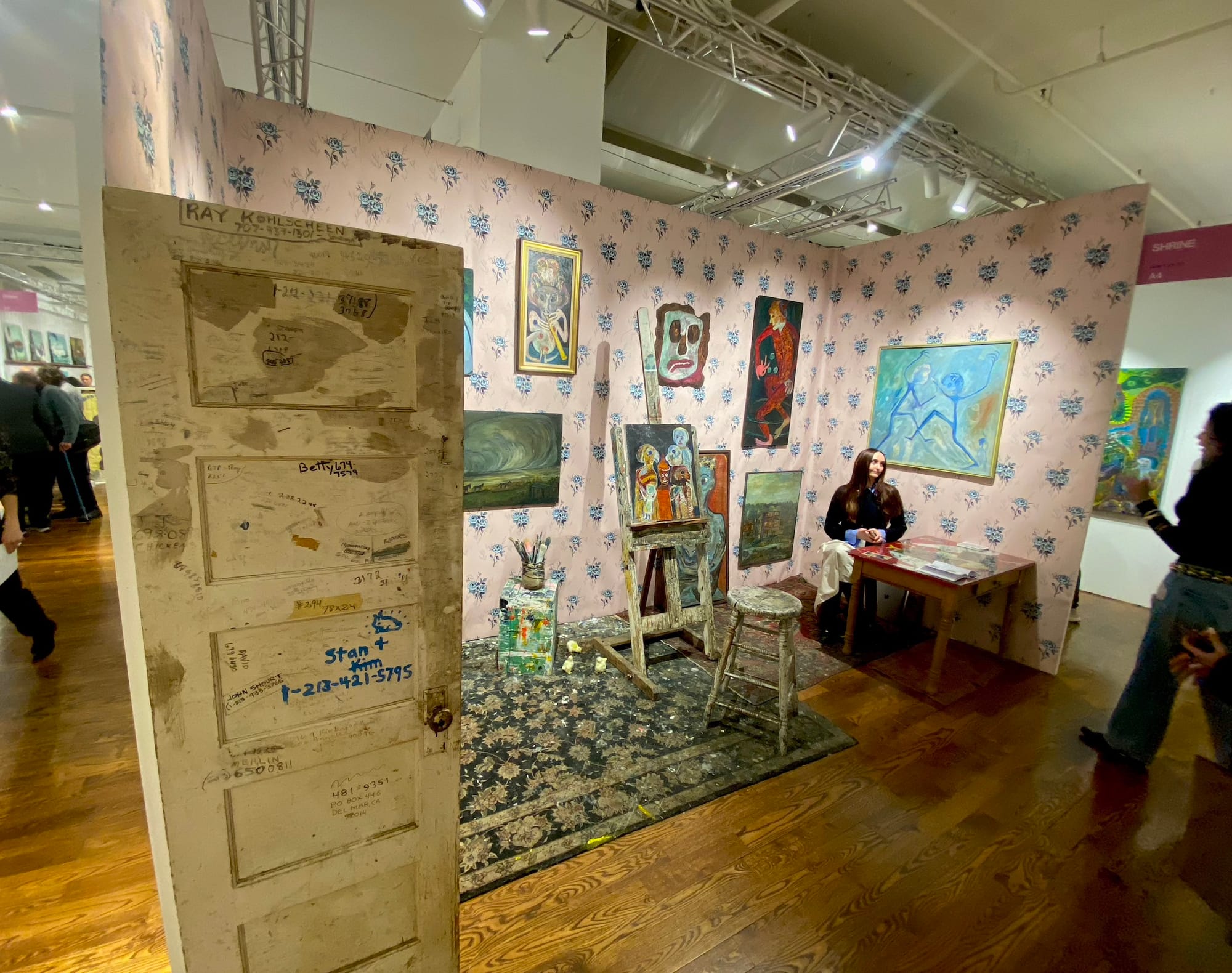
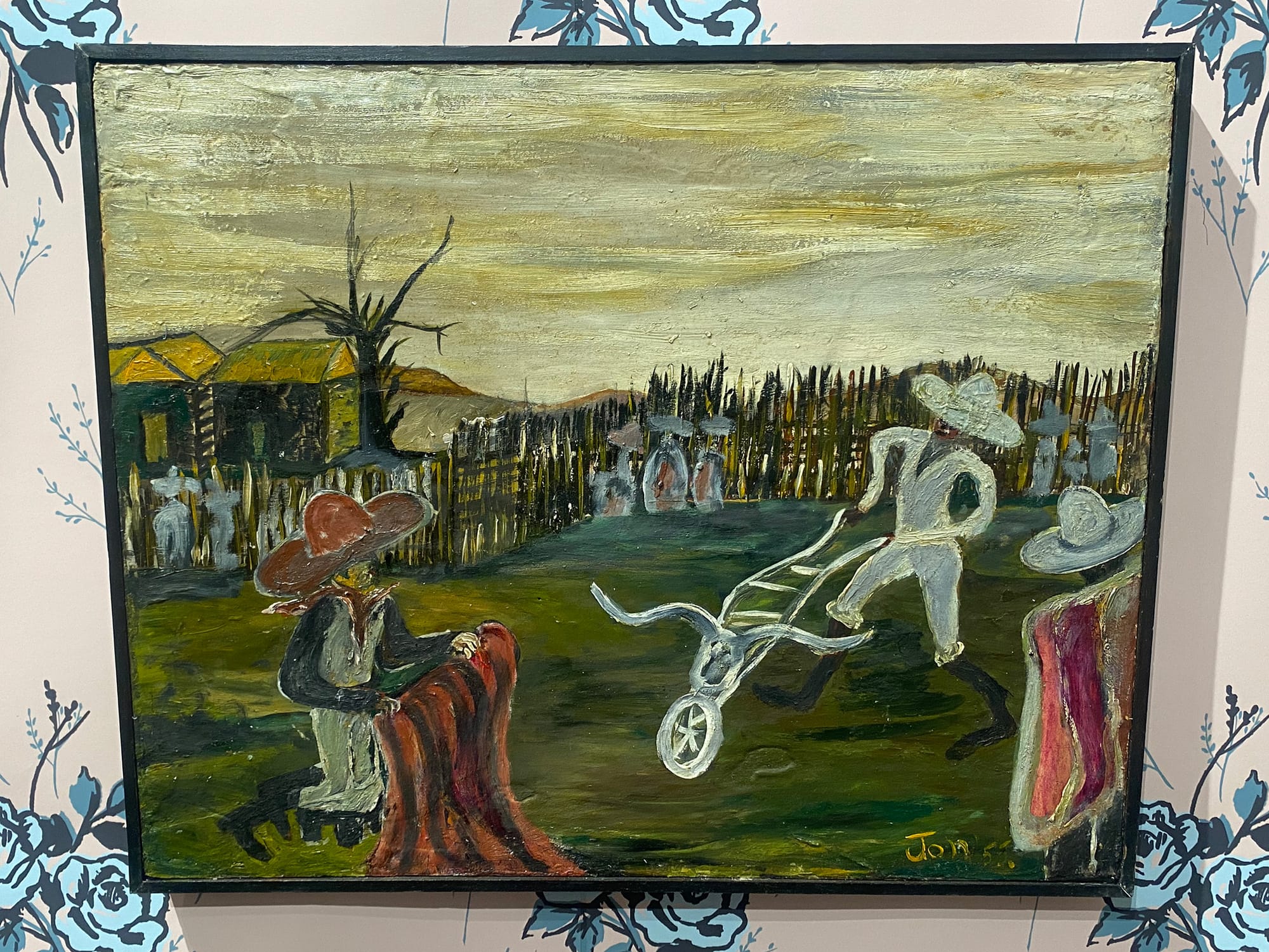
Nearby, SHRINE’s display of Jon Serl’s regarded and distinct figurative paintings offered a standout salon-style presentation that incorporated his original easel and other materials from his home studio, staged as if the artist had just stepped away from his work.
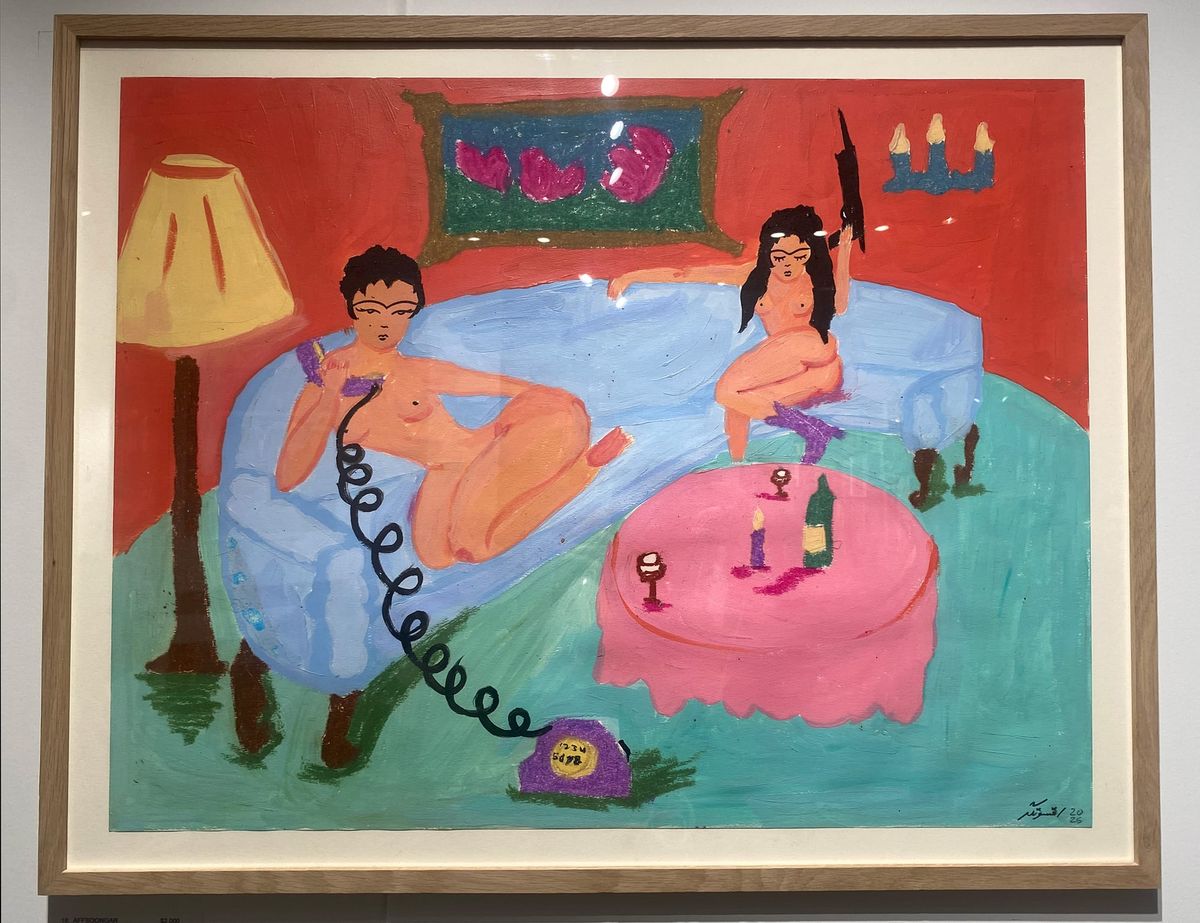
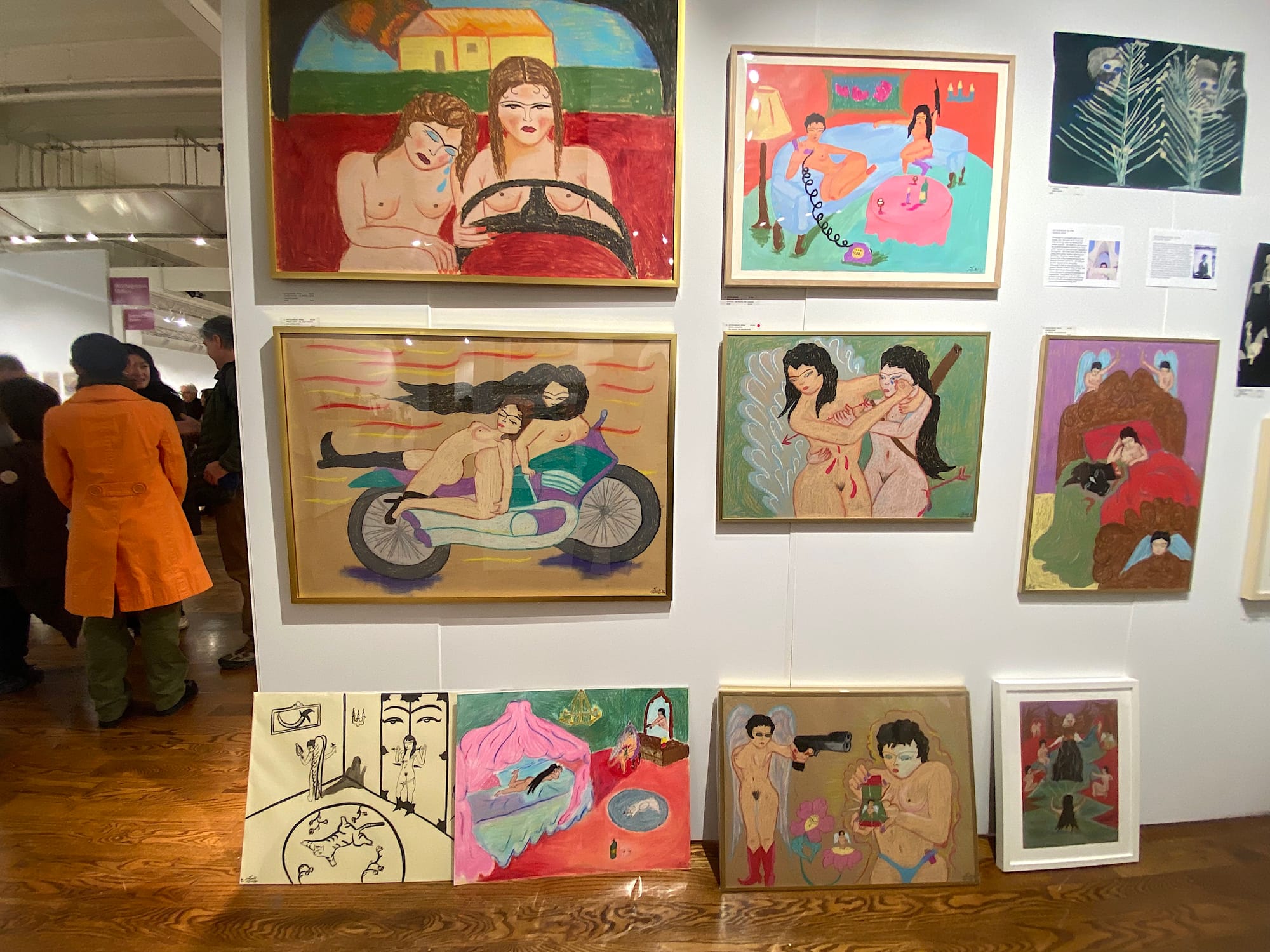
Massachusetts-based PULP featured a noteworthy selection of lesser-known figures, including Afsoongar, an alias for a young Iranian artist who anonymously creates subversive works that push against the Iranian regime’s restrictive patriarchy. The artist renders defiant women, nude amid compositions that recall action-movie fight scenes. Her work is a topical reminder of self-taught art’s political potency, actively engaging with the broader Iranian women’s movement in an immediate way.
Andrea Gutiérrez, whose work is on view at the booth of Idaho’s Stewart Gallery, examines femininity through a domestic lens. The artist implements delicate thread-and-needle techniques she learned from her mother to create small-scale works that sumptuously depict the quotidian: picking potatoes, cutting onions, and women with their backs to us.
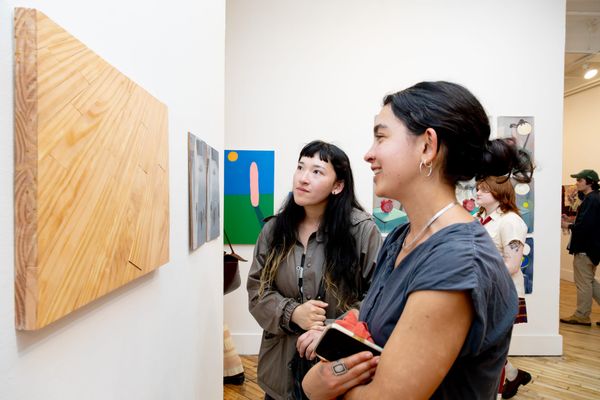
When I ran into Brooklyn- and Los Angeles-based artist Jaqueline Cedar, who was visiting the fair for the first time, her reflections highlighted the overlap between formally trained and self-taught artists — reinforcing the porosity of these categorizations.
“It was a nice range,” Cedar said. “I discovered so many artists. I feel like my work aligns with a lot of these aesthetics. They’re all connected.”
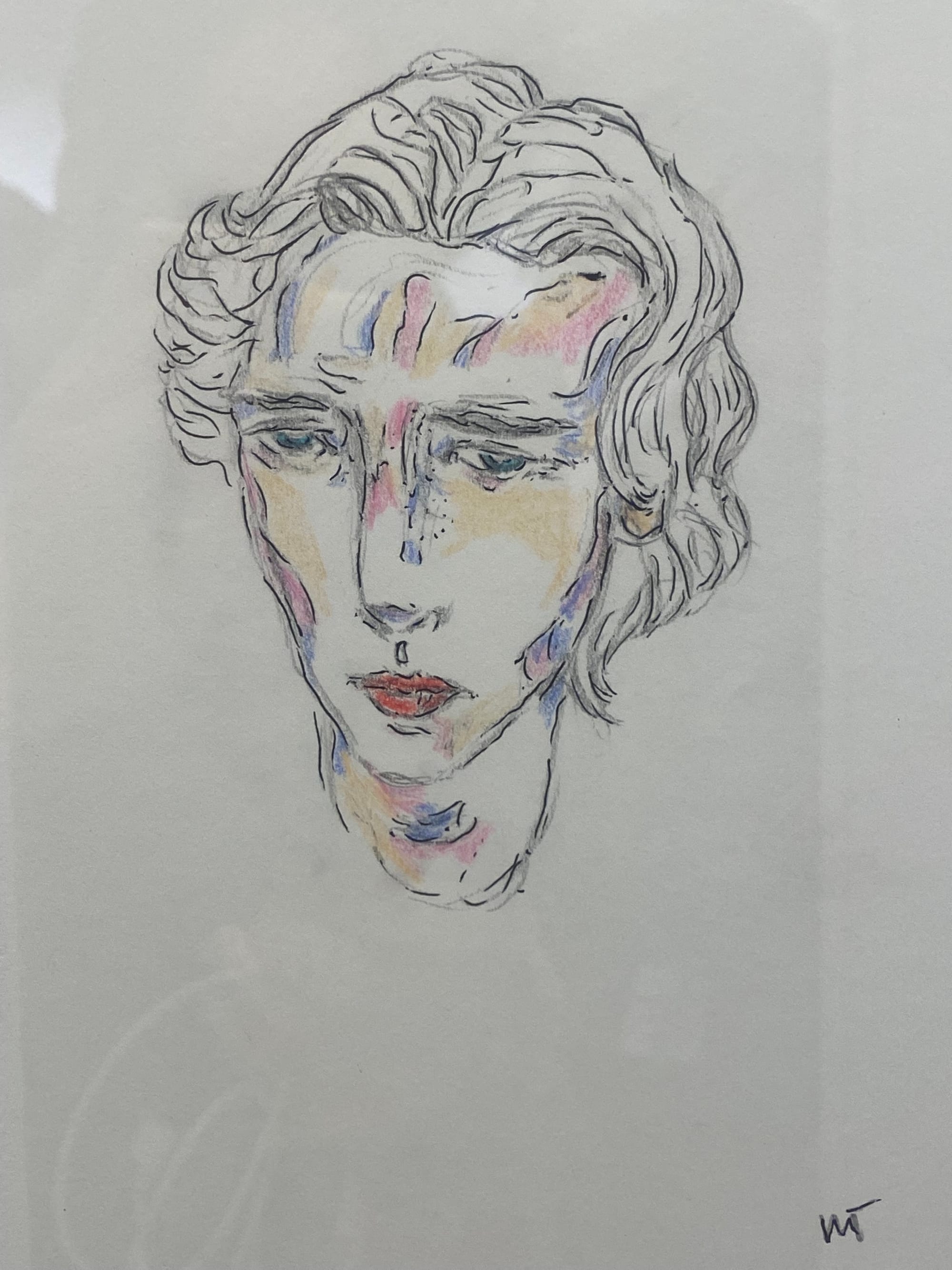
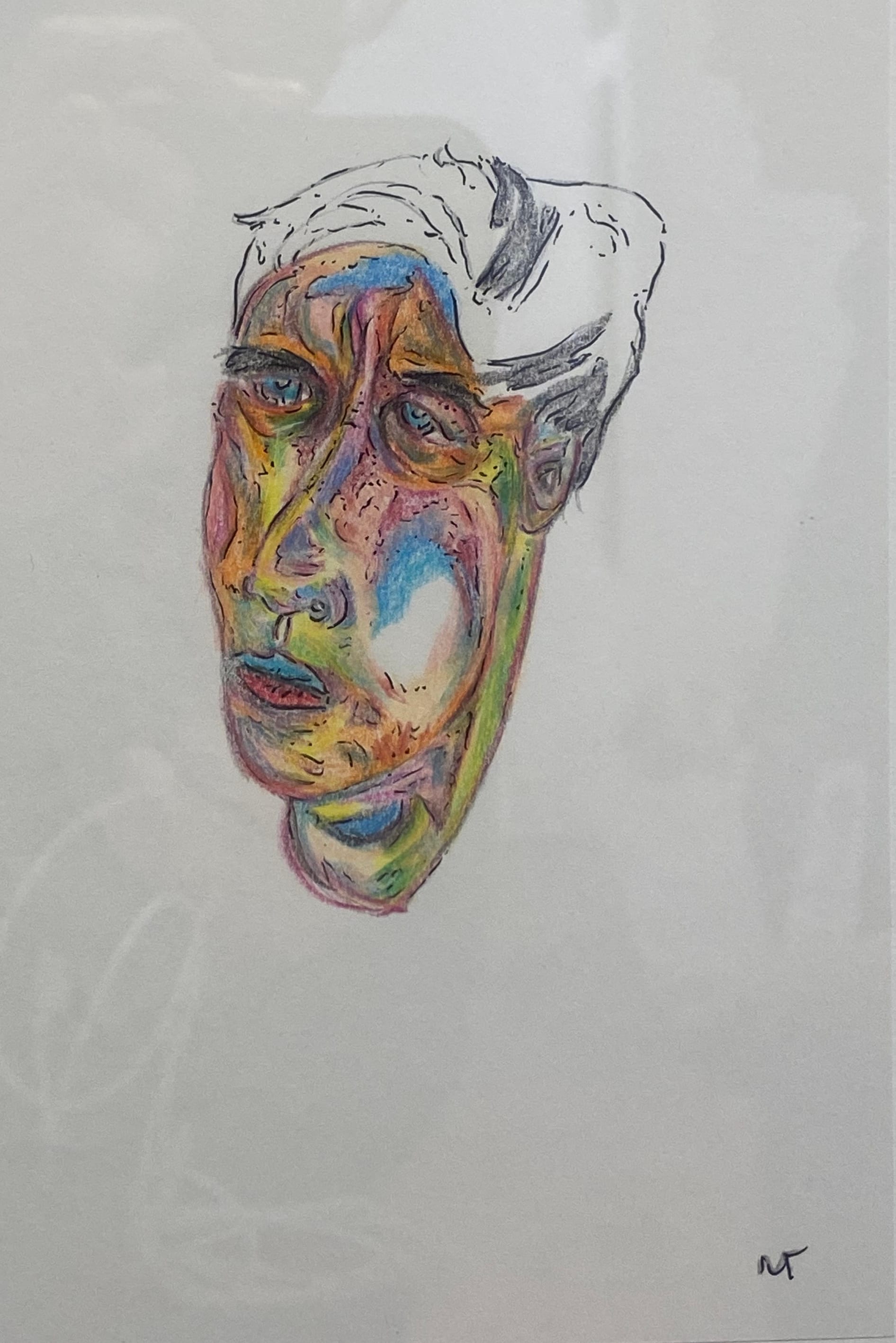
Portrait Society Gallery of Contemporary Art’s display of work by Marcus Tauch
Many nonprofit art studios across the country facilitate art education for adults with disabilities and no prior art experience, thereby fostering a rich lineage within outsider art history.
Fountain House Studio and Gallery in Manhattan works with people with mental illnesses, supporting artists like Alyson Vega, who had to leave her job as a math teacher after sustaining a brain injury. Through Fountain House’s booth, the native New Yorker of Puerto Rican descent displayed her remarkably sophisticated compositions of the city’s streets during Trump protests, using fabric, acrylic, and paper.
Considering the art market’s saturation with mediocre figuration, Milwaukee-based Portrait Society Gallery of Contemporary Art’s display of eight bust-length portraits stood out. These colorful line drawings by Marcus Tauch, showing at an art fair for the first time, exist on a spectrum between Pavel Tchelitchew’s hallucinatory portraiture and Egon Schiele’s incisive sketches.
Gallery Director Debra Brehmer explained that she is still learning more about Tauch, who she says simply “sent us a box of his sketchbooks, and we thought, wow, they are so delicate and beautiful!” Noticing my interest, she kindly offered to pull out Tauch’s sketchbooks for me to peruse. Here, I walked away appreciating the distinct offerings of the Outsider Art Fair: generosity and possibility, qualities that can be applied to encounters with any artist's work.