Paul Pfeiffer on the Spectacle of Politics
“Perhaps the stadium is actually the replacement for the UN as a symbolic gathering point to conduct world politics,” the artist told Hyperallergic in an interview.

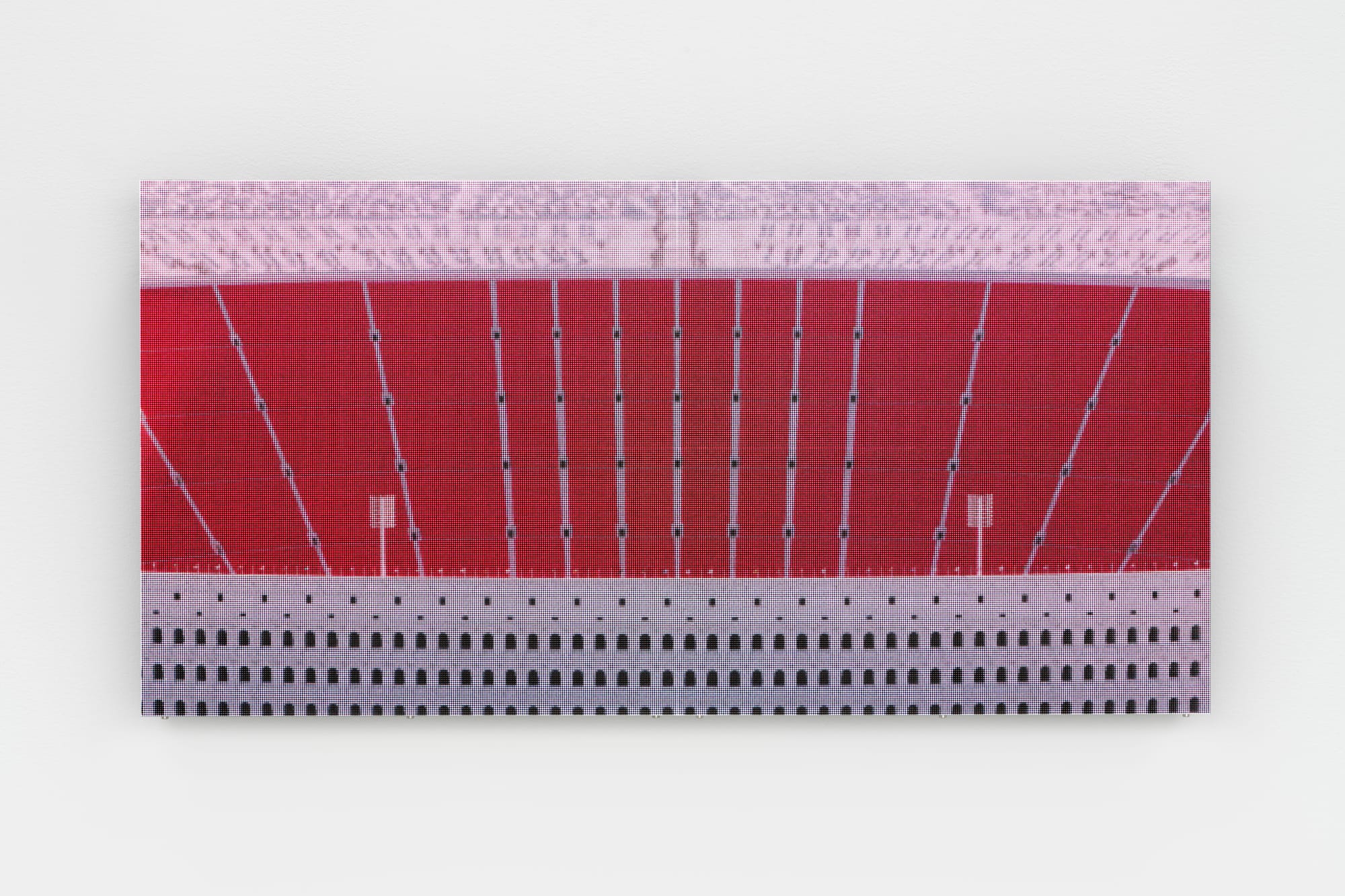
LOS ANGELES — In the early 1990s, Paul Pfeiffer began producing a series of striking interventions in found video footage, often featuring celebrated sports figures, to highlight the effects of media and fame on not just individuals but also the larger body politic. Using innovative post-production techniques, he removed key elements from scenes of professional boxers and basketball players, isolating them in various arenas, teasing out the uncanny undercurrents in such late modern spectacles.
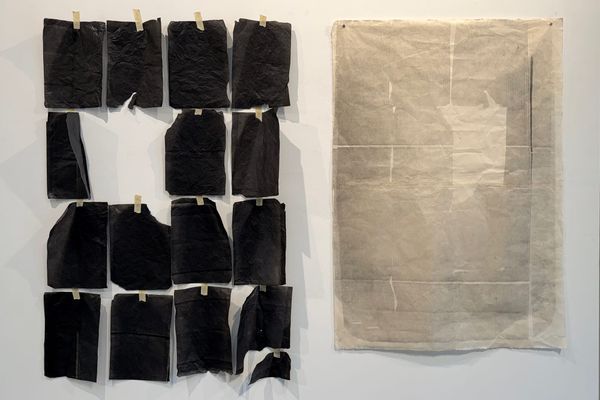
Pfeiffer’s work further heightened the stakes of these scenes of pop culture by invoking art historical figures from classical sources, including caryatids from his eponymous 2003–4 series, and modern painting, as seen in his 1999 digital video installation “Fragment of a Crucifixion (after Francis Bacon).” He has also developed a wide-ranging practice of drawing and sculpture, as seen in his series of sculptural maquettes and imagined plans for a million-seat stadium, all named some version of Vitruvian Figure, and woodcarvings of pop singer Justin Bieber in the style of Jesus on the Cross — “Justin Bieber Legs Crucified (Seville)” from 2026 — which feature in his current exhibition at Galerie Perrotin in Los Angeles.

Hyperallergic: What do you think about the scaling up of mass culture in recent generations, and how it creates collective affects that can be appealing, but also lead to dystopian outcomes? I’m thinking of the quote, “A million Elvis fans can't be wrong” — would a billion Swifties gathering be a stadium too far?
Paul Pfeiffer: There's a proliferation of stadiums, often connected to cyclical events like the World Cup or the Olympics, traveling from city to city, such that the architecture mirrors this kind of rhythm.
If we think about soft power and the amount of politics conducted through the World Cup, and the listlessness and questionable effectiveness of the United Nations now, perhaps the stadium is actually the replacement for the UN as a symbolic gathering point to conduct world politics. It certainly hides as much as it reveals, but has become a staging ground for political pronouncements. In that way it’s beyond symbolic — the athletes' bodies move beyond the agonistic encounters in the stadium.
H: I think about Iranian athletes who trained outside the United States border during the World Cup due to the US government’s unwillingness to host them overnight, and faced this greater adversity just getting to their jobs. I think also of those people marching out of the UN assembly during Netanyahu’s speech, who voted with their bodies.
PP: For me, it's the play of the visible and the invisible, or the facade and the informal production scheme behind the facade. This is present in the ways politics are conducted through culture now, a formal symbolic aspect that carries a certain kind of weight. I agree about the spectacle of so many delegates walking out on Netanyahu is heartening — a bit of agency when we needed it.