Why do a performance art festival tied to national political issues foregrounded in the midterm election? In a moment when cultural and political institutions are retreating from provocative stances into solipsism and leisure, and government funding for the arts is but one of the many areas being slashed by right-wing political operatives, it might seem like the opposite of common sense to be opening a museum dedicated to presenting and preserving the least marketable and most controversial aspect of contemporary art: performance.
Instead, the opening of the Performance Art Museum in Los Angeles, the first US museum dedicated to this ephemeral medium, has been met with tremendous support. This is because performance, with its emphasis on embodied experience, altered psychological states, challenging social dynamics, and the absurd, provides a necessary counteraction to the dissociation and isolation of our fractured and digitized society.
Since the early 20th century, artists have deployed performance as a medium for political commentary. Dada artists in Zurich and Berlin played with the emptiness of political speech in war-torn Europe while Mavo artists in Meiji Japan used cross-dressing and shock value to mock the nation’s entanglement in colonial wars in China and Russia. With the midterm elections unfolding against a backdrop of unrelenting genocide, the embodied stakes of performance serve to sharpen its critique. The influencer news cycle has shortened our attention spans from 24 hours, already a significant shift manifested via CNN and Headline News during the Gulf War and honed during 9/11, to a far shorter, dopamine-fueled spike of rage-and-crash out that can be repeated multiple times in a single day. The war on Gaza has both numbed us to atrocities in our feed, and disconnected us from our own bodies and communities as we quietly absorb the unspoken impacts of the violence that we outsource.
In the 1960s and 1970s, this absorbed violence erupted in the work of the Actionist artists including Hermann Nitsch, Rudolf Schwarzkogler, Valie Export, and Gina Pane. High Performance magazine was the first outlet to cover these artists in the United States and an emerging generation of artists informed by them, including Chris Burden and Kim Jones, who took significant physical risks in performances that openly critiqued the prolonged war in Vietnam. At the same time, the sexual revolution was underway and artists including Barbara T. Smith, Suzanne Lacy, and Johanna Went put their bodies on the line accordingly, looking at the pleasures and the risks of erotic life from feminist perspectives. Artist and poet Sue Dakin, the publisher of High Performance, ran a campaign for president as an independent candidate in 1984.
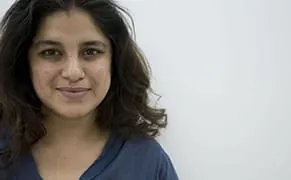
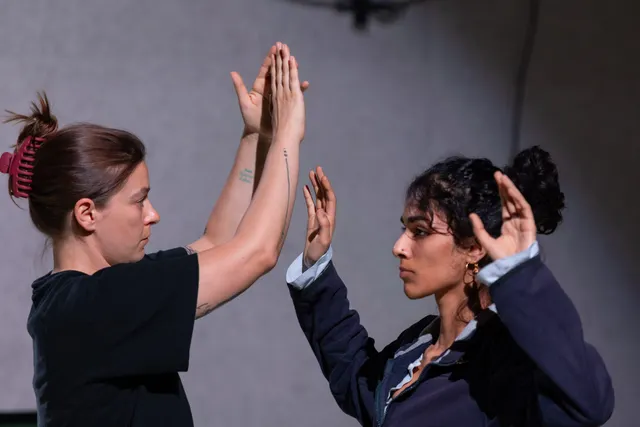
These histories inform the two-year Performance Art Museum initiative, High Performance: A 2 Year Conference for which my colleague Leon J. Hilton and I organized Public Spirits: A Performance Art Festival on October 23, 2026.
Emerging out of these practices and the magazine’s coverage of them, the 1980 Public Spirit festival, organized by the Highland Art Agents (including Paul McCarthy, Barbara T. Smith, Chip Chapman, John Duncan, and High Performance editor Linda Frye Burnham) through LACE, LA’s longest-running experimental art space, featured 60 artists and over 100 performances over two weeks in May and four weeks in October. Many of the works were staged in rooms at the American Hotel and were intimate in scale. Some, like the Feminist Art Workers’ Bill of Rights advocating for the ill-fated Equal Rights Amendment or The Waitresses’ Coffee Cauldron honoring women in service work, were explicitly political in nature. Many followed participant Allan Kaprow’s model for Happenings, being unscripted actions that turned absurd, comedic, or disturbing. Some involved singing, dancing, or traditional theatrical presentations — including a musical by Carole Caroompas about unreliable exes, a dance number by Nancy Buchanan about covert US intervention in Central America, and a play by Alexis Smith and Heidi Hardin titled “Stardust” that featured an unknown Whoopi Goldberg. A gallery at LACE was designated the “Public Spirit Remnants Room” and exhibited artifacts from the performances after the fact.
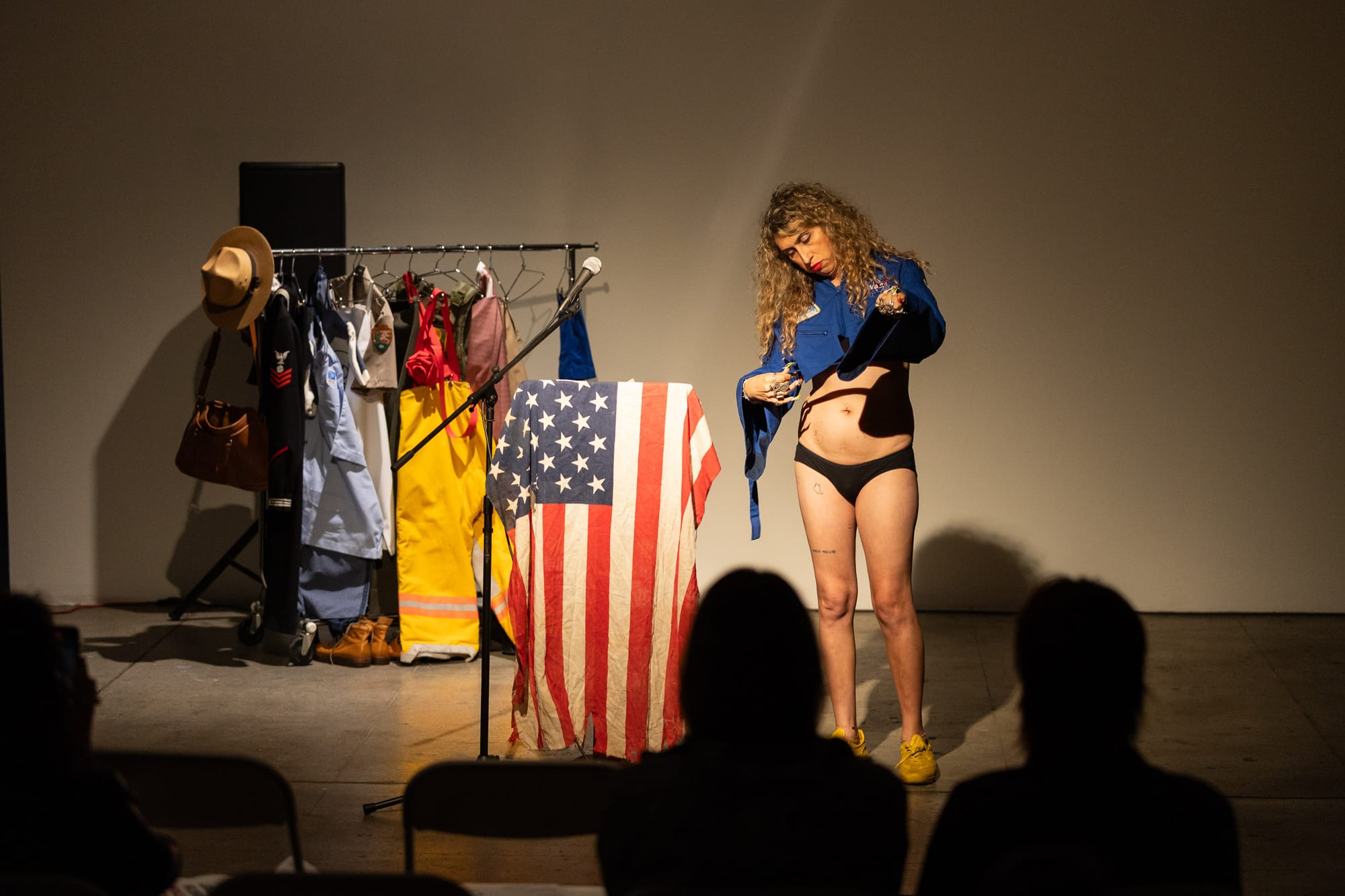
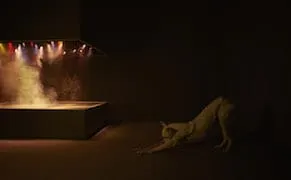
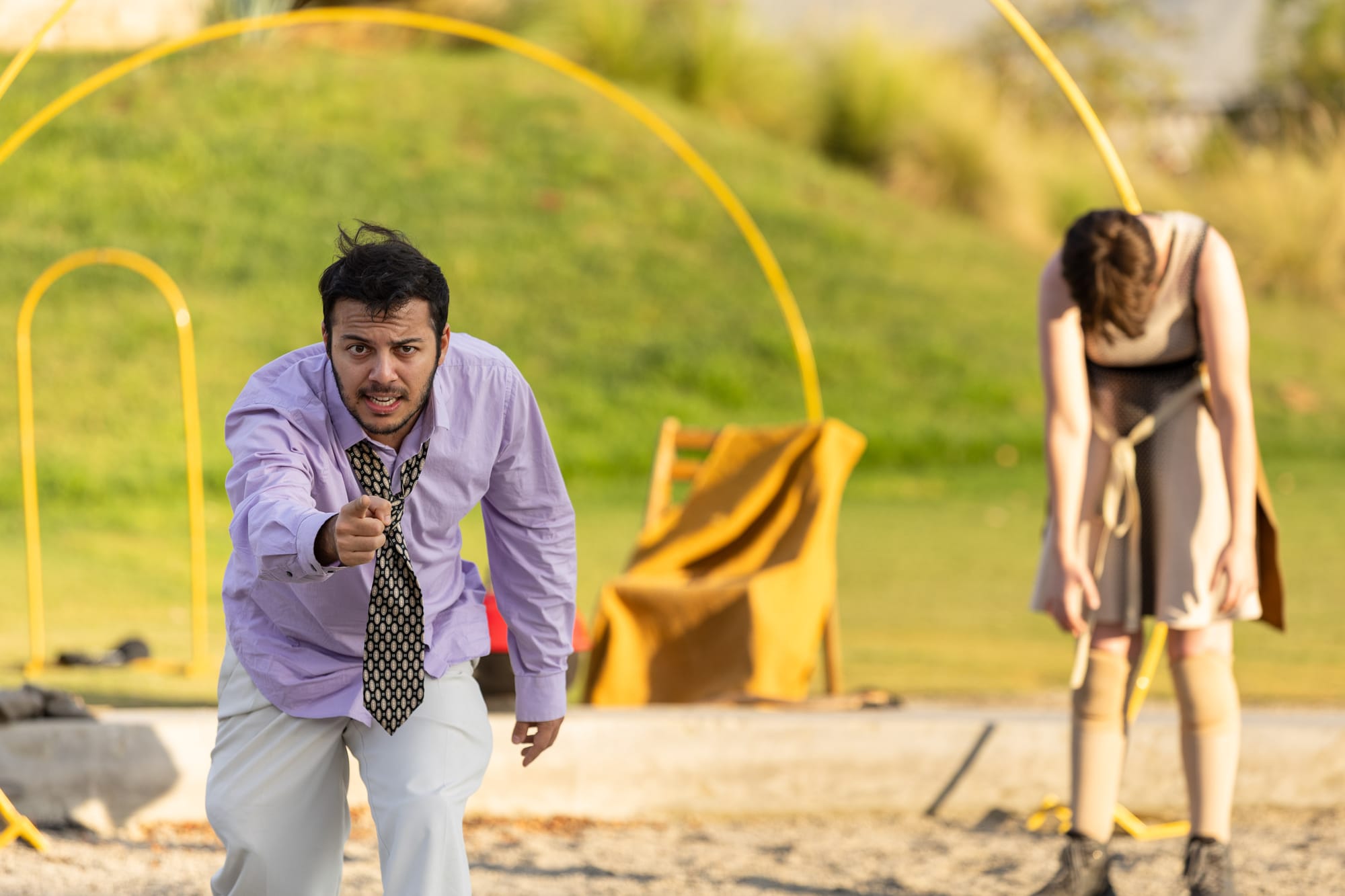
The election in November 1980 marked the ascent of Ronald Reagan to the presidency, bringing the era of government funding that enabled Public Spirit to a close. 1980 was the peak year for funding for artists through the Comprehensive Employment and Training Act (CETA) passed under Richard Nixon, and for alternative spaces through the National Endowment for the Arts. Resources are more scarce and costs are much higher for artists working today. A performance festival on this scale that would be impactful both for audiences and for the participating artists would be inconceivable with the capacity that the 1980 Public Spirit organizers were able to muster. Our 2026 homage was more modest in scale with four artists highlighted over a single day at our home base, the Performance Building in Chinatown, and nearby locations at the Los Angeles State Historic Park and Homeboy Art Academy. Our artists — Pau S. Pescador, Jade Guanaro Kuriki-Olivo (Puppies Puppies), Da Ron Vinson, and Ryat Yezbick — balanced poetics with politics to address hot-button issues at the top of this election cycle such as AI and mass surveillance, transgender civil rights, sexual exploitation and trafficking in corridors of power, racial profiling, and gender discrimination. Our intention was to build connections within our new neighborhood and to bring our community of artists and supporters together with the public in a way that felt provocative but also physically and emotionally safe for vulnerable populations.
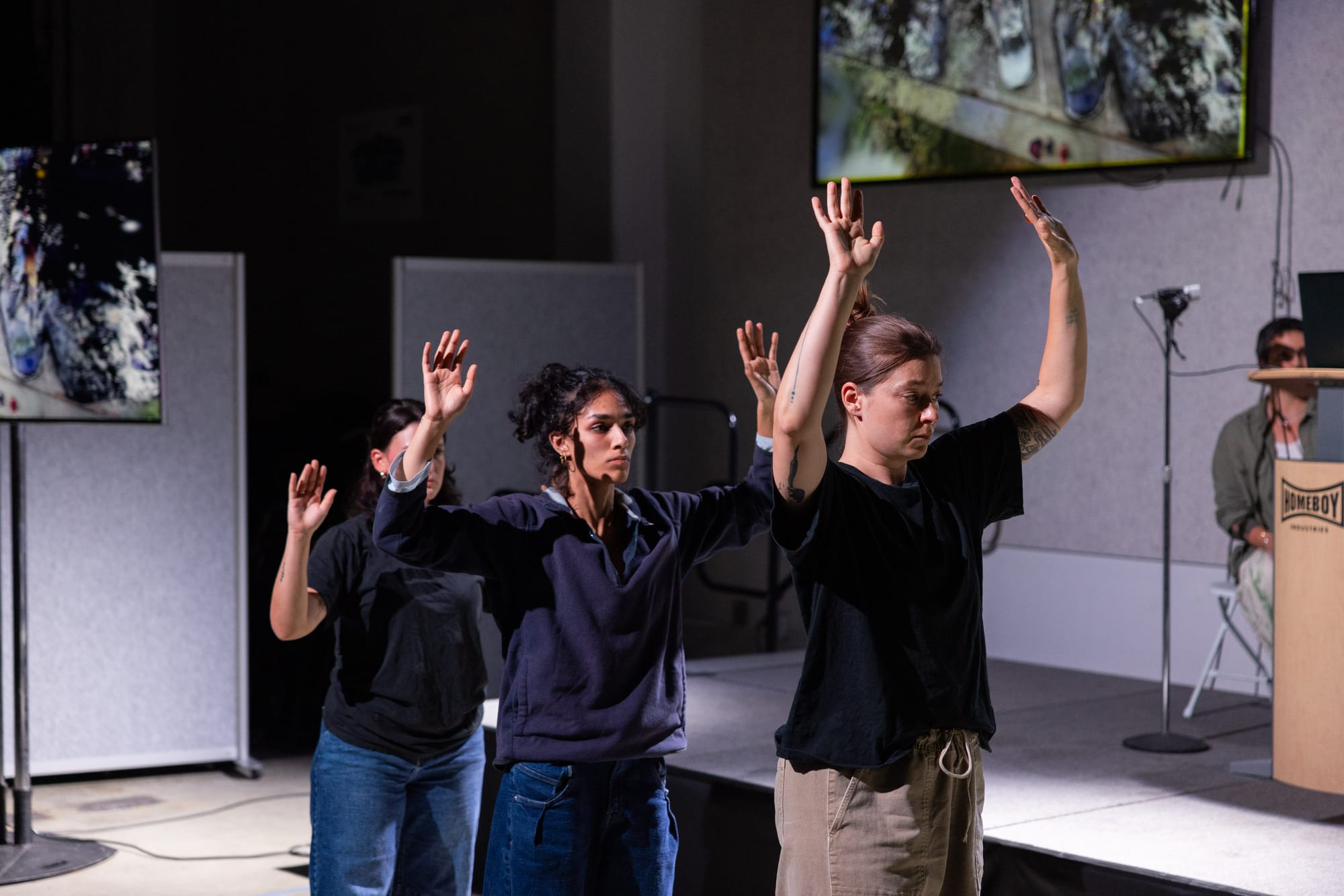
Despite the bleak political landscape, we hoped to generate collective joy through demonstrations of resistance. Politics in 2026 can be discouraging at best, at worst a bloodbath of allegations and backbiting. The U.S. Department of Homeland Security raided the home of Minnesota Representative Ilhan Omar last month as a political stunt. Outgoing Michigan Representative Haley Stevens’ endorsement of Republican Mike Rogers rather than her own party’s candidate for the US Senate, Abdul Al-Sayed, was a peak act of political theater designed to prolong a losing candidate’s influence when the reins of actual power have slipped from her grasp. The sitting president resorts to theatrics on a daily basis to distract from the incompetence of his governance. Much of our political culture today consists of symbolic gestures, a stunt politics based on the cynical expectation that nothing real is at stake. Yet the U.S. Immigration and Customs Enforcement (ICE) raids and mass shootings have real long-term consequences that quickly slip from the headlines, replaced by another circus act.
The right, with its relentless homoerotic homophobia, is a parody of itself. Yesterday obsessed with Hasan Piker’s shirtless photos, today with Long Island congressional candidate Chris Gallant’s decades-old BDSM modeling spread for gay San Francisco landmark, Mr. S. Leather. Until recently, the response from the Democrats would be to fan the moral panic, undermining their own candidates’ strong policy records with ruminations about their private lives. As Gallant notes, though he lost his race, he demonstrated that the bar for personal behavior has dropped so low under the current administration and the level of hypocrisy grown so high that nothing he has done or could do as a gay person in a consensual adult context ought to be viewed as invalidating to his political career. Anxiety about the body, gender, and sexuality drives productivity, with relentless labor framed as the only alternative to a life of exploitation, and catastrophic debt the only route to sexual desirability. The performance artist seizes control of these narratives of the social body, often leaning into the worst possible interpretation to highlight the absurdity of the whole proposition.
In inviting me to write this opinion piece, Hyperallergic’s Editor-in-Chief Hakim Bishara asked me point-blank: “Aren’t all politicians really performance artists?” To which I say yes, but not in the ways that matter. A real performance artist puts their body on the line, asking of themselves more than they would ever ask of another. Zohran Mamdani jumping fully clothed into a swimming pool is political theater, but he is no more a performance artist than his idol, Fiorello La Guardia — a great orator who built a cult of personality, yes, but fundamentally a legal and economic reformer. The theater is a tool to get popular buy-in for necessarily dry bureaucratic actions. Incoming New York Representative Brad Lander getting arrested in Palestine is theater that points to a bureaucratic inequality. His passport and his privilege get him released within 24 hours while Arab activists sit in jail on equally bogus charges.
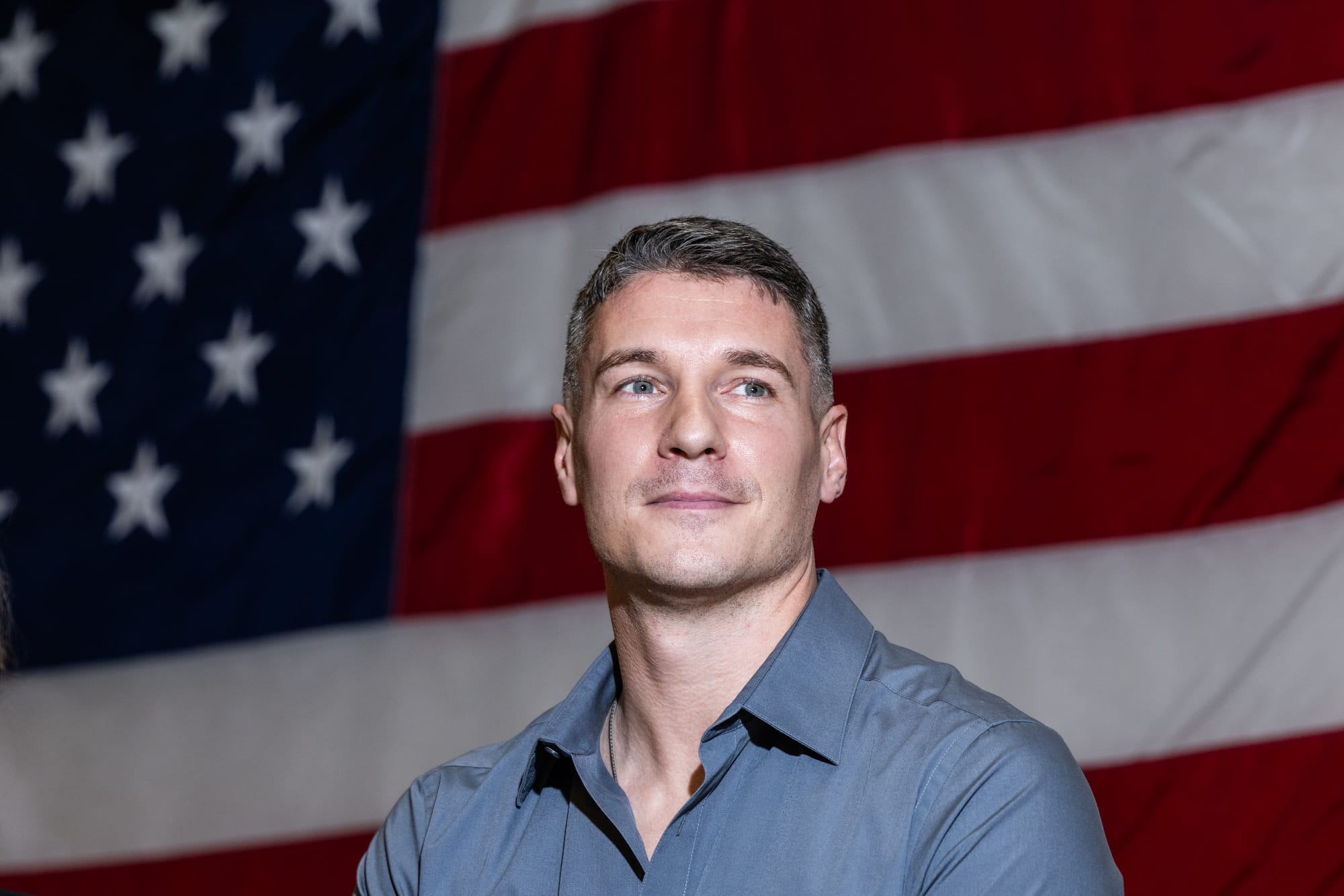
The performance artist does not have an easily readable political agenda. She seeks something more ephemeral and simultaneously more real — metempsychosis — achieving total transformation by killing the Ego if not the physical body. The performance artist attempts to close the gap between their privilege and the suffering of others by getting down to the level of the least of us. It is not religion, but it is a ritual of transubstantiation. Perhaps Gallant, with his Avatar: The Last Airbender haircut and his U.S. Army and Fire Department bona fides, would be the closest a politician has come recently to putting some real skin in the game.
Politics, however altruistic, elevates the self. Performance art annihilates and remakes it, refracting into the audience through the prism of the artist. Politics changes the system, but performance art changes the artist and the viewer by foregrounding and renegotiating the social contract. Politics can only work with what we see. Performance engages what we can’t.